
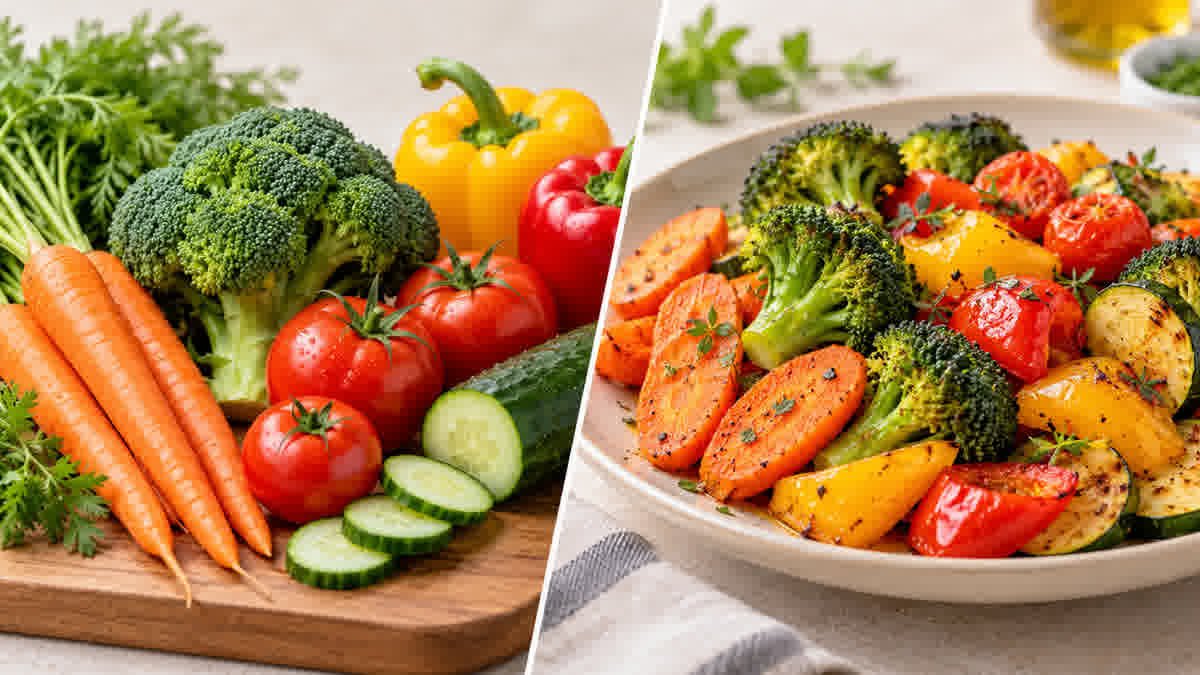

Many people believe raw vegetables are healthier because cooking destroys nutrients. The science is more nuanced. When it comes to raw vs. cooked vegetables, neither is universally better: raw vegetables can keep more of certain heat-sensitive vitamins, while cooking can make other nutrients easier for the body to use.
That matters for everyday choices, from whether to order the salad or the roasted side to how long to steam your broccoli. The answer depends on the vegetable, the cooking method, the nutrient in question, and your overall diet. Eating enough vegetables in any form is more important than choosing the perfect preparation.
This guide compares raw and cooked vegetables on vitamins, antioxidants, fiber, digestion, and food safety. You will also find vegetable-by-vegetable examples, a ranking of cooking methods, and practical tips. The information is general and educational, and it is not a substitute for advice from your clinician or a registered dietitian.
Quick answer: Both raw and cooked vegetables can be healthy choices. Raw vegetables may retain more heat-sensitive nutrients, such as vitamin C, while cooking can improve the availability of certain compounds, including lycopene in tomatoes and beta-carotene in carrots. The healthiest choice depends on the vegetable, cooking method, and overall diet.
| Factor | Raw vegetables | Cooked vegetables |
|---|---|---|
| Vitamin C | Often retains more | May lose some through heat |
| Folate | Can retain more | May decrease with prolonged cooking |
| Lycopene | Generally less bioavailable in tomatoes | More available in cooked tomatoes |
| Beta-carotene | Present naturally | May be more accessible after cooking |
| Fiber | Provides dietary fiber | Still provides fiber; texture changes |
| Digestion | May be harder for some people | Softened texture may help some people |
| Food safety | Requires careful washing and handling | Adequate cooking reduces certain microbial risks |
These are general patterns, not universal rules. Actual nutrient retention varies by vegetable, preparation method, and cooking time.
Raw vs. Cooked Vegetables: What’s the Difference?
Raw vegetables are eaten uncooked, whether whole, sliced, grated, or tossed in a salad. Cooked vegetables are prepared with heat, using methods such as steaming, boiling, microwaving, roasting, sauteing, grilling, or simmering in soups and stews. Frozen vegetables are usually blanched (briefly heated) before freezing, so they sit somewhere in between.
Heat changes vegetables in several ways. It softens plant cell walls, can break down some vitamins, and can release others that were locked inside plant tissue. How much changes depends on the vegetable, the temperature, the cooking time, and how much water is used.
It also helps to separate two ideas: how much of a nutrient a food contains and how much your body actually absorbs. Absorption, sometimes called bioavailability, can go up or down with cooking. That is why a simple raw-is-best rule does not hold up.
The table above summarizes the main patterns. The sections below explain them.
Raw vs. Cooked Vegetables: Nutritional Comparison
There is no single winner. Each form has advantages and limits, and the details depend on which nutrient you are looking at.
Vitamins and Minerals
Vitamin C and folate are sensitive to heat and dissolve in water, so they can be lost during long cooking or leach into cooking water that is then poured away. Harvard Health notes that cooking vegetables in water causes some nutrients to leach out and that the best approach cooks quickly, for the shortest time, with little liquid.
Minerals such as potassium, calcium, and magnesium are not destroyed by heat. They can, however, move into cooking water, so boiling and discarding the liquid reduces what ends up on your plate. For more on vitamin C sources, see our list of foods high in vitamin C.
Antioxidants and Nutrient Absorption
Cooking can make some plant compounds easier to absorb. Heat helps break down tough cell walls, which releases carotenoids such as lycopene and beta-carotene, according to the Linus Pauling Institute. Cooked tomatoes, for example, tend to provide more absorbable lycopene than raw tomatoes, and cooked carrots can provide more accessible beta-carotene.
Carotenoids are fat-soluble, so a small amount of oil or other fat in the meal helps absorption. Other antioxidants, such as vitamin C and some polyphenols, can decline with heat. You can find more examples in our guide to antioxidant-rich foods.
Fiber and Digestion
Cooking does not remove most of the fiber in vegetables. It softens the structure, which can make vegetables easier to chew and, for some people, more comfortable to digest. Raw vegetables provide a satisfying crunch and more chewing, and they supply the same kind of fiber.
For more on fiber-rich options, see these high-fiber foods for digestive health.
Calories and Overall Nutrition
The cooking method and added ingredients matter as much as the heat itself. Steamed broccoli and fried broccoli in batter are very different foods. Oil, butter, cheese, sauces, and breading can raise calories, sodium, and saturated fat, while salad dressings can do the same for raw vegetables.
A moderate amount of healthy fat, such as olive oil, can help you absorb carotenoids. The issue is the quantity and type of fat, not whether the vegetable is raw or cooked.
Benefits of Eating Raw Vegetables
Raw vegetables earn their place in a balanced diet for several reasons.
- Heat-sensitive nutrients: Raw vegetables avoid cooking-related losses of vitamin C and folate.
- Convenience: Many can be washed, cut, and eaten in minutes without a stove.
- Texture and variety: Salads, slaws, and crudites offer a range of textures and cool, fresh flavors.
- No cooking oil needed: Raw preparations require no added cooking fat, though dressings and dips may add fat, salt, or sugar.
- Familiar examples: Cucumbers, carrots, bell peppers, lettuce, radishes, and tomatoes are easy to eat raw.
Raw does not mean richer in every nutrient, and uncooked foods are not inherently healthier. Raw vegetables also need careful washing, which is covered in the food safety section below.
Benefits of Eating Cooked Vegetables
Cooking remains a valuable part of healthy eating.
- Better availability of some nutrients: Heat can help release carotenoids from plant tissue, as with tomatoes and carrots.
- Softer texture: Cooked vegetables may be easier to chew and more comfortable for some people to eat, including older adults and young children.
- More culinary variety: Steamed, roasted, sauteed, and simmered vegetables have different flavors, which can make eating more of them easier. Our guide on how to eat more vegetables has practical ideas.
- Food safety: Adequate cooking kills many microbes that may be on produce, according to Harvard Health.
- Practical examples: Cooked tomatoes, carrots, spinach, broccoli, and winter squash all work well.
It is important to distinguish how much of a nutrient survives from how available it becomes. Cooking can lower one while raising the other, and it does not make every vegetable easier to digest.
Which Vegetables Are Healthier Raw or Cooked?
The examples below show how the same logic plays out in everyday foods. None of these is a rule, only a guide.
Tomatoes: Cooked or Raw?
Cooking tomatoes increases the availability of lycopene, a carotenoid linked to the red color. Pasta sauce, soups, and roasted tomatoes are good sources. Raw tomatoes retain more of certain heat-sensitive nutrients, such as vitamin C, so both forms are worthwhile.
Carrots: Raw or Cooked?
Light cooking can improve access to beta-carotene, which the body converts to vitamin A. Raw carrots remain a good source of nutrients and fiber and are an easy crunchy snack. Eating them with a little fat, such as hummus or olive oil, helps carotenoid absorption.
Broccoli: Raw or Cooked?
Broccoli is a cruciferous vegetable with vitamin C and glucosinolates. Long boiling can reduce both, while brief steaming or quick cooking keeps more. Raw broccoli keeps the most vitamin C, but one form is not universally better.
Spinach: Raw or Cooked?
Spinach shrinks dramatically when cooked, so a cup of cooked spinach contains far more spinach than a cup of raw leaves, and equal-volume comparisons are misleading. Cooking can also reduce soluble oxalates, which can limit how well the body absorbs calcium from spinach, as the NIH calcium fact sheet explains. Raw baby spinach is still a convenient addition to salads and smoothies. See our guide to leafy green vegetables.
Bell Peppers and Other Leafy Greens
Bell peppers are rich in vitamin C and are easy to eat raw, but sauteing them brings out sweetness and softens the texture. Lettuce, arugula, and other tender greens are typically eaten raw, while sturdier greens such as kale and collards often taste better lightly cooked.
Which Cooking Methods Preserve the Most Nutrients?
The broad principle from Harvard Health is simple: shorter cooking times and less water generally keep more nutrients.
Steaming
Steaming keeps vegetables out of direct contact with water, which limits the loss of water-soluble vitamins. A short steam also preserves color and texture.
Microwaving
Microwaving uses short cooking times and often just a small splash of water, which can preserve nutrients well. Frozen vegetables usually need no added water at all.
Boiling
Boiling can move vitamin C, folate, and some minerals into the cooking water. If you boil vegetables, use as little water as you can and serve the liquid in soups, sauces, or grains so those nutrients stay in the meal.
Roasting and Stir-Frying
Roasting and stir-frying bring out flavor and caramelization, which can make vegetables more appealing. Very long high-heat cooking and heavy amounts of added fat are less desirable, so keep cook times moderate.
A simple rule: use the least water and the shortest cooking time that gives a safe, enjoyable result.
What Is the Healthiest Way to Cook Vegetables?
Here are the main practices to remember:
- Steam vegetables for a short time.
- Microwave with a small amount of water.
- Stir-fry or saute using a moderate amount of oil.
- Avoid prolonged boiling when the cooking liquid will be discarded.
- Use varied preparation methods to enjoy a wider range of vegetables.
Is It Better to Eat Vegetables Raw or Cooked for Digestion?
Cooking softens plant tissue, which can make vegetables easier to chew and, for some people, easier on the stomach. Raw vegetables may cause more gas, bloating, or discomfort for some people, particularly in large portions or when fiber intake has recently increased.
Still, neither form is automatically easier for everyone. Some people find raw salads fine and cooked cabbage troublesome, and others find the opposite. Individual tolerance varies a great deal.
If you notice discomfort, try changing the texture, portion size, or preparation. Lightly cooking a vegetable, chewing thoroughly, and increasing intake gradually often help. This is general information and not a diagnosis; if you have persistent symptoms, see our overview of common digestive problems and talk with a healthcare professional.
How to Get the Most Nutrition From Vegetables
A few habits matter more than any single cooking rule:
- Eat a variety of colorful vegetables throughout the week.
- Combine raw and cooked options instead of choosing only one.
- Prefer steaming, microwaving with little water, or quick sauteing when appropriate.
- Pair vegetables that contain fat-soluble carotenoids with a reasonable amount of healthy fat.
- Wash produce under running water before preparing or eating it raw, following the FDA’s produce safety guidance.
- Store and prepare produce safely, and cook foods that require cooking.
Consistency and variety matter more than chasing a perfect method. For the bigger picture, see our guides to the benefits of eating vegetables and what a healthy diet looks like.
A few cautions apply. People taking warfarin should keep vitamin K intake consistent, whether vegetables are raw or cooked. People with kidney disease or specific digestive conditions may need individualized guidance from a clinician or dietitian.
Conclusion: Raw vs. Cooked Vegetables, Which Should You Choose?
In the raw vs. cooked vegetables debate, the best answer is both. Raw vegetables can retain more heat-sensitive nutrients like vitamin C, while cooking can improve the availability of compounds such as lycopene and beta-carotene and add texture and safety.
Eat a diverse mix in forms you enjoy and can prepare safely, and remember that eating vegetables at all matters more than how you prepare them.
Frequently Asked Questions About Raw vs. Cooked Vegetables
Are raw vegetables healthier than cooked vegetables?
Neither form is universally healthier. Raw vegetables may retain more heat-sensitive nutrients, such as vitamin C, while cooking can improve the availability of certain antioxidants and change digestibility. The best choice depends on the vegetable and how you prepare it.
Does cooking vegetables destroy their nutrients?
Cooking can reduce some heat-sensitive vitamins, especially with prolonged heating or boiling, according to Harvard Health. It can also improve the availability of certain plant compounds. The overall effect depends on the vegetable and cooking method.
Which vegetables are best eaten cooked?
Tomatoes and carrots are useful examples because their carotenoids may become more available after cooking, as the Linus Pauling Institute describes. Other vegetables can benefit too, depending on the nutrient and preparation method.
Is steamed broccoli healthier than raw broccoli?
Both can contribute valuable nutrients. Brief steaming softens broccoli while limiting losses of some nutrients compared with prolonged boiling. The overall result depends on cooking time and method, so eating it both ways is reasonable.
Does cooking vegetables reduce fiber?
Cooking usually changes the texture and structure of vegetables rather than removing most of their dietary fiber. The amount retained depends on the vegetable and preparation method.
Should I eat vegetables raw or cooked every day?
Including both raw and cooked vegetables is a practical way to enjoy different textures, flavors, and nutrient profiles. Choose safe preparations that suit your preferences and dietary needs, and ask a clinician or dietitian if you have a medical condition.
Sources
- Harvard Health Publishing. Microwave cooking and nutrition.
- Harvard Health Publishing. Ask the doctor: Microwave’s impact on food.
- Oregon State University, Linus Pauling Institute. Carotenoids.
- National Institutes of Health, Office of Dietary Supplements. Vitamin C, Folate, Calcium, and Vitamin K fact sheets.
- U.S. Food and Drug Administration. Selecting and Serving Produce Safely.
Medical Disclaimer: This article is for general educational purposes only and is not medical advice. It does not diagnose, treat, or prevent any condition, and it cannot replace guidance from a qualified healthcare professional who knows your health history. Always talk with your doctor or a registered dietitian before changing your diet, especially if you have a medical condition, take medications such as warfarin, or are pregnant. If you think you may have a medical emergency, call 911 or your local emergency number right away.
1 thought on “Raw vs. Cooked Vegetables: Which Is Healthier?”
Comments are closed.