
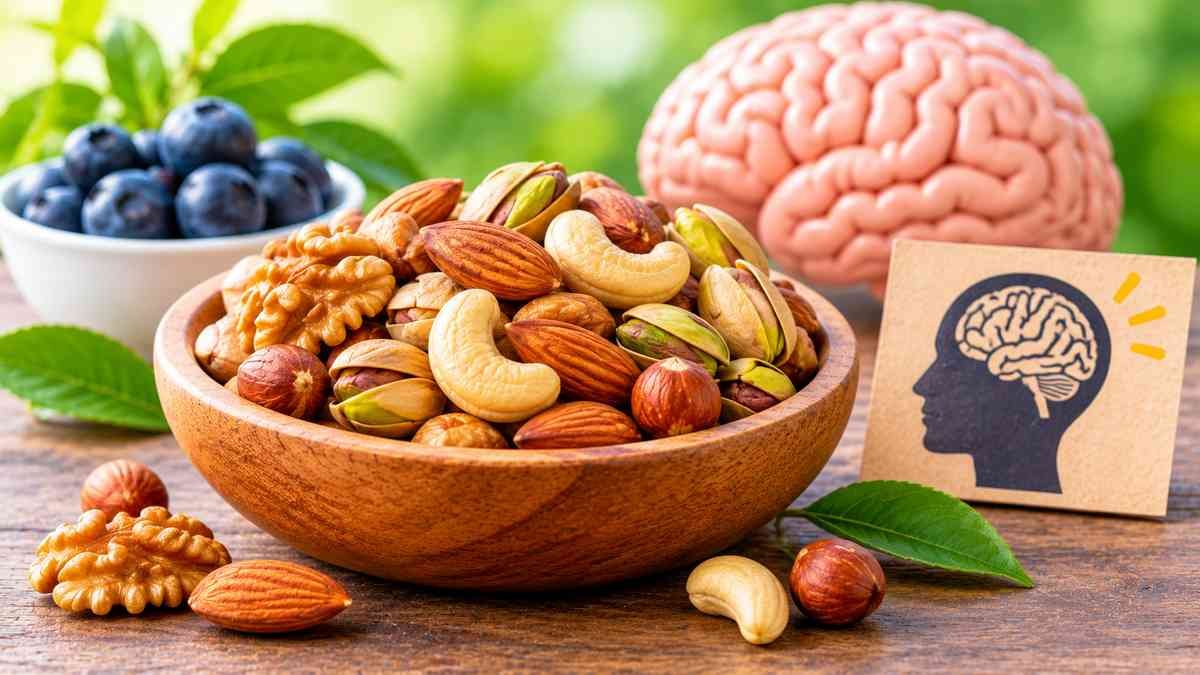

Your daily food choices can influence more than your physical health. Nutrition also plays a role in supporting the brain, which relies on a steady supply of energy and essential nutrients to function properly. Nuts are especially interesting because they contain unsaturated fats, vitamin E, magnesium, and plant compounds that researchers are studying for their possible role in cognitive health.
So can eating walnuts, almonds, or pistachios actually improve memory or protect against age-related cognitive decline? Research offers some encouraging clues, mostly from observational studies and from broader dietary patterns that include nuts. Results from clinical trials, however, are mixed, and no study has shown that nuts alone prevent memory loss or dementia.
This guide looks at what scientists have found about nuts and brain health, which nutrients may matter, and where the evidence is still thin. You will also find practical serving guidance and ways to add nuts to a balanced diet. The goal is to help you make informed choices without expecting miracles from any single food.
How Nuts May Support Brain Health
Researchers study nuts for brain health because of what they contain. These nutrients offer a plausible biological connection to cognitive aging. A plausible connection is not the same as proven benefit, though, so each idea below comes with that caveat.
Healthy Fats and Brain Function
The brain contains a large share of fat, and dietary fats contribute to cell membrane structure and other normal body processes. Nuts are rich in monounsaturated and polyunsaturated fats. Our guide to healthy fats explains how these fit into a balanced diet.
Walnuts also provide alpha-linolenic acid (ALA), a plant-based omega-3 fatty acid. The NIH omega-3 fact sheet describes ALA as an essential fat that the body cannot make on its own. Eating omega-3-containing nuts does not automatically mean better memory or cognitive performance, and that link has not been established.
Antioxidants and Oxidative Stress
The brain uses a lot of oxygen, which makes it vulnerable to oxidative stress, a type of cell damage linked to unstable molecules called free radicals. Vitamin E acts as an antioxidant that helps protect cells from this kind of damage, as explained in the NIH vitamin E fact sheet. Nuts also contain polyphenols and other plant compounds with antioxidant activity.
Antioxidant activity seen in a laboratory does not always translate into proven benefits in people. For a broader look at this topic, see our guide to antioxidants and your health.
Inflammation and Overall Metabolic Health
Researchers are also looking at whether chronic inflammation and metabolic problems contribute to cognitive aging. Nuts provide unsaturated fats, fiber, and plant compounds, and nut-rich eating patterns have been studied for their effects on cardiovascular and metabolic risk factors that relate to brain health.
This does not mean nuts treat inflammation in the brain or any neurological condition. It means they may play a supporting role in an overall pattern that is good for the heart and blood vessels, which also supply the brain.
Best Nuts for Brain Health
The nuts below are discussed because of their nutrition and the research that exists. None has been proven to boost memory on its own. Think of this list as a guide to nutritional characteristics, not a ranking of brain boosters.
1. Walnuts: A Source of Plant-Based Omega-3 Fatty Acids
Walnuts are the nut most often studied for cognition. They contain ALA, polyphenols, and vitamin E. Their fatty acid profile makes them especially interesting to brain-health researchers.
Some observational studies link walnut intake with better cognitive scores. A systematic review of nut consumption and cognitive performance found that most walnut studies reported a positive association, but it also noted inconsistent evidence overall because studies differed in design, nut types, and outcomes. Randomized trials have been less consistent.
For more on this nut, see our guide to the benefits of eating walnuts every day.
2. Almonds: Vitamin E and Antioxidant Support
Almonds are a good source of vitamin E, and they also provide magnesium, fiber, and unsaturated fats. Vitamin E’s antioxidant role is relevant to cell health, which is one reason almonds appear in brain-health discussions.
Direct evidence that almonds improve memory or protect against Alzheimer’s disease is limited. They are best viewed as a nutritious snack that contributes to overall dietary quality. Learn more in our almond health benefits guide.
3. Pistachios: Nutrients for Overall Brain Function
Pistachios provide vitamin B6, copper, fiber, and unsaturated fats. According to the NIH vitamin B6 fact sheet, vitamin B6 is involved in making neurotransmitters, the chemical messengers used by nerve cells.
Direct human evidence that pistachios improve cognitive performance is limited. See our article on the health benefits of pistachios for more nutrition detail.
4. Hazelnuts: Vitamin E and Healthy Fats
Hazelnuts are rich in vitamin E and provide monounsaturated fats and several minerals. Their antioxidant content makes them an interesting food in nutrition research.
Nutrient content should not be confused with proven cognitive outcomes, and hazelnut-specific brain studies are scarce. You can read more in our guide to the health benefits of hazelnuts.
5. Brazil Nuts: Selenium and Antioxidant Enzymes
Brazil nuts are exceptionally rich in selenium, a mineral that supports antioxidant enzymes and contributes to normal thyroid and immune function. The NIH selenium fact sheet notes that a single Brazil nut can contain roughly 68 to 91 micrograms of selenium, and that eating too many can push you over the upper limit.
Too much selenium can be harmful, so Brazil nuts call for moderation. Selenium content also varies from nut to nut. Treat them as an occasional food, not a daily handful.
What Scientific Research Says About Nuts and Brain Health
This is the most important section of the article. Studies differ in strength, so the findings below are organized by study type instead of treating every result as equally convincing.
What Observational Studies Suggest
Some observational studies have linked regular nut intake with better cognitive performance in older adults. These studies track what people eat and how they score on cognitive tests, but they cannot show that nuts caused any difference.
A study published in Public Health Nutrition followed 3,632 US adults aged 65 and older. People who reported eating walnuts had higher cognitive scores at the start. However, walnut intake was not associated with changes in cognition over the four-year follow-up. The researchers also found that walnut eaters tended to have higher socioeconomic status, healthier habits, and higher intake of other nutrients, any of which could explain the difference. The study was funded by the California Walnut Commission.
What Randomized Controlled Trials Have Found
Randomized controlled trials (RCTs) are better at testing cause and effect. A 2024 systematic review and meta-analysis in Frontiers in Nutrition pooled five RCTs with a combined 928 adults. It did not find a statistically significant overall effect of nuts on cognitive function. The authors called for larger, better-designed trials.
This finding matters. It shows that the encouraging signals from observational research have not yet been confirmed in clinical trials.
What Research on Mixed Nuts Suggests
A 2023 randomized crossover trial in Clinical Nutrition gave 28 older adults 60 grams a day of mixed nuts (walnuts, pistachios, cashews, and hazelnuts) for 16 weeks. Compared with a no-nut period, brain blood flow was higher in several regions. Visuospatial and verbal memory scores improved, while executive function and processing speed did not change.
The results are interesting, but the study was small, short, and partly supported by a nut industry council, so larger independent trials are needed before drawing firm conclusions.
The Difference Between Association and Proof
- Observational studies identify relationships, but other factors such as education, exercise, overall diet, and income may explain them.
- Randomized controlled trials test whether an intervention causes an effect, but small trials may not apply to everyone.
- Differences between studies in nut types, serving sizes, duration, and cognitive tests make results hard to compare.
The takeaway is that nuts are nutritious foods worth including in a balanced diet, but their independent effect on memory and cognitive decline remains uncertain.
Nutrients in Nuts That Matter for the Brain
Several nutrients in nuts contribute to normal nervous system function. Getting them from a varied diet matters more than relying on any one food.
Vitamin E
Found in almonds and hazelnuts, vitamin E works as an antioxidant that helps protect cells from oxidative damage. It supports normal cell health, but taking high-dose supplements is a different matter and should be discussed with a healthcare professional.
Omega-3 Fatty Acids
Walnuts provide ALA, a plant-based omega-3 fat involved in cell membrane structure. The body can convert ALA into EPA and DHA, but conversion is limited. Walnuts do not provide the same omega-3 profile as oily fish. Our guides to omega-3 fatty acids and fatty fish explain the difference.
Magnesium
Almonds, cashews, and peanuts provide magnesium, which supports nerve transmission, muscle function, and many metabolic processes. The NIH magnesium fact sheet has more detail.
Vitamin B6
Pistachios and other nuts provide vitamin B6, which helps the body produce neurotransmitters and supports normal nervous system function.
Copper and Selenium
Copper contributes to normal nervous system function (NIH copper fact sheet), and selenium supports antioxidant enzymes. Brazil nuts are especially concentrated in selenium, so they need portion caution.
How Many Nuts Should You Eat for Brain Health?
A typical serving of nuts is about 1 ounce (28 grams), or a small handful. Calories and nutrients vary by nut, so check labels or USDA FoodData Central for specifics. Unsalted and unsweetened nuts are convenient everyday choices, and you can eat them at breakfast, as snacks, or in meals.
There is no scientifically established daily serving proven to improve memory or prevent cognitive decline. The research that exists uses different amounts and types of nuts. Mayo Clinic’s guidance on nuts and heart health describes a small handful as a reasonable portion within a healthy diet. Our guide on how many nuts to eat every day can help you plan.
Brazil nuts need special care because their selenium content is high and varies widely.
How to Add Nuts to a Brain-Healthy Diet
Easy Ways to Include Nuts in Your Diet
- Add walnuts to oatmeal or breakfast cereal.
- Sprinkle almonds over Greek yogurt.
- Mix pistachios with fresh fruit.
- Add chopped hazelnuts to salads.
- Spread natural peanut butter on whole-grain toast.
- Enjoy a small portion of mixed nuts as an afternoon snack.
If you are active, our guide to nuts for energy before and after exercise offers pairing ideas.
Combine Nuts With Other Nutrient-Rich Foods
Nuts work best as part of a balanced dietary pattern that also includes:
- Leafy green vegetables (see our leafy greens guide)
- Berries and other fruits
- Whole grains
- Beans and legumes
- Fish and other protein sources
- Healthy vegetable oils
The Mediterranean diet is one well-studied example of a pattern that includes nuts alongside these foods.
The strongest evidence here involves overall eating patterns, not nuts in isolation. A 2025 USDA Nutrition Evidence Systematic Review examined dietary patterns and risk of cognitive decline, mild cognitive impairment, dementia, and Alzheimer’s disease. It concluded, with evidence graded as moderate, that healthy dietary patterns are associated with lower risk. These patterns emphasize foods such as vegetables, fruits, legumes, nuts, fish, and unsaturated fats. Because this evidence comes from observational research on whole patterns, it cannot be credited to nuts alone.
For broader ideas, see our guide to the best foods for healthy aging.
Potential Risks and Considerations
Nut Allergies
Tree nuts and peanuts can cause allergic reactions, from itching and hives to anaphylaxis, which is a medical emergency. People with known allergies should avoid the relevant nuts. The FDA’s food allergy information explains that tree nuts and peanuts are among the major allergens that must be declared on packaged food labels.
Excessive Selenium From Brazil Nuts
Brazil nuts contain unusually high amounts of selenium, and the NIH sets a tolerable upper limit for adults at 400 micrograms per day from food and supplements combined. Regularly exceeding it can cause selenium toxicity. Avoid large daily servings of Brazil nuts.
Calories and Portion Sizes
Nuts are energy-dense, so large portions can add substantial calories. Measuring a serving helps, especially if you are managing your weight.
Avoid Unproven Brain-Health Claims
Nuts should not replace prescribed medication, medical treatment, or professional advice for memory problems or neurological conditions. If you or a loved one notices changes in memory, thinking, or daily functioning, talk with a healthcare professional.
Frequently Asked Questions
Which nuts are best for brain health?
Walnuts, almonds, pistachios, and hazelnuts provide nutrients associated with normal brain function. Walnuts are notable for ALA omega-3 fats, while almonds and hazelnuts provide vitamin E. No single nut has been proven to be the best.
Do walnuts improve memory?
Some observational studies link walnut consumption with better cognitive scores. However, clinical trial evidence has not consistently shown that walnuts improve memory (review).
Are almonds good for brain health?
Almonds provide vitamin E, magnesium, fiber, and unsaturated fats, which contribute to overall health. Direct evidence that almonds improve memory remains limited.
Can eating nuts prevent dementia?
There is currently not enough evidence to say that eating nuts alone prevents dementia or Alzheimer’s disease. Research on broader healthy dietary patterns is more encouraging, though it shows association and not proof (USDA review).
How many nuts should you eat daily for brain health?
A small handful, about 28 grams, is a common serving. There is no brain-health-specific amount supported by clinical research, so the right portion depends on your overall diet and calorie needs.
Are pistachios good for memory?
Pistachios contain nutrients such as vitamin B6 and copper that contribute to normal nervous system function. Direct evidence that pistachios improve memory is still limited.
Conclusion
Nuts are nutritious foods that contribute valuable fats, vitamins, minerals, and plant compounds to your diet. Walnuts provide plant-based omega-3 fats, almonds and hazelnuts offer vitamin E, and pistachios supply vitamin B6 and other minerals. Research on nuts and brain health continues, but there is not yet strong evidence that eating nuts alone prevents cognitive decline.
Observational studies are promising, while clinical trials remain mixed. Including a variety of nuts alongside fruits, vegetables, whole grains, and other nutrient-rich foods is a practical way to support overall health as you age.
Sources
- Moabedi M, et al. The effect of consuming nuts on cognitive function: a systematic review and meta-analysis of randomized clinical trials. Frontiers in Nutrition. 2024
- Nijssen KMR, et al. Longer-term mixed nut consumption improves brain vascular function and memory: a randomized, controlled crossover trial in older adults. Clinical Nutrition. 2023
- Bishop NJ, Zuniga KE. Investigating walnut consumption and cognitive trajectories in a representative sample of older US adults. Public Health Nutrition. 2021
- Theodore LE, et al. Nut Consumption for Cognitive Performance: A Systematic Review. Advances in Nutrition. 2021
- USDA Nutrition Evidence Systematic Review: Dietary Patterns and Risk of Cognitive Decline, Dementia, Alzheimer’s Disease, and Mild Cognitive Impairment
- NIH Office of Dietary Supplements: Selenium fact sheet for consumers
- NIH Office of Dietary Supplements: Vitamin E
- NIH Office of Dietary Supplements: Omega-3 Fatty Acids
- NIH Office of Dietary Supplements: Magnesium
- NIH Office of Dietary Supplements: Vitamin B6
- NIH Office of Dietary Supplements: Copper
- Mayo Clinic: Nuts and your heart
- USDA FoodData Central
- FDA: Food Allergies
Medical Disclaimer: This article is for general educational purposes only and is not a substitute for professional medical advice, diagnosis, or treatment. Eating nuts has not been proven to prevent, treat, or reverse memory loss, dementia, or any neurological condition. If you have concerns about memory, thinking, or mood, or if you have a food allergy or a medical condition, talk with a doctor or registered dietitian before changing your diet.
1 thought on “Best Nuts for Brain Health: Benefits, Nutrients & Research”
Comments are closed.