
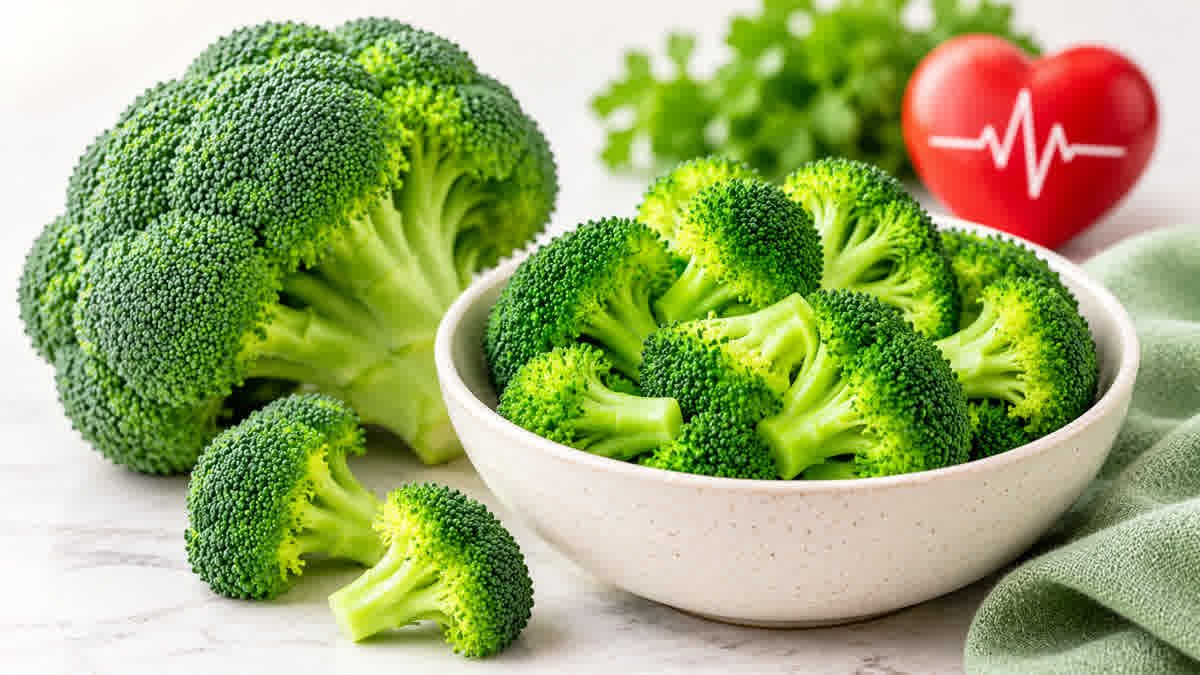

Can eating broccoli help lower high cholesterol? Broccoli is a nutritious vegetable that fits well into a heart-healthy diet, and it is a smart choice for people managing their cholesterol. It provides fiber, vitamins, minerals, and plant compounds, and it is naturally low in saturated fat. However, ordinary broccoli is not a proven standalone treatment for high cholesterol.
Cholesterol management matters because elevated LDL cholesterol, often called bad cholesterol, is a recognized risk factor for heart disease. Broccoli’s fiber and plant compounds are relevant to cholesterol research, but its direct LDL-lowering effect has not been firmly established for ordinary varieties. Lasting results depend on your overall eating pattern, physical activity, individual risk factors, and medical treatment when needed.
This guide explains what broccoli offers, what the research says about broccoli and LDL cholesterol, and how to prepare and pair it in everyday meals. The information is general and educational, not individualized medical advice. For more on this vegetable, see our overview of the health benefits of broccoli.
Is Broccoli Good for High Cholesterol?
Yes, broccoli is a good choice for people managing high cholesterol. It provides fiber and important nutrients and fits into a heart-healthy eating pattern. However, it should not be considered a proven standalone treatment for high cholesterol.
Its value comes from several characteristics:
- It provides dietary fiber.
- It contains vitamin C, vitamin K, and folate.
- It is naturally low in saturated fat.
- It can replace less nutritious side dishes or accompany meals made with healthier fats.
- It adds to the variety of vegetables recommended in heart-healthy dietary patterns.
Not all fiber affects cholesterol equally. Soluble fiber is the type most relevant because it helps reduce cholesterol absorption in the digestive tract, according to the National Heart, Lung, and Blood Institute (NHLBI). Broccoli contains some soluble fiber, but it is not as concentrated a source as oats, beans, or certain fruits.
For that reason, focus on the overall quality of your diet rather than expecting one vegetable to produce a large change in your cholesterol levels.
How Broccoli May Support Healthy Cholesterol Levels
Several features explain why broccoli is often recommended as part of a cholesterol-conscious diet. None of them make it a replacement for established treatment.
Broccoli Provides Dietary Fiber
Broccoli contains both soluble and insoluble fiber. Soluble fiber is especially relevant to cholesterol management because it can help reduce cholesterol absorption. Insoluble fiber supports normal bowel function.
The amount of soluble fiber in a typical serving of broccoli is fairly modest. The NHLBI’s Therapeutic Lifestyle Changes (TLC) program emphasizes soluble fiber as one component of lowering LDL cholesterol, along with reducing saturated fat and adding plant stanols and sterols. Broccoli alone does not supply enough soluble fiber to produce a clinically meaningful LDL reduction.
Broccoli Contains Plant Compounds
Broccoli and other cruciferous vegetables contain glucosinolates. The body can convert these into related compounds, including sulforaphane, which are a focus of nutrition research. Our guide to cruciferous vegetables explains this family of foods in more detail.
Research interest in these compounds does not automatically mean that ordinary portions of broccoli will lower cholesterol in a predictable way. The evidence is still developing.
Broccoli Can Help Improve Overall Diet Quality
Broccoli can anchor a dietary pattern rich in vegetables, whole grains, legumes, nuts, and other minimally processed foods. It is especially useful when it replaces side dishes high in saturated fat or accompanies meals built around unsaturated fats. If you want more ideas, see our guide on how to eat more vegetables.
Broccoli Is Naturally Low in Saturated Fat
Replacing foods rich in saturated fat with foods lower in saturated fat is an established strategy for improving LDL cholesterol. Broccoli does not need to lower LDL on its own to be a useful part of that approach.
The key takeaway is that broccoli supports a heart-healthy dietary pattern, but its contribution should be considered alongside other foods and lifestyle habits.
Nutritional Benefits of Broccoli for Heart Health
Broccoli is valuable beyond any link to cholesterol. The table below lists approximate nutrients in 1 cup (about 91 grams) of chopped raw broccoli, based on USDA FoodData Central. Cooking changes some values, so check the specific entry you use.
| Nutrient or characteristic | Approximate amount (1 cup raw) | Relevance to a balanced diet |
|---|---|---|
| Dietary fiber | 2.4 g | Supports normal bowel function |
| Vitamin C | 81 mg | Supports normal immune function and collagen formation |
| Vitamin K | 92 mcg | Supports normal blood clotting and bone health |
| Folate | 57 mcg | Supports DNA synthesis and normal cell division |
| Saturated fat | Less than 0.1 g | Makes broccoli useful in heart-conscious meals |
Vitamin C
Vitamin C supports normal immune function, collagen formation, and antioxidant activity, according to the NIH Office of Dietary Supplements. Getting it from broccoli has not been shown to directly lower LDL cholesterol or prevent cardiovascular disease.
Vitamin K
Vitamin K plays a role in normal blood clotting and bone health, as described in the NIH vitamin K fact sheet. If you take warfarin, keep your vitamin K intake fairly consistent from day to day. Talk with your prescribing clinician rather than making abrupt dietary changes.
Folate
Folate is needed for DNA synthesis and normal cell division. The NIH folate fact sheet explains its functions in more detail. Folate contributes to broccoli’s overall nutritional value, but it is not a cholesterol treatment.
Fiber and Other Plant Nutrients
Broccoli is also a source of fiber and naturally occurring plant compounds. None of these individual nutrients should be viewed as a treatment for high cholesterol. They matter because they make broccoli a nutrient-dense food. To compare options, see our list of the best vegetables for heart health.
Can Broccoli Lower LDL Cholesterol? What Research Says
This is the most important question, and the honest answer is that it depends on the type of broccoli. The research is promising but limited.
What Human Studies Have Found
A 2015 study in Molecular Nutrition & Food Research reported on two double-blind, randomized trials with a total of 130 volunteers. Participants ate about 400 grams of either standard broccoli or a high-glucoraphanin variety each week for 12 weeks. Participants were adults with mild to moderate cardiovascular risk, and the broccoli was blanched, frozen, and then steamed.
The researchers found that LDL cholesterol was significantly lower in the high-glucoraphanin groups. Changes in the standard broccoli groups were small and not statistically significant. The authors concluded that diets rich in high-glucoraphanin broccoli reduced LDL cholesterol.
Why the Findings Need Context
These results are interesting, but several points limit how far they can be applied:
- The study tested a specific broccoli variety bred to contain more glucoraphanin.
- The results do not guarantee a cholesterol reduction for every person.
- The study does not prove that broccoli alone can adequately treat high cholesterol.
- More evidence is needed on different varieties, serving sizes, and dietary patterns.
For these reasons, no one should expect a specific percentage reduction from adding broccoli to their meals.
What Readers Should Take Away
Broccoli is a sensible addition to a heart-healthy diet. The strongest practical approach is still to follow established cholesterol-management recommendations. These include reducing saturated fat, eating more fiber-rich foods, choosing unsaturated fats, and eating a variety of vegetables, whole grains, legumes, and nuts.
Research into broccoli is promising, but the evidence does not justify calling ordinary broccoli a reliable or independent cholesterol-lowering treatment. Our overview of high cholesterol covers causes, testing, and treatment in more depth.
How Much Broccoli Should You Eat for Cholesterol?
There is no universally established amount of ordinary broccoli that reliably lowers cholesterol. Regular inclusion in a varied diet is more realistic than eating unusually large portions in hopes of faster results.
Start With a Practical Serving
A familiar serving is about half a cup to one cup of cooked broccoli, depending on appetite and individual dietary needs. This is a practical serving suggestion, not a clinically established cholesterol-lowering dose. For perspective, the 2015 trials used roughly 400 grams per week of a specific variety.
Focus on Consistency and Variety
Rotate broccoli with other vegetables, and add foods that provide more soluble fiber, such as oats, beans, lentils, and some fruits. Increase fiber gradually to reduce the chance of gas or bloating. Our article on eating broccoli every day covers daily intake in more detail.
Avoid the Single-Food Approach
Eating broccoli every day does not guarantee lower LDL cholesterol. Your results depend on your overall diet, genetics, health conditions, medications, and other lifestyle factors.
Best Ways to Prepare Broccoli for Heart Health
The goal is to make broccoli an enjoyable part of a sustainable eating pattern. No single cooking method has been proven to lower cholesterol more effectively than another.
| Preparation method | Practical consideration |
|---|---|
| Steamed | Requires little or no added fat |
| Roasted | Can be prepared with a modest amount of unsaturated oil |
| Boiled | Simple to prepare; some water-soluble nutrients may enter the cooking water |
| Raw | Convenient for salads and snacks when properly washed |
Steamed Broccoli
Steaming is a practical method that needs little added fat. Season it with herbs, spices, lemon, or a small amount of unsaturated oil.
Roasted Broccoli
Roasting adds flavor and variety. Use a moderate amount of olive or another unsaturated oil instead of butter or heavy cheese sauces. See our guide to olive oil benefits for more.
Boiled Broccoli
Boiling is another reasonable option. Some water-soluble nutrients may enter the cooking water, so using that water in soups can help retain some of them.
Raw Broccoli
Raw broccoli can fit into a healthy diet when it is washed and prepared safely. Choose based on taste, digestion, and convenience. For a closer look, read our comparison of raw vs. cooked vegetables.
Broccoli vs. Other Vegetables for High Cholesterol
Broccoli is one of many vegetables for high cholesterol that can contribute to a heart-healthy diet. There is not enough comparative evidence to rank them by cholesterol-lowering ability, so variety is the better goal.
| Food | Relevant nutritional characteristic |
|---|---|
| Broccoli | Provides fiber and a range of vitamins and plant compounds |
| Brussels sprouts | Provide fiber, including some soluble fiber |
| Carrots | Supply fiber and beta-carotene |
| Spinach | Contributes folate and other nutrients |
| Green peas | Provide fiber and plant protein |
| Leafy greens | Add variety and nutrients to a balanced diet |
Foods such as oats, beans, lentils, and certain fruits can be especially useful for increasing soluble fiber intake. You can explore more in our guides to leafy greens and legumes.
Foods to Eat With Broccoli for Better Cholesterol Management
Broccoli works best as part of a complete meal. These pairings add soluble fiber and healthier fats.
Whole Grains
Pair broccoli with oats at breakfast or whole grains such as brown rice at lunch or dinner. Whole grains add fiber and fit a heart-conscious pattern.
Beans and Lentils
Beans, lentils, and chickpeas are useful sources of fiber and plant protein. They also contribute soluble fiber, which is particularly relevant to cholesterol management.
Nuts and Seeds
Nuts and seeds provide unsaturated fats and other nutrients. Add them in portions that suit your energy needs. Our guide to the best nuts for heart health can help you choose.
Unsaturated Oils
Use unsaturated oils in place of fats high in saturated fat. For example, roast broccoli with a modest amount of olive oil and serve it with beans and brown rice.
A simple meal idea: Combine steamed broccoli, cooked lentils, brown rice, and a small amount of olive oil with herbs. This is a balanced meal, not a special recipe proven to lower cholesterol on its own.
Other Ways to Manage High Cholesterol
Several broader measures matter more than any single food.
Reduce Saturated Fat
Limiting foods high in saturated fat and replacing them with foods that contain unsaturated fats can help improve LDL cholesterol. The NHLBI’s TLC program highlights this as a first step.
Increase Soluble Fiber
Include oats, beans, lentils, and suitable fruits alongside vegetables like broccoli. See our list of high-fiber foods for digestive health for ideas.
Stay Physically Active
Regular physical activity supports cardiovascular health and can improve aspects of your blood lipid profile.
Monitor Your Cholesterol Levels
High cholesterol often has no noticeable symptoms, so a blood test is needed to assess it. Follow up with a healthcare professional to understand your results and overall cardiovascular risk. Our article on LDL vs. HDL cholesterol explains the numbers.
Follow Medical Advice
Dietary changes are not enough for some people. If you have been prescribed cholesterol-lowering medication, do not stop or change it because you are eating more broccoli. The NHLBI recommends combining dietary changes with other lifestyle measures and medical care when necessary. The Mayo Clinic also offers practical food guidance.
Frequently Asked Questions About Broccoli and High Cholesterol
Is broccoli good for high cholesterol?
Yes. Broccoli is a nutritious, low-saturated-fat vegetable that fits into a heart-healthy diet. It provides fiber and other nutrients, but it should not be relied on as a standalone treatment for high cholesterol.
Can broccoli lower LDL cholesterol?
Some research has studied broccoli varieties rich in glucoraphanin and reported favorable LDL cholesterol changes (study). These results do not establish that ordinary broccoli reliably lowers LDL cholesterol in everyone.
How much broccoli should I eat to lower cholesterol?
There is no established therapeutic serving of ordinary broccoli. A practical serving can be included regularly as part of a varied diet rich in vegetables, whole grains, legumes, and other fiber-containing foods.
Is raw or cooked broccoli better for cholesterol?
Both can fit into a heart-healthy diet. Cooking affects texture and some nutrient levels, but no established evidence shows that raw broccoli is consistently better than cooked broccoli for lowering cholesterol.
Is broccoli high in fiber?
Broccoli contains dietary fiber, including a smaller amount of soluble fiber. Foods such as oats and beans typically provide more soluble fiber per serving and are useful additions to a cholesterol-conscious diet (NHLBI).
Can eating broccoli replace cholesterol medication?
No. Broccoli is a nutritious food, not a substitute for prescribed treatment. Anyone taking cholesterol medication should talk with their healthcare professional before changing their treatment.
What is the healthiest way to cook broccoli?
Steaming, boiling, and roasting are all reasonable options. Using modest amounts of unsaturated oil and avoiding excessive butter or heavy sauces helps keep the meal aligned with heart-healthy recommendations.
Conclusion
Broccoli is a valuable addition to a balanced diet for people managing high cholesterol. It provides fiber, vitamins, and plant compounds while containing little saturated fat. The evidence does not establish ordinary broccoli as a standalone treatment for elevated LDL cholesterol.
Eat a variety of vegetables, include foods rich in soluble fiber, replace saturated fats with unsaturated fats, and follow appropriate medical advice. Broccoli can support a heart-healthy diet, but lasting cholesterol management depends on your overall eating pattern and other lifestyle and medical measures.
For more guidance, browse our heart-healthy foods guide.
Sources
- National Heart, Lung, and Blood Institute. Therapeutic Lifestyle Changes (TLC) to lower cholesterol.
- Armah CN, et al. Diet rich in high glucoraphanin broccoli reduces plasma LDL cholesterol: evidence from randomised controlled trials. Molecular Nutrition & Food Research. 2015;59(5):918-926.
- U.S. Department of Agriculture. FoodData Central.
- National Institutes of Health, Office of Dietary Supplements. Vitamin C fact sheet.
- National Institutes of Health, Office of Dietary Supplements. Vitamin K fact sheet.
- National Institutes of Health, Office of Dietary Supplements. Folate fact sheet.
- Mayo Clinic. Top foods to improve your cholesterol.
Medical Disclaimer: This article is for informational and educational purposes only and is not a substitute for professional medical advice, diagnosis, or treatment. Consult a qualified healthcare professional about your cholesterol levels and any questions about your treatment. Do not stop or change prescribed medication because of anything you read here.