
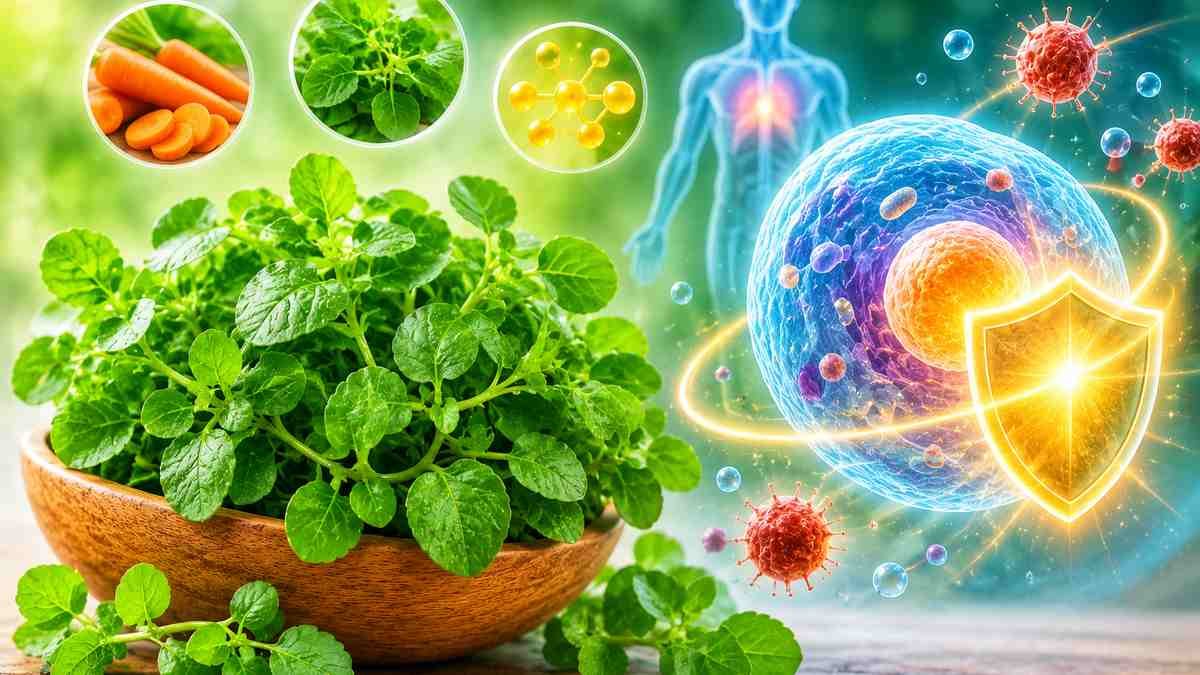

Every cell in your body produces reactive molecules as part of normal metabolism. These molecules, called reactive oxygen species (ROS), play useful roles in cell signaling and immune defense. When they build up beyond what the body can control, the result is oxidative stress, which can affect proteins, fats, and DNA.
Diet is one way to support the body’s natural defenses. Watercress, a peppery cruciferous vegetable, contains flavonoids, carotenoids, vitamin C, and sulfur-containing compounds called glucosinolates. Researchers are interested in how these compounds may interact with a cellular defense system known as the Nrf2 pathway.
This guide explains oxidative stress in plain language, what watercress contains, and how its compounds may work in cells. We also review what human studies show so far. The evidence is promising but early, and watercress is a nutritious food, not a treatment for oxidative stress or chronic disease.
Understanding Oxidative Stress and Its Effects on Your Cells
What Is Oxidative Stress?
Reactive oxygen species are unstable, oxygen-containing molecules that cells make while turning food into energy. Your body also uses them to fight germs and to send signals between cells. ROS are not inherently harmful.
Problems arise when ROS outnumber the body’s antioxidant defenses, a state called oxidative stress. Antioxidants are substances that help keep this balance (called redox balance) by neutralizing reactive molecules or by supporting the body’s own protective enzymes. Learn more in our guide on what antioxidants are.
How Free Radicals Can Affect Cellular Structures
Excessive oxidative activity may affect several parts of the cell:
- Cell membranes: Lipid peroxidation can change membrane structure and function.
- Proteins: Oxidation can alter how proteins are shaped and how they work.
- DNA: Oxidative damage can affect genetic material.
- Mitochondria: Imbalance can interfere with normal cellular energy production.
Oxidative Stress and Inflammation
Oxidative stress and inflammation influence each other. Excess ROS can switch on inflammatory signals, and inflammation can in turn generate more ROS. Both processes also occur in normal, healthy responses such as healing, so the goal is balance rather than elimination.
What Makes Watercress an Antioxidant-Rich Food?
A Nutrient-Dense Cruciferous Vegetable
Watercress (Nasturtium officinale) belongs to the Brassicaceae family, along with broccoli, cabbage, and kale. It has small, dark green leaves, a peppery taste, and very few calories, about 11 per 100 grams according to USDA FoodData Central. It also provides vitamin C, vitamin K, and carotenoids.
For a broader overview, see our guide to the health benefits of watercress and our article on why watercress is so nutrient-dense.
The Main Antioxidant Compounds in Watercress
A 2025 narrative review in Life describes watercress as rich in glucosinolates, isothiocyanates, flavonoids, vitamins, and minerals. Three groups of compounds are central to this article:
| Compound group | Examples | Potential biological role |
|---|---|---|
| Flavonoids | Quercetin, kaempferol | Antioxidant and cell-signaling effects |
| Carotenoids | Beta-carotene, lutein, zeaxanthin | Antioxidant activity |
| Glucosinolates | Gluconasturtiin | Precursors of bioactive isothiocyanates |
Watercress also contains phenolic acids and vitamin C, which add to its antioxidant profile.
Why Multiple Antioxidants Matter
Different compounds act in different ways. Some, like vitamin C, dissolve in water. Others, like carotenoids, dissolve in fat and work within cell membranes. Still others, like isothiocyanates, may switch on the body’s own defense genes. This variety is one reason researchers study whole foods rather than single nutrients, although it is not yet clear how much each compound contributes in people.
The Nrf2 Pathway: How Watercress May Support Cellular Antioxidant Defenses
What Is the Nrf2 Pathway?
Nrf2 (nuclear factor erythroid 2-related factor 2) is a protein that acts as a master switch for cellular defense. Think of it as a coordinator that helps cells build up their own protective systems when needed.
Here is how it generally works:
- Under normal conditions, a partner protein called Keap1 keeps Nrf2 in check and marks it for breakdown.
- When cells encounter certain oxidative or electrophilic signals, Nrf2 is stabilized and moves into the cell nucleus.
- There it binds to DNA sequences called antioxidant response elements and turns on protective genes.
Which Antioxidant Enzymes Does Nrf2 Help Regulate?
Nrf2 influences many protective proteins, including:
- Heme oxygenase-1 (HO-1): Involved in cellular stress responses.
- NQO1 (NAD(P)H quinone dehydrogenase 1): Helps protect cells from certain forms of oxidative stress.
- Glutathione S-transferases (GSTs): Enzymes that help process reactive compounds.
- Glutamate-cysteine ligase (GCL): Supports the production of glutathione.
Glutathione is one of the body’s major internally made antioxidants. Supporting its production is one way cells defend themselves.
How Watercress Compounds May Activate Nrf2
The link between watercress and Nrf2 runs through phenethyl isothiocyanate (PEITC). The process is thought to work like this:
- Watercress contains gluconasturtiin, its main glucosinolate.
- When the plant is chopped, crushed, or chewed, the enzyme myrosinase can come into contact with glucosinolates.
- This can produce isothiocyanates, including PEITC.
- PEITC can interact with cell-signaling mechanisms that control Nrf2.
- Nrf2 activation may raise the production of certain protective genes.
A 2022 review of glucosinolate-derived isothiocyanates discusses these cellular effects. How much PEITC forms depends on preparation, enzyme activity, and individual biology, so the amount you absorb from a salad can vary.
Why Nrf2 Activation Matters for Cellular Health
In principle, Nrf2 signaling helps cells maintain redox balance, boost their own antioxidant defenses, and respond to environmental and metabolic stress. It is a protective pathway, not a guarantee against damage or disease. Its effects depend on context, and more activation is not always better. Most of what we know about PEITC and Nrf2 comes from laboratory research, not from studies of people eating watercress.
Flavonoids in Watercress and Their Antioxidant Effects
What Are Flavonoids?
Flavonoids are plant compounds (polyphenols) found in vegetables, fruits, herbs, and tea. In experiments, they can interact with reactive molecules, influence antioxidant signaling, and affect enzymes involved in oxidation and inflammation.
Quercetin and Kaempferol
The Life review lists quercetin, rutin, and kaempferol among the flavonoids in watercress.
- Quercetin: Has shown antioxidant activity in experimental studies and has been explored for effects on inflammatory and Nrf2-related pathways.
- Kaempferol: A flavonol with antioxidant properties that has been investigated for effects on cellular stress responses and inflammatory signaling.
The amounts that reach your cells after eating watercress are much smaller and more variable than those used in laboratory studies.
How Flavonoids May Influence NF-κB
NF-κB is a signaling pathway that helps control inflammatory responses, including the production of messengers such as TNF-α, IL-6, and IL-1β. In experimental models, some flavonoids have influenced NF-κB activity. That does not mean eating watercress suppresses these markers in every person.
Carotenoids in Watercress and Protection Against Oxidative Damage
Beta-Carotene
Beta-carotene can help neutralize certain reactive molecules, and the body converts some of it into vitamin A, which is needed for normal cell function and vision. It is one of the main carotenoids in watercress.
Lutein and Zeaxanthin
These two carotenoids are best known for their role in eye health, but they also have antioxidant properties. Researchers are studying whether they help protect cell structures from oxidative damage and influence certain inflammatory processes. USDA data report lutein and zeaxanthin together in watercress.
How Carotenoids Complement Other Antioxidants
Carotenoids dissolve in fats and are found in cell membranes, so they work differently from water-soluble antioxidants such as vitamin C. Together with flavonoids, they give watercress a broad antioxidant profile. Eating carotenoids from watercress has not been proven to prevent diseases linked to oxidative stress. See our list of antioxidant-rich foods for other sources.
Glucosinolates and Isothiocyanates: Watercress’s Unique Defense Compounds
What Are Glucosinolates?
Glucosinolates are sulfur-containing compounds typical of cruciferous vegetables. Plants use them as part of their chemical defense. They also give these vegetables their sharp, peppery taste. When tissue is cut or chewed, myrosinase helps convert glucosinolates into other active compounds. Our guide to cruciferous vegetables explains more.
Gluconasturtiin and Phenethyl Isothiocyanate (PEITC)
Gluconasturtiin is the predominant glucosinolate in watercress, and its breakdown product is PEITC. A proof-of-concept study describes it this way, noting that anti-inflammatory effects had mostly been shown in cell and animal models. PEITC has attracted attention in cellular and molecular research for its influence on Nrf2-related defense pathways.
How Isothiocyanates May Support Cellular Protection
Researchers have proposed several mechanisms:
- Modulation of Nrf2 signaling
- Higher expression of selected cellular defense enzymes
- Effects on oxidative stress responses
- Interaction with inflammatory signaling
These are experimental findings. They should not be confused with established human health outcomes.
Does Preparation Affect Glucosinolate Activity?
A 2016 study in Food Chemistry tested five cooking methods. Boiling significantly decreased phenolic content, antioxidant activity, and recoverable glucosinolates, though it increased measured carotenoids. Microwaving and steaming kept most phytochemicals. The authors suggested boiling be avoided to maximize phytochemical intake. These results apply to the compounds measured and do not make one method best for every nutrient.
Watercress, Inflammation, and Cellular Health
The Connection Between Oxidative Stress and Inflammation
Excess ROS can trigger inflammatory signaling, and inflammation can create more ROS. This cycle is part of normal defense, but when it is prolonged, it may contribute to long-term health problems. Maintaining a balanced response is the aim. See our guide to anti-inflammatory foods.
How Watercress Compounds May Influence Inflammatory Pathways
In experimental research, several watercress compounds may play a role:
- Flavonoids, through NF-κB and other signaling pathways
- Carotenoids, through antioxidant and inflammatory regulation
- Isothiocyanates, through Nrf2-related defense mechanisms
Researchers measure markers such as C-reactive protein (CRP), TNF-α, and IL-6 in human studies. Changes in these laboratory markers do not prove that watercress prevents chronic inflammatory disease.
What Does Scientific Research Say About Watercress and Oxidative Stress?
Evidence From Laboratory and Animal Studies
Experimental studies show antioxidant activity of watercress extracts, possible Nrf2 modulation, effects on oxidative stress markers, and anti-inflammatory mechanisms. Laboratory concentrations and animal models often do not reflect normal dietary intake in humans.
Evidence From Human Clinical Trials
A 2025 systematic review of randomized controlled trials in Food Science & Nutrition included seven trials and 302 participants with an average follow-up of about 39 days. Doses ranged from 85 grams per day to 750 mg/kg per day of an extract. The authors reported improvement in most antioxidant and anti-inflammatory markers, including measures such as protein carbonyls, malondialdehyde, and catalase, and a strong safety profile. They also noted short follow-up and differences in populations, formulations, and doses.
Earlier research found that eight weeks of daily watercress in healthy adults reduced DNA damage in white blood cells and changed blood antioxidant status, as described in a 2007 trial in the American Journal of Clinical Nutrition. A small 2026 Antioxidants pilot trial of dried watercress capsules also tracked oxidative stress markers, reporting some within-group improvements. The authors called for larger trials.
Results are not uniformly one-directional. In the proof-of-concept study mentioned above, 85 grams of fresh watercress before intense exercise led to a stronger pro-inflammatory response during exercise and a stronger anti-inflammatory counter-response afterward. Its authors said the clinical meaning needs confirmation.
What Remains Uncertain?
- Long-term human evidence is limited.
- Results from supplements and extracts cannot automatically be applied to ordinary servings of food.
- The best intake has not been established.
- Improvements in biomarkers do not prove prevention of chronic disease.
| Question | Current evidence |
|---|---|
| Does watercress contain antioxidant compounds? | Established |
| Can PEITC influence Nrf2 in laboratory studies? | Supported by experimental research |
| Does watercress change oxidative stress markers in people? | Promising but short-term and varied |
| Does watercress prevent cellular damage or chronic disease? | Not established |
How to Include Watercress in Your Diet
Watercress is easy to add to meals:
- Add fresh leaves to salads.
- Layer it in sandwiches and wraps.
- Stir it into vegetable soups near the end of cooking.
- Pair it with tomatoes, legumes, and other antioxidant-rich vegetables.
- Serve lightly steamed watercress as a side dish.
Chopping or chewing releases more of its glucosinolate-derived compounds. Gentle cooking such as steaming preserves more phytochemicals than boiling. Variety matters more than relying on one vegetable. Read about raw vs. cooked vegetables for more tips.
Safety and Precautions
- Wash thoroughly. Rinse fresh watercress under clean running water. Our guide on how to wash and store vegetables can help.
- Avoid wild-harvested watercress from unknown water. It can carry parasites such as liver flukes, as described by the CDC.
- Mind vitamin K if you take warfarin. Keep intake steady and talk with your healthcare professional, as advised by the NIH Office of Dietary Supplements.
- Be cautious with allergies. Stop eating it and get care if you notice signs of a reaction.
- Do not equate food with supplements. Concentrated extracts are different from ordinary servings, and high-dose antioxidant supplements should be taken only with professional guidance.
Watercress is a food, not a treatment for oxidative stress, inflammation, or chronic disease.
Frequently Asked Questions About Watercress and Oxidative Stress
Is Watercress Good for Oxidative Stress?
Watercress contains antioxidant compounds, and short human trials report improvements in some oxidative stress markers. However, it has not been shown to prevent damage or disease. It is best viewed as one part of an antioxidant-rich diet. See the systematic review.
What Antioxidants Are Found in Watercress?
Watercress contains vitamin C, carotenoids such as beta-carotene and lutein, flavonoids such as quercetin and kaempferol, phenolic acids, and glucosinolates. Glucosinolates are not antioxidants themselves but can form isothiocyanates that may influence antioxidant defenses.
How Does Watercress Activate the Nrf2 Pathway?
Watercress contains gluconasturtiin, which can form PEITC when the plant is chopped or chewed. In laboratory research, PEITC has activated Nrf2 signaling. Whether ordinary servings do this meaningfully in people is not established.
What Is PEITC in Watercress?
PEITC (phenethyl isothiocyanate) is a compound formed from gluconasturtiin by the enzyme myrosinase. It gives watercress part of its peppery flavor and is studied for effects on cellular defense pathways. Most evidence comes from experimental studies.
Does Watercress Contain Flavonoids?
Yes. Reviews list quercetin, rutin, and kaempferol among watercress flavonoids. Flavonoids have antioxidant activity in experiments, but the effect of eating watercress on human health outcomes is still unclear.
How Do Carotenoids Protect Cells From Oxidative Damage?
Carotenoids dissolve in fat and sit within cell membranes, where they can neutralize certain reactive molecules. Beta-carotene is also a source of vitamin A. Their ability to prevent disease through food has not been proven.
Can Watercress Help Reduce Inflammation?
Some short trials show changes in inflammatory markers after watercress, but results vary by study, dose, and form. A proof-of-concept study found a mixed pattern after exercise. Long-term effects on inflammation are unknown.
What Is the Difference Between Oxidative Stress and Inflammation?
Oxidative stress is an imbalance between reactive molecules and antioxidant defenses. Inflammation is the immune system’s response to injury or threat. The two are linked and can amplify each other.
Does Cooking Watercress Reduce Its Antioxidant Content?
It depends on the method. A 2016 study found boiling reduced phenolics, antioxidant activity, and glucosinolates, while steaming and microwaving preserved most compounds. Carotenoids behaved differently, rising with boiling.
Can Eating Watercress Every Day Support Cellular Health?
Most people can eat watercress regularly as part of a varied diet, and it contributes plant compounds linked to antioxidant defenses. There is no proven daily amount for cellular health. People on warfarin should keep vitamin K intake consistent.
Conclusion: Can Watercress Help Protect Your Cells?
Watercress contains flavonoids, carotenoids, and glucosinolates that may support the body’s antioxidant defenses and influence inflammatory signaling. PEITC, formed from gluconasturtiin, is especially interesting because of its effects on the Nrf2 pathway in laboratory research.
Early human studies are encouraging, but they are short and use different forms and doses, so long-term benefits remain uncertain. Including watercress in a varied, balanced diet is a practical way to enjoy its nutrients.
For related reading, see our guide on antioxidants and your health.
Sources
- Wen J, et al. Evaluating the Anti-Oxidant and Anti-Inflammatory Properties of Watercress Supplementation at Short-Term Follow-Up: A Systematic Review of Randomized Controlled Trials. Food Science & Nutrition, 2025
- Maluwa C, et al. Watercress (Nasturtium officinale) as a Functional Food for Non-Communicable Diseases Prevention and Management: A Narrative Review. Life, 2025
- Kamal RM, et al. Beneficial Health Effects of Glucosinolates-Derived Isothiocyanates on Cardiovascular and Neurodegenerative Diseases. Molecules, 2022
- Proof-of-concept study on watercress and inflammatory responses after exercise in healthy adults (PubMed Central)
- Gill CI, et al. Watercress supplementation in diet reduces lymphocyte DNA damage and alters blood antioxidant status in healthy adults. American Journal of Clinical Nutrition, 2007
- Kijkuokool P, et al. Efficacy of Watercress Consumption on Blood Pressure, Oxidative Stress Biomarkers, and Estimated Cardiovascular Risk in Thai Middle-Aged Adults: A Randomized Placebo-Controlled Pilot Study. Antioxidants, 2026
- Giallourou N, et al. Effects of domestic processing methods on the phytochemical content of watercress. Food Chemistry, 2016
- USDA FoodData Central: Watercress, raw
- NIH Office of Dietary Supplements: Vitamin K Fact Sheet for Health Professionals
- CDC: Fascioliasis
Medical Disclaimer: This article is for general educational purposes only and is not medical advice. It does not diagnose, treat, or prevent any condition, and it cannot replace guidance from a doctor, registered dietitian, or other qualified healthcare professional. Do not use watercress or any antioxidant supplement to replace prescribed treatment. Talk with your healthcare provider before making major changes to your diet or starting supplements, especially if you take medications such as warfarin, have a medical condition, are pregnant, or are breastfeeding.