
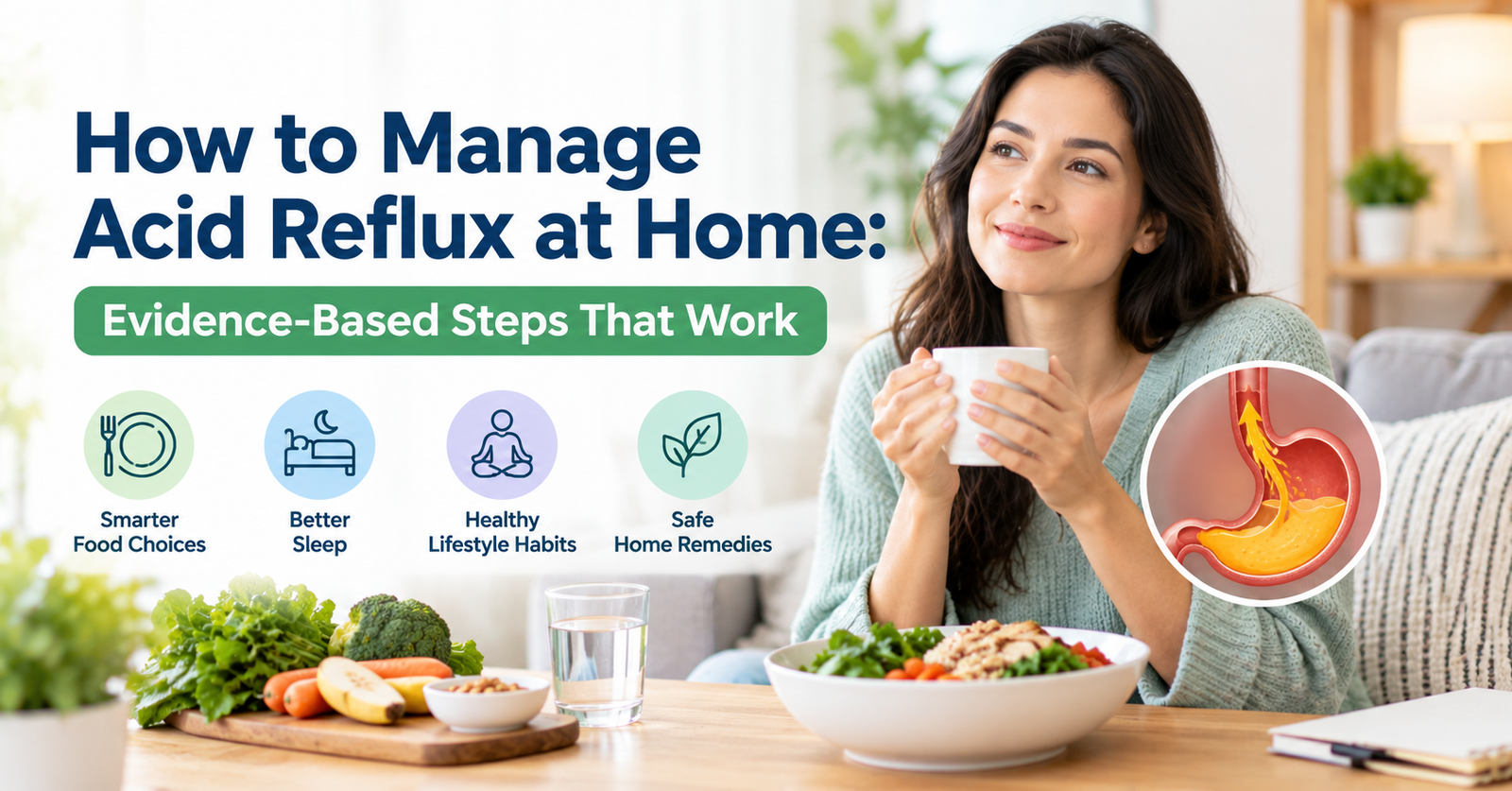

Acid reflux can turn a simple meal into hours of burning, bloating, and discomfort. If it keeps coming back, you probably want relief that does not depend on a daily trip to the pharmacy. The good news is that most people can learn how to manage acid reflux at home with a few practical, proven changes.
This guide covers the habits, foods, sleep adjustments, and over-the-counter options with the strongest evidence behind them. It also explains which popular remedies fall short and when you should see a doctor. Reflux ranks among the most common health issues adults face, so you are far from alone.
What Is Acid Reflux?
Acid reflux happens when stomach contents flow backward into the esophagus. The esophagus is the tube that carries food from your throat to your stomach. Stomach acid irritates this tube because its lining lacks the strong protection that the stomach wall has.
Most people have occasional reflux after a big meal. Doctors diagnose gastroesophageal reflux disease (GERD) when reflux happens more than twice a week for several weeks. They also use the term when reflux damages the esophagus or disrupts daily life.
Common Symptoms
Reflux affects people in different ways. Typical symptoms include:
- Heartburn: a burning feeling behind the breastbone, often after eating or when lying down
- Regurgitation: a sour or bitter taste as liquid rises into your throat or mouth
- Bloating and burping: a full, gassy feeling in the upper abdomen
- Throat symptoms: hoarseness, a dry cough, a sore throat, or a feeling of a lump in the throat
Reflux pain usually centers in the chest and upper abdomen. Other digestive conditions can cause pain in different spots. Our guide on what abdominal pain feels like can help you compare sensations. Reflux also overlaps with other common digestive problems, such as indigestion and gastritis.
Why Acid Reflux Happens
A ring of muscle called the lower esophageal sphincter (LES) works like a valve at the bottom of your esophagus. It opens to let food into your stomach. Then it closes to keep acid out.
Reflux happens when this valve relaxes at the wrong time or stays weak. Several factors raise your chances:
- Excess body weight, especially around the belly
- Pregnancy
- Smoking
- A hiatal hernia, where the top of the stomach pushes up through the diaphragm
- Large meals and lying down soon after eating
- Slow stomach emptying
- Certain medicines
Our article on acid reflux risk factors explains each one in more detail. Knowing your own risk factors helps you choose the changes most likely to work for you.
How to Manage Acid Reflux at Home: Start With How You Eat
Eating habits give you the fastest control over symptoms. Small changes at the table often bring relief within days.
Eat Smaller Meals
Large meals stretch your stomach and increase pressure on the LES. Smaller portions reduce that pressure. Try four or five modest meals instead of two or three big ones.
Slow Down
Fast eating leads to bigger bites and more swallowed air. Put your fork down between bites and chew thoroughly. Aim to spend about 20 minutes on each meal.
Stop Eating Two to Three Hours Before Bed
Lying down with a full stomach makes it easy for acid to travel upward. The American College of Gastroenterology (ACG) recommends avoiding meals within two to three hours of bedtime if you have nighttime reflux. Make dinner your last substantial meal. Skip the late-night snack.
Foods and Drinks: What to Limit and What to Try
Many people expect a long list of banned foods. The evidence looks more nuanced. Researchers have found that few foods trigger reflux in everyone. Your triggers may differ from your neighbor’s.
Common Trigger Foods
These items bother many people with reflux:
- Fried and fatty foods, which slow stomach emptying
- Chocolate
- Spicy dishes
- Citrus fruits and tomato-based sauces, which can irritate an inflamed esophagus
- Coffee and other caffeinated drinks
- Carbonated drinks
- Alcohol
- Peppermint and spearmint
Do not cut everything at once. Pick one or two likely suspects and remove them for two weeks. Then add them back one at a time and watch your symptoms.
Foods That May Help
Certain foods tend to sit well with reflux-prone stomachs:
- High-fiber foods: oatmeal, whole grains, sweet potatoes, and green vegetables
- Lean proteins: skinless chicken, fish, egg whites, and tofu
- Non-citrus fruits: bananas, melons, apples, and pears
- Healthy fats in small amounts: avocado, olive oil, and walnuts
Some early studies suggest a Mediterranean-style eating pattern may ease reflux symptoms. This pattern emphasizes vegetables, whole grains, fish, and olive oil. More research would strengthen this finding, but the diet supports overall health anyway.
Lifestyle Changes That Reduce Reflux
Your daily habits matter as much as your menu. These changes have some of the best research support.
Lose Excess Weight
Extra weight around the belly raises pressure inside the abdomen. That pressure pushes stomach contents upward. In a large study of women, weight loss reduced reflux symptoms, and weight gain increased them.
Even modest weight loss can help. If you plan to lose weight, choose steady, sustainable methods. Our overview of weight loss trends in 2026 can help you separate useful approaches from hype.
Quit Smoking
Smoking weakens the LES and reduces saliva. Saliva normally helps neutralize acid in your esophagus. Quitting may reduce your symptoms, and it protects your heart and lungs too.
Limit Alcohol
Alcohol relaxes the LES and can increase stomach acid. Beer, wine, and spirits can all trigger symptoms. Cut back and see whether your heartburn improves.
Wear Looser Clothing
Tight belts and waistbands squeeze your stomach. That squeeze can push acid upward. Choose comfortable clothing, especially after meals.
Stay Upright After Eating
Wait at least two to three hours before lying down. A gentle 10-to-15-minute walk after a meal is a good alternative. Avoid bending over, heavy lifting, and intense exercise right after eating.
Sleep Tips for Nighttime Reflux
Nighttime reflux disrupts sleep and can harm your esophagus. Acid stays in contact with the lining longer when you lie flat. A few adjustments can make a big difference.
Raise the Head of Your Bed
The ACG recommends raising the head of the bed for people with nighttime symptoms. Aim for a lift of about 6 to 8 inches (15 to 20 centimeters). You can place risers under the bed legs or use a foam wedge pillow.
Stacking regular pillows works poorly. It bends your waist and can increase pressure on your stomach. A wedge supports your whole upper body at a steady angle.
Sleep on Your Left Side
Research suggests that sleeping on your left side lowers acid exposure compared with sleeping on your right. The way your stomach and esophagus join explains part of this effect. If you wake up with heartburn, try switching sides.
Home Remedies: What Works and What Doesn’t
The internet offers endless reflux remedies. Some have modest support. Others have little proof and may cause harm. This table sorts the most popular options.
| Remedy | What the evidence shows | Practical tip |
|---|---|---|
| Sugar-free chewing gum | Small studies show it increases saliva and swallowing, which clears acid | Chew for 30 minutes after meals. Skip mint flavors if they bother you. |
| Ginger | Evidence for reflux is limited. It may help nausea and digestion. | Use small amounts. Large doses can trigger heartburn in some people. |
| Baking soda in water | Neutralizes acid quickly, but adds a lot of sodium and gas | Use rarely. Avoid it if you have high blood pressure or kidney disease. |
| Apple cider vinegar | No good evidence it helps reflux | Skip it. Its acidity may irritate your esophagus and wear down tooth enamel. |
| Aloe vera juice | Small studies show possible symptom relief | Choose products with aloin removed, since aloin can cause diarrhea. |
| Deglycyrrhizinated licorice (DGL) | Limited evidence | Avoid regular licorice. It can raise blood pressure and lower potassium. |
| Milk | May soothe briefly, but fat and protein can trigger more acid later | Do not rely on it for lasting relief. |
Ginger deserves a closer look because many people already keep it in the kitchen. It offers other digestive benefits, and you can read more in our article on whether ginger is good for health. For reflux specifically, treat it as an optional extra rather than a proven treatment.
Over-the-Counter Options for Flare-Ups
Sometimes lifestyle changes need backup. Several over-the-counter (OTC) medicines can help. Each works differently, so match the product to your symptoms.
| Type | Examples | How it helps | What to know |
|---|---|---|---|
| Antacids | Calcium carbonate, magnesium hydroxide, aluminum hydroxide | Neutralize acid within minutes | Best for occasional heartburn. Can cause constipation or diarrhea. |
| Alginates | Alginate-based liquids and chewables | Form a foam barrier on top of stomach contents | Helpful after meals and at bedtime. Some products contain sodium. |
| H2 blockers | Famotidine | Reduce acid production | Start working in about an hour and last up to 12 hours. Some people take them before trigger meals. |
| Proton pump inhibitors (PPIs) | Omeprazole, esomeprazole, lansoprazole | Block the cells that make acid | Best for frequent heartburn. Full effect takes one to four days. |
Use Medicines Safely
Read the label and follow the dose. Take OTC PPIs 30 to 60 minutes before your first meal of the day. The standard OTC course lasts 14 days, and the label advises repeating it no more often than every four months.
Antacids can change how your body absorbs some other medicines. Ask a pharmacist about timing if you take prescription drugs. Long-term PPI use has links to low vitamin B12, low magnesium, and other concerns. Talk with your doctor if you need any acid-reducing medicine for more than two weeks.
Manage Stress and Try Diaphragmatic Breathing
Stress does not directly cause reflux. It can make you more aware of symptoms, though. It can also push you toward habits that trigger reflux, such as late meals, alcohol, or smoking.
Diaphragmatic breathing offers a drug-free tool. Your diaphragm wraps around the lower esophagus and helps the LES do its job. Small trials found that breathing exercises reduced reflux symptoms. Here is a simple routine:
- Sit or lie down comfortably. Place one hand on your belly.
- Breathe in slowly through your nose for about four counts. Let your belly rise.
- Breathe out slowly through pursed lips for about six counts.
- Repeat for five to ten minutes, once or twice a day.
Check Your Medicines
Some medicines relax the LES or irritate the esophagus. Common examples include:
- Ibuprofen, aspirin, and other NSAIDs
- Certain blood pressure medicines, such as calcium channel blockers
- Nitrates, which treat chest pain
- Bisphosphonates for osteoporosis
- Doxycycline and some other antibiotics
- Potassium tablets
- Some sedatives and anticholinergic drugs
Never stop a prescribed medicine on your own. Ask your doctor whether an alternative exists. When you take pills, drink a full glass of water and stay upright for at least 30 minutes.
Managing Reflux at Different Ages
Reflux looks different across life stages. Your best strategy may change as you age.
In Your 30s
Stress, fast-paced eating, weight changes, and pregnancy often drive reflux in this decade. Our guide to acid reflux in your 30s covers the most common causes and solutions. Pregnant women should ask their doctor before using any reflux medicine.
In Your 50s and Beyond
Hiatal hernias, slower digestion, and more prescription medicines raise the odds of reflux with age. New reflux symptoms after age 50 deserve a doctor’s evaluation. Read more in our article on acid reflux in your 50s.
Track Your Triggers With a Symptom Diary
A simple diary turns guesswork into clear patterns. Keep it for two weeks. Record these details each day:
- What and when you ate, including portion size
- When symptoms started and how severe they felt, on a scale from 1 to 10
- Your sleep position and bedtime
- Medicines and supplements you took
- Stress level and exercise
Review your notes at the end of two weeks. You may spot a clear link, such as heartburn after late dinners. Bring the diary to your appointment if you need to see a doctor. It saves time and helps your provider make better decisions.
When to See a Doctor
Home care works well for mild, occasional reflux. It cannot replace medical care when symptoms signal something more serious. Know the warning signs.
Call Emergency Services Right Away If You Have
Heartburn and a heart attack can feel alike. Call your local emergency number if you have chest pain along with:
- Shortness of breath
- Sweating or nausea
- Pain that spreads to your arm, jaw, neck, or back
- Sudden dizziness or fainting
Book an Appointment Soon If You Notice
- Heartburn more than twice a week despite home care
- A need for OTC acid medicine most days for more than two weeks
- Trouble swallowing or pain when swallowing
- Unplanned weight loss
- Ongoing vomiting
- Black, tarry stools or vomit that looks like coffee grounds (seek urgent care)
- A chronic cough, hoarseness, or wheezing
- New reflux symptoms after age 50
Long-term, untreated GERD can lead to complications. These include inflammation of the esophagus, narrowing of the esophagus, and Barrett’s esophagus. In Barrett’s esophagus, the lining of the esophagus changes and slightly raises the risk of esophageal cancer. Early treatment lowers these risks.
Your doctor may recommend tests such as an upper endoscopy or acid monitoring. Our guide on how acid reflux is diagnosed explains what to expect.
Can You Prevent Acid Reflux?
You cannot prevent every case. Genetics, pregnancy, and a hiatal hernia can cause reflux even when you do everything right. Still, many of the steps in this guide also lower your risk of future episodes.
Focus on a healthy weight, smaller meals, and early dinners. Avoid smoking and heavy drinking. For more detail, see our article on whether acid reflux can be prevented.
Frequently Asked Questions
How long does it take to manage acid reflux at home?
Many people notice improvement within a few days to two weeks of consistent changes. Benefits from weight loss take longer. If you see no progress after two to four weeks, talk with your doctor.
What is the fastest way to relieve heartburn at home?
Sit upright and loosen tight clothing. Take an antacid or alginate product according to the label. Avoid lying down, and wait for the burning to settle.
Does drinking water help acid reflux?
Small sips of water can wash acid out of your esophagus. Large amounts during a meal can fill your stomach and increase pressure. Drink most of your fluids between meals.
Can acid reflux go away on its own?
Occasional reflux often fades once you avoid the trigger. Chronic GERD usually needs ongoing lifestyle changes and sometimes medicine.
Key Takeaways
- Eat smaller meals, and stop eating two to three hours before bed.
- Track your personal triggers instead of cutting out every popular culprit.
- Lose excess weight, quit smoking, and limit alcohol.
- Raise the head of your bed and try sleeping on your left side.
- Use antacids, alginates, H2 blockers, or PPIs exactly as the label directs.
- See a doctor for warning signs, frequent symptoms, or heartburn that lasts beyond two weeks of home care.
Managing reflux at home takes patience, but the payoff is real. Start with two or three changes, give them time, and add more as you go. Your body will show you which steps matter most.
References
- Katz PO, Dunbar KB, Schnoll-Sussman FH, et al. ACG Clinical Guideline for the Diagnosis and Management of Gastroesophageal Reflux Disease. Am J Gastroenterol. 2022;117(1):27-56.
- Ness-Jensen E, Hveem K, El-Serag H, Lagergren J. Lifestyle Intervention in Gastroesophageal Reflux Disease. Clin Gastroenterol Hepatol. 2016;14(2):175-182.
- Jacobson BC, Somers SC, Fuchs CS, Kelly CP, Camargo CA Jr. Body-Mass Index and Symptoms of Gastroesophageal Reflux in Women. N Engl J Med. 2006;354(22):2340-2348.
- Kaltenbach T, Crockett S, Gerson LB. Are Lifestyle Measures Effective in Patients with Gastroesophageal Reflux Disease? An Evidence-Based Approach. Arch Intern Med. 2006;166(9):965-971.
- National Institute of Diabetes and Digestive and Kidney Diseases. Symptoms & Causes of GER & GERD.
This article offers general education and does not replace personal medical advice. Talk with a qualified healthcare professional about your symptoms and treatment.
Read our full Medical Disclaimer.
4 thoughts on “How to Manage Acid Reflux at Home: Evidence-Based Steps That Work”
Comments are closed.