
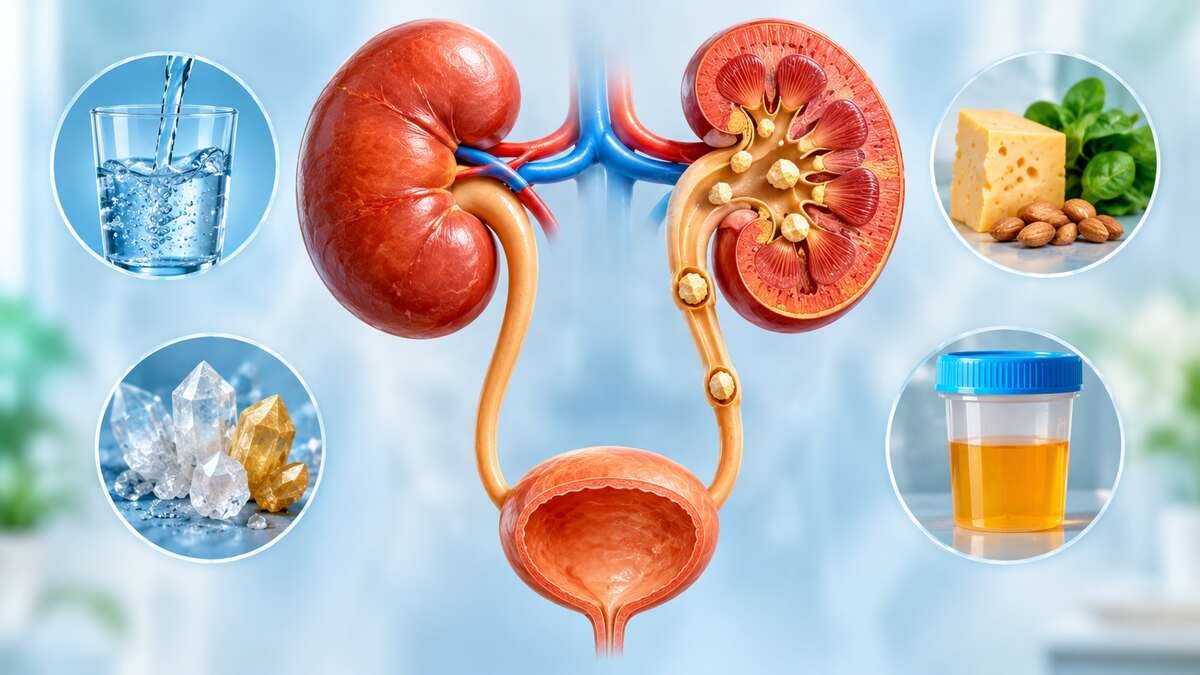

Kidney stones are hard deposits of minerals and salts that form inside the kidneys and may travel through the urinary tract. They are common in the United States. The National Institute of Diabetes and Digestive and Kidney Diseases (NIDDK) reports that about 1 in 10 people will have a kidney stone at some point in their lives. Some stones are tiny and pass without notice, while others cause severe pain or complications.
Stones develop when urine contains more crystal-forming substances than the fluid can keep dissolved. Dehydration, eating patterns, inherited traits, certain medications, and several medical conditions can all push urine chemistry in that direction. Having a risk factor does not mean a person will form a stone, and the combination of causes differs from one person to the next.
This guide explains what causes kidney stones, how tiny crystals become stones, why the four main stone types have different triggers, and why stones sometimes come back. You will also find practical prevention steps and guidance on when to seek care. For a closer look at who is most likely to develop stones, see our article on kidney stone risk factors.
How Do Kidney Stones Form?
Kidney stone formation is a chemistry problem that happens inside the urinary system. Understanding the basic process makes it easier to see why so many different factors can lead to the same result.
Understanding the Role of Urine Chemistry
Urine is more than water. It carries dissolved minerals, salts, and waste products that the kidneys filter out of the blood. Calcium, oxalate, phosphate, and uric acid are among the substances that can form crystals when conditions allow.
Normally, urine also contains natural inhibitors that help keep crystals from forming or sticking together. Citrate is the best-known example. It binds to calcium and helps keep it dissolved. When crystal-forming substances become too concentrated, or when protective substances such as citrate are too low, the balance tips toward crystal formation.
From Tiny Crystals to Kidney Stones
Stone formation generally follows a sequence:
- Urine becomes concentrated or chemically imbalanced.
- Minerals and other substances reach levels that encourage crystallization.
- Small crystals begin to form.
- Crystals attach to structures in the kidney or clump together.
- Over time, the deposit can grow into a larger stone.
Not every crystal becomes a clinically significant stone. Many people pass microscopic crystals in their urine without ever knowing it. Problems usually arise when crystals remain, grow, and either cause pain by moving into the ureter or block the flow of urine. The Mayo Clinic offers a helpful overview of this process.
Dehydration and Not Drinking Enough Water
Low fluid intake is one of the most consistent contributors to kidney stones. The National Kidney Foundation lists not drinking enough fluids among the leading factors in stone formation, and guidelines from the European Association of Urology (EAU) emphasize higher fluid intake as a foundation of prevention.
How Dehydration Contributes to Kidney Stones
When the body does not get enough fluid, the kidneys conserve water and make less urine. That smaller volume is more concentrated, which means minerals and salts sit closer together. Crystals are more likely to form under those conditions.
This matters for several stone types. Concentrated urine raises the chance of calcium-containing stones, and it also favors uric acid stones, which tend to form when urine is both concentrated and acidic. Staying hydrated does not guarantee that a stone will never form, but it addresses one of the most common and modifiable contributors.
Who May Be More Vulnerable to Dehydration?
Some people lose more fluid than others or have a harder time replacing it. Groups that may need extra attention include:
- People who work outdoors or in hot indoor settings
- Those who live in hot, humid climates
- People who exercise heavily or sweat a lot
- Individuals who regularly drink too little fluid
- People with ongoing vomiting or diarrhea
In hot and humid environments, fluid needs can rise sharply. A simple clue is urine color: pale yellow usually suggests good hydration, while dark yellow suggests the body may need more fluid. Our guide on the benefits of hydration covers everyday habits that help.
Dietary Habits That Can Contribute to Kidney Stones
Diet influences the amount of calcium, oxalate, uric acid, and citrate in urine. The effects depend on the stone type and the person, so food advice should be individualized. No single food causes kidney stones on its own.
Eating Too Much Sodium
High sodium intake increases the amount of calcium the kidneys release into urine. More calcium in urine raises the likelihood of calcium-containing stones. Most excess sodium comes from processed foods, salty snacks, restaurant meals, and packaged products rather than from the salt shaker.
The NIDDK notes that lowering sodium is a common part of stone prevention. Our overview of the DASH diet for beginners describes one way to eat with less sodium.
Excessive Animal Protein Intake
Diets very high in animal protein, such as large portions of red meat, poultry, fish, and eggs, may raise the risk of certain stones. Animal protein can increase uric acid production, make urine more acidic, and reduce urinary citrate. Together, these changes favor uric acid and calcium stones in susceptible people.
This does not mean protein is harmful for everyone. It means that very high intake may matter for people who already form stones. You can learn more about balanced intake in our article on high-protein foods.
High Oxalate Foods
Oxalate is a natural compound found in many plant foods. Foods higher in oxalate include:
- Spinach
- Rhubarb
- Almonds and some other nuts
- Beets
- Some chocolate products
Oxalate can bind with calcium in urine to form calcium oxalate crystals, the most common building block of stones. Still, oxalate-containing foods are not universally harmful, and many are nutritious. Advice should depend on a person’s stone history and urine test results. You can read more about spinach, almonds, and beetroot on CollectedMed.
Low Dietary Calcium Intake
This is one of the most common misconceptions. Calcium in food binds to oxalate in the digestive tract, which helps keep oxalate from being absorbed into the blood and later filtered into urine. When dietary calcium is too low, more oxalate may be absorbed, which can increase stone risk in some people.
For most people, normal dietary calcium intake is recommended. Calcium supplements are different. They may raise risk in some individuals, so it is wise to discuss them with a healthcare professional. See our list of calcium-rich foods for dietary sources.
High Sugar Intake
Diets high in added sugars, especially sugar-sweetened beverages, have been linked in observational research to a higher likelihood of kidney stones. Possible explanations include metabolic changes such as insulin resistance and increased calcium and oxalate in urine. These studies show association, not proof of cause, so the findings should be read with that limit in mind.
Different Types of Kidney Stones and What Causes Them
There are four major types of kidney stones. Each forms through a different pathway, which is why a single prevention plan does not fit everyone. Analyzing a passed stone is the best way to learn which type a person has.
Calcium Oxalate and Calcium Phosphate Stones
Calcium stones are the most common type, and most of them are calcium oxalate. Contributing factors include:
- Excess calcium in urine
- High urinary oxalate
- Low urinary citrate
- Low urine volume
- Metabolic and dietary influences
In many cases, several of these factors act together rather than one alone.
Uric Acid Stones
Uric acid stones tend to form when urine is persistently acidic and uric acid levels are high. A diet rich in purines (found in organ meats, some seafood, and red meat) may contribute in susceptible people. Gout and metabolic conditions are also linked to this type.
Struvite Stones
Struvite stones are connected to certain urinary tract infections. Some bacteria produce an enzyme called urease, which raises urine pH and creates conditions that allow struvite to crystallize. These stones can grow relatively quickly and are often associated with recurrent or complicated urinary infections.
Cystine Stones
Cystine stones are rare. They are tied to cystinuria, an inherited condition in which the kidneys allow too much of the amino acid cystine into urine. Because the underlying cause is genetic, cystine stones can develop repeatedly and often need long-term management.
Medical Conditions That Can Cause Kidney Stones
Health conditions can change urine composition in ways that favor stone formation. Some are direct causes, while others are associations that increase likelihood.
Hyperparathyroidism
The parathyroid glands control calcium balance. When they are overactive, calcium levels in blood and urine can rise, which increases the chance of calcium-containing stones.
Diabetes and Insulin Resistance
Insulin resistance can make urine more acidic, which favors uric acid stone formation. This is one reason metabolic health and kidney stones are linked. Learn more about diabetes and insulin resistance in our related guides.
Obesity and Metabolic Syndrome
Excess weight and metabolic syndrome are associated with changes in urine acidity and in uric acid and calcium excretion. As a result, they are linked with both uric acid and calcium-containing stones.
Digestive Disorders and Intestinal Conditions
Certain gut conditions raise stone risk, including:
- Crohn’s disease
- Ulcerative colitis
- Chronic diarrhea
- Malabsorption disorders
- Some intestinal or weight-loss surgeries
When fat is not absorbed well, it binds calcium in the gut. That leaves more oxalate free to be absorbed and passed into urine, which can promote calcium oxalate stones. Chronic diarrhea can also cause dehydration and more acidic urine.
Recurrent Urinary Tract Infections
Repeated infections with urease-producing bacteria can lead to struvite stones, as described above. Treating infections promptly and following up with a clinician is important for people with a history of these stones.
Genetics and Family History
Inherited factors can influence who forms stones, but genes are only part of the picture.
Are Kidney Stones Hereditary?
People with a close relative who has had kidney stones are more likely to develop them. Inherited traits can affect how the body handles calcium and oxalate, and cystinuria is a clearly inherited cause of cystine stones. Shared eating habits and environment within families may also play a role.
A genetic predisposition does not guarantee that stones will form. Many people with a family history never develop one, especially when other risk factors are well managed. Our article on kidney stone risk factors explores family history further.
Lifestyle and Environmental Factors
Daily habits and surroundings can add to the causes above.
Living in Hot Climates
Heat and sweating increase fluid loss. If that fluid is not replaced, urine becomes more concentrated, which raises the chance of crystal formation.
Physical Inactivity
Prolonged immobilization, such as long bed rest, can cause bone to release calcium, which may increase urinary calcium in some people. Regular movement supports overall health. See how to build a step count habit for easy ways to start.
Obesity and Unhealthy Lifestyle Patterns
Poor metabolic health, diets high in sodium and sugar, and too little physical activity often occur together, and each can contribute to stone formation. Small, steady changes tend to be more sustainable than dramatic ones. For ideas, visit our guide to weight management.
Certain Medications and Supplements
Some medications and supplements can alter urine chemistry or raise levels of stone-forming substances. Examples include:
- Topiramate (used for seizures and migraine)
- Acetazolamide
- Certain antiviral medications, such as indinavir
- High-dose vitamin C supplements
- Calcium or other high-dose supplements in susceptible people
Never stop a prescribed medication on your own. If you are concerned, talk with your prescriber or pharmacist about the risks and alternatives.
Why Do Kidney Stones Keep Coming Back?
Stones can return when the underlying cause has not been identified or addressed. Common reasons include:
- Ongoing low fluid intake
- Dietary factors that remain unchanged
- Inherited metabolic conditions
- Underlying medical disorders
- Incomplete management of stone-forming abnormalities
- Not knowing the original stone composition
For people with recurring stones, stone analysis and urine testing can show which chemical imbalances are driving the problem. A 24-hour urine collection is often used for this purpose. The NICE guideline on renal and ureteric stones and the EAU guidelines both support individualized evaluation and follow-up. Treatment choices are covered in our guide to kidney stones treatment options.
How Can You Prevent Kidney Stones?
Prevention works best when it targets the specific cause. These general steps are widely recommended, but individual plans may differ.
Drink Enough Water
Adequate fluid intake increases urine volume and lowers the concentration of minerals. Guidelines often suggest aiming for roughly 2.5 liters of urine per day, which usually requires drinking somewhat more than that in total fluid. Needs vary with climate, activity, and health conditions, so ask your clinician what is right for you.
Make Kidney-Friendly Dietary Choices
Helpful habits may include:
- Limiting excess sodium
- Keeping normal dietary calcium intake
- Avoiding very high animal protein intake
- Following individualized advice on oxalate
- Eating a balanced diet with plenty of fruits and vegetables
Our guide to what is a balanced diet is a good starting point.
Manage Underlying Health Conditions
Working with your care team to manage diabetes, gout, hyperparathyroidism, and digestive disorders may help lower stone risk. Regular follow-up matters, since these conditions can change over time.
Get Medical Advice if You Have Recurrent Stones
People who form stones repeatedly may benefit from stone composition analysis, urine testing, and a 24-hour urine evaluation when appropriate. Based on the results, a clinician may recommend preventive medications. These are used only when prescribed and tailored to the stone type.
When Should You Seek Medical Attention?
See a healthcare professional if you have symptoms that could signal a stone, including:
- Severe pain in the side or back
- Blood in the urine
- Persistent nausea or vomiting
- Difficulty urinating
Fever or chills with suspected kidney stones, especially with a blockage in urine flow, may signal an infection and can be an emergency. Seek immediate medical care if this happens. The Mayo Clinic lists additional warning signs.
Conclusion
Kidney stones develop through a mix of urine chemistry, dehydration, dietary habits, genetics, and underlying medical conditions. Knowing these causes can help you make informed choices about kidney health. If you have concerns about your own risk, discuss them with a qualified healthcare professional.
Frequently Asked Questions
What is the main cause of kidney stones?
There is no single cause, but concentrated urine from low fluid intake is among the most common contributors. When urine holds too many crystal-forming minerals, stones can develop. Diet, genetics, medications, and health conditions also play important roles. (NIDDK)
Can drinking too little water cause kidney stones?
Yes, it can contribute. Less fluid means less urine and a higher concentration of minerals and salts, which makes crystals more likely to form. Drinking enough fluid to keep urine light yellow is a common recommendation, though needs vary by person. (National Kidney Foundation)
What foods cause kidney stones?
No food causes stones by itself. High sodium, very high animal protein, and, for some people, high-oxalate foods may raise risk. The right approach depends on your stone type, so ask a clinician before cutting out healthy foods. (NIDDK)
Does eating too much calcium cause kidney stones?
Usually not. Calcium from food binds oxalate in the gut and may actually help lower stone risk. Calcium supplements may be different for some people, so talk with a healthcare professional before taking them. (NIDDK)
Can stress cause kidney stones?
Stress is not an established direct cause of kidney stones. It may influence habits such as fluid intake, food choices, and sleep, which can affect risk indirectly. Evidence on a direct link is limited, so hydration and diet remain better-supported priorities.
Are kidney stones hereditary?
Family history can raise your likelihood of forming stones, and cystinuria is a clearly inherited cause. Still, genes do not guarantee stones will develop. Hydration, diet, and managing health conditions can influence outcomes. (Mayo Clinic)
Can diabetes cause kidney stones?
Diabetes and insulin resistance are associated with more acidic urine, which favors uric acid stones. This is an association rather than a guarantee. If you have diabetes, discuss stone risk with your care team. Learn more in our diabetes guide.
Why do kidney stones form in the first place?
They form when urine becomes concentrated or chemically imbalanced, allowing minerals such as calcium, oxalate, or uric acid to crystallize. Crystals can then cling together and grow. Low levels of natural inhibitors, such as citrate, make this more likely. (NIDDK)
Can kidney stones develop without symptoms?
Yes. Small stones may sit in the kidney or pass without causing noticeable symptoms. They are sometimes discovered by chance on imaging done for another reason. Symptoms typically appear when a stone moves or blocks urine flow. (Mayo Clinic)
Why do some people get kidney stones repeatedly?
Stones often recur when the underlying cause, such as low fluid intake, diet, a metabolic condition, or an inherited trait, has not been addressed. Stone analysis and urine testing can help identify the cause and guide prevention. (NICE)
Sources
- NIDDK: Definition and Facts for Kidney Stones
- NIDDK: Eating, Diet, and Nutrition for Kidney Stones
- National Kidney Foundation: Kidney Stones
- Mayo Clinic: Kidney Stones, Symptoms and Causes
- European Association of Urology: Urolithiasis Guidelines
- NICE: Renal and Ureteric Stones, Assessment and Management (NG118)
Medical Disclaimer: This article is for general educational purposes only and is not medical advice. It does not diagnose, treat, or replace care from a qualified healthcare professional. Always talk with your doctor about your own health, symptoms, and treatment options. If you think you may be having a medical emergency, call 911 or your local emergency number right away.
4 thoughts on “What Causes Kidney Stones? Understanding the Main Causes”
Comments are closed.