
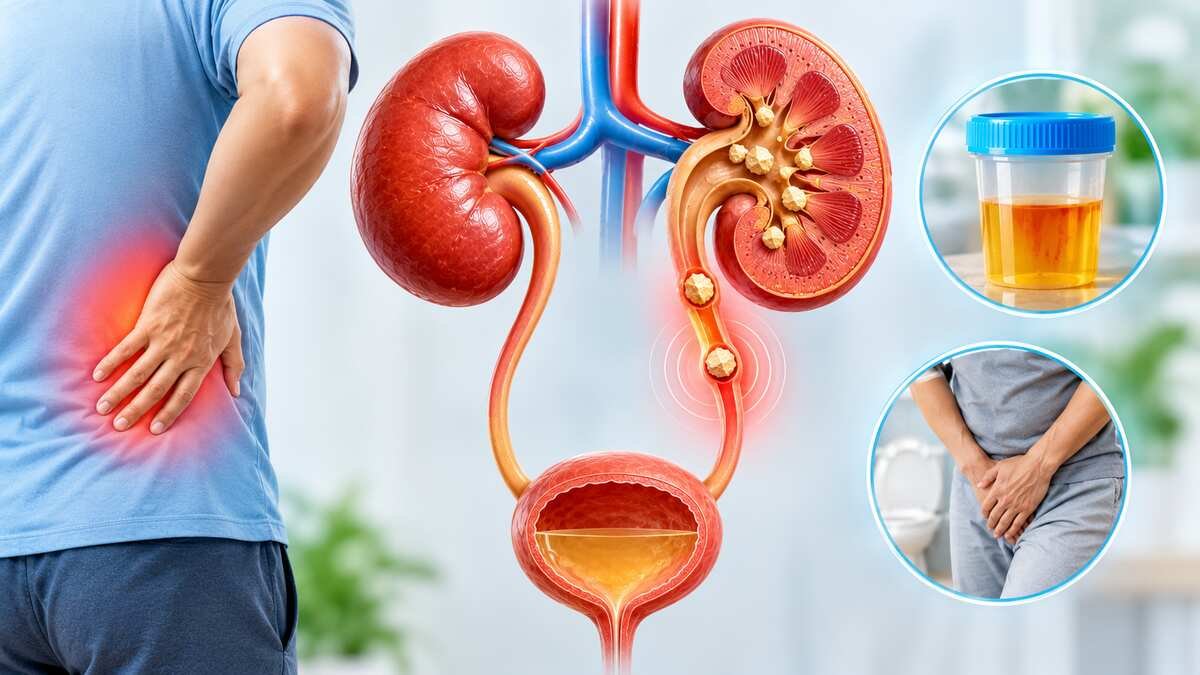

Kidney stones can sit in the kidneys for a long time without causing any symptoms at all. Many people learn they have one only when a scan for another problem finds it. When symptoms do appear, they are often mild at first and easy to mistake for a muscle strain or a minor urinary issue.
Symptoms usually become more noticeable when a stone moves into the ureter, the narrow tube that carries urine from the kidney to the bladder. Common warning signs include discomfort in the back or side, changes in urination, blood in the urine, and nausea. Not everyone has all of these, and not every stone begins with mild pain.
Knowing what to look for can help you decide when to seek a medical evaluation. This guide explains the early signs of kidney stones, how they differ from other urinary problems, which symptoms are urgent, and how doctors confirm a diagnosis. It is general information and cannot tell you whether you have a stone.
What Are Kidney Stones?
Kidney stones are hard deposits made from minerals and salts that build up in urine. Substances such as calcium, oxalate, and uric acid can form crystals when urine becomes too concentrated or chemically imbalanced. Those crystals may clump together and grow into stones. Our guide on what causes kidney stones explains this process in more detail.
Stones begin in the kidneys and may stay there or travel into the ureter. The National Institute of Diabetes and Digestive and Kidney Diseases (NIDDK) describes four main types:
- Calcium stones: the most common type, often made of calcium oxalate
- Uric acid stones: more likely when urine is persistently acidic
- Struvite stones: often linked to certain urinary tract infections
- Cystine stones: rare and tied to an inherited condition called cystinuria
Stone size and location strongly influence symptoms. A small stone in the kidney may cause nothing, while even a small stone lodged in the ureter can cause significant pain. To learn who is more likely to form stones, see our article on kidney stone risk factors.
What Are the Early Signs of Kidney Stones?
The signs below are common, but they do not appear in the same order for everyone. Some people notice only one or two. Because many of these symptoms overlap with other conditions, they point toward a possible stone rather than confirming one.
1. Mild Pain in the Lower Back or Side
One of the earlier signs can be discomfort on one side of the back, just below the ribs. This area is often called the flank. The pain may begin as a dull ache or come and go.
As a stone moves or blocks urine flow, the pain can become much stronger. Still, back pain has many possible causes, including muscle strain and spinal problems, and it does not automatically mean a kidney stone. Our overview of what causes back pain covers other possibilities.
2. Pain That Spreads Toward the Lower Abdomen or Groin
As a stone travels down the ureter, pain often moves with it. You may feel discomfort spread from the side or back toward the lower abdomen, groin, or genital area. The Mayo Clinic notes that pain location can shift as the stone changes position.
This changing pattern can help clinicians understand where a stone may be. It is also one reason people sometimes confuse stone pain with other causes of belly pain. For general context, read about what causes abdominal pain.
3. Blood in the Urine
Stones can irritate or scratch the lining of the urinary tract, which may cause bleeding. Urine may look pink, red, or brown. This is called visible blood.
Blood can also be microscopic, meaning it shows up only on a urine test. Blood in the urine should always be medically evaluated, whether or not you have pain, because it can have causes other than stones.
4. Frequent Urination
A stone that has moved close to the bladder can create a strong urge to urinate. You may visit the bathroom often, even when only small amounts of urine come out.
This symptom is not specific to stones. Urinary tract infections (UTIs) and other bladder problems can cause the same pattern, so a clinician needs to sort out the reason.
5. Burning or Painful Urination
A stone near the bladder can irritate the tissue and cause burning, stinging, or discomfort while you urinate. People often assume this means a UTI, and that is a common cause.
However, stones and infections can occur together. If you have painful urination along with side pain or blood in your urine, mention all of these symptoms when you seek care.
6. Cloudy or Foul-Smelling Urine
Urine may look cloudy or have an unusual odor. These changes can be associated with infection or other urinary problems.
Cloudy or strong-smelling urine alone cannot confirm a kidney stone. Many everyday factors, including dehydration, can also change how urine looks and smells. Treat these changes as a reason to pay attention, not as a diagnosis.
7. Nausea and Vomiting
The kidneys and digestive tract share nerve connections, so severe stone pain can trigger nausea and vomiting. These symptoms often occur alongside strong side or back pain.
If you are vomiting, try to sip fluids when you can. Persistent vomiting that prevents you from keeping fluids down needs prompt medical care. Our guide on what causes nausea offers more background.
8. Restlessness and Difficulty Finding a Comfortable Position
People with stone pain often cannot get comfortable. Sitting, standing, and lying down may all feel bad, and many people pace or shift positions frequently.
This differs from some other types of back or abdominal pain. For example, a pulled muscle often hurts more with certain movements and eases with rest, while stone pain may stay intense regardless of position.
9. Pain That Comes in Waves
Clinicians call severe stone pain renal colic. It happens when the ureter contracts and tightens around a stone, or when the stone blocks urine flow and pressure builds in the kidney. The result can be intense pain that rises, eases, and returns.
The intensity varies with the stone’s size and position. Some people describe it as among the worst pain they have felt, while others have a more moderate version. If you want to compare sensations, see what abdominal pain can feel like.
10. Reduced Urine Output or Difficulty Urinating
A stone that blocks the urinary tract can interfere with urine flow. You may notice you are passing much less urine than usual, or you may have trouble urinating.
Reduced output is especially concerning when both kidneys may be affected or when a person has only one working kidney. Being unable to urinate is an urgent warning sign and calls for immediate medical attention.
Can You Have Kidney Stones Without Symptoms?
Yes. Small stones can remain in the kidney without causing noticeable symptoms. These are sometimes found by accident during imaging done for another reason, such as a scan for abdominal pain or an injury.
Symptoms often begin when a stone moves into the ureter or blocks the flow of urine. Because of this, not having pain does not always mean a stone is absent. It also means that symptoms may appear suddenly after a long period with none. The National Kidney Foundation offers additional information on how stones present.
How Do Early Kidney Stone Symptoms Differ From Other Urinary Problems?
Kidney stone symptoms overlap with several other conditions. The table below shows how some commonly differ, though symptoms alone cannot reliably tell them apart.
| Condition | Common Symptoms |
|---|---|
| Kidney stones | Side or back pain, blood in urine, nausea, painful urination |
| Urinary tract infection (UTI) | Burning urination, frequent urination, cloudy urine |
| Kidney infection | Fever, chills, back or side pain, nausea |
| Muscle strain | Localized back pain that may worsen with movement |
| Bladder infection | Urinary urgency, frequent urination, lower abdominal discomfort |
These conditions can also occur together. For instance, a stone can lead to infection, and an infection can lead to certain stones. A healthcare professional can use a urine test and imaging to figure out what is going on. If your symptoms are persistent, severe, or unusual, get a medical evaluation rather than waiting to see what happens.
When Should You See a Doctor for Possible Kidney Stones?
Some symptoms call for a prompt appointment, and others call for emergency care.
Arrange prompt medical evaluation if you have:
- Persistent pain in your side or back
- Blood in your urine
- Pain or burning during urination
- Repeated nausea or vomiting
- New urinary frequency or urgency
- Unexplained changes in the appearance of your urine
Seek emergency medical care if you have:
- Severe or uncontrolled pain
- Fever or chills along with possible kidney stone symptoms
- Difficulty urinating or an inability to pass urine
- Persistent vomiting or signs of dehydration
- Severe symptoms and only one functioning kidney
A stone with fever or chills can mean an infection behind a blockage. This can become a medical emergency, so do not wait. Our article on when abdominal pain is an emergency can also help you recognize urgent warning signs.
How Are Kidney Stones Diagnosed?
Diagnosis usually starts with your symptoms and medical history. A clinician may ask about the location of your pain, your fluid and food habits, past stones, and family history.
The NIDDK lists several common tests:
- Urinalysis: checks urine for blood, infection, and other abnormalities
- Blood tests: assess kidney function and related factors
- Ultrasound: can identify stones and signs of urinary blockage
- CT scan: provides more detailed imaging when needed
These results help determine the stone’s size and location, which guide the next steps. To learn about what may come after diagnosis, see our guide to kidney stones treatment options.
What Should You Do If You Notice Early Signs of Kidney Stones?
If something feels off, a few practical steps can help:
- Do not ignore persistent or worsening symptoms. Early evaluation can help identify problems before they become more serious.
- Drink fluids if you can tolerate them. Do this unless a clinician has told you to limit fluids. Our guide to the benefits of hydration explains why fluid matters.
- Think before taking medication. Pain relievers can be unsafe for some people, depending on their kidney function and other health conditions. Check with a clinician or pharmacist first.
- Get assessed rather than self-diagnosing. Symptoms alone cannot confirm a stone.
- Follow your clinician’s advice. This includes recommended testing and treatment.
Timely evaluation may help reduce the risk of complications such as infection or kidney damage from a long-standing blockage.
Frequently Asked Questions About Early Signs of Kidney Stones
What is usually the first sign of kidney stones?
It varies. Some people first notice pain in the side or back, while others see blood in their urine. Some have no symptoms at first. Symptoms often start when a stone moves into the ureter. (NIDDK)
Can kidney stones start with mild pain?
Yes. Discomfort may be mild or dull at first. Pain can become intense if the stone moves or blocks urine flow. Not every stone begins mildly, so sudden severe pain is also possible. (Mayo Clinic)
How do you know if kidney stones are starting to move?
Pain that changes location or spreads toward the lower abdomen or groin may suggest movement. You may also notice new urinary symptoms or blood in your urine. Only a clinician can confirm this with an exam and imaging.
Can kidney stones cause frequent urination?
Yes. A stone near the bladder can irritate the urinary tract and cause frequent or urgent urination. Infections can cause the same symptom, so testing helps clarify the cause. (NHS)
Can kidney stones cause blood in urine without pain?
Yes. Blood can appear with or without noticeable pain. It can be visible or detected only on a urine test. Blood in the urine should always be checked by a healthcare professional. (NIDDK)
How long can early kidney stone symptoms last?
It depends on the stone’s size, location, and movement. There is no timeline that fits everyone. If symptoms last or get worse, seek medical care rather than waiting them out.
Can you have kidney stones without knowing it?
Yes. Some stones stay in the kidney without symptoms and are found during imaging for another reason. Symptoms usually begin if a stone moves or causes a blockage. (National Kidney Foundation)
Conclusion
The early signs of kidney stones can include side or back pain, pain that spreads toward the groin, blood in the urine, urinary changes, and nausea. Some stones cause no symptoms until they move. Because many of these signs overlap with other conditions, a healthcare professional is the best person to confirm what is happening. Seek urgent care for fever, chills, uncontrolled pain, or trouble urinating.
Sources
- NIDDK: Symptoms and Causes of Kidney Stones
- NIDDK: Diagnosis of Kidney Stones
- National Kidney Foundation: Kidney Stones
- Mayo Clinic: Kidney Stones, Symptoms and Causes
- European Association of Urology: Urolithiasis Guidelines
- NHS: Kidney Stones
Medical Disclaimer: This article is for general educational purposes only and is not medical advice. It does not diagnose, treat, or replace care from a qualified healthcare professional. Always talk with your doctor about your own health, symptoms, and treatment options. If you think you may be having a medical emergency, call 911 or your local emergency number right away.
3 thoughts on “What Are the Early Signs of Kidney Stones? 10 Symptoms to Know”
Comments are closed.