
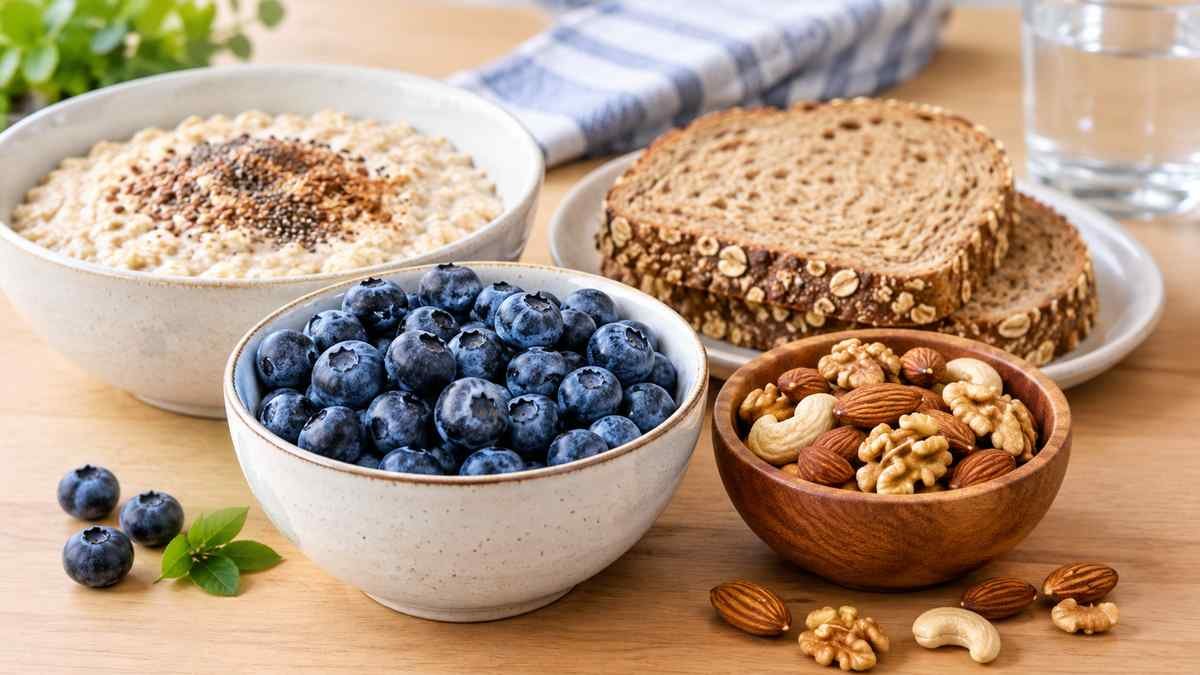

Blueberries can be a nutritious addition to a heart-healthy diet, and their anthocyanins have attracted scientific interest for possible effects on cardiovascular health. Some research has reported improvements in certain cholesterol measurements after berry or anthocyanin interventions. Evidence showing that ordinary servings of blueberries reliably lower high cholesterol remains limited, so they are not a treatment on their own.
High cholesterol can raise the risk of cardiovascular disease, particularly when LDL cholesterol is elevated, as the American Heart Association explains. Many people wonder whether adding a food like blueberries can help improve their numbers. Blueberries contain anthocyanins (the pigments that give them their blue-purple color), fiber, and other nutrients, which makes the question a reasonable one.
This guide explains what the research does and does not show, how blueberries fit into a cholesterol-friendly eating pattern, and how to enjoy them in practical ways. It also covers safety, serving ideas, and the established strategies, including medication when needed, that matter most for managing cholesterol.
Are Blueberries Good for High Cholesterol?
Blueberries are a sensible fruit choice for many people with high cholesterol, but they should not replace proven cholesterol management strategies. They are naturally low in saturated fat and provide fiber and plant compounds. You can read more in our overview of the health benefits of blueberries.
Anthocyanins have been studied for their possible influence on lipid metabolism and other cardiovascular markers. Some blueberry studies have reported favorable changes in HDL cholesterol or other blood lipid measurements, as summarized in a 2021 systematic review and meta-analysis. However, findings vary between studies, and an improvement in one marker does not mean LDL cholesterol has fallen.
A healthy food can add to overall diet quality without producing a large or predictable change in a lab result. Think of blueberries as one part of a balanced eating pattern rather than a cholesterol-lowering treatment.
How Might Blueberries Affect Cholesterol?
Researchers have proposed several ways blueberries could support heart health. These ideas justify further study, but they do not guarantee results for any one person.
Anthocyanins and Cardiovascular Health
Anthocyanins are plant pigments found in blueberries, blackberries, strawberries, and other colorful fruits. Researchers have investigated their possible effects on oxidative stress and inflammation, as reviewed in the 2021 meta-analysis. Experimental research also suggests they may influence pathways involved in lipid metabolism, and scientists have studied their potential effects on vascular function.
These mechanisms provide a reason for more research. They do not prove that eating blueberries will lower LDL cholesterol in an individual. Laboratory findings and proposed mechanisms are different from outcomes demonstrated in human clinical trials.
Fiber and the Benefits of Whole Fruit
Blueberries provide dietary fiber, though they are not among the most concentrated sources of soluble fiber. Fiber supports digestive health and a balanced diet. Foods such as oats, barley, beans, and certain fruits have a more established role in helping lower LDL cholesterol, as noted in the CDC’s guidance on preventing high cholesterol.
Whole blueberries can add to your overall fiber intake, but their fiber should not be presented as a powerful cholesterol-lowering treatment by itself. Whole fruit is generally a more practical choice than sweetened drinks or heavily processed fruit products.
For other options, see our list of high-fiber foods.
Antioxidants Do Not Tell the Whole Story
Blueberries contain several plant compounds, but the presence of antioxidants does not automatically establish a clinical benefit. Antioxidant activity measured in a laboratory is not the same as a demonstrated reduction in LDL cholesterol. You can learn more in our guide to antioxidant-rich foods.
The amount and type of anthocyanins also vary by blueberry variety, preparation, and processing. Clinical outcomes depend on a participant’s baseline cholesterol, the intervention used, the length of the study, and other dietary habits. Researchers have to evaluate actual blood lipid results, not just the theoretical properties of a food.
What Does Scientific Research Say About Blueberries and Cholesterol?
The research is encouraging in places but mixed overall. It helps to look at what each type of study actually measured.
Research on Anthocyanin-Rich Berries
A 2021 systematic review and meta-analysis examined randomized controlled trials and prospective cohort studies on anthocyanins and anthocyanin-rich berries. In pooled results, berry interventions were associated with a modest reduction in total cholesterol. For LDL cholesterol, the results were not statistically significant when anthocyanin-rich berries were analyzed as a group.
A subgroup analysis reported a small increase in HDL cholesterol after blueberry interventions. This should be interpreted cautiously, because the subgroup involved relatively few participants and the studies varied considerably.
What Broader Berry-Product Research Found
A 2024 systematic review and meta-analysis of berry-derived phenolic products included 37 clinical trials with 2,161 participants. Its pooled results reported changes in some lipid measurements, including total cholesterol and HDL cholesterol. According to the article’s reported findings, the overall effects on LDL cholesterol and triglycerides were not statistically significant.
This research looked at a range of berry-derived phenolic products, not just whole blueberries. It cannot be used to claim that a particular serving of fresh blueberries will produce the same effects.
What the Findings Mean for Everyday Eating
In plain language, some findings are promising, but they are not consistent across all cholesterol measurements. Research on concentrated anthocyanin supplements is not the same as research on whole blueberries. A small change in HDL or total cholesterol also does not necessarily mean cardiovascular risk has meaningfully improved.
Different preparations, doses, participant groups, and study lengths make it hard to define a single expected effect. A result that is not statistically significant also does not prove blueberries can have no effect for anyone.
The fair conclusion is that blueberries can be included in a heart-healthy diet, but current evidence does not establish a reliable, predictable LDL-lowering effect from blueberries alone. To understand the markers themselves, see our guide to LDL vs. HDL cholesterol.
How Many Blueberries Should You Eat for High Cholesterol?
There is no established serving of blueberries proven to treat high cholesterol. Many people eat about a half cup to one cup of whole blueberries as an ordinary food portion. That is practical nutrition advice, not a clinically validated cholesterol-lowering dose.
You can add blueberries to breakfast, snacks, or meals according to your preferences and overall dietary needs. Fresh and frozen unsweetened blueberries are convenient options. Consider portion size in the context of your overall calorie and carbohydrate needs.
If you enjoy blueberries, adding a portion to oatmeal, plain yogurt, or a snack can be an easy way to eat more fruit. Eating more of them does not guarantee a greater reduction in LDL cholesterol. For better results, pair fruit with an eating pattern that emphasizes fiber-rich foods and replaces saturated fats with healthier unsaturated fats.
For more on daily intake, see our article on eating blueberries every day.
Best Ways to Eat Blueberries for Heart Health
These ideas make it easier to work blueberries into everyday meals.
Add Blueberries to Breakfast
- Top oatmeal with fresh or frozen blueberries.
- Stir them into plain, low-fat yogurt with a small serving of unsalted nuts.
- Add them to whole-grain cereal.
- Make overnight oats with blueberries and chia seeds.
Oats and certain seeds provide additional fiber, while nuts can contribute unsaturated fats.
Use Blueberries in Snacks and Meals
- Enjoy a bowl of fresh blueberries.
- Blend whole blueberries into a smoothie with unsweetened yogurt.
- Add them to a fruit salad.
- Serve them with whole-grain toast as part of a balanced breakfast.
Variety matters. Blueberries should not be the only fruit in your diet, and our list of heart-healthy foods offers other ideas.
Limit Added Sugar
Sweetened blueberry drinks, syrups, jams, desserts, and some packaged dried blueberries can contain a lot of added sugar. Check labels and choose whole fruit or minimally processed products more often. The goal is better overall diet quality, and not every product containing blueberries offers the same benefits.
Are Fresh or Frozen Blueberries Better for High Cholesterol?
There is not enough evidence to say one form of blueberries lowers cholesterol better than another. Here are the practical differences.
- Fresh blueberries: Easy to eat whole and convenient when in season.
- Frozen blueberries: Useful year-round for oatmeal, yogurt, and smoothies. Unsweetened varieties are a practical choice.
- Dried blueberries: Portable, but some products contain added sugar, and portions can be calorie-dense relative to their volume.
- Blueberry juice: May provide less fiber than whole fruit and can contain added sugar.
- Supplements and extracts: Not equivalent to eating the fruit, and evidence about their effects on cholesterol is still developing.
Fresh or frozen unsweetened whole fruit is a sensible everyday default.
How to Build a Cholesterol-Friendly Diet With Blueberries
Blueberries make the most sense as one piece of a pattern with stronger evidence behind it. The CDC’s guidance on preventing high cholesterol highlights dietary patterns, saturated fat, fiber-rich foods, and lifestyle choices. You can also read our overview of high cholesterol.
Eat More Soluble Fiber
Soluble fiber can help reduce LDL cholesterol by interfering with cholesterol absorption and supporting its removal from the body, according to the CDC. Good sources include oats, barley, beans, lentils, apples, pears, and other vegetables and whole fruits.
Blueberries can contribute to your fruit intake, but foods such as oats and beans are especially useful sources of soluble fiber.
Replace Saturated Fats With Unsaturated Fats
Swapping foods high in saturated fat for sources of unsaturated fat can help improve LDL cholesterol, as the American Heart Association’s 2026 dietary guidance describes. Examples include nuts and seeds, olive or other suitable liquid plant oils, avocado, and fish. See our guides to healthy fats and olive oil benefits.
Adding blueberries will not offset a diet that is high in saturated fat.
Choose a Heart-Healthy Eating Pattern
A heart-healthy pattern centers on fruit, vegetables, whole grains, legumes, nuts, and suitable protein sources, while limiting highly processed foods and excess saturated fat. Blueberries can be one part of this pattern alongside many other fruits and vegetables.
The American Heart Association’s 2026 dietary guidance emphasizes overall eating patterns rather than relying on individual foods. Our article on the Mediterranean diet describes one well-known example.
Follow a Cholesterol Management Plan
Regular physical activity, avoiding tobacco, and maintaining a healthy weight where appropriate all support cardiovascular health. People with elevated LDL cholesterol or high cardiovascular risk may need medication as well as lifestyle changes, as the American Heart Association explains.
Talk with a healthcare professional about your results and personal risk factors. You may also find our article on how to prevent heart disease helpful.
Are Blueberries Safe for People With High Cholesterol?
Whole blueberries are generally safe for most people as part of a balanced diet. There is no reason for most people to avoid ordinary servings simply because they have high cholesterol. A few situations call for extra care.
- Allergy: People with a blueberry allergy should avoid them.
- Diabetes: Many people with diabetes can include whole blueberries in a balanced eating plan, considering overall carbohydrate intake. See our article on blueberries and blood sugar.
- Specific dietary restrictions: Follow individualized medical advice.
- Supplements and extracts: Concentrated blueberry extracts and anthocyanin supplements are not the same as whole fruit and may have different risks or interactions.
Blueberries cannot replace cholesterol medication. Do not stop or change prescribed treatment based on dietary changes or supplement claims. If you also manage blood pressure, our article on blueberries and high blood pressure may be useful.
Frequently Asked Questions
Can Eating Blueberries Every Day Lower Cholesterol?
Blueberries can be part of a heart-healthy diet, but pooled clinical research does not establish that eating them daily reliably lowers LDL cholesterol. Your overall diet and medical risk factors matter more than relying on a single food.
Do Blueberries Lower LDL or Raise HDL Cholesterol?
Some studies report favorable changes in certain measurements, including a small HDL increase in a blueberry subgroup of a 2021 meta-analysis. The evidence is mixed, and a reliable LDL-lowering effect from whole blueberries has not been established.
How Long Does It Take for Blueberries to Affect Cholesterol?
There is no established timeline, because blueberries have not been proven to produce a consistent, predictable reduction. Any change depends on many factors. Follow-up blood tests should be guided by a healthcare professional.
Are Frozen Blueberries Good for Cholesterol?
Unsweetened frozen blueberries are a convenient way to eat fruit and can fit into a heart-healthy diet. There is no strong evidence that frozen blueberries lower cholesterol better or worse than fresh ones.
Can Blueberries Replace Statins?
No. Blueberries are a food, not a substitute for prescribed cholesterol medication, and the American Heart Association notes that some people need medication alongside lifestyle changes. Do not stop or change statin treatment without talking to your healthcare professional.
The Bottom Line: Are Blueberries Good for High Cholesterol?
Blueberries provide fiber and anthocyanins and can be part of a heart-healthy diet. Some studies suggest possible benefits for selected blood lipid measurements, but results are mixed, and no specific serving has been established as a treatment for high cholesterol.
A diet rich in fiber, fruit, vegetables, whole grains, legumes, and unsaturated fats has a stronger evidence base for supporting healthy cholesterol. Some people also need medication and regular follow-up.
Enjoy blueberries if you like them, but focus on your overall eating pattern and follow your individualized cholesterol management plan.
Sources
- Anthocyanins, Anthocyanin-Rich Berries, and Cardiovascular Risks: Systematic Review and Meta-Analysis of 44 Randomized Controlled Trials and 15 Prospective Cohort Studies. 2021.
- Effect of Berry-Derived Phenolic Products on Blood Lipid Profiles: A Systematic Review and Meta-Analysis. 2024.
- American Heart Association. 2026 Dietary Guidance to Improve Cardiovascular Health: Top Things to Know
- Centers for Disease Control and Prevention. Preventing High Cholesterol
- American Heart Association. Prevention and Treatment of High Cholesterol (Hyperlipidemia)
Medical Disclaimer: This article is for general information and education only. It is not medical advice and does not replace care from a doctor or other qualified healthcare professional. Everyone’s health needs are different, so please talk with your healthcare provider before changing your diet, supplements, or medications. Never stop or change cholesterol medicine without medical guidance. If you have chest pain, shortness of breath, or other signs of a heart emergency, call 911 right away.