
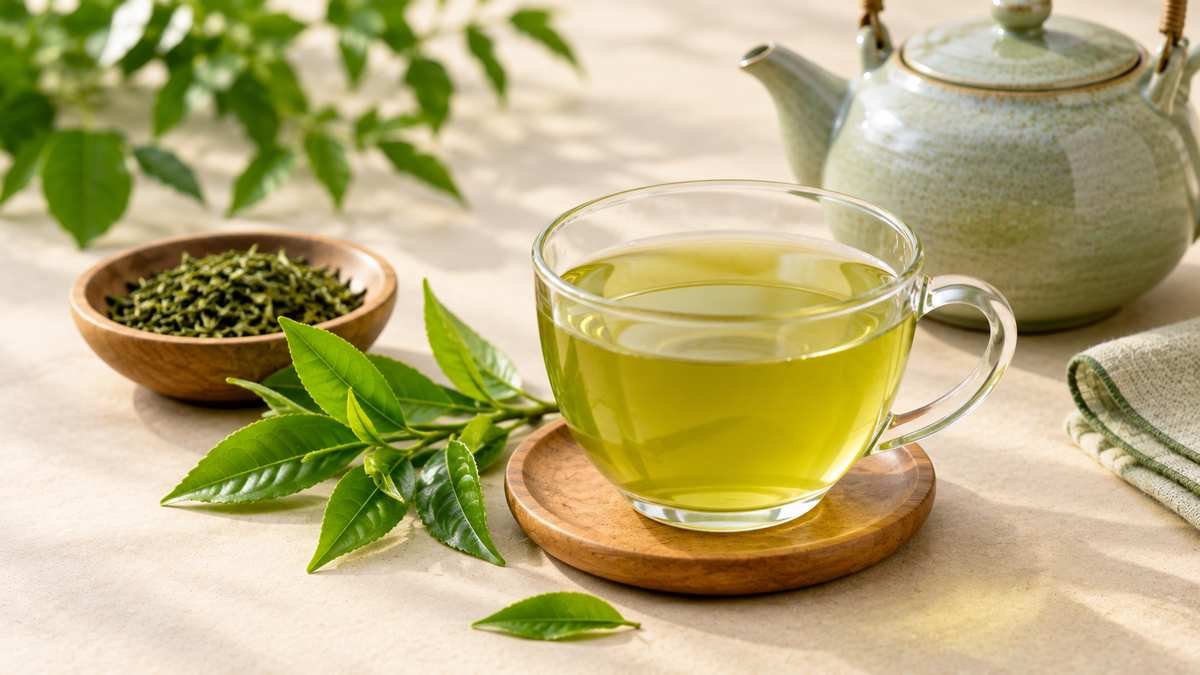

Is green tea good for high blood pressure? It may offer a small benefit, but the evidence is modest and it is not a substitute for proven treatment. Pooled research suggests green tea supplementation is associated with average reductions in blood pressure of about one millimeter of mercury (mmHg), which is a very small change. Green tea also contains caffeine, which can temporarily raise blood pressure in some people.
Green tea is rich in natural plant compounds called polyphenols, including catechins, which researchers have studied for effects on blood vessels and cardiovascular risk factors. Many of these studies used concentrated extracts or supplements rather than brewed tea, so results may not apply to a cup you make at home. Individual responses to both catechins and caffeine vary.
This article explains what the research shows, how green tea may affect blood pressure, and what to watch for, including caffeine and medication interactions. You will also find practical tips for drinking green tea as part of a heart-healthy diet.
Can Green Tea Help Lower Blood Pressure?
Possibly, but only slightly. Blood pressure is reported as two numbers: systolic pressure (the top number, measured as the heart beats) and diastolic pressure (the bottom number, measured between beats). For more on how these numbers work, see our guide to blood pressure and heart health.
A 2025 systematic review and meta-analysis in the journal Blood Pressure pooled 36 randomized controlled trials. It concluded that green tea supplementation is associated with modest reductions in systolic and diastolic blood pressure, with averages reported at roughly 1 mmHg for each measure. For comparison, an earlier 2020 meta-analysis of 24 trials found similarly small average reductions (about 1.2 mmHg systolic and 1.2 mmHg diastolic) in short-term trials and called for larger, longer studies.
These are small numbers. A drop of one or two mmHg is far smaller than the effect of established treatments, and individual results will vary. Pooled results are also averages, so some people may see no change.
An important caveat is the form of green tea. Most trials tested green tea supplements or extracts. The National Center for Complementary and Integrative Health (NCCIH) notes that results suggest green tea extract supplementation may reduce blood pressure over the short term, but that does not automatically show the same effect for ordinary brewed tea. NCCIH also reports that green or black tea may have small beneficial effects on blood pressure, as part of a broader lifestyle approach.
How Green Tea May Affect Blood Pressure
Researchers have proposed several biological mechanisms. These are plausible explanations, not conclusively demonstrated effects in people.
Catechins and antioxidant activity
Green tea contains catechins, including epigallocatechin gallate (EGCG). In laboratory studies, these compounds act as antioxidants, which are substances that can neutralize unstable molecules called free radicals. Antioxidant activity in a test tube does not automatically translate into a measurable health benefit. For background, see our explainer on what antioxidants are.
Potential effects on blood vessel function
The 2025 meta-analysis authors suggested green tea may lower blood pressure by improving blood vessel function, and researchers have studied whether catechins affect the lining of blood vessels. This remains a hypothesis. Human trials measure blood pressure, not the underlying mechanism.
Caffeine and temporary blood pressure changes
Caffeine can have the opposite effect. The American Heart Association (AHA) scientific statement on caffeine and cardiovascular disease reports that short-term effects of caffeine may include temporary increases in blood pressure and heart rate. It also notes that regular users can develop some tolerance, and that high doses, such as those in energy drinks, may significantly raise blood pressure, especially in people who already have high blood pressure.
A cup of green tea typically has far less caffeine than an energy drink. One reference text reports roughly 30 to 40 milligrams of caffeine in a typical 250 mL cup of brewed green tea (NCBI Bookshelf), though the amount varies.
Why individual responses differ
People respond differently to green tea for many reasons: caffeine sensitivity, regular caffeine habits, baseline blood pressure, medications, diet, and genetics. An earlier meta-analysis of green tea catechins and blood pressure suggested the effect may be greater in people with systolic blood pressure at or above 130 mmHg, and in studies that used extracts. This is another reason not to assume the findings apply equally to everyone.
Potential Health Benefits of Green Tea
Green tea can be a pleasant part of a balanced lifestyle, but it should be viewed realistically.
Provides plant compounds called polyphenols
Green tea is a source of polyphenols, which are found in many plant foods. Getting these compounds from a varied diet is a sensible goal. Our guide to antioxidant-rich foods lists other sources. Antioxidant content alone does not prove a clinical benefit.
May offer modest cardiovascular benefits
Along with the small blood pressure findings above, some trials have tested effects on cholesterol. NCCIH notes that most cholesterol studies evaluated green tea extract supplements rather than green tea as a beverage. These effects, if present, appear modest. Green tea has not been established as a treatment for hypertension or heart disease. Our overview of how to prevent heart disease explains approaches with stronger support.
Can replace sugar-sweetened drinks
Unsweetened green tea has almost no calories. Choosing it instead of soda, sweet tea, or juice drinks reduces added sugar, which the Dietary Guidelines for Americans encourage. That benefit comes from what you stop drinking, not from a special property of tea.
May fit into a heart-healthy dietary pattern
Green tea can be included in many eating patterns, such as the DASH plan or a Mediterranean-style diet. Our guide to the Mediterranean diet offers another heart-friendly approach. The tea itself is a small piece of a much larger picture.
How Much Green Tea Should You Drink for High Blood Pressure?
No specific number of cups has been established as a treatment for hypertension. Trials tested a wide range of doses, mostly using supplements, so they cannot be translated into a recommended number of cups. Reviews have also not found a clear relationship between dose and blood pressure change.
Caffeine content varies with cup size, the amount of tea used, water temperature, and steeping time. A stronger or longer-steeped cup generally contains more caffeine. If you want to drink green tea, a few practical guidelines may help:
- Choose unsweetened tea. Added sugar does not help your heart health goals.
- Keep moderation in mind. Start with one or two cups and notice how you feel.
- Consider your total caffeine. The FDA cites about 400 milligrams per day as an amount not generally associated with negative effects for most healthy adults, but this is not a target and does not apply equally to everyone.
- Assess your personal sensitivity. If you notice a racing heart, jitteriness, or trouble sleeping after drinking tea, reduce your intake or choose decaffeinated tea.
If you check your blood pressure at home, you can ask your clinician how to compare readings before and after caffeine. Do not use a supplement trial dose as a guide for a cup of tea. For more on daily intake, read our article on drinking green tea every day.
Risks and Side Effects of Green Tea
For most adults, brewed green tea has a good safety record. NCCIH reports that no safety concerns have been identified for green tea consumed as a beverage by adults, while noting that it contains caffeine. The points below are most relevant to people with high blood pressure.
Caffeine sensitivity, palpitations, and sleep disruption
Caffeine can cause jitteriness, trouble sleeping, and a faster or irregular heartbeat in sensitive people. The AHA statement also notes that caffeine may cause palpitations or sleep disruption in some individuals. If you notice these symptoms, see our guide to heart palpitations and our tips on how to improve sleep. People with severe hypertension or heart rhythm problems should discuss caffeine with their clinician.
Possible interactions with blood pressure medication
Green tea can interact with some medicines. NCCIH reports that green tea at high doses has been shown to reduce blood levels, and therefore the effectiveness, of the beta-blocker nadolol. A small study of healthy volunteers also found that a single cup of brewed green tea can reduce nadolol absorption for at least an hour.
This documented interaction applies to nadolol specifically. It does not mean that every blood pressure medicine interacts in the same way. Other interactions have been described: the Merck Manual reports that vitamin K in green tea may reduce the effect of warfarin, and that green tea may decrease absorption of iron and folic acid. Ask a pharmacist or clinician whether green tea is appropriate with your medications. Do not stop or reduce prescribed medication because you drink green tea.
Why concentrated green tea extracts differ from brewed tea
Extracts can deliver much more catechin per dose than a cup of tea. One research paper notes that the catechins in a single tablet labeled as green tea extract may equal three to ten cups of green tea. The National Library of Medicine’s LiverTox database lists green tea extract as a well-established cause of clinically apparent liver injury, while stating that such cases are rare compared with how widely these products are used. NCCIH adds that green tea extract can reduce blood levels of the cholesterol medicine atorvastatin.
When to consult a healthcare professional
Talk with a clinician or pharmacist before using green tea supplements, especially if you take prescription medication, have liver disease, or are pregnant. The American College of Obstetricians and Gynecologists advises limiting caffeine to 200 milligrams per day during pregnancy. Seek medical care promptly for chest pain, severe headache, shortness of breath, yellowing of the skin or eyes, or very high blood pressure readings.
How to Include Green Tea in a Blood Pressure-Friendly Diet
Green tea works best as one beverage choice within a much bigger plan. The dietary pattern matters far more than any single drink.
Choose unsweetened green tea
Plain green tea fits into most eating plans. Check the labels on bottled teas, which often contain added sugar (see our guide to nutrition facts).
Pair it with a balanced, heart-friendly diet
The National Heart, Lung, and Blood Institute’s DASH eating plan emphasizes vegetables, fruits, whole grains, fat-free or low-fat dairy products, fish, poultry, beans, nuts, and vegetable oils. It also limits saturated fat, sugar-sweetened beverages, and sweets. Our guides to healthy foods, what makes a balanced diet, the health benefits of leafy green vegetables, and calcium-rich foods can help you build meals around those groups.
Pay attention to sodium
The DASH plan sets a sodium target of 2,300 milligrams per day, and the NHLBI notes that 1,500 milligrams lowers blood pressure even further. Reducing excess sodium is a better-established step than adding any one beverage.
Support the basics
Regular physical activity, adequate sleep, stress management, and taking medication as prescribed all matter for blood pressure. See our guides to exercise and heart health and how to lower blood pressure.
NCCIH emphasizes that people with high blood pressure should follow the treatment plan prescribed by their health care provider and discuss any complementary approach with them.
Frequently Asked Questions
Is green tea safe for people with high blood pressure?
For most adults, brewed green tea is considered safe, but it contains caffeine and can interact with some medicines. NCCIH reports no safety concerns for green tea consumed as a beverage by adults (NCCIH). Check with your clinician or pharmacist if you take blood pressure medication, especially nadolol.
Can green tea raise blood pressure because of caffeine?
It can, temporarily, in some people. Caffeine may cause short-term increases in blood pressure and heart rate, with larger effects possible in people with severe hypertension or high caffeine sensitivity (AHA statement). A cup of green tea has much less caffeine than an energy drink, but individual responses vary.
Is decaffeinated green tea better for hypertension?
It may be a reasonable choice for people who are sensitive to caffeine, but decaffeinated tea has not been shown to be a blood pressure treatment. Decaffeinated products still contain small amounts of caffeine, and their catechin content can differ. Check the label if caffeine is a concern.
How many cups of green tea can you drink daily?
No specific number has been proven to help with hypertension. Many adults drink a few cups a day without problems, but the right amount depends on your caffeine tolerance and overall caffeine intake. The FDA describes about 400 milligrams of caffeine per day as an amount not generally associated with negative effects for most healthy adults.
Is green tea better than black tea for blood pressure?
Research does not clearly show that one is better. NCCIH notes that both green and black tea may have small beneficial effects on blood pressure. Choose the one you enjoy and tolerate well, and keep it unsweetened.
Can green tea replace blood pressure medication?
No. Green tea has not been shown to match the effectiveness of established hypertension treatments. NCCIH advises that people with high blood pressure follow the treatment plan prescribed by their health care provider, and you should not change your medication without talking with your clinician.
Conclusion: Should You Drink Green Tea for High Blood Pressure?
Green tea may offer a small benefit for blood pressure, with pooled averages of about one mmHg in supplement trials. The effect is modest, much of the evidence comes from extracts, and caffeine can temporarily raise blood pressure in some people. It is not a replacement for established treatment.
If you like green tea, unsweetened brewed tea can fit into a heart-healthy lifestyle. Focus on the fundamentals: a DASH-style eating pattern, less sodium, regular activity, good sleep, blood pressure monitoring, and the medication your clinician prescribed.
For more heart-healthy ideas, explore our guides to heart-healthy foods and green tea health benefits.
Sources
- Rezaei et al. Effect of green tea supplementation on blood pressure in adults: a GRADE-assessed systematic review and dose-response meta-analysis of randomised controlled trials. Blood Pressure, 2025.
- Xu R, et al. Effect of green tea supplementation on blood pressure: A systematic review and meta-analysis of randomized controlled trials. Medicine, 2020.
- Khalesi S, et al. Green tea catechins and blood pressure: a systematic review and meta-analysis of randomised controlled trials. European Journal of Nutrition, 2014.
- National Center for Complementary and Integrative Health. Complementary Health Approaches for Hypertension: What the Science Says
- National Center for Complementary and Integrative Health. Hypertension (High Blood Pressure)
- National Center for Complementary and Integrative Health. Cardiovascular Disease and Complementary Health Approaches
- National Center for Complementary and Integrative Health. Green Tea: Usefulness and Safety
- American Heart Association. Caffeine and Cardiovascular Disease: A Scientific Statement From the American Heart Association. Circulation, 2026. Summary: Moderate coffee intake may support heart health, AHA says
- National Heart, Lung, and Blood Institute. DASH Eating Plan
- Effects of single green tea ingestion on pharmacokinetics of nadolol in healthy volunteers
- National Library of Medicine. LiverTox: Green Tea
- Hoofnagle JH, et al. HLA-B*35:01 and Green Tea-Induced Liver Injury. Hepatology, 2021.
- Merck Manual Consumer Version. Green Tea
- U.S. Food and Drug Administration. Spilling the Beans: How Much Caffeine Is Too Much?
- American College of Obstetricians and Gynecologists. How Much Coffee Can I Drink While Pregnant?
- NCBI Bookshelf. Green tea catechin and caffeine content
- U.S. Department of Agriculture and U.S. Department of Health and Human Services. Dietary Guidelines for Americans
Medical Disclaimer
This article is for general educational purposes only and is not medical advice. It does not diagnose, treat, or replace guidance from a qualified health care professional. If you have high blood pressure, talk with your doctor or pharmacist before making green tea a daily habit, using supplements, or changing your diet or medications. If you think you are having a medical emergency, call 911 or your local emergency number right away.