
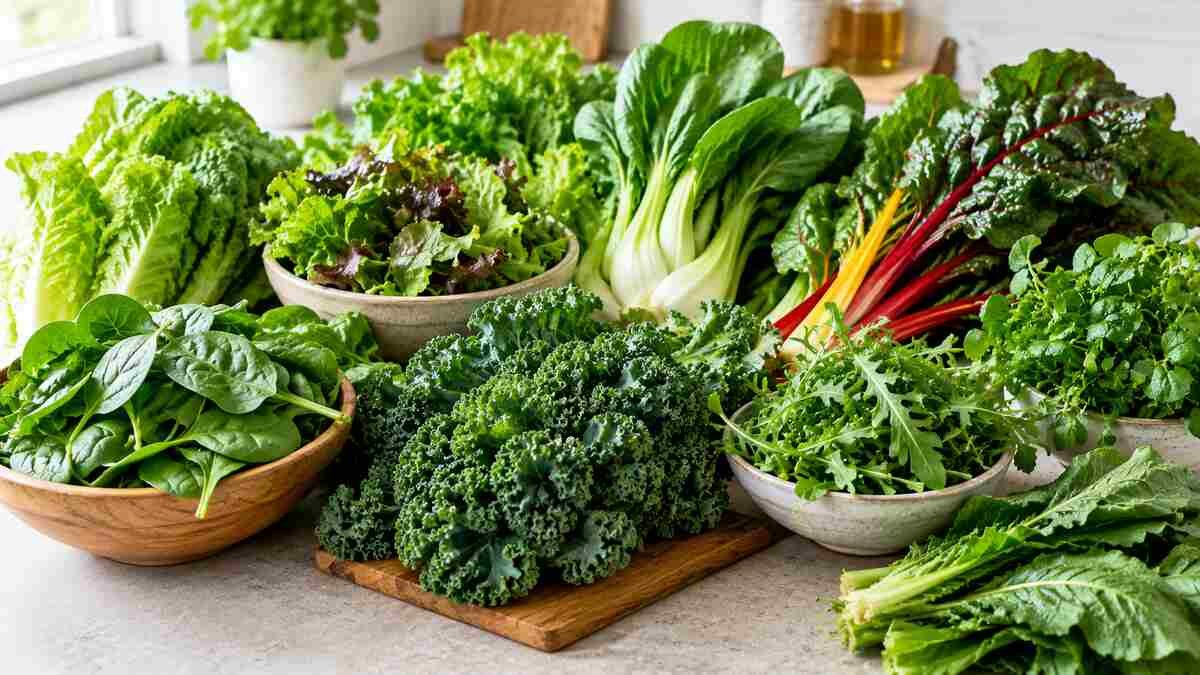

Leafy greens are nutrient-rich vegetables that provide vitamins A, C, and K, folate, fiber, and beneficial plant compounds. Eating a variety of leafy greens as part of a balanced diet can support normal digestion, bone health, vision, and cardiovascular health.
From spinach and kale to lettuce, bok choy, and mustard greens, leafy greens are among the most versatile vegetables for building nutritious meals. They are low in calories, easy to cook or eat raw, and available fresh or frozen in most grocery stores. Many cuisines around the world also feature local greens, such as amaranth leaves (lal shak) and spinach (palong shak) in South Asia.
This guide explains what leafy greens are, the nutrients they provide, and eight ways they can support health. It also covers the best varieties to eat, raw versus cooked preparation, and precautions for people who take blood thinners or are prone to kidney stones. Leafy greens complement a balanced diet but do not replace other nutritious foods, and no single green supplies everything your body needs.
What Are Leafy Greens?
Leafy greens are vegetables whose leaves, and sometimes their tender stems, are eaten. They range from mild and tender, such as romaine lettuce, to bold and slightly bitter, such as mustard greens and arugula. Most can be eaten raw or cooked, depending on the type.
Common Types of Leafy Greens
Some of the most widely eaten leafy greens include:
- Spinach
- Kale
- Collard greens
- Romaine and other lettuces
- Swiss chard
- Bok choy
- Mustard greens
- Turnip greens
- Arugula
- Watercress
- Amaranth leaves (lal shak) and other seasonal edible greens common in South Asian cooking
Many of these, including kale, collards, bok choy, mustard greens, arugula, and watercress, belong to the cruciferous family.
You can read more in our guide to cruciferous vegetables.
Why Are Leafy Greens Considered Nutrient-Dense?
A food is called nutrient-dense when it provides many vitamins and minerals relative to its calories. Most leafy greens fit this description. Exact nutrient levels vary by species, freshness, portion size, and preparation, so it helps to eat a range of types. For more foods in this category, see our guide to nutrient-dense foods.
Leafy Greens Nutrition Facts
The nutrient profile differs from one green to another, but several nutrients appear again and again. The ones below have well-established roles in the body, according to the NIH Office of Dietary Supplements.
Important Vitamins and Minerals
- Vitamin K: Helps with normal blood clotting and supports bone metabolism. Kale, spinach, collards, and turnip greens are especially rich sources, as described in the NIH vitamin K fact sheet.
- Folate: Needed for DNA synthesis and normal cell division. See the NIH folate fact sheet.
- Vitamin A precursors: Beta-carotene in some greens can be converted to vitamin A, which supports normal vision and immune function.
- Vitamin C: Supports collagen formation and helps the body absorb iron from plant foods. Our list of foods high in vitamin C shows more sources.
- Calcium: Contributes to normal bones and teeth. Amounts and absorption vary among greens.
- Potassium: Helps maintain fluid balance and supports nerve and muscle function.
- Magnesium: Supports many processes, including normal muscle and nerve function.
- Fiber: Supports digestive health and regular bowel movements.
Antioxidants and Beneficial Plant Compounds
Leafy greens also contain carotenoids such as lutein, zeaxanthin, and beta-carotene, along with other naturally occurring plant compounds. These add to the variety of your diet. However, evidence about a single compound should not be taken as proof that a vegetable prevents or treats disease.
Do All Leafy Greens Have the Same Nutritional Value?
No. Spinach, for example, is rich in several micronutrients but also contains oxalates, which can reduce how much calcium your body absorbs from it. Collards and bok choy are generally better calcium sources, because their calcium is absorbed more easily. The table below gives a general comparison; verify exact amounts in USDA FoodData Central.
| Leafy green | Notable nutrients | Common uses |
|---|---|---|
| Spinach | Folate, vitamin K, carotenoids, magnesium | Salads, soups, omelets, lentil dishes |
| Kale | Vitamin K, vitamin C, carotenoids | Salads, soups, stir-fries, grain bowls |
| Collard greens | Vitamin K, calcium | Stews, braised sides, wraps |
| Bok choy | Vitamin K, vitamin C, calcium | Steaming, soups, stir-fries |
| Swiss chard | Vitamin K, magnesium, potassium | Sauteing, soups, egg dishes |
| Romaine lettuce | Vitamin K, folate, vitamin A precursors | Salads, sandwiches, wraps |
| Mustard greens | Vitamin K, vitamin C, vitamin A precursors | Cooked sides, curries |
| Arugula | Vitamin K, nitrates, folate | Salads, pizza toppings, pasta |
| Watercress | Vitamin K, vitamin C | Salads, sandwiches, soups |
8 Health Benefits of Leafy Greens
The benefits below connect nutrients to established biological functions. Research on diets rich in vegetables often shows associations with better health, but these studies cannot prove that leafy greens alone cause those outcomes.
1. Supports Heart Health
Leafy greens contribute folate, potassium, fiber, and other nutrients to a heart-healthy eating pattern. They are low in calories and contain no cholesterol. Cardiovascular benefits are linked to an overall vegetable-rich diet, not to one food alone.
For more context, see our guide to the best vegetables for heart health.
2. Helps Maintain Strong Bones
Vitamin K plays a role in normal bone metabolism, and some greens, such as collards and bok choy, also provide calcium. The NIH calcium fact sheet notes that calcium absorption varies by food source.
Bone health also depends on vitamin D, protein, physical activity, and genetics. Leafy greens are one helpful piece of that picture. Read about other options in our list of calcium-rich foods.
3. Promotes Healthy Digestion
Dietary fiber adds bulk to stool, supports regular bowel movements, and feeds beneficial gut bacteria. Fiber content differs among greens, and cooked greens contain more fiber per cup than raw ones because they are more compact.
If you are not used to eating many vegetables, increase your intake gradually and drink enough water to reduce gas or bloating.
For more ideas, see our guides to vegetables for gut health and high-fiber foods for digestive health.
4. Supports Normal Vision
Lutein, zeaxanthin, and beta-carotene are found in greens such as spinach, kale, and collards. Beta-carotene is converted to vitamin A, which is essential for normal vision, as the NIH vitamin A fact sheet explains. Lutein and zeaxanthin are found in the retina.
These nutrients contribute to normal eye function, but leafy greens do not cure eye conditions or guarantee protection against vision loss. See an eye care professional for any changes in your vision.
5. Contributes to Normal Immune Function
Vitamins A and C, folate, and other nutrients in leafy greens are involved in normal immune function. The immune system also depends on an adequate overall diet, sleep, physical activity, and other health factors. Greens support these needs but cannot prevent infections by themselves.
6. Supports Healthy Blood Pressure
Potassium helps balance sodium in the body and supports normal blood pressure regulation. Leafy greens can fit into an eating pattern like the DASH eating plan, which also includes fruits, legumes, whole grains, and other vegetables.
People who have been advised to limit potassium because of kidney disease or certain medicines should talk with their healthcare professional first. Learn more in our article on potassium-rich vegetables.
7. Provides Antioxidants and Plant Compounds
Carotenoids, flavonoids, and other compounds in leafy greens act as antioxidants in laboratory studies. Promising research does not equal proven clinical outcomes in people, and evidence that antioxidants from foods prevent cancer or other diseases is mixed. Their main value is adding variety and nutrients to your diet.
To explore this topic further, read our overview of antioxidant-rich foods.
8. Helps Build a Nutrient-Rich Eating Pattern
Adding greens to meals increases vegetable variety and contributes important micronutrients without many calories. They pair well with beans, eggs, fish, whole grains, nuts, and other protein sources. No single vegetable provides everything the body needs, so greens work best alongside other foods.
Our overview of vegetable benefits explains how different vegetables complement each other.
Best Leafy Greens to Eat
The best leafy green is one you enjoy and can eat regularly. Each variety offers a slightly different mix of nutrients, so rotating among them gives you the widest range.
1. Spinach. Spinach provides folate, vitamin K, and carotenoids. It works well in salads, soups, omelets, lentil dishes, and cooked sides. Its oxalate content limits calcium absorption from spinach itself.
2. Kale. Kale provides vitamin K, vitamin C, and carotenoids. It suits salads, soups, stir-fries, and grain bowls. Massaging raw kale with a little olive oil and lemon makes it more tender.
3. Collard greens. Collards are a useful source of vitamin K and calcium. Calcium is generally absorbed better from collards than from high-oxalate spinach.
4. Bok choy. Bok choy provides vitamin K, vitamin C, and calcium. Its mild flavor works well in soups, steamed dishes, and stir-fries.
5. Amaranth leaves and mustard greens. These familiar options in many food traditions can be cooked with lentils, rice, or other vegetables. Amaranth leaves are also a good source of iron and calcium compared with many greens, although absorption varies.
Swiss chard, arugula, romaine lettuce, turnip greens, and watercress are also excellent choices, as shown in the table above. Beet greens, the tops of beets, are worth using too; see our guide to beetroot health benefits.
Raw vs. Cooked Leafy Greens: Which Is Healthier?
Neither raw nor cooked greens are universally healthier. The right choice depends on the vegetable, the dish, and the nutrient you care about.
Benefits of Eating Greens Raw
- They are convenient for salads, wraps, and sandwiches.
- They can retain heat-sensitive nutrients such as some vitamin C.
- They offer crunch, texture, and variety.
Benefits of Cooking Leafy Greens
- Cooking reduces volume, so it is easier to eat a larger portion.
- Certain cooking methods can improve how well the body absorbs some carotenoids.
- Boiling can reduce oxalates in some greens, but some water-soluble nutrients may leach into the cooking water.
Steaming, microwaving, or lightly sauteing are practical choices for many greens. Alternating raw and cooked preparations gives you the benefits of both. For a broader comparison, see our guide to raw vs. cooked vegetables.
How to Eat More Leafy Greens Every Day
Small, easy habits are more sustainable than elaborate recipes. Try a few of these:
- Add spinach or amaranth leaves to lentil dishes and soups.
- Include leafy vegetables in omelets and other breakfast dishes.
- Layer lettuce or arugula into sandwiches and wraps.
- Prepare mustard greens, bok choy, or other greens as a side dish.
- Mix greens into rice dishes, noodles, curries, or stir-fries.
- Combine greens with beans, eggs, tofu, fish, nuts, or seeds for more balanced meals.
- Use fresh or frozen greens, depending on availability and budget.
Tip: Start with the greens you already enjoy, then gradually introduce others. There is no need to eat every type or prepare elaborate recipes.
Frozen greens are often just as nutritious as fresh and can be more affordable; see our article on whether frozen vegetables are healthy. Our guide on how to eat more vegetables and the nutrition of broccoli offer more inspiration.
Potential Risks, Precautions, and Food Safety
Leafy greens are safe for most people when handled properly. Certain medicines and medical conditions can affect individual dietary advice.
Leafy Greens and Blood-Thinning Medication
Some leafy greens are rich in vitamin K, which can interact with the blood thinner warfarin. The NIH vitamin K fact sheet advises people taking warfarin to keep their vitamin K intake consistent from day to day. They should talk with their healthcare professional before making major dietary changes and should not automatically eliminate greens.
Oxalates and Kidney Stones
Spinach, Swiss chard, and some other greens contain oxalates. People with a history of certain kidney stones may need individualized dietary advice, and the NIDDK offers general guidance. They should not assume that all leafy vegetables must be avoided.
Washing and Storing Greens Safely
Fresh produce can sometimes carry harmful bacteria. The FDA recommends these basic steps:
- Wash fresh leafy vegetables under running water before preparing or eating them.
- Keep perishable greens refrigerated.
- Discard leaves that are spoiled or slimy.
- Follow package directions for prewashed greens, and avoid cross-contamination with raw meat and unwashed surfaces.
For more on this topic, see our guide to how to wash and store vegetables.
Frequently Asked Questions About Leafy Greens
What are the healthiest leafy greens to eat?
Spinach, kale, collards, bok choy, and other greens each provide different nutrients. Variety is generally more helpful than choosing a single “healthiest” option. Choose the types you enjoy and can afford.
Is it good to eat leafy greens every day?
For most people, eating leafy greens regularly can help contribute to a balanced diet. People who take warfarin should keep their intake steady, and those with kidney stones or kidney disease should ask their healthcare team about greens high in oxalates or potassium.
Are leafy greens healthier raw or cooked?
Both can be nutritious. Raw greens keep more heat-sensitive vitamin C, while cooking makes it easier to eat larger portions and may improve absorption of some carotenoids. The best choice depends on the vegetable, the cooking method, and the nutrient of interest.
Which leafy greens are rich in iron?
Spinach, Swiss chard, and amaranth leaves provide non-heme iron, the form found in plants. The NIH iron fact sheet explains that plant iron is absorbed less efficiently than heme iron from animal foods, and that eating vitamin C-rich foods at the same meal can improve absorption. See also our list of vegetables high in iron.
Can leafy greens help with digestion?
The fiber in leafy greens contributes to normal bowel function and regularity. Fiber amounts vary by green, and cooked greens are more concentrated per cup. Increase your intake gradually to limit gas and bloating.
Do leafy greens lose nutrients when frozen?
Frozen greens are usually blanched and frozen soon after harvest, so they retain most of their vitamins and minerals. Some vitamin C may be lost during blanching and storage. Frozen greens are a convenient and budget-friendly option year-round.
Can leafy greens prevent disease?
No single food can prevent disease. Diets rich in vegetables, including leafy greens, are associated with better long-term health, but studies cannot prove that greens alone are responsible. Think of leafy greens as one helpful part of an overall healthy lifestyle.
Conclusion
Leafy greens provide vitamins, minerals, fiber, and beneficial plant compounds that support normal body functions. Spinach, kale, collards, bok choy, and local seasonal greens can all contribute to a varied diet. Choose affordable, enjoyable options and alternate raw and cooked preparations. Include leafy greens in regular meals alongside other vegetables, protein sources, fruits, and whole grains.
If you take warfarin or have a medical condition that affects your diet, follow your healthcare professional’s advice.
Sources
- National Institutes of Health, Office of Dietary Supplements. Vitamin K: Fact Sheet for Health Professionals
- National Institutes of Health, Office of Dietary Supplements. Folate: Fact Sheet for Health Professionals
- National Institutes of Health, Office of Dietary Supplements. Vitamin A: Fact Sheet for Health Professionals
- National Institutes of Health, Office of Dietary Supplements. Calcium: Fact Sheet for Health Professionals
- National Institutes of Health, Office of Dietary Supplements. Iron: Fact Sheet for Health Professionals
- U.S. Department of Agriculture. FoodData Central
- National Heart, Lung, and Blood Institute. DASH Eating Plan
- National Institute of Diabetes and Digestive and Kidney Diseases. Eating, Diet, and Nutrition for Kidney Stones
- U.S. Food and Drug Administration. Selecting and Serving Produce Safely
Medical Disclaimer: This article is for general educational purposes only and is not medical advice. It does not diagnose, treat, or replace guidance from a qualified healthcare professional who knows your health history. Talk with your doctor or a registered dietitian before changing your diet, especially if you take blood thinners such as warfarin, have kidney disease or a history of kidney stones, or follow a potassium-restricted diet. If you think you may be having a medical emergency, call 911 or your local emergency number right away.