
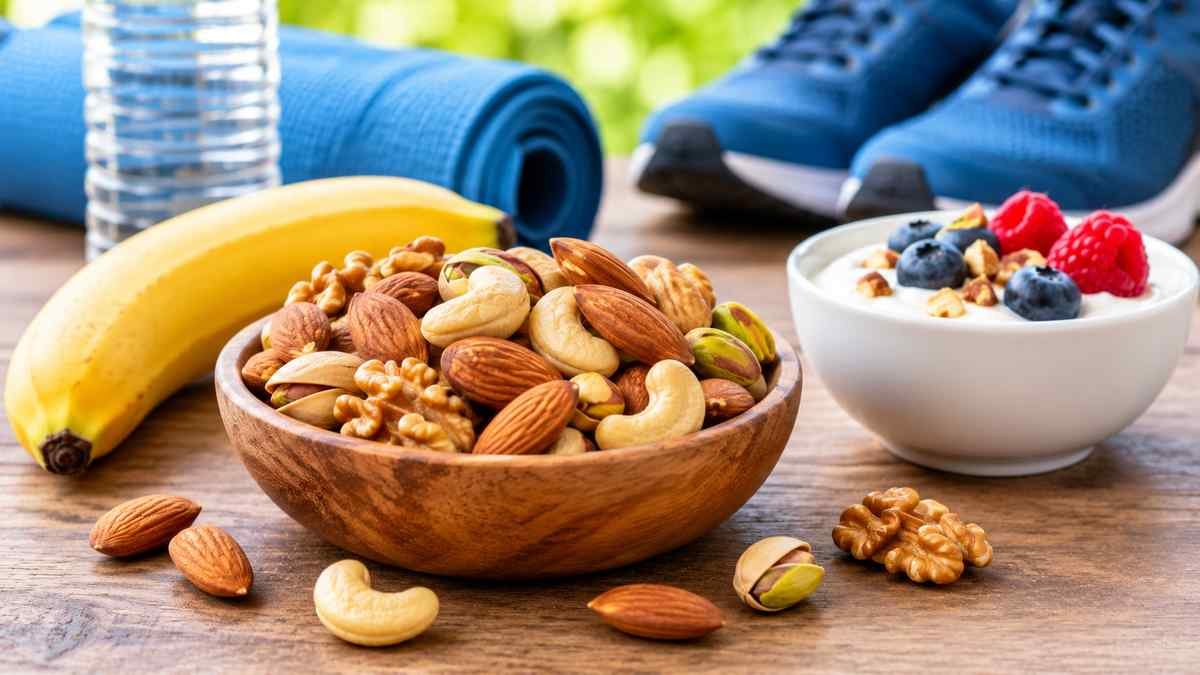

Whether you are heading to the gym, going for a run, or simply trying to stay active through the day, the right snack can help meet your energy needs. Nuts are a convenient option because they pack healthy fats, plant-based protein, and essential nutrients into a small serving. They also travel well, which makes them easy to keep in a gym bag, desk drawer, or car.
Not all nuts offer the same nutrition, though, and timing matters as much as the type you choose. Almonds, cashews, pistachios, walnuts, and peanuts each have their own strengths. A small handful can be a comfortable snack hours before a workout, but a large portion eaten right before intense exercise may feel heavy.
This guide explains how nuts for energy actually work, which choices fit different situations, and how to pair them with other foods. You will also find practical timing tips, serving sizes, and precautions. The central idea is simple: nuts can support an active lifestyle, but your needs depend on the type, length, and intensity of your activity.
How Nuts Provide Energy
Nuts provide dietary energy, which is different from the quick alertness you might feel from caffeine. They fuel your body gradually, as part of your overall eating pattern. Here is what makes them useful.
Nuts Are a Concentrated Source of Calories
Calories are the energy your body gets from food. Fat provides about 9 calories per gram, while carbohydrates and protein provide about 4 calories per gram each. Because nuts are rich in fat, they are energy-dense: most provide roughly 150 to 200 calories per ounce (28 grams), according to USDA FoodData Central and Mayo Clinic’s nut guide.
That density helps people with higher energy needs, such as those who train often, hike for hours, or find it hard to eat large meals. It also means portions add up quickly, which is worth remembering if you are watching your calorie intake.
The Role of Healthy Fats
Most nuts contain mostly unsaturated fats, including monounsaturated and polyunsaturated types. Fat contributes to your total energy intake, and it digests more slowly than carbohydrate. That slower pace can make nuts feel satisfying, and it also explains why they are not the best choice for a quick pre-workout boost.
Our guide to healthy fats explains how different fats fit into a balanced diet.
Protein, Fiber, and Micronutrients
Nuts also deliver nutrients that support an active body:
- Protein helps maintain and repair muscle. The MyPlate protein foods guidance lists nuts among everyday protein choices.
- Fiber supports digestive health.
- Magnesium contributes to normal muscle and nerve function, as described in the NIH magnesium fact sheet.
- B vitamins help the body turn food into usable energy. The NIH vitamin B6 fact sheet explains their role in metabolism.
- Iron supports oxygen transport in the blood (NIH iron fact sheet).
The amounts vary by nut. Nuts supply dietary energy and nutrients, but they do not work as instant stimulants. For more on foods that pack a lot of nutrition into small portions, see our guide to nutrient-dense foods.
Best Nuts for Energy
Each nut below can contribute to your energy intake. The “best” choice depends on your taste, budget, and the kind of exercise you do. No specific nut has been shown to directly increase stamina or athletic performance. The differences are mainly in nutrients, texture, and convenience.
1. Almonds: A Convenient Everyday Energy Snack
Almonds are a practical all-around choice for active people. They provide healthy fats, protein, fiber, vitamin E, and magnesium in a crunchy, portable snack. Vitamin E is an antioxidant, and the NIH vitamin E fact sheet lists nuts and seeds among its richest food sources.
For better exercise fueling, pair almonds with a carbohydrate source such as a banana, apple, or dried fruit. You can learn more in our guide to almond health benefits.
2. Cashews: A Useful Source of Carbohydrates and Minerals
Cashews contain somewhat more carbohydrate than several other common nuts, along with copper, magnesium, and plant-based protein. The NIH copper fact sheet notes that copper supports enzymes involved in energy production and iron use. Their softer, creamier texture works well in smoothies, homemade snack bars, and sauces.
Mixed with raisins or other dried fruit, cashews make a simple portable snack. Our article on the health benefits of cashews covers their nutrition in more detail.
3. Pistachios: Protein and Convenient Portioning
Pistachios offer protein, fiber, unsaturated fats, and vitamin B6. Unshelled pistachios also slow you down a little, since you have to crack each one, which can make portions easier to notice.
They work well in trail mix and in post-workout snacks with yogurt or fruit. See the health benefits of pistachios for more background.
4. Walnuts: A Source of Plant-Based Omega-3 Fat
Walnuts stand out for alpha-linolenic acid (ALA), a plant-based omega-3 fatty acid. The NIH omega-3 fact sheet explains that ALA is an essential fat, meaning the body cannot make it on its own. Walnuts also provide other unsaturated fats and add richness to oatmeal, yogurt, and snack mixes.
Walnuts are highly nutritious, but there is not strong human evidence that they reduce exercise soreness or speed up muscle recovery. Think of them as a nutritious addition to your diet, not a recovery supplement. Our guide to the benefits of eating walnuts every day goes deeper.
5. Peanuts: An Affordable, Protein-Rich Option
Peanuts are technically legumes, not botanical tree nuts, although they are usually grouped with nuts in nutrition discussions. They provide protein, fat, and calories at a budget-friendly price.
Peanut butter is an easy way to add energy to toast, bananas, or oatmeal. Choose versions with minimal added sugar and salt when you can. Our article on the health benefits of peanuts has more details.
Quick Comparison of Nuts for Energy
| Nut (plain) | Approx. calories per 28 g | Notable nutrient |
|---|---|---|
| Almonds | 164 | Vitamin E |
| Cashews | 157 | Copper |
| Pistachios | 159 | Vitamin B6 |
| Walnuts | 185 | ALA omega-3 |
| Peanuts | 166 | Protein |
Values are approximate and vary by variety and preparation, such as raw versus dry-roasted. You can check exact figures in USDA FoodData Central.
Nuts Before a Workout
Are Nuts Good Before Exercise?
They can be, with some caution. Nuts are convenient and provide energy, but their fat and fiber content slows digestion. Eaten well before a workout, that slower pace can help you feel fueled. Eaten right before running or high-intensity training, nuts may feel heavy or cause stomach discomfort in some people.
Cleveland Clinic’s guidance on eating before and after workouts notes that the intensity and length of your session affect whether you need a snack at all. For a light 30-minute session, you may not need one, while longer workouts call for more fuel. Tolerance varies from person to person, so if you notice cramping or fullness, try a smaller portion or move your snack earlier.
Best Nuts to Eat Before a Workout
These pairings combine a modest amount of nuts with carbohydrates:
- Almonds with a banana
- Cashews with a small serving of dried fruit
- Peanut butter on whole-grain toast
- A small portion of pistachios with fruit
Carbohydrate-rich foods are generally the more useful fuel for immediate exercise, especially for longer or more intense workouts. The joint position statement from the Academy of Nutrition and Dietetics, Dietitians of Canada, and the American College of Sports Medicine emphasizes that well-chosen nutrition strategies, including timing, support performance and recovery. Nuts work best as a supporting player.
When Should You Eat Nuts Before Exercise?
These are practical guidelines, not rigid rules:
| Timing | Practical approach |
|---|---|
| 2 to 3 hours before | A balanced meal with carbohydrates, protein, and a moderate amount of fat |
| 1 to 2 hours before | A small snack with carbohydrates and a modest nut portion |
| 30 to 60 minutes before | Prioritize easily digested carbohydrates; keep nuts minimal if they cause discomfort |
Workout length, intensity, and your own digestion all matter. A light walk is very different from a hard interval session or a long run.
Nuts After a Workout
Do Nuts Help With Post-Workout Recovery?
Exercise raises your need for energy and nutrients. Protein supports muscle repair and adaptation, and carbohydrates help replenish stored glycogen after demanding activity. A review in the Journal of the International Society of Sports Nutrition discusses how carbohydrate and protein intake after training relate to glycogen replenishment and muscle adaptation. Nuts contribute energy, some protein, and micronutrients, so they can be part of a recovery snack.
On their own, though, nuts may not supply enough protein or carbohydrate for recovery after a hard workout. They are best used alongside other foods. Eating nuts will not guarantee muscle growth or prevent soreness.
Best Nuts for Post-Workout Nutrition
Try these combinations:
- Almonds with Greek yogurt
- Pistachios with fruit
- Peanut butter on whole-grain toast
- Walnuts in oatmeal made with milk
- Cashews in a balanced snack bowl with fruit and yogurt
Pairing nuts with protein and carbohydrate foods creates a more complete recovery snack. If you are building muscle, our guide on how much protein you need to build muscle can help you plan your daily intake.
When Should You Eat Nuts After Exercise?
A balanced meal or snack within a few hours of exercise is a practical approach for most people. There is no need to rush to eat within a narrow “anabolic window.” The same nutrient timing review found that the importance, and even the existence, of a tight post-exercise window depends on several factors, including what and when you ate beforehand. Your total daily protein, carbohydrate intake, and overall diet matter more than the exact minute you eat.
After demanding exercise, aim for a mix of carbohydrates, protein, fluids, and enough total energy. Nuts can add to that mix but should not be the whole plan.
Best Nut and Food Combinations
Simple pairings are often the most useful. Bananas and dried fruit provide carbohydrates, while nuts add fat and some protein. Greek yogurt and milk contribute extra protein for recovery.
| Snack combination | Best use |
|---|---|
| Banana + almonds | Before exercise |
| Peanut butter + whole-grain toast | Pre-workout or everyday energy |
| Greek yogurt + pistachios + berries | Post-workout |
| Oatmeal + walnuts + milk | Recovery breakfast |
| Cashews + raisins | Portable energy snack |
| Trail mix with nuts and dried fruit | Hiking, walking, or longer activities |
You do not need a special combination for every workout. These are ideas to make eating well easier. The Dietary Guidelines for Americans encourage choosing a variety of nutrient-dense foods, which fits this approach. For everyday snack choices beyond exercise, see our guides to healthy foods and heart-healthy foods.
How Many Nuts Should You Eat for Energy?
A typical serving is about 1 ounce (28 grams), or a small handful. Most nuts provide roughly 150 to 200 calories per serving. The right amount depends on your energy needs, workout intensity, and other meals.
A smaller portion is usually more comfortable shortly before exercise. After a demanding session, a larger snack may make sense when you combine nuts with other foods. People who exercise for long periods may need more carbohydrate than nuts alone can provide.
A small handful of nuts can be a useful addition to an exercise snack, but the right amount depends on your activity level and overall energy needs. For immediate workout fuel, pair nuts with carbohydrates such as fruit or whole grains. If you eat several types of nuts, count them together toward your daily total. Our guide on how many nuts you should eat every day offers more help.
Potential Downsides and Precautions
Nuts May Feel Heavy Before Exercise
Fat and fiber slow digestion. A large portion right before running or intense training may cause discomfort. If this happens to you, try a smaller amount or eat nuts earlier.
Nuts Are Calorie-Dense
A small serving provides a lot of energy. That is helpful for many active people, and it is not a flaw. If you are monitoring calorie intake, measure portions instead of eating straight from the bag.
Nut Allergies
Tree nuts and peanuts can cause serious allergic reactions, including anaphylaxis. People with a known allergy should avoid the relevant foods and follow guidance from their healthcare professional. The FDA’s food allergy information explains that major allergens, including tree nuts and peanuts, must be declared on packaged food labels. Cross-contact is also possible with mixed nuts and packaged snacks, so read labels carefully.
Added Salt, Sugar, and Oils
Plain, unsalted nuts are a convenient everyday choice. Candied, honey-roasted, or heavily flavored products may contain added sugar or sodium. Check the ingredient list and the Nutrition Facts label when choosing packaged snacks and trail mixes. For general label-reading help, see Nutrition.gov.
Frequently Asked Questions
Which nuts are best for energy?
Almonds, cashews, pistachios, walnuts, and peanuts all provide energy through calories, fats, protein, and other nutrients. The best choice depends on your preferences and exercise needs. Most provide about 150 to 200 calories per ounce (USDA FoodData Central).
Should I eat nuts before or after a workout?
Nuts can fit either time. Before a workout, smaller portions paired with carbohydrates may be more comfortable. After exercise, nuts can complement protein- and carbohydrate-rich foods (Cleveland Clinic).
Are almonds good for pre-workout energy?
Yes, in moderation. Almonds provide energy, healthy fats, and some protein. Pairing a small portion with fruit adds carbohydrates, which are generally more useful for immediate exercise fuel.
Can nuts help with muscle recovery?
Nuts provide some protein and energy, which contribute to recovery nutrition. After demanding exercise, they usually need to be combined with other protein- and carbohydrate-rich foods (review). Nuts alone are not a complete recovery meal.
How many nuts should I eat before a workout?
A small portion often works well, especially one to two hours before exercise. The ideal amount depends on workout intensity, digestion, and individual energy needs.
Conclusion
Nuts are a convenient way to add energy and valuable nutrients to an active lifestyle. Whether you choose almonds before a workout or pistachios with yogurt afterward, the key is to match your snack to your exercise needs. Using nuts for energy works best when portions are sensible and timing suits your body.
Combine nuts with carbohydrate- and protein-rich foods when appropriate, and remember that consistent, balanced nutrition matters more than any single snack. You may also enjoy our guide to the health benefits of hazelnuts for another nutrient-dense nut to try.
Sources
- USDA FoodData Central: nutrient values for almonds, cashews, pistachios, walnuts, and peanuts
- Position of the Academy of Nutrition and Dietetics, Dietitians of Canada, and the American College of Sports Medicine: Nutrition and Athletic Performance (2016)
- Aragon AA, Schoenfeld BJ. Nutrient timing revisited: is there a post-exercise anabolic window? Journal of the International Society of Sports Nutrition. 2013
- Cleveland Clinic: What to eat before and after a workout
- Mayo Clinic: Nuts and your heart
- NIH Office of Dietary Supplements: Magnesium
- NIH Office of Dietary Supplements: Vitamin E
- NIH Office of Dietary Supplements: Vitamin B6
- NIH Office of Dietary Supplements: Iron
- NIH Office of Dietary Supplements: Copper
- NIH Office of Dietary Supplements: Omega-3 Fatty Acids
- USDA MyPlate: Protein Foods
- Dietary Guidelines for Americans
- FDA: Food Allergies
- Nutrition.gov
Medical Disclaimer: This article is for general educational purposes only and is not a substitute for professional medical or nutrition advice. Your energy and food needs depend on your health, activity, and goals. Talk with a doctor or registered dietitian before changing your diet or exercise routine, especially if you have a food allergy, diabetes, a digestive condition, or another medical concern.
1 thought on “Nuts for Energy: Best Choices Before and After Exercise”
Comments are closed.