
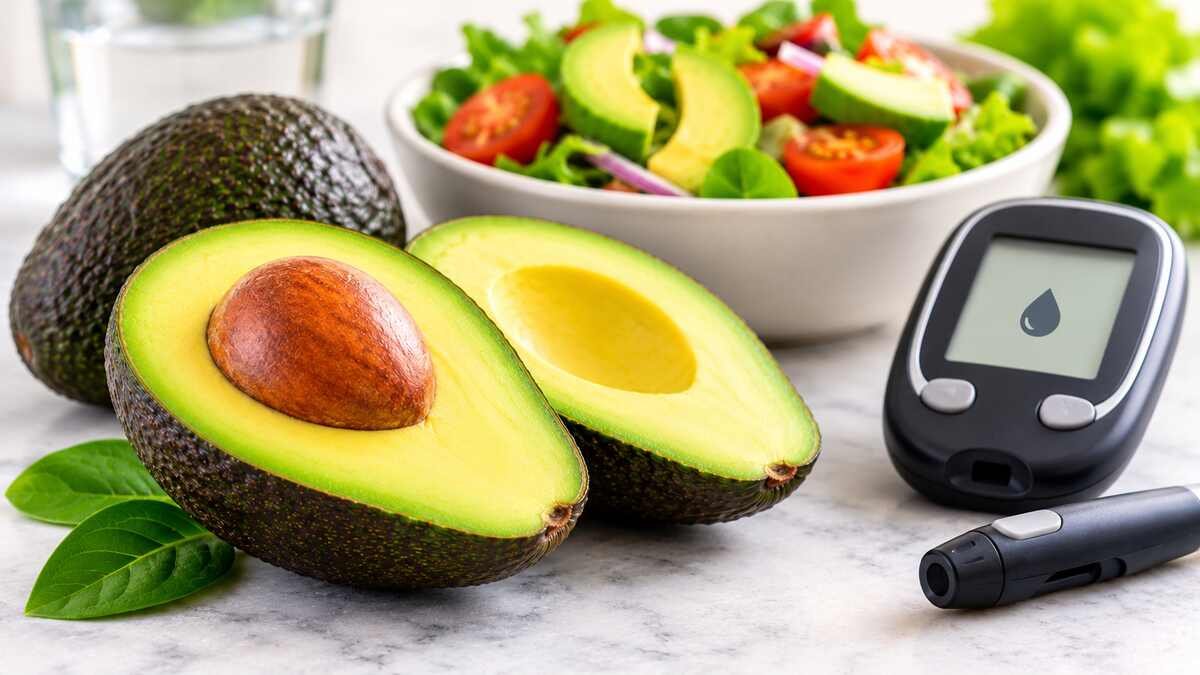

Can adding avocado to breakfast or lunch help keep your blood sugar steady? It is a common question, and avocado does have a lot going for it. It contains fiber, monounsaturated fats, and far less digestible carbohydrate than most fruits.
The honest answer is that avocado is unlikely to lower blood sugar directly or quickly. Because it has little digestible carbohydrate, it usually has a small immediate effect on blood glucose. Its fiber and unsaturated fats may support a balanced eating pattern that helps with long-term blood sugar management, but eating avocado is not a treatment for diabetes.
This article explains how avocado affects blood glucose, what research says about avocado and diabetes, how much is reasonable, and how to use it in everyday meals. It draws on sources such as USDA FoodData Central, the American Diabetes Association, and published clinical studies. It offers general information, not individualized medical advice.
Does Avocado Lower Blood Sugar?
Avocado does not directly lower blood sugar in a way that is proven or reliable. It is a low-carbohydrate, high-fiber food that can fit well into blood sugar-conscious meals, and some studies link it to better glucose measures. The evidence is not strong enough to call avocado a blood sugar-lowering food.
Does Avocado Directly Reduce Blood Glucose?
No. Avocado is not a medication, and research has not shown that it independently lowers blood glucose. Several points explain why it is often a comfortable choice for people watching their blood sugar:
- Avocado contains relatively few digestible carbohydrates.
- Eaten alone, it generally produces a smaller glucose response than carbohydrate-rich foods.
- Its fat and fiber may change how a mixed meal is digested.
If you want a broader foundation, see our guides to blood sugar and blood sugar levels.
Can Avocado Help Keep Blood Sugar More Stable?
It may help indirectly. Replacing refined carbohydrates or saturated-fat-rich foods with avocado can improve the overall quality of a meal. The effect depends on what the avocado replaces, the rest of the meal, the portion size, and your individual metabolic response.
For more on this topic, see our article on the health benefits of avocado.
How Avocado Affects Blood Sugar Levels
Three features of avocado explain why it tends to work well in a blood sugar-conscious diet.
Avocado Contains Very Few Digestible Carbohydrates
Avocado does contain carbohydrate, but most of it is fiber. Fiber is not digested and absorbed the way starch and sugar are, so it does not raise blood glucose in the same way. Digestible (net) carbohydrate is the number that matters most when thinking about a food’s immediate effect on blood sugar.
Fiber May Support Blood Sugar Management
Dietary fiber can slow digestion, add to fullness, and improve overall diet quality. The National Institute of Diabetes and Digestive and Kidney Diseases and the American Diabetes Association both encourage fiber-rich foods as part of eating with diabetes. Avocado’s fiber is helpful, but it does not guarantee a specific drop in blood sugar. Our list of high-fiber foods for digestive health has more options.
Healthy Fats May Influence Meal Responses
Avocado is rich in monounsaturated fat. Fat can slow stomach emptying, which sometimes delays the rise in glucose after a mixed meal. A delayed rise is not necessarily a lower overall glucose response, so this effect should not be overstated. You can read more about healthy fats on CollectedMed.
7 Potential Benefits of Avocado for Blood Sugar and Diabetes
Most of these benefits are indirect. They come from what avocado adds to a meal and what it replaces.
1. May Help Support More Balanced Meals
Avocado adds fiber and unsaturated fat to meals. Combined with vegetables and protein, it can make a plate more satisfying and nutritionally balanced.
2. Provides Fiber With Minimal Digestible Carbohydrates
People who monitor carbohydrate intake often find avocado useful. It contributes fiber and digestive benefits without adding much digestible carbohydrate.
3. May Support Cardiovascular Health
Heart health is especially important for people with diabetes. Replacing foods high in saturated fat with avocado may support healthier cholesterol levels, according to the American Heart Association. See our guide to heart-healthy foods.
4. May Help Improve Satiety
Fat and fiber can help you feel satisfied after eating. Fullness does not automatically lead to weight loss or better glucose control, but it can make healthy eating easier to stick with.
5. Supports Nutrient-Dense Eating
Avocado provides potassium, folate, vitamin E, and other nutrients. Nutrient-dense foods help build a healthy overall dietary pattern, which matters more than any single food.
6. May Fit Into Weight-Management Diets
Avocado can be part of a balanced weight-management approach. Because it is relatively calorie-dense, portion size matters. Our weight management guide covers broader strategies.
7. Can Replace Less Nutritious Ingredients
Substitution is where avocado shines. Try it in place of butter on toast, instead of some mayonnaise in sandwiches, or instead of creamy, saturated-fat-rich dressings. Swapping is more meaningful than simply adding avocado to an existing meal.
Avocado Nutrition Facts and Glycemic Index
Avocado differs from most carbohydrate-rich fruits. It is high in fat and fiber and low in digestible carbohydrate. The values below are approximate for 100 grams of raw avocado, based on USDA FoodData Central.
| Nutrient | Amount per 100 g |
|---|---|
| Calories | 160 kcal |
| Total carbohydrates | 8.5 g |
| Dietary fiber | 6.7 g |
| Net carbohydrates (total minus fiber) | 1.8 g |
| Total fat | 14.7 g |
| Protein | 2 g |
| Potassium | 485 mg |
What Is the Glycemic Index of Avocado?
Avocado is generally considered a very low-glycemic food because it contains so little digestible carbohydrate. It is unlikely to cause a large glucose spike when eaten alone, and its response differs from that of carbohydrate-rich fruits.
There is limited reason to focus on a precise glycemic index number for avocado. The overall meal matters more than one ingredient, including the other carbohydrates you eat with it.
Is Avocado Good for People With Diabetes?
Avocado can fit well into a diabetes-friendly eating pattern. It does not replace medication or medical care.
Avocado and Type 2 Diabetes
A 2023 cross-sectional analysis of up to 14,591 Hispanic/Latino adults in the Hispanic Community Health Study/Study of Latinos found that, among people with type 2 diabetes, higher avocado intake was associated with lower HbA1c and lower fasting glucose. Because the study looked at one point in time, it cannot show that avocado caused these differences. A related analysis of the same group reported an association between avocado intake and lower rates of new type 2 diabetes, which also remains observational.
Controlled trials have been less clear. A 12-week randomized trial in 93 adults with overweight or obesity and insulin resistance found trends toward better HbA1c and fasting insulin with daily avocado, but differences did not reach standard statistical significance. Another randomized trial of one fresh avocado daily found no improvement in insulin sensitivity or beta-cell function. Our type 2 diabetes overview offers more background.
Avocado and Prediabetes
Evidence is even less conclusive for prediabetes. The 2023 observational study found no clear associations in participants with prediabetes. Avocado has not been shown to prevent diabetes or reverse insulin resistance.
Can People With Diabetes Eat Avocado Daily?
Many people with diabetes can include avocado regularly. Portion size, total calorie intake, individual carbohydrate needs, and medication and meal-planning considerations all matter. Avoid changing your diet in major ways without talking to your care team, particularly if you take insulin or other glucose-lowering medicines. Our diabetes diet guide offers more general guidance.
How Much Avocado Should You Eat for Blood Sugar Management?
There is no official recommended amount of avocado for blood sugar management. These are general ideas, not medical prescriptions.
Is Half an Avocado a Good Daily Portion?
Half of a medium avocado is a practical serving for many people. The best portion depends on your energy needs, activity level, and the rest of your meal.
Can You Eat One Whole Avocado Every Day?
A whole avocado can fit some diets, but it contains considerably more calories than a smaller portion. Our article on whether you can eat avocado every day covers portions and safety in more detail.
Does Eating More Avocado Lower Blood Sugar More?
No established dose-response relationship shows that larger amounts of avocado lower blood sugar further. Eating excessive amounts as a diabetes-management strategy is not recommended, since it mainly adds calories.
Best Ways to Eat Avocado for Blood Sugar-Friendly Meals
Good preparations keep avocado simple and balanced with other whole foods.
Add Avocado to Whole-Grain Toast
Top whole-grain toast with mashed avocado and an egg or another protein source. The protein and fat help make the meal more balanced than toast alone.
Pair Avocado With Vegetables
Add avocado to salads with leafy greens, tomatoes, and cucumbers. See our list of the best vegetables for diabetes for more ideas.
Combine Avocado With Protein-Rich Foods
Try avocado with beans, lentils, fish, eggs, or chicken. These combinations create satisfying meals with fiber, protein, and unsaturated fat.
Replace Less Healthy Fats
Use avocado in place of some butter, mayonnaise, or saturated-fat-rich spreads. This is one of the simplest ways to improve the fat quality of a meal.
Avoid Excessive Added Sugar and Calories
Avocado smoothies and desserts can become poor choices for blood sugar-conscious eating when they contain large amounts of sweeteners. Read labels and keep added sugars low.
Can Avocado Cause Blood Sugar Problems?
For most people, avocado is unlikely to cause blood sugar problems. A few points are still worth knowing.
Can Avocado Raise Blood Sugar?
Avocado contains some carbohydrate, but most of it is fiber, so its immediate effect on blood glucose is usually limited. Responses vary from person to person. If you use a glucose meter or continuous monitor, you can see how your own body responds.
Can Eating Too Much Avocado Affect Weight?
Avocado is calorie-dense, and large portions can raise total calorie intake. Over time, extra calories can contribute to weight gain, which can make blood sugar harder to manage.
Does Avocado Affect Diabetes Medication?
Avocado is not a substitute for medication, and it should never be used to adjust insulin or other diabetes medicines on your own. Talk with a healthcare professional about significant diet changes, especially if you take glucose-lowering medication. The CDC offers additional diabetes resources.
Frequently Asked Questions About Avocado and Blood Sugar
Does Avocado Lower Blood Sugar Quickly?
No. Avocado is not a fast-acting blood sugar-lowering food or treatment. Its main advantage is its low digestible carbohydrate content and its potential role in a balanced meal.
Is Avocado Good for High Blood Sugar?
Avocado can be included in a balanced diet for people with high blood sugar because it contains relatively little digestible carbohydrate. It does not independently treat hyperglycemia, so follow your care plan. See our guide to signs of high blood sugar.
Does Avocado Have a High Glycemic Index?
No. Avocado is generally considered a very low-glycemic food because it contains very little digestible carbohydrate.
Can Diabetics Eat Avocado Every Day?
Most people with diabetes can include avocado regularly. Portion size, calorie intake, and individual dietary needs should guide how much you eat.
Is Avocado Better Than Banana for Blood Sugar?
Avocado generally contains much less digestible carbohydrate than banana, so its immediate glucose effect is usually smaller. Both can fit into a healthy diet depending on portion size and your needs. See our guide to the health benefits of bananas.
Does Avocado Help Reduce Insulin Resistance?
Some research links avocado intake to better glucose regulation, but current evidence does not establish avocado as a treatment for insulin resistance. A randomized trial in adults with insulin resistance showed only trends in some measures.
The Bottom Line
Avocado generally has a limited immediate effect on blood glucose. Its fiber and unsaturated fats make it a nutritious choice, and it may support blood sugar-conscious eating when it replaces less nutritious ingredients. Some observational research links avocado intake to better glucose measures in people with type 2 diabetes, but the evidence is not strong enough to claim that avocado independently lowers blood sugar or treats diabetes.
Portion size and your overall dietary pattern remain important. Avocado can be a useful addition to balanced meals, but managing blood sugar takes a broader approach: nutrition, physical activity, medication when prescribed, and regular monitoring.
For next steps, explore our guide to how to prevent diabetes.
Sources
- U.S. Department of Agriculture. FoodData Central.
- American Diabetes Association. Food and Nutrition.
- National Institute of Diabetes and Digestive and Kidney Diseases. Diet, Eating, and Physical Activity.
- Centers for Disease Control and Prevention. Diabetes.
- American Heart Association. Saturated Fats.
- Senn MK, et al. Associations between avocado intake and measures of glucose and insulin homeostasis in Hispanic individuals with and without type 2 diabetes (HCHS/SOL). Nutrition, Metabolism and Cardiovascular Diseases, 2023.
- Wood AC, et al. Associations between Avocado Intake and Lower Rates of Incident Type 2 Diabetes in US Adults with Hispanic/Latino Ancestry. Journal of Diabetes Mellitus, 2023.
- Zhang X, et al. Avocado Consumption for 12 Weeks and Cardiometabolic Risk Factors: A Randomized Controlled Trial in Adults with Overweight or Obesity and Insulin Resistance. Journal of Nutrition, 2022.
- Khan NA, et al. Avocado Consumption, Abdominal Adiposity, and Oral Glucose Tolerance Among Persons with Overweight and Obesity. Journal of Nutrition, 2021.
Medical Disclaimer: This article is for general educational purposes only and is not medical advice. It does not replace the guidance of your doctor, pharmacist, or registered dietitian. Talk with a qualified healthcare professional before changing your diet or diabetes treatment, especially if you take insulin or other glucose-lowering medication.
1 thought on “Does Avocado Lower Blood Sugar? Benefits, Nutrition & What Science Says”
Comments are closed.