
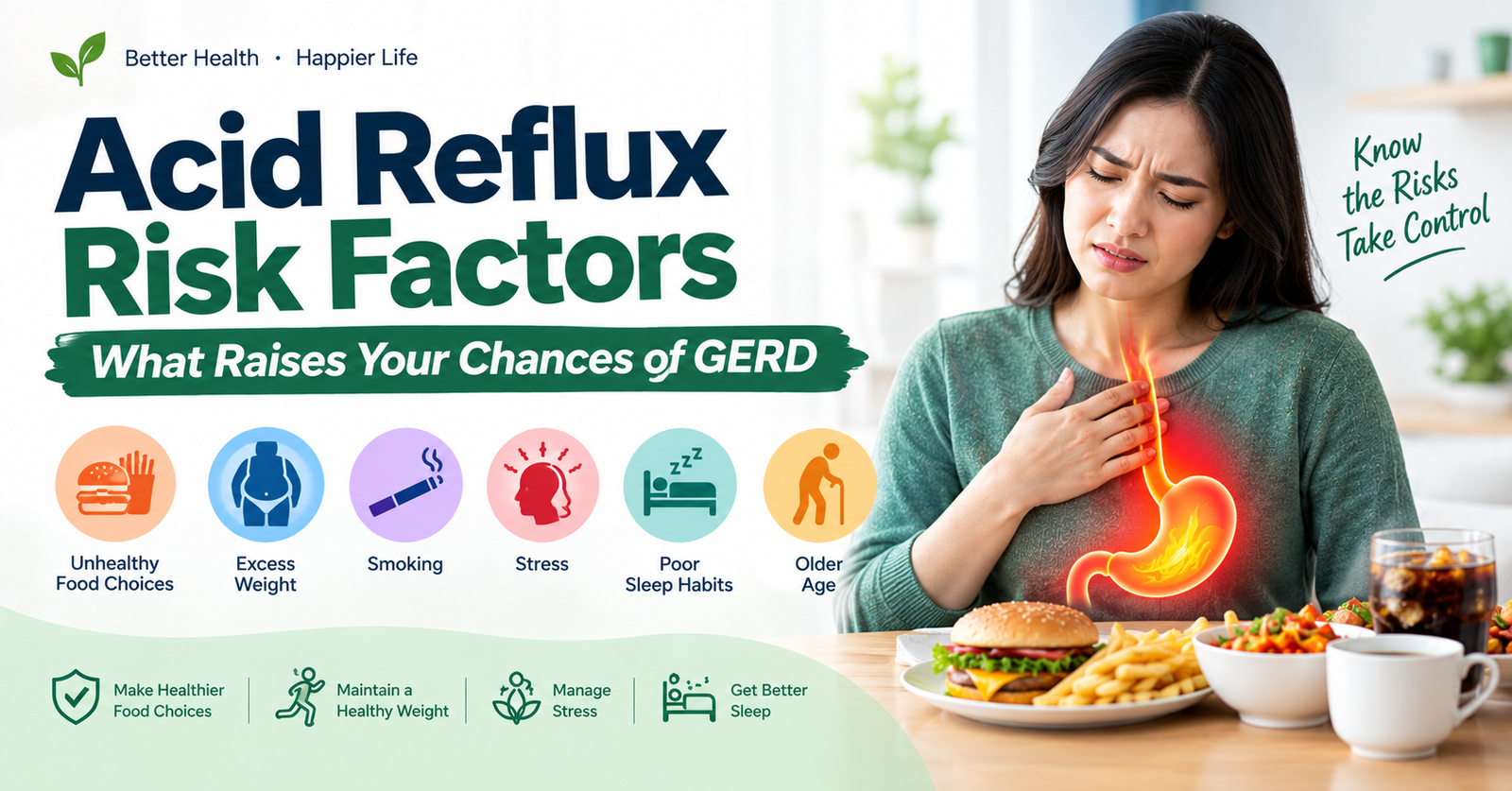

Almost everyone gets acid reflux occasionally. A big meal, a glass of wine, or a late dinner can push stomach acid back up where it doesn’t belong. But some people deal with it constantly, while others rarely notice it at all.
The difference often comes down to risk factors — the traits, habits, and health conditions that make reflux more likely. Some of these you can change. Others, like age or genetics, you can’t.
This guide walks through the main risk factors behind acid reflux and GERD, in plain language. You’ll see which ones apply to you, and which ones are worth addressing.
What Acid Reflux and GERD Actually Are
Acid reflux happens when stomach acid flows backward into the esophagus, the tube connecting your mouth to your stomach. A ring of muscle called the lower esophageal sphincter (LES) normally keeps this from happening. It opens to let food down, then closes again.
When the LES weakens or relaxes at the wrong time, acid slips through. That’s reflux.
Occasional reflux is normal. GERD (gastroesophageal reflux disease) is the diagnosis doctors use when reflux happens often enough, or is severe enough, to cause real symptoms or damage. Most guidelines define this as symptoms occurring two or more times a week, or milder symptoms that still affect your daily life.
If you’re not sure whether your symptoms fit this pattern, our guide to common digestive problems covers how reflux compares to other everyday digestive complaints.
Age-Related Risk Factors
Age is one of the strongest, most consistent risk factors for acid reflux. Several physical changes happen in the body over time, and they tend to stack.
The LES Weakens Over Time
The muscle tone of the lower esophageal sphincter naturally declines with age. A weaker LES lets acid escape more easily, even without any single “cause” behind it.
The Esophagus Clears Acid More Slowly
Esophageal motility — the wave-like muscle contractions that push food and acid back down — also slows with age. This means acid sits in contact with the esophageal lining longer, which increases irritation.
Hiatal Hernias Become More Common
A hiatal hernia happens when part of the stomach pushes up through the diaphragm. It becomes dramatically more common with age. Research shows hiatal hernias affect up to 60% of people over age 50, and a hernia directly disrupts the anti-reflux barrier.
The Stomach Empties More Slowly
Gastric emptying slows with age too. Food stays in the stomach longer, which raises the odds that some of it — and the acid with it — ends up back in the esophagus.
We’ve covered how these age-related changes play out in two dedicated guides. See acid reflux in your 30s for when reflux often first appears, and acid reflux in your 50s for when these changes become much more significant.
Weight and Body-Related Risk Factors
Extra weight, especially around the abdomen, is one of the most well-documented risk factors for reflux.
Abdominal Pressure
Extra weight around the midsection pushes up on the stomach. That added pressure can force acid through the LES, even if the muscle itself is otherwise healthy.
Weight Loss Genuinely Helps
This is one of the few reflux-related lifestyle factors backed by strong clinical evidence. Weight loss in people who are overweight is specifically recommended in gastroenterology guidelines for reducing GERD symptoms.
If weight is part of your reflux picture, our roundup of current weight loss trends covers approaches people are using now, with an eye toward what’s actually sustainable.
Diet and Food Triggers
Food doesn’t cause reflux on its own, but certain foods make it easier for acid to escape or increase how much acid your stomach produces.
Common Trigger Foods
The most frequently reported triggers include:
- Fatty and fried foods
- Spicy dishes
- Citrus fruits and tomato-based sauces
- Chocolate
- Caffeinated drinks
- Carbonated beverages
- Mint and peppermint
Not everyone reacts to the same foods. Triggers vary quite a bit from person to person, so a personal food log often works better than a generic avoidance list.
Meal Size and Timing
Large meals stretch the stomach and increase pressure on the LES. Eating within a few hours of lying down gives acid an easy path upward, since gravity isn’t helping keep it in place.
Natural Remedies Worth Understanding
Some people turn to natural ingredients like ginger to settle their stomach. Our article on whether ginger helps acid reflux looks at what the evidence actually says. Our broader piece on ginger’s health benefits covers where it helps and where the claims outpace the research.
Lifestyle Risk Factors
Daily habits add up over time, and several have a direct, measurable effect on reflux risk.
Alcohol
Alcohol relaxes the LES. Research reviewing multiple trials found this effect consistently across studies, making alcohol one of the better-supported dietary triggers for reflux.
Smoking
Smoking reduces LES pressure and cuts down on saliva production. Saliva naturally helps neutralize acid, so less of it means less protection for your esophagus.
Stress
Stress doesn’t directly increase stomach acid the way it’s often described. But it does appear to heighten how strongly your body perceives reflux symptoms, and several studies link higher stress and anxiety levels with more severe GERD symptoms.
Lack of Physical Activity
A sedentary lifestyle contributes to weight gain and slower digestion, both of which raise reflux risk indirectly rather than as a direct cause on their own.
Medical Conditions That Raise Reflux Risk
Several health conditions make reflux more likely, independent of diet or lifestyle.
Hiatal Hernia
As mentioned above, this structural issue directly weakens the body’s natural defense against reflux and becomes more common with age.
Diabetes
Diabetes can slow gastric emptying, a condition called gastroparesis. Food sitting in the stomach longer increases the chance that acid backs up into the esophagus.
Connective Tissue Disorders
Conditions like scleroderma affect the muscles of the esophagus directly, often causing more severe and harder-to-treat reflux than typical GERD.
Asthma
The relationship between asthma and reflux runs in both directions. Reflux can worsen asthma symptoms, and certain asthma medications can relax the LES, creating a cycle that’s worth discussing with a doctor if you have both conditions.
If you’re dealing with abdominal discomfort alongside reflux, it helps to sort out which symptom is causing what. Our guides to abdominal pain that comes and goes and what abdominal pain feels like can help with that.
Medications That Can Trigger or Worsen Reflux
Several common medications list reflux as a known side effect. This doesn’t mean you should stop taking them without talking to your doctor, but it’s worth knowing about.
Medications linked to increased reflux risk include:
- NSAIDs like ibuprofen and naproxen
- Calcium channel blockers, used for blood pressure
- Some antihistamines
- Certain antidepressants
- Bisphosphonates, used for bone density
These drugs work through different mechanisms. Some relax the LES directly. Others irritate the esophageal lining. If you started a new medication around the same time your reflux symptoms began, mention it at your next appointment.
Pregnancy as a Risk Factor
Pregnancy is one of the strongest known triggers for new-onset reflux. Two things happen at once during pregnancy that make this almost unavoidable for many women.
Rising progesterone levels relax smooth muscle throughout the body, including the LES. At the same time, the growing uterus adds physical pressure on the stomach. Reflux often improves after delivery, though for some women it persists or marks the start of a longer-term pattern.
Genetic and Family History Factors
Reflux isn’t purely about lifestyle. Twin studies estimate that genetics account for roughly 31% of the variation in who develops GERD. That’s a meaningful share, even though it’s less than half.
Researchers have identified several genes that may affect LES function, acid production, and inflammation in the esophagus. Having a parent or sibling with GERD, Barrett’s esophagus, or esophageal cancer raises your own risk, though it doesn’t guarantee you’ll develop the condition.
The practical takeaway: if reflux runs in your family, lifestyle changes still matter. Genetic risk and environmental risk interact, and addressing the factors you can control still reduces your overall risk even with an inherited predisposition.
Can You Lower Your Risk?
Several risk factors respond well to change, even though a few — age and genetics — are fixed.
Steps with the most consistent evidence behind them include:
- Losing weight if you’re overweight
- Cutting back on alcohol
- Quitting smoking
- Avoiding large meals close to bedtime
- Identifying and limiting your own specific food triggers, rather than following a generic list
None of these guarantee reflux will disappear entirely, especially if a hiatal hernia or another structural issue is part of the picture. But they meaningfully reduce how often and how severely symptoms occur for most people.
When to See a Doctor
Occasional reflux after a big meal usually isn’t worth a doctor’s visit. A pattern is different.
See a doctor if you have:
- Symptoms two or more times a week
- Difficulty or pain when swallowing
- Reflux that disrupts your sleep regularly
- Symptoms that don’t improve with over-the-counter antacids
- Unintentional weight loss alongside reflux symptoms
These signs suggest it’s time for an actual evaluation rather than continued self-management.
Frequently Asked Questions
What is the biggest risk factor for acid reflux?
Age and excess weight are two of the most consistently identified risk factors, since both directly affect how well the lower esophageal sphincter functions. That said, risk usually comes from a combination of factors rather than one single cause.
Can acid reflux be genetic?
Yes, to a meaningful degree. Twin studies estimate GERD heritability at around 31%, meaning genetics account for roughly a third of the variation in who develops the condition. Family history raises your risk but doesn’t determine your outcome on its own.
Does stress cause acid reflux?
Stress doesn’t appear to directly increase stomach acid production, but it does seem to increase how intensely people notice and experience reflux symptoms. Higher stress levels are consistently linked with more severe GERD symptoms in research.
Why does acid reflux get worse with age?
Several changes happen together as people get older: the LES weakens, the esophagus clears acid more slowly, the stomach empties more slowly, and hiatal hernias become far more common. Each change on its own is modest, but they tend to compound.
Can losing weight actually reduce acid reflux?
Yes. Weight loss in people who are overweight is one of the few lifestyle interventions for GERD with strong supporting evidence. Current clinical guidelines specifically recommend it for symptom improvement.
Are certain medications linked to acid reflux?
Yes. NSAIDs, calcium channel blockers, some antihistamines, certain antidepressants, and bisphosphonates have all been associated with increased reflux risk. Don’t stop a prescribed medication without talking to your doctor first.
Is acid reflux during pregnancy a sign of a problem?
Not usually. Reflux is extremely common in pregnancy due to hormonal changes and physical pressure from the growing uterus, and it typically improves after delivery. Severe or unusual symptoms should still be discussed with your OB.
How do I know if my reflux is serious enough to see a doctor?
Reflux that happens two or more times a week, disrupts sleep, causes difficulty swallowing, or doesn’t respond to over-the-counter antacids warrants a medical evaluation rather than continued self-treatment.
The Bottom Line
Acid reflux risk isn’t just one thing. It’s a combination of age, weight, diet, habits, medical conditions, medications, and genetics, all interacting at once.
Some of these you can’t change. But many of the biggest contributors — weight, alcohol, smoking, meal timing, and identifying your personal food triggers — respond well to action.
If your reflux happens occasionally and clears up on its own, that’s normal. If it’s frequent, worsening, or disrupting your life, treat that pattern as a signal to get evaluated rather than something to push through indefinitely.
Sources
- American College of Gastroenterology. Guidelines for the Diagnosis and Management of Gastroesophageal Reflux Disease
- Population-based study. Risk Factors for Gastroesophageal Reflux Disease
- PMC. Gastric Outlet Obstruction Caused by Acute Gastric Volvulus — hiatal hernia prevalence data
- PMC. Endoscopic Findings of GERD in Elderly and Younger Age Groups
- Examine.com. What Role Does Genetics Play in GERD?
- PMC. Genetic and Lifestyle Risk Factors for Gastroesophageal Reflux Symptoms — Swedish Twin Registry Study
Related Reading
- Common Digestive Problems: Causes and What They Mean
- Acid Reflux in Your 30s: Why It’s Starting Now
- Acid Reflux in Your 50s: What’s Changed and What Helps
- Abdominal Pain That Comes and Goes: Causes and Red Flags
- What Does Abdominal Pain Feel Like?
- Is Ginger Good for Acid Reflux?
- Is Ginger Good for Health?
- Weight Loss Trends for 2026
Medical Disclaimer
This article is for general information and education. It is not a diagnosis and cannot replace an in-person medical evaluation. If you have persistent, worsening, or concerning symptoms, talk to a healthcare professional.
Read our full Medical Disclaimer.
1 thought on “Acid Reflux Risk Factors: What Raises Your Chances of GERD”
Comments are closed.