
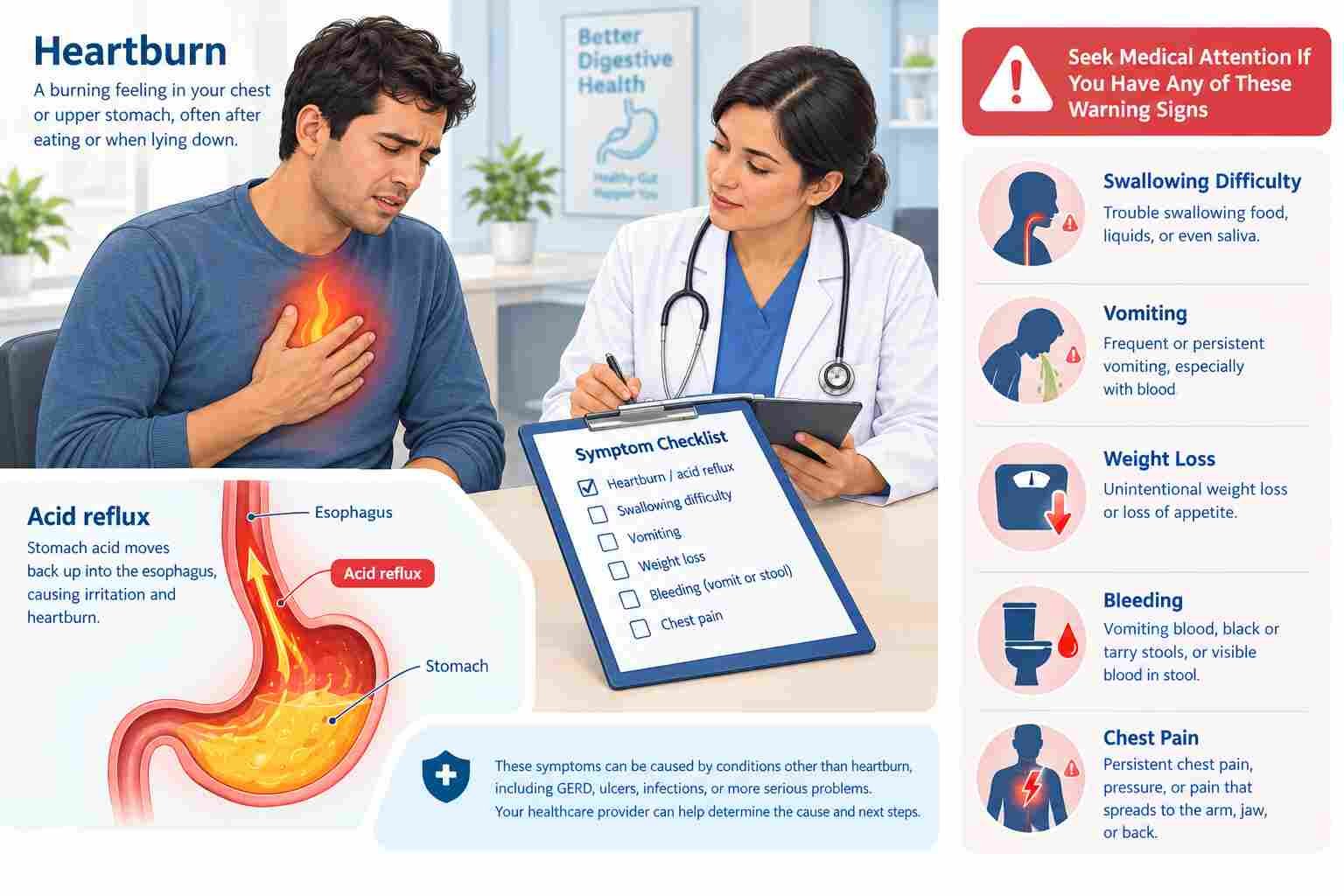

Occasional heartburn is common, and most people have felt it after a large meal or a late night snack. In many cases it passes on its own or responds to simple changes. That is reassuring, but it is only part of the picture.
Acid reflux that becomes frequent, disruptive, or unusual deserves attention, and some symptoms should not be assumed to be “just reflux.” A few warning signs call for prompt or even emergency care. Mayo Clinic advises seeing a healthcare professional for severe or frequent symptoms, for symptoms that continue despite nonprescription medicine, and for problems such as trouble swallowing or persistent vomiting.
This guide helps you sort your symptoms into three groups: what you can usually manage at home, what calls for an appointment, and what needs urgent or emergency care. It offers general information, not a diagnosis, and it cannot replace advice from a clinician who knows your history.
Quick answer: You should see a doctor for acid reflux when symptoms are frequent, persistent, severe, or don’t improve with lifestyle changes or over-the-counter treatment. Difficulty swallowing, persistent vomiting, unexplained weight loss, signs of digestive bleeding, or concerning chest pain also require medical evaluation.
When Is Acid Reflux Normal, and When Should You Worry?
Occasional reflux can happen after a large meal, after certain foods, or after lying down too soon after eating. If you want to understand why, see our guide on the common causes of acid reflux.
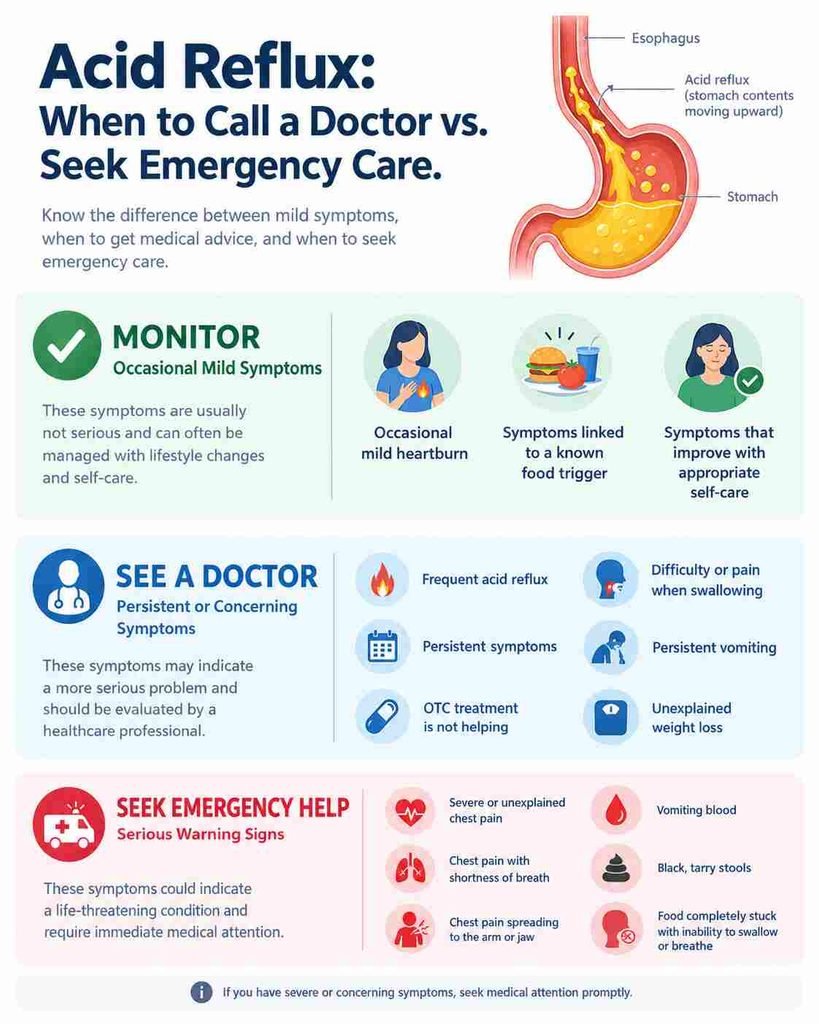
Not every symptom needs the same response. This three-level framework can help.
Usually manageable at home
- Occasional mild heartburn
- Symptoms linked to an identifiable trigger
- Symptoms that improve with lifestyle measures or occasional over-the-counter treatment
Make a doctor’s appointment
- Frequent symptoms
- Persistent symptoms
- Symptoms that affect sleep or daily life
- Symptoms that do not respond to usual measures
Seek urgent or emergency care
- Severe or unexplained chest pain
- Signs of gastrointestinal bleeding
- Food stuck in the esophagus
- Serious breathing or swallowing problems
For a broader look at severity and complications, read about when acid reflux may be serious. This article focuses on what to do next.
7 Acid Reflux Warning Signs You Shouldn’t Ignore
- Acid reflux happens frequently
- Symptoms don’t improve with lifestyle changes or over-the-counter medicine
- You have trouble or pain when swallowing
- You have persistent vomiting or nausea
- You are losing weight without trying
- You notice signs of bleeding
- You have chest pain that could be more than heartburn
1. Acid Reflux Happens Frequently
Recurring heartburn is not something you need to accept as normal. Signs that reflux has become a pattern include:
- Symptoms that appear repeatedly each week
- Regular use of over-the-counter medicine
- Symptoms that interfere with daily activities
- Frequent reflux at night
How often is acid reflux too often? Mayo Clinic suggests seeing a healthcare professional if you have severe or frequent symptoms or use nonprescription heartburn medicine more than twice a week. Frequency is not the only factor, though. Severity, sleep disruption, and how much symptoms affect your life also matter.
2. Symptoms Don’t Improve With Lifestyle Changes or Over-the-Counter Medicine
Perhaps you have tried smaller meals, earlier dinners, and an antacid, but the burning keeps returning. Repeated self-treatment should not replace an evaluation when symptoms persist.
NIDDK advises seeing a doctor if GERD symptoms do not improve with lifestyle changes or medicines. A clinician can check whether you have GERD, whether another condition is involved, and which treatment fits. You can preview your options in our guide to acid reflux treatment options.
3. You Have Trouble or Pain When Swallowing
The medical term for trouble swallowing is dysphagia. It can feel like:
- Food sticking in your throat or chest
- Difficulty getting food or liquids down
- Pain when you swallow
- Swallowing that is getting harder over time
This can point to irritation, narrowing of the esophagus, or another condition that needs evaluation. NIDDK lists difficulty or pain with swallowing as a reason to seek medical care.
Emergency note: If food becomes completely stuck and you cannot swallow, or you have trouble breathing, get emergency help right away. Mayo Clinic lists severe swallowing or breathing problems among reasons for urgent attention.
4. You Have Persistent Vomiting or Nausea
Occasional nausea is not always caused by reflux. Persistent vomiting should not automatically be blamed on acid reflux. Pay attention to:
- Repeated vomiting
- Trouble keeping food or fluids down
- Vomiting that comes with worsening symptoms
- Blood in vomit
NIDDK lists persistent vomiting as a warning sign. Vomiting blood, or vomit that looks like coffee grounds, can indicate digestive tract bleeding and needs prompt medical attention. Our article on what causes nausea explains other possible explanations.
5. You’re Losing Weight Without Trying
Unexplained weight loss matters because it can have several causes. With reflux, possible reasons include:
- Reduced appetite
- Difficulty swallowing
- Avoiding food because eating brings on symptoms
- Another digestive or medical condition
NIDDK lists unexplained weight loss as a reason to be evaluated when you also have reflux symptoms. Weight loss on its own does not prove a serious disease. It simply means a clinician should look into the reason.
6. You Notice Signs of Bleeding
Bleeding can occur anywhere along the digestive tract. Warning signs include:
- Vomiting blood
- Vomit that looks like coffee grounds
- Black, tarry stools
- Blood in the stool
NIDDK describes these as signs of gastrointestinal bleeding that need medical attention.
Don’t assume bleeding is caused by acid reflux. Seek prompt medical evaluation, and call 911 or go to an emergency department if bleeding is heavy or you feel faint, weak, or short of breath.
7. You Have Chest Pain That Could Be More Than Heartburn
This is the most important warning sign. Heartburn and heart-related chest pain can feel alike, so unexplained chest pain should not automatically be blamed on reflux. Chest pain should not be assumed to be acid reflux, particularly when it is severe, unexplained, or comes with other concerning symptoms.
🚨 Seek emergency medical help (call 911 in the U.S.) for chest pain with any of the following:
- Shortness of breath
- Pain spreading to the arm or jaw
- Pressure, squeezing, or severe discomfort
- Sweating
- Dizziness or fainting
Mayo Clinic advises immediate medical help for severe chest pain or pressure, especially with shortness of breath or arm or jaw pain.
Other Acid Reflux Symptoms Worth Discussing With Your Doctor
The seven signs above are not the only reasons to call. GERD can involve symptoms beyond classic heartburn. NIDDK notes that chronic cough and hoarseness can be associated with GERD. Consider raising these with a clinician:
- Chronic cough
- Persistent hoarseness
- Sore throat
- Nighttime reflux
- Regurgitation (stomach contents rising into your throat or mouth)
- Symptoms that disturb your sleep
- New or worsening symptoms
Cough and breathing symptoms can have many causes, so see our guides on what causes a cough and shortness of breath for more context.
When Should You See a Doctor for Acid Reflux?
| Situation | What to do |
|---|---|
| Occasional mild heartburn | Monitor triggers and use appropriate self-care |
| Frequent reflux | Schedule a medical appointment |
| Symptoms persist despite over-the-counter treatment | Schedule a medical appointment |
| Trouble swallowing | Contact a healthcare professional |
| Persistent vomiting | Contact a healthcare professional promptly |
| Unexplained weight loss | Arrange a medical evaluation |
| Vomiting blood or black stools | Seek urgent medical care |
| Severe or unexplained chest pain | Seek emergency medical help |
This table is a general guide, not a diagnosis. If you are unsure, it is reasonable to call your healthcare professional and describe what you are noticing.
What Will a Doctor Do for Acid Reflux?
Knowing what to expect can make an appointment feel less stressful.
Medical History
NIDDK explains that doctors usually start by reviewing your symptoms and medical history. Your clinician may ask:
- When your symptoms started
- How often they happen
- What seems to trigger them
- Whether they occur at night
- What medicines you have tried
- Whether swallowing is difficult
Physical Examination
Your clinician may do a physical exam based on your symptoms and history.
Additional Testing
Not everyone needs testing right away. Depending on your symptoms and response to treatment, doctors may consider an upper endoscopy, reflux monitoring, or other esophageal testing. NIDDK notes that doctors may order an upper GI endoscopy to check for complications or for problems other than GERD, and esophageal pH monitoring to confirm GERD or see whether treatment is working. Our guide on how acid reflux is diagnosed explains each step.
What Can Happen if Frequent Acid Reflux Goes Untreated?
Most people with reflux do not develop severe complications. Still, long-lasting or frequent reflux deserves proper evaluation. NIDDK describes possible GERD complications, which can include:
- Esophagitis (inflammation of the esophagus)
- Narrowing of the esophagus (stricture)
- Barrett’s esophagus (changes in the esophageal lining)
Effective treatment and follow-up can reduce symptoms and may lower the chance of complications, though results vary by person. For a deeper look at complications, see our article on when acid reflux may be serious. It may also help to review acid reflux risk factors to see why some people have more persistent symptoms.
What You Can Do While Waiting to See a Doctor
These steps are low risk and may help you and your clinician:
- Keep a symptom diary, including foods and drinks that seem to trigger symptoms.
- Avoid lying down right after eating.
- Eat smaller meals if large meals trigger symptoms.
- Follow medicine directions carefully.
- Bring a list of your medicines and supplements to the appointment.
- Do not stop prescribed medicines without medical advice.
Our guide on how to manage acid reflux at home covers these steps in more detail. If you want to know which habits to look at first, our article on what makes acid reflux worse can help.
Questions to Ask Your Doctor About Acid Reflux
Bring a short list so you do not forget anything:
- Could my symptoms be GERD or something else?
- Do I need medicine, and for how long?
- Do I need an endoscopy or another test?
- Which symptoms should make me seek urgent care?
- Are any of my medicines making reflux worse?
- Which lifestyle changes matter most for me?
Frequently Asked Questions
How often is acid reflux too often?
If you have heartburn or reflux more than twice a week, or you need over-the-counter medicine that often, it is time to talk with a healthcare professional. Frequent or recurring symptoms deserve evaluation. Mayo Clinic gives this guidance.
When should I see a doctor for acid reflux?
See a doctor if symptoms are frequent, persistent, severe, or not improving with treatment. Also seek care for trouble swallowing, persistent vomiting, unexplained weight loss, or signs of bleeding. NIDDK lists these warning signs.
Is acid reflux ever an emergency?
Yes, in some situations. Get emergency help for severe or unexplained chest pain, especially with shortness of breath or arm or jaw pain. Heavy bleeding, food stuck in the esophagus, or serious swallowing or breathing problems also need emergency care.
Can acid reflux cause difficulty swallowing?
It can be associated with swallowing problems, but trouble or pain with swallowing should always be evaluated. It may signal irritation, narrowing, or another condition. NIDDK lists it as a reason to see a doctor.
Can acid reflux cause weight loss?
Reflux itself is not necessarily the direct cause, but symptoms can make eating uncomfortable, which may lead to weight loss. Unexplained weight loss should be evaluated no matter the reason. Do not assume it comes from reflux.
Should I see a doctor for heartburn every day?
Yes. Daily or very frequent heartburn warrants professional evaluation instead of indefinite self-treatment. A clinician can look for GERD or other causes and recommend a treatment plan. Our guide on living with acid reflux offers additional support.
What happens if acid reflux is left untreated?
Most people do not develop severe problems, but long-lasting reflux can lead to complications such as esophagitis, narrowing of the esophagus, or Barrett’s esophagus. NIDDK describes these complications. Effective treatment can reduce symptoms and may reduce the chance of complications.
Conclusion
Occasional acid reflux is common, but frequent, persistent, or unusual symptoms deserve attention. Knowing the warning signs can help you avoid unnecessary worry while making sure you do not overlook symptoms that need care.
A simple way to remember it: occasional and mild symptoms call for self-care and monitoring, frequent or persistent symptoms call for an appointment, warning signs call for prompt evaluation, and severe chest pain or possible bleeding call for emergency care.
If you are managing mild symptoms, our guides to acid reflux treatment options and how to manage acid reflux at home can help. If anything on the warning list sounds familiar, please contact a healthcare professional.
Sources
- National Institute of Diabetes and Digestive and Kidney Diseases (NIDDK). Acid Reflux (GER & GERD) in Adults
- NIDDK. Symptoms & Causes of GER & GERD
- NIDDK. Diagnosis of GER & GERD
- NIDDK. Definition & Facts for GER & GERD
- Mayo Clinic. Gastroesophageal reflux disease (GERD): Symptoms and causes
- Mayo Clinic News Network. Mayo Clinic Q and A: Is it heartburn or a heart attack?
Medical Disclaimer: This article is for general information and education only. It does not provide medical advice, diagnosis, or treatment, and it is not a substitute for care from a qualified healthcare professional. Everyone’s health situation is different, so talk with your own clinician about your symptoms, medicines, and treatment choices. Never ignore or delay seeking professional advice because of something you read here. If you think you may be having a medical emergency, such as severe chest pain, call 911 or your local emergency number right away.
1 thought on “When to See a Doctor for Acid Reflux: 7 Warning Signs You Shouldn’t Ignore”
Comments are closed.