
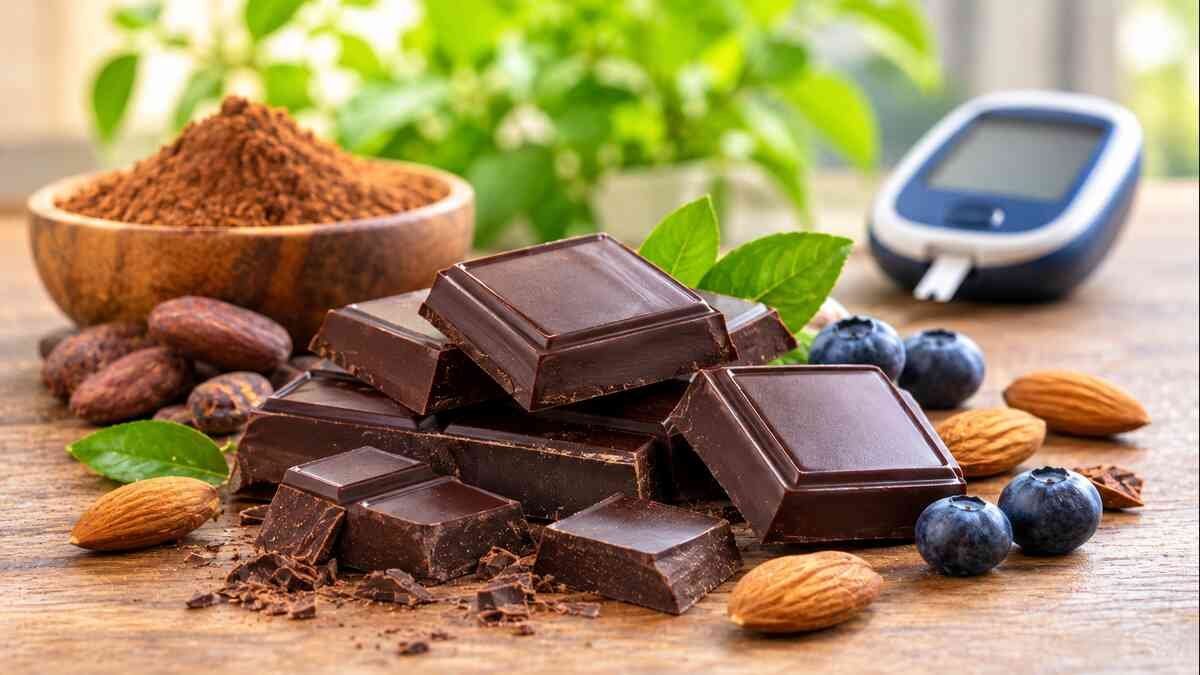

Dark chocolate can be enjoyed by some people with type 2 diabetes in moderate portions, but it is not a treatment for the condition. It contains cocoa flavanols that may support certain aspects of metabolic health, although findings are mixed. Because it still contains carbohydrates, calories, and sometimes added sugar, portion size and nutrition labels matter.
If you have type 2 diabetes, you have probably wondered whether dark chocolate is a smarter choice than a candy bar. It is a fair question. Dark chocolate generally has more cocoa and often less sugar than milk chocolate, and cocoa contains plant compounds that researchers have studied for their effects on insulin sensitivity and blood vessels.
This guide explains how dark chocolate may affect blood sugar, what the research does and does not show, and how to read labels and choose a product. It also covers portions, sugar-free options, risks, and the habits that matter most for managing diabetes. The goal is realistic expectations: dark chocolate may fit into a balanced eating plan, but your total carbohydrate intake, medication, and overall habits do the heavy lifting.
Is Dark Chocolate Good for Type 2 Diabetes?
Dark chocolate may fit into a balanced, diabetes-friendly eating plan, but it should not be treated as a blood sugar-lowering food or a diabetes treatment. It is often considered a better option than milk chocolate because it contains more cocoa solids and, in many products, less sugar. It also contains flavanols, a group of plant compounds found in cocoa.
According to the Harvard T.H. Chan School of Public Health, flavanols in chocolate have been linked to increased insulin sensitivity in short-term studies. Researchers are also interested in how flavanols may support blood vessel function. Some studies report improvements in blood glucose or other metabolic markers after cocoa intake.
However, these findings do not mean dark chocolate controls diabetes. Many studies use cocoa powders or extracts, not everyday chocolate bars. They are also often short, small, or inconsistent.
Added sugar and portion size remain important. A product labeled “dark” can still contain a meaningful amount of carbohydrate, and calories add up quickly. For a broader look at the food, see our overview of dark chocolate health benefits.
How Does Dark Chocolate Affect Blood Sugar?
Blood sugar is influenced by the total amount and type of carbohydrate you eat, along with fiber, fat, protein, activity, and medication. Dark chocolate is one small piece of that picture. Here is what to know about each angle.
Cocoa Flavanols and Insulin Sensitivity
Flavanols are naturally occurring plant compounds in cocoa, and epicatechin is one of the best known. Researchers are studying whether they help the body respond better to insulin, partly by supporting nitric oxide and healthy blood vessel function. Insulin sensitivity is central to type 2 diabetes, and you can read more in our guide to insulin resistance.
A promising biological mechanism is not the same as a proven treatment benefit. Flavanol levels in chocolate bars also vary widely, since processing can reduce them considerably.
Dark Chocolate and Blood Glucose Levels
When you eat carbohydrates, your body breaks them down into glucose, which enters the bloodstream. Dark chocolate contains carbohydrates, including sugar. According to Cleveland Clinic, one ounce of 70 to 85% dark chocolate contains about 13 grams of carbohydrates, 6.8 grams of sugar, and roughly 4 grams of fiber.
Different products can look very different. A 50% bar may have much more sugar, while an 85% bar may have less. Individual glucose responses also vary, so the same square can affect two people differently. For general background, see our guide to blood sugar.
Does Dark Chocolate Have a Low Glycemic Index?
The glycemic index (GI) ranks foods by how quickly they raise blood glucose compared with a reference food. A lower GI means a slower rise. Chocolate’s fat and fiber may slow digestion somewhat, but GI values vary by product, and it would be a mistake to label all dark chocolate as low-GI.
GI also does not tell the whole story. Portion size and total carbohydrate intake matter at least as much. A small portion with a modest carbohydrate load is usually easier to manage than a large portion of anything.
What Does Scientific Research Say About Dark Chocolate and Type 2 Diabetes?
The research covers two different questions: whether dark chocolate may lower the risk of developing type 2 diabetes, and whether cocoa may improve markers in people who already have it. These are not interchangeable.
A 2024 BMJ cohort study looked at diabetes risk. In a study published in The BMJ, researchers analyzed three large U.S. cohorts of health professionals followed for about 25 years. People who ate at least five servings of dark chocolate per week (a serving was about one ounce) had a 21% lower risk of developing type 2 diabetes than those who rarely ate chocolate. Milk chocolate showed no significant association, and higher milk chocolate intake was linked to long-term weight gain.
This was observational research, so it cannot prove that dark chocolate prevents diabetes. Most participants were older, non-Hispanic white adults, so the results may not apply to everyone. The authors called for randomized trials.
A 2022 meta-analysis looked at trials in people with type 2 diabetes. A systematic review and meta-analysis of 12 randomized trials in the International Journal of Food Sciences and Nutrition found that, in longer trials, cocoa products were associated with lower blood glucose, LDL cholesterol, and triglycerides. The trials used different cocoa products and interventions, not necessarily ordinary chocolate bars.
A 2025 review urged caution on blood lipids. A dose-response meta-analysis of 11 randomized trials with 506 participants with type 2 diabetes found a small reduction in triglycerides and no significant change in other blood lipids. The authors described the certainty as low, with considerable differences between studies, and noted that few trials had a low risk of bias.
Why Research Findings Differ
- Cocoa and flavanol amounts vary from study to study.
- Products differ. Cocoa powder, extracts, and chocolate bars are not the same.
- Sugar and fat content vary, which can offset potential benefits.
- Study length differs, and many trials are short.
- Some trials are small.
- Participants differ in diabetes status, medications, and baseline health.
Taken together, the evidence is interesting but not conclusive. It does not support using dark chocolate to manage blood sugar.
Dark Chocolate vs. Milk Chocolate: Which Is Better for Diabetes?
Dark chocolate generally offers more cocoa compounds, while milk chocolate often contains more added sugar. The table below shows typical differences, though actual values depend on the brand.
| Feature | Dark chocolate | Milk chocolate |
|---|---|---|
| Cocoa content | Usually higher | Usually lower |
| Cocoa flavanols | Generally more | Generally fewer |
| Added sugar | Varies by product | Often higher |
| Carbohydrates | Varies | Varies |
| Fat | Can be substantial | Can be substantial |
| Diabetes-friendly potential | May offer more cocoa compounds | Often contains more added sugar |
Higher cocoa content may mean more flavanols, but dark chocolate can still contain added sugar and a fair amount of fat. Milk chocolate is not automatically off the table either; a small, carefully counted portion can fit into some meal plans. Nutrition labels and serving sizes are more useful than relying on a product name alone.
What Type of Dark Chocolate Should People With Diabetes Choose?
A few simple habits make shopping easier.
Consider Higher Cocoa Percentages
A cocoa percentage of 70% or higher is a practical starting point when comparing products. Higher percentages often leave less room for added sugar, though that is not guaranteed. Flavanol levels also vary with processing, so a high percentage does not promise more benefit.
Check the Nutrition Facts Label
Compare these items across products:
- Total carbohydrates per serving
- Total sugars and added sugars
- Dietary fiber
- Serving size
- Calories
- Saturated fat
Total carbohydrates are especially important if you plan meals or count carbohydrates. A “serving” on one label may be a very different size than on another, so compare equal amounts.
Be Careful With Sugar-Free Chocolate
Sugar-free does not mean carbohydrate-free. Many sugar-free chocolates use sugar alcohols, which still affect blood sugar, though less than regular sugar, and can cause bloating or diarrhea in larger amounts. Check the total carbohydrates and the full ingredient list, and do not treat these products as “free foods.”
How Much Dark Chocolate Can People With Type 2 Diabetes Eat?
There is no medically established dose of dark chocolate for diabetes. A small portion, roughly 10 to 20 grams depending on the product’s nutrition information and your carbohydrate goals, is a practical serving example. It is not a treatment dose.
Small portions are easier to fit into a balanced eating plan. The American Heart Association notes that a full standard bar of 70 to 85% dark chocolate can contain about 600 calories and 24 grams of sugar, so a whole bar is far more than a small treat.
To account for chocolate in your day, count its carbohydrates as you would any other food, and consider swapping it for another sweet item instead of adding it on top. If you check your glucose, you can see how your body responds to a small portion. Follow the carbohydrate and portion guidance from your healthcare professional or registered dietitian. For related meal-planning ideas, see our guide to the diabetes diet.
Potential Risks of Eating Dark Chocolate With Diabetes
For most people, small portions are unlikely to cause problems. A few considerations are worth knowing.
- Added sugar: Some dark chocolates contain considerable added sugar, which contributes to your carbohydrate intake.
- Calories: Frequent large portions can make weight management harder.
- Saturated fat: Cocoa butter contributes saturated fat, so excessive amounts may not support heart health. See our article on dark chocolate and cholesterol.
- Sugar alcohols: Some sugar-free products may cause bloating, gas, or diarrhea.
- Caffeine and theobromine: Cocoa naturally contains these stimulants, which may affect people who are sensitive.
- Digestive symptoms: Chocolate can trigger heartburn in some people. Read more about dark chocolate and digestive health.
- Medication: If you take glucose-lowering medication, keep taking it as prescribed and follow your clinician’s advice. Dark chocolate should never replace diabetes medication.
Healthy Ways to Manage Type 2 Diabetes
Habits with stronger evidence matter far more than any single food. Our overview of type 2 diabetes offers more detail.
Choose High-Fiber Foods
Fiber can slow digestion and help support blood glucose management. Good sources include oats, beans and lentils, leafy green vegetables, whole grains, and fresh fruit in appropriate portions. See our lists of high-fiber foods and the best vegetables for diabetes.
Choose Healthy Fats
Replacing some saturated fat with unsaturated fat is a standard heart-health recommendation. Options include nuts, seeds, avocado, olive oil, and oily fish. Learn more about healthy fats.
Stay Physically Active
Walking, cycling, swimming, and other regular activity can support insulin sensitivity and overall health. Start with something you enjoy and build gradually. Our guide to walking for health is a good place to begin.
Maintain a Healthy Weight
For some people with type 2 diabetes, losing weight can improve insulin sensitivity. Small, steady changes tend to work better than extreme diets. See our article on weight management.
Monitor Blood Glucose
Follow your individual monitoring plan, and work with your healthcare professional to adjust treatment when needed. Our explainer on the A1C test can help you understand your results.
Frequently Asked Questions
Can people with type 2 diabetes eat dark chocolate?
Yes, some people can enjoy small portions as part of a balanced eating plan. Check carbohydrate and sugar content, and pay attention to your individual glucose response.
Does dark chocolate lower blood sugar?
Some research suggests cocoa products may improve certain metabolic markers, including blood glucose in longer trials, as in this 2022 meta-analysis. Dark chocolate is not a proven blood sugar-lowering treatment.
Is 70% dark chocolate good for diabetics?
It may be a reasonable option compared with sweeter chocolates. The nutrition label and serving size matter more than the cocoa percentage alone.
Is 85% dark chocolate better for blood sugar?
It often contains less sugar than sweeter chocolate, but carbohydrate content varies by brand and product. Compare labels instead of assuming.
Can dark chocolate prevent type 2 diabetes?
An observational study in The BMJ found an association between eating dark chocolate and a lower risk of developing type 2 diabetes. It does not prove that eating chocolate prevents diabetes.
Is sugar-free dark chocolate safe for diabetics?
It may be an option for some people. However, sugar-free products can still contain carbohydrates and calories, and sugar alcohols may cause digestive discomfort.
Conclusion
Dark chocolate may fit into a diabetes-friendly diet when eaten in moderation, but it is not a treatment for type 2 diabetes. Cocoa flavanols are being studied for possible metabolic benefits, though the research is not conclusive. The 2024 BMJ findings are interesting, yet they show an association, not proof.
If you enjoy dark chocolate, choose a product with higher cocoa content, compare carbohydrate and sugar values, and keep portions small. A balanced diet, regular physical activity, glucose monitoring, and prescribed medical treatment remain central to diabetes management. For more ideas, see our guide to healthy habits.
Sources
- The BMJ (2024). Chocolate Intake and Risk of Type 2 Diabetes: Prospective Cohort Studies (PubMed)
- International Journal of Food Sciences and Nutrition (2022). Effects of Cocoa Products Intake on Cardiometabolic Biomarkers of Type 2 Diabetes Patients: A Systematic Review and Meta-Analysis (PubMed)
- Acta Diabetologica (2025). Serum Lipids Changes Following Cocoa Intake in Type 2 Diabetes Patients: A Graded Dose-Response Systematic Review and Meta-Analysis (PubMed)
- Harvard T.H. Chan School of Public Health. Dark Chocolate (The Nutrition Source)
- Cleveland Clinic. The Health Benefits of Dark Chocolate
- American Heart Association News. Are There Health Benefits From Chocolate?
- Yale New Haven Health. Sugar Alcohols
Medical Disclaimer: This article is for educational purposes only and is not a substitute for professional medical advice, diagnosis, or treatment. People with type 2 diabetes should consult a qualified healthcare professional or registered dietitian before making significant changes to their diet or diabetes-management plan. Do not start, stop, or change any medicine because of something you read here. If you have symptoms of very high or very low blood sugar, or think you may have a medical emergency, call 911 or your local emergency number right away.