
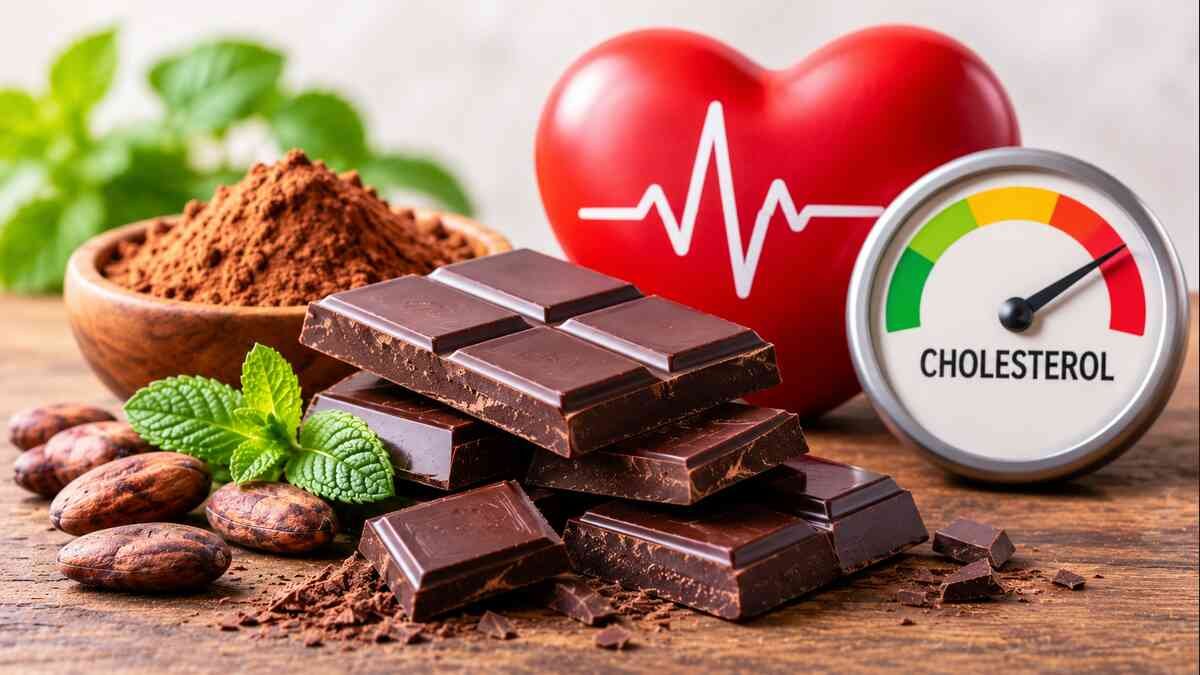

Dark chocolate may have modest effects on cholesterol levels because it contains cocoa flavanols, plant compounds that may support cardiovascular health. Some studies have found small reductions in LDL cholesterol, but the evidence is mixed. Dark chocolate also contains saturated fat and calories, so it should be eaten in moderation as part of an overall heart-healthy diet.
Dark chocolate has a reputation as a “heart-healthy” treat, so it is natural to wonder whether it can help if your cholesterol is high. The connection between dark chocolate and cholesterol is real but small, and it depends heavily on the type of cocoa product and the amount studied. It is also easy to overestimate what a chocolate bar can do.
This guide explains how cocoa may affect LDL, HDL, and triglycerides, what recent research found, and how to choose and portion dark chocolate wisely. It also covers the risks and the proven ways to manage cholesterol. Dark chocolate is not a cholesterol-lowering treatment, and the goal here is to help you enjoy it without undermining a heart-healthy diet.
Is Dark Chocolate Good for High Cholesterol?
Dark chocolate can fit into a heart-conscious diet, but it should not be promoted as a reliable way to lower high cholesterol. The potential benefit comes from cocoa flavanols, which are found in cocoa solids. Dark chocolate generally contains more cocoa solids than milk chocolate, so it offers more of these compounds.
Some research suggests that cocoa products may modestly lower LDL cholesterol, often called “bad” cholesterol. Other studies find no meaningful change. This inconsistency is the most important thing to understand about the topic.
There are good reasons results differ. Studies use different cocoa products, different amounts, and different lengths of time. Many also use cocoa powders or extracts with known flavanol levels, which are not the same as the chocolate bar in your pantry.
There is also a difference between a food that supports heart health and a treatment for high cholesterol. Treatment plans are built by your healthcare professional and may include diet, exercise, and medication. Chocolate can be a small part of an eating pattern, but it cannot stand in for any of those.
Portion size and overall habits matter too. A small square eaten in place of a sugary dessert is very different from a large bar eaten on top of an already high-saturated-fat diet. For a broader look at the food itself, see our guide to dark chocolate health benefits and our article on whether you can eat dark chocolate every day.
How Does Dark Chocolate Affect Cholesterol?
Cholesterol is a waxy substance your body needs, but too much of certain types can raise heart disease risk. If you want a plain-language refresher, our article on LDL vs. HDL cholesterol explains the difference. Here is how dark chocolate may relate to each marker.
Cocoa Flavanols and LDL Cholesterol
Flavanols are naturally occurring plant compounds found in cocoa, tea, and some fruits. They have antioxidant properties and may help blood vessels function better. You can learn more about these compounds in our explainer on what antioxidants are.
Researchers are studying whether flavanols influence how the body handles LDL cholesterol, including how easily LDL particles become damaged by oxidation. This is still an active research area. It does not mean antioxidants remove cholesterol from the arteries, and no study of chocolate has shown that.
Dark Chocolate and HDL Cholesterol
HDL cholesterol is often called “good” cholesterol because it helps carry cholesterol back to the liver. Some research suggests cocoa intake may slightly increase HDL, but findings are inconsistent. Any change that does occur appears to be small.
Does Dark Chocolate Affect Triglycerides?
Triglycerides are a type of fat in your blood that your body uses for energy. High levels can add to cardiovascular risk, especially alongside high LDL or low HDL. Evidence that cocoa changes triglycerides is limited, and most reviews find no significant effect. This is one reason to look at your full lipid panel, not just one number.
What Does Scientific Research Say About Dark Chocolate and Cholesterol?
The research is a good example of why nutrition headlines can be misleading. Three sources help show the full picture.
A 2024 meta-analysis found small improvements in LDL. A meta-analysis of randomized controlled trials in the journal Nutrients pooled 31 trials with 1,986 adults. It reported average reductions of about 8.4 mg/dL in total cholesterol and about 9.5 mg/dL in LDL cholesterol with cocoa consumption. It found no significant effect on HDL cholesterol or triglycerides, and it also reported small reductions in blood pressure.
A 2023 review reached a different conclusion. A systematic review and meta-analysis in the journal Dietetics looked at cocoa beverages and dark chocolate in people with normal and elevated LDL cholesterol. It found no significant effect on LDL, total cholesterol, or triglycerides. It did find a small increase in HDL (about 0.05 mmol/L, or roughly 2 mg/dL).
The American Heart Association points to limits in the evidence. According to the American Heart Association, the flavanol amounts used in studies are unlikely to be reached by eating commercial dark chocolate daily. It also described a 2017 study in which people with overweight or obesity lowered LDL when they ate almonds, dark chocolate, and cocoa together, but not with chocolate and cocoa alone.
Why Do Research Results Differ?
Several factors explain the mixed findings:
- Flavanol content varies. Processing can reduce flavanols considerably, so two products with the same cocoa percentage may differ.
- Doses differ. Studies use different amounts of chocolate or cocoa.
- Trials are short. Many last only weeks, so long-term effects are unknown.
- Some trials are small. Small groups make results less certain.
- Participants differ. Baseline diet, weight, and health conditions affect results.
One more point deserves emphasis. A small change in a cholesterol marker does not prove that eating chocolate prevents heart attacks or strokes. Lab markers are only part of the story.
Dark Chocolate vs. Milk Chocolate: Which Is Better for Cholesterol?
Dark chocolate generally offers more cocoa-related compounds than milk chocolate, but neither is a low-fat food. The table below summarizes typical differences. Actual values depend on the brand.
| Feature | Dark chocolate | Milk chocolate |
|---|---|---|
| Cocoa content | Usually higher | Usually lower |
| Cocoa flavanols | Often more | Generally fewer |
| Sugar | Varies by product | Often higher |
| Saturated fat | Can be substantial | Can also be substantial |
| Heart-health potential | May offer more cocoa-related compounds | Usually offers fewer |
A higher cocoa percentage does not automatically mean a product is low in saturated fat, sugar, or calories. Cocoa butter itself contributes saturated fat. That is why reading the label matters more than relying on the percentage alone.
What Type of Dark Chocolate Should You Choose?
If you enjoy dark chocolate, a few simple shopping habits can help you choose well.
Look for Higher Cocoa Content
A cocoa percentage of 70% or higher is a practical starting point. The Harvard T.H. Chan School of Public Health notes that higher-percentage bars provide more flavanol-rich cocoa solids, though they are also more bitter.
Flavanol levels still vary with processing. An 85% or 90% bar is not proven to lower cholesterol more effectively than a 70% bar.
Check the Nutrition Label
Compare products using the Nutrition Facts panel. Look at:
- Saturated fat per serving
- Added sugar
- Total calories
- Serving size
- The ingredient list
Serving sizes differ between brands, so compare equal amounts. The NHS also suggests comparing saturated fat per 100 grams, noting that more than 5 grams per 100 grams is considered high.
Choose Simpler Ingredients
Plain dark chocolate is usually a better option than bars with caramel, cream, sugary fillings, or other calorie-dense additions. Shorter ingredient lists, with cocoa listed first, tend to be easier to fit into a heart-healthy pattern.
How Much Dark Chocolate Can You Eat If You Have High Cholesterol?
There is no medically established dose of dark chocolate for cholesterol. A small portion, such as 10 to 20 grams (roughly one or two small squares, depending on the bar), is a practical starting point, not a treatment dose.
Check the serving size and saturated fat on the label to decide what is reasonable for you. The AHA notes that a full standard bar of 70 to 85% dark chocolate can contain about 600 calories and 24 grams of sugar, so a whole bar is far more than a “small treat.”
It also helps to let chocolate replace another treat, not add to your usual intake. If you eat a square instead of a pastry or ice cream, you may lower your overall saturated fat and sugar. If you add it on top, you may not.
Individual needs differ, especially for people managing weight, blood sugar, or other health conditions. A registered dietitian or your doctor can help you set a portion that fits your plan.
Potential Risks of Eating Dark Chocolate With High Cholesterol
For most people, small portions are unlikely to cause problems. Still, a few considerations are worth knowing.
- Saturated fat: Cocoa butter contributes saturated fat. The NHS lists chocolate among foods that contribute saturated fat, and eating a lot of it can raise cholesterol.
- Added sugar: Sweetened bars can add to your daily sugar intake.
- Calories: Large portions make weight management more difficult, which can indirectly affect cholesterol.
- Caffeine and theobromine: These stimulants may affect people who are sensitive to them, including sleep.
- Allergies and dietary restrictions: Check labels for milk, nuts, soy, and other allergens, since cross-contact is common.
People with high cholesterol should consider the full nutritional profile of a product and not choose chocolate based on cocoa percentage alone.
Better Ways to Manage High Cholesterol Alongside Dark Chocolate
Lifestyle habits with stronger evidence matter far more than any single food. Our overview of high cholesterol and the guide to how to prevent heart disease offer more detail.
Eat More Soluble Fiber
Soluble fiber is found in oats, beans, lentils, apples, and many vegetables, and it is commonly recommended as part of a cholesterol-friendly diet. Some people also use psyllium-containing foods or products when appropriate, ideally after checking with a healthcare professional. See our list of high-fiber foods for digestive health and our guide on how many vegetables to eat a day.
Choose Heart-Healthy Fats
Replacing some saturated fat with unsaturated fat is a standard recommendation. NHS guidance suggests eating more oily fish, olive or rapeseed oil, nuts, seeds, wholegrains, fruit, and vegetables. Read more about healthy fats, olive oil, nuts, and avocado.
Exercise Regularly
The same NHS page suggests at least 150 minutes of moderate activity or 75 minutes of vigorous activity each week. Brisk walking, cycling, and swimming are good starting points, and the best activity is one you will keep doing. Our guides on walking for health and exercise and heart health can help you get started.
Maintain a Healthy Weight
Gradual weight management can support a healthier lipid profile for many people. Small, sustainable changes usually work better than rapid dieting. See our article on weight management for practical ideas.
Follow Your Treatment Plan
If your doctor has prescribed a cholesterol medication, including a statin, do not stop or replace it with chocolate or any other food. Diet and medication often work together. Ask your healthcare professional before changing any part of your plan.
Frequently Asked Questions
Can dark chocolate lower LDL cholesterol?
Some studies suggest cocoa products may modestly reduce LDL cholesterol, but findings are mixed. A 2024 meta-analysis found a small reduction, while a 2023 review found no significant effect on LDL.
Is 70% dark chocolate good for high cholesterol?
It may be a reasonable choice because it contains more cocoa than many milk chocolates. Still, check saturated fat, sugar, and portion size, since a higher percentage does not guarantee a lower-fat product.
Can I eat dark chocolate every day if I have high cholesterol?
A small portion may fit into a balanced diet, provided it does not add excessive calories or saturated fat. Ask your healthcare professional what is appropriate for you.
Does dark chocolate increase HDL cholesterol?
Some research suggests a small increase, but results are inconsistent. The 2023 review above reported a small rise, while the 2024 meta-analysis found no significant effect.
Is dark chocolate better than milk chocolate for heart health?
Dark chocolate generally contains more cocoa compounds, but its nutritional value depends on the product and serving size. Compare labels for saturated fat and sugar.
Can dark chocolate replace cholesterol medication?
No. Dark chocolate is not a substitute for prescribed medication or professional cholesterol management. Never stop a prescribed medicine without talking to your doctor.
Conclusion
Dark chocolate contains cocoa flavanols that may have modest cardiovascular benefits, but the research on cholesterol remains mixed. If you enjoy it, choose products with higher cocoa content, check saturated fat and sugar, and keep portions small. The same approach applies to chocolate and heart health in general: it can be a pleasant part of a diet, not a core strategy.
The most effective way to manage high cholesterol is a combination of a balanced diet, regular exercise, medical monitoring, and prescribed treatment when necessary.
Sources
- Nutrients (2024). Effects of Cocoa Consumption on Cardiometabolic Risk Markers: Meta-Analysis of Randomized Controlled Trials (PubMed)
- Dietetics (2023). Effect of Cocoa Beverage and Dark Chocolate Intake on Lipid Profile in People Living with Normal and Elevated LDL Cholesterol: A Systematic Review and Meta-Analysis
- American Heart Association News. Are There Health Benefits From Chocolate?
- NHS. Eat Less Saturated Fat
- NHS (West Cheshire). How to Lower Your Cholesterol
- Harvard T.H. Chan School of Public Health. Dark Chocolate (The Nutrition Source)
Medical Disclaimer: This article is for educational purposes only and is not a substitute for professional medical advice, diagnosis, or treatment. People with high cholesterol should consult a qualified healthcare professional about their individual dietary and treatment needs. Do not start, stop, or change any medicine because of something you read here. If you think you may have a medical emergency, call 911 or your local emergency number right away.