
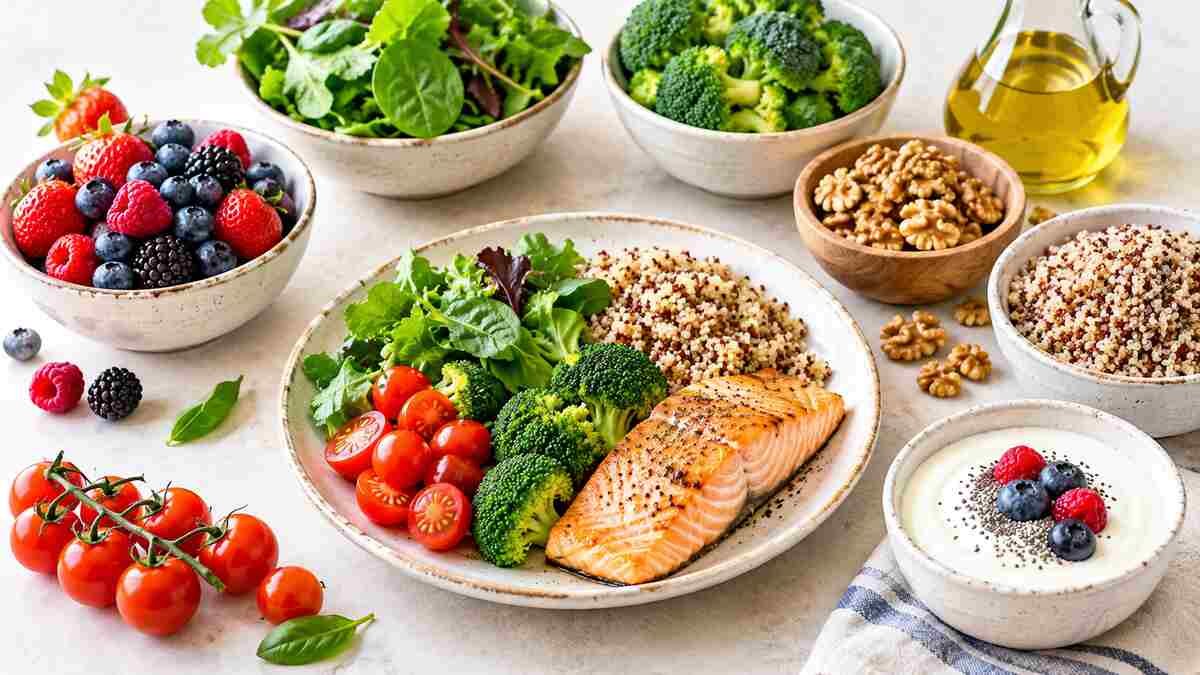

The best foods for healthy aging are not exotic or expensive. They are everyday choices like berries, leafy greens, beans, fish, nuts, whole grains, and olive oil. As we get older, muscle mass and bone density tend to decline, digestion can change, and appetite may shrink, so the quality of what we eat matters more than ever.
Nutrient needs shift with age, too. Older adults often need fewer calories but just as many (or more) vitamins, minerals, and protein. A balanced eating pattern can help support energy, mobility, heart health, brain function, and overall well-being. You can also explore our guide to vegetables and healthy aging for a closer look at one key food group.
It helps to be realistic from the start. No single food can stop or reverse aging, and “anti-aging foods” is a marketing phrase, not a medical category. What the research supports is consistent, varied eating over many years. This guide covers why nutrition matters, 15 foods worth eating more often, the nutrients to watch, and practical ways to make healthy eating easier.
Why Nutrition Matters for Healthy Aging
Good nutrition does not change your age, but it can help your body work well for longer. Here is how food supports some of the areas that matter most as we get older.
Maintaining Muscle and Physical Strength
Muscle mass and strength decline gradually with age, a process called sarcopenia. This can affect balance, mobility, and independence. Eating enough protein helps your body maintain and repair muscle, and the American Heart Association notes that many older adults fall short on protein.
Food works best alongside movement. Resistance exercise and adequate protein support each other, so pairing them is more effective than either one alone. Our strength training for beginners guide is a good place to start.
Supporting Heart and Brain Health
Eating patterns rich in fiber, unsaturated fats, and plant foods support cardiovascular health. They are also the patterns most often studied for brain health. The evidence on cognition is encouraging but not conclusive, as we explain later in this article. For more on the heart side, see our guide to heart-healthy foods.
Protecting Bones and Supporting Digestion
Calcium, vitamin D, and protein all contribute to bone strength. Fiber and fluids support regular digestion, and a variety of plant foods feeds the gut. You can learn more about calcium-rich foods and foods high in vitamin D on CollectedMed.
15 Best Foods for Healthy Aging
These foods offer a mix of fiber, protein, vitamins, minerals, and healthy fats. You do not need to eat all of them. Pick the ones you enjoy, and rotate them through your week.
- Berries. Blueberries, strawberries, and raspberries provide fiber and plant compounds called polyphenols. Stir them into oatmeal or yogurt, or eat them as a snack. Frozen berries work just as well and cost less.
- Leafy green vegetables. Spinach, kale, and other greens supply folate, vitamin K, and carotenoids. Add them to soups, eggs, salads, or sautés. Read more in our guide to the health benefits of leafy greens.
- Cruciferous and colorful vegetables. Broccoli, cauliflower, carrots, and bell peppers provide fiber and vitamins. Different colors offer different plant compounds, so aim for variety across the week. See our article on cruciferous vegetables for ideas.
- Fatty fish. Salmon, trout, and mackerel provide protein and omega-3 fats, and some varieties also supply vitamin D. Bake, grill, or steam fish instead of deep-frying it. Learn more about fatty fish and omega-3 fatty acids.
- Nuts. Almonds, walnuts, and pistachios provide unsaturated fats, fiber, and minerals. Use them as snacks or toppings, and choose unsalted options when you can. Because nuts are energy-dense, portions matter; our article on whether nuts are good for weight management explains how to enjoy them sensibly. For more on this food group, see the health benefits of nuts.
- Yogurt and other fermented dairy foods. Yogurt provides protein and calcium, and some products contain live cultures. Choose plain or lower-added-sugar versions and top them with fruit. Read about yogurt’s health benefits.
- Eggs. Eggs provide protein, vitamin B12, and choline. They are inexpensive, soft, and easy to prepare. Pair them with vegetables or whole-grain toast for a balanced meal.
- Beans and lentils. These provide plant protein, fiber, folate, and minerals. Add them to soups, stews, curries, and salads. Our guide to the health benefits of legumes has more detail.
- Whole grains. Oats, brown rice, barley, and whole-wheat foods provide fiber and make meals more filling. Swap some refined grains for whole-grain versions.
- Avocados. Avocados provide monounsaturated fat, fiber, and potassium. Use them in salads, on toast, or as a spread. See the health benefits of avocado.
- Olive oil. Olive oil is a source of monounsaturated fat and a staple of Mediterranean-style eating. Use it in dressings and everyday cooking. Learn more about olive oil benefits.
- Sweet potatoes. They provide fiber, potassium, and beta-carotene. Bake, roast, or steam them as a side dish. Read about the health benefits of sweet potatoes.
- Tomatoes. Tomatoes provide vitamin C, potassium, and lycopene. Enjoy them fresh, roasted, or in sauces made with little added salt.
- Sardines and other small fish. Sardines provide protein and omega-3 fats. Canned versions with edible bones can also contribute calcium. Look for lower-sodium options.
- Citrus and other vitamin C-rich fruits. Oranges, guava, and kiwi provide vitamin C and fiber, and vitamin C plays a role in collagen formation. Choose whole fruit more often than juice. See our lists of foods high in vitamin C and kiwi’s health benefits.
Key Nutrients for Healthy Aging
Food choices should help meet changing nutritional needs, though needs differ from person to person. Age, health conditions, medications, and activity level all play a part. The National Institute on Aging offers practical guidance on planning balanced meals for older adults.
| Nutrient | Why it matters | Food sources |
|---|---|---|
| Protein | Helps maintain muscle and repair body tissues | Eggs, fish, yogurt, beans, lentils, tofu |
| Calcium | Supports bone health | Yogurt, milk, fortified alternatives, calcium-set tofu, some fish |
| Vitamin D | Helps the body absorb calcium and supports muscle function | Fatty fish, fortified foods, eggs |
| Vitamin B12 | Supports nerve function and red blood cell formation | Fish, meat, eggs, dairy, fortified foods |
| Fiber | Supports digestion and bowel regularity | Vegetables, fruits, oats, beans, whole grains |
| Omega-3 fats | Support normal heart and brain function | Salmon, sardines, walnuts, chia seeds |
| Potassium | Helps support normal blood pressure and muscle function | Potatoes, bananas, beans, leafy greens |
A few points deserve extra attention:
- Protein. The Dietary Guidelines for Americans fact sheet for older adults notes that many older adults do not eat enough protein. Our guides to high-protein foods and how much protein you need can help.
- Vitamin B12. Older adults do not need more B12 than younger adults, but some absorb it less efficiently, and certain medications can reduce absorption. The American Heart Association points to protein foods and fortified foods as ways to meet needs. See our guide to vitamin B12 benefits and food sources.
- Vitamin D. The recommended daily amount rises slightly after age 70, according to the same AHA article. Your needs can vary with sun exposure, diet, and health status.
- Fiber. Beans, vegetables, fruit, and whole grains all contribute. Our list of high-fiber foods for digestive health offers more options.
Supplements are not automatically necessary. Whether you need one depends on your diet, medications, health conditions, and sometimes blood test results. The NIA and federal guidelines recommend talking with a healthcare professional before starting a supplement, especially if you suspect a deficiency.
Best Eating Patterns for Healthy Aging
Individual foods matter, but the overall pattern matters more. A sustainable eating style that you can maintain for years is more useful than chasing one “anti-aging” food.
Mediterranean-Style Eating
This pattern emphasizes vegetables, fruits, beans, whole grains, nuts, olive oil, and fish, with moderate amounts of dairy and poultry. It limits highly processed foods and added sugar. The World Health Organization similarly emphasizes fruits, vegetables, legumes, nuts, and whole grains as the foundation of a healthy diet. Our Mediterranean diet guide explains it in detail.
The MIND Diet and Brain Health
The MIND diet blends Mediterranean and DASH-style eating, with special emphasis on leafy greens, berries, nuts, beans, whole grains, and fish. Research is promising, but it is largely observational. A 2025 narrative review of dietary patterns and brain health found the Mediterranean diet had the most consistent cognitive benefits, while results for DASH and MIND were more mixed.
A 2026 critical narrative review adds that randomized trials have not consistently shown that these diets prevent cognitive decline. In short, these patterns are sensible choices, but no diet can promise protection against dementia.
DASH-Style Eating
DASH focuses on fruits, vegetables, whole grains, beans, nuts, and appropriate protein sources, and it can help support healthy blood pressure. People with kidney disease or those taking certain medications may need to adjust sodium and potassium intake. Check with your healthcare provider first.
Key takeaway: A sustainable eating pattern matters more than any single food.
Foods and Eating Habits to Limit as You Age
Moderation works better than strict bans. Occasional treats can fit into a balanced diet, so focus on what you eat most days.
Foods and habits worth limiting include:
- Highly processed foods that are high in sodium, added sugars, or saturated fat.
- Sugary drinks and frequent sweets.
- Processed meats and frequent large portions of fatty or heavily processed meat.
- Salty packaged snacks and ready meals.
- Alcohol, especially if you take medications or have a health condition that it can affect.
The WHO suggests keeping salt under about 5 grams a day and free sugars below 10% of total energy. Labeling foods as entirely “good” or “bad” tends to backfire. Look at your overall pattern instead.
Practical Tips for Eating Well as You Get Older
Healthy eating should fit your budget, cooking skills, and appetite. These strategies work for many people.
- Include a protein source with each main meal, such as eggs, fish, yogurt, beans, or tofu.
- Eat colorful fruits and vegetables. Our guide to how to eat more vegetables has easy ideas.
- Choose whole grains more often, such as oats, brown rice, and whole-wheat bread.
- Keep easy options on hand. Eggs, yogurt, lentils, canned fish, and frozen vegetables are affordable and quick.
- Drink water regularly. Thirst can become less noticeable with age.
- Use herbs, spices, garlic, and lemon to add flavor without extra salt.
- Adapt for chewing difficulties. Cooked vegetables, soft fruits, soups, lentil dishes, and tender proteins can help.
- Eat smaller, nutrient-rich meals if your appetite is low, and tell a healthcare professional if appetite changes persist.
Eating with others can also make meals more enjoyable. The NIA and the Dietary Guidelines both encourage practical adjustments that make healthy eating easier, including community meal programs. Pair good nutrition with regular physical activity and good sleep for the best results.
People with kidney disease, diabetes, swallowing difficulties, or other medical conditions may need individualized nutrition advice from a doctor or registered dietitian.
Frequently Asked Questions
What are the best foods for healthy aging?
Vegetables, berries, whole grains, beans, nuts, fish, yogurt, eggs, and olive oil are all useful choices. They provide protein, fiber, vitamins, minerals, and unsaturated fats that support health as you age. The WHO highlights variety across fruits, vegetables, legumes, nuts, and whole grains.
What is the best fruit for healthy aging?
There is no single best fruit. Berries, citrus fruits, apples, guava, and other whole fruits offer different mixes of fiber, vitamins, and plant compounds. Eating a variety is more useful than relying on one.
Which foods help maintain muscle as you age?
Protein-rich foods such as fish, eggs, yogurt, poultry, tofu, beans, and lentils provide the building blocks for muscle. Regular resistance exercise is also important. The Dietary Guidelines fact sheet for older adults notes that protein can help prevent muscle loss.
Are eggs good for healthy aging?
Eggs provide protein, vitamin B12, and choline, and they are soft and easy to eat. They can be part of a balanced diet. Individual needs may differ depending on cholesterol levels, medical conditions, and overall eating patterns, so ask your doctor if you are unsure.
What foods support brain health as you age?
A varied diet with leafy greens, berries, whole grains, beans, nuts, and fish is a sensible approach. These foods appear often in dietary patterns linked with better cognitive outcomes. However, randomized trials have not consistently shown that any diet prevents cognitive decline.
What nutrients do older adults need more of?
Protein, vitamin B12, and vitamin D often need extra attention, along with calcium, fiber, and potassium. The American Heart Association notes that older adults absorb B12 less efficiently and that the recommended vitamin D amount rises after age 70. A healthcare professional can help you decide whether you need testing or supplements.
What foods should older adults limit?
Highly processed foods, sugary drinks, processed meats, salty packaged foods, and excess alcohol are worth limiting. Occasional treats can still fit. Your regular eating pattern matters most.
Can food slow down aging?
Food cannot stop or reverse biological aging. A balanced diet can support heart health, muscle function, bone strength, and overall well-being throughout life. It works best alongside physical activity, sleep, and regular healthcare.
Conclusion
The best foods for healthy aging work through consistency, not magic. Aim to build most meals around vegetables, fruits, whole grains, protein-rich foods, nuts, and healthy fats. Keep an eye on protein, calcium, vitamin D, vitamin B12, fiber, and hydration.
Adapt your choices to your health needs, appetite, culture, and budget. Pair nutritious eating with physical activity, sleep, and regular check-ups. A simple place to start is adding one more serving of vegetables, fruit, beans, or another nutrient-rich food to your daily routine. For more guidance, browse our Nutrition articles.
Sources
- National Institute on Aging. Healthy Meal Planning: Tips for Older Adults.
- U.S. Department of Health and Human Services and U.S. Department of Agriculture. Build a Healthy Eating Routine as You Get Older (Dietary Guidelines for Americans fact sheet).
- American Heart Association. The changing nutritional needs of older adults and how to meet them. 2024.
- World Health Organization. Healthy diet.
- Seabrook JA, et al. Dietary Patterns and Brain Health in Middle-Aged and Older Adults: A Narrative Review. Nutrients. 2025.
- Dietary Patterns, Micronutrient Adequacy, and Metabolic Vulnerability in Alzheimer’s Disease: A Critical Narrative Review. Nutrients. 2026.
Medical Disclaimer: This article is for general educational purposes only and is not a substitute for professional medical advice, diagnosis, or treatment. Nutrition needs vary from person to person, so talk with your doctor or a registered dietitian before making major changes to your diet, starting supplements, or if you have a health condition or take medication. Never ignore professional advice or delay seeking care because of something you read here.