
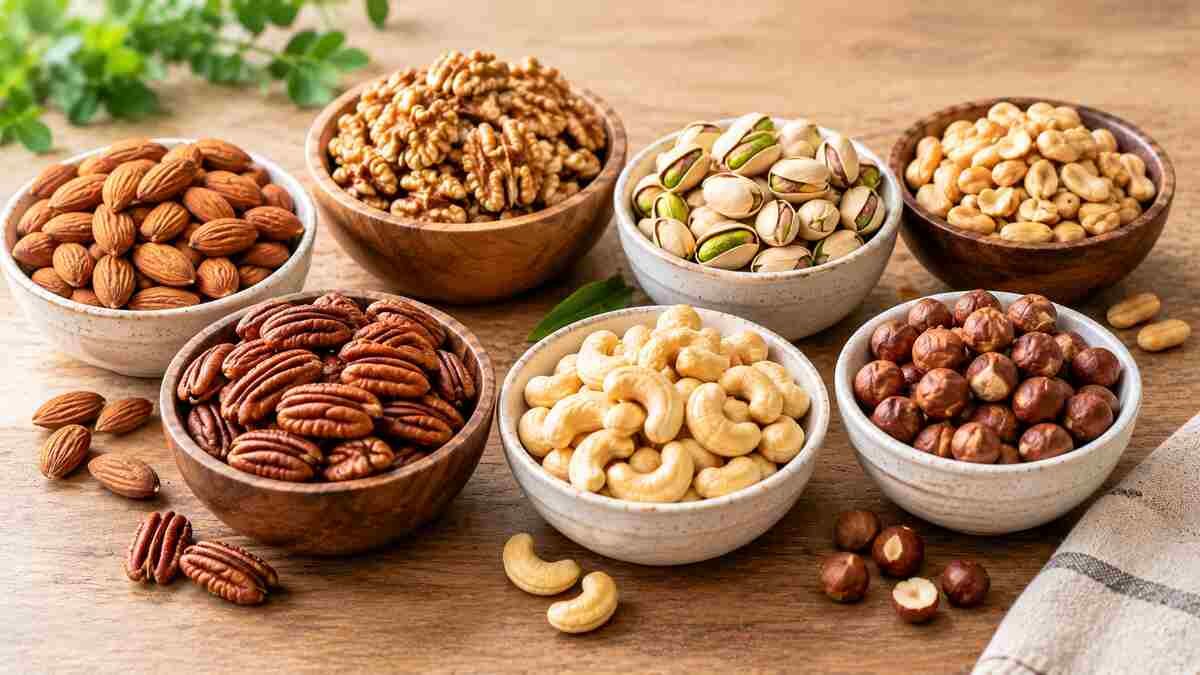

Nuts such as almonds, walnuts, pistachios, peanuts, pecans, and hazelnuts can fit into a balanced eating pattern for people with type 2 diabetes. They provide combinations of unsaturated fats, fiber, protein, and minerals. Plain or unsalted varieties are practical choices, but individual food needs and portions vary.
If you are searching for the best nuts for diabetes, you are probably looking for a clear list, a way to compare them, and an honest answer about blood sugar. Nuts differ in carbohydrate content, fiber, and nutrient composition, so some are better matches for certain goals. This guide covers seven popular varieties, how to choose them, and how to enjoy them.
Nuts are foods, not diabetes treatments. They should never replace prescribed medication or professional care. For broader meal planning, see our guide to the diabetes diet.
Why Can Nuts Be a Good Choice for People With Type 2 Diabetes?
Most plain nuts provide a useful mix of nutrients in a small serving:
- Unsaturated fats
- Plant-based protein
- Dietary fiber
- Magnesium and other minerals
- Vitamin E and other antioxidant compounds
Plain nuts also contain relatively little carbohydrate compared with many refined snack foods such as chips, crackers, and pastries. The combination of protein, fat, and fiber contributes to the overall quality of meals and snacks. Replacing some highly processed snacks with plain nuts may improve your overall eating pattern.
Nutrition guidance supports this. The American Diabetes Association lists nuts and seeds among the protein foods that can fit into diabetes eating patterns. Coverage of a 2026 ADA panel also noted that the dietary guidelines committee found strong data supporting nuts and seeds, along with other plant foods. Eating plans should be individualized, so ask your care team what fits your needs.
Healthy Fats and Heart Health
Nuts are rich in monounsaturated and polyunsaturated fats. Replacing some saturated-fat-rich foods, such as processed meats or fried snacks, with unsaturated-fat-rich foods is a standard part of heart-conscious eating. Our guide to healthy fats explains the differences.
Heart health matters because people with type 2 diabetes face higher cardiovascular risk. Nuts do not independently prevent heart disease, but they can be one part of a heart-healthy pattern. See our list of heart-healthy foods for more.
Fiber, Protein, and Nutrient Variety
Nuts contribute fiber and plant-based protein, though amounts differ from one nut to the next. Eating a variety, instead of relying on one type, gives you a wider range of nutrients. Our guide to high-fiber foods for digestive health shows how nuts fit alongside beans, vegetables, and whole grains.
Best Nuts for Type 2 Diabetes
No single nut is the universal best. Each has strengths, and your preferences, nutrient needs, and allergies matter. Here is how seven popular varieties compare.
1. Almonds
Almonds provide unsaturated fats, fiber, protein, magnesium, and vitamin E. They are one of the higher-fiber nuts, with roughly 3.5 grams per ounce. Plain almonds work well as a snack or as a crunchy addition to yogurt, oatmeal, and salads.
Compare plain almonds with flavored versions, since sweetened or heavily salted products change the nutrition picture. Almonds do not treat diabetes, and no one should expect them to lower blood glucose on their own.
For more detail, see our guide to almonds and their health benefits.
2. Walnuts
Walnuts are notable for alpha-linolenic acid (ALA), a plant-based omega-3 fatty acid. They also provide unsaturated fats and some fiber, and they fit well in a heart-conscious eating pattern.
Research on walnuts and blood glucose is mixed. A meta-analysis of 16 randomized trials found no significant change in fasting glucose or other glycemic measures. A 2025 review of 32 trials reported lower insulin resistance (HOMA-IR) but no significant overall effect on fasting glucose, insulin, or HbA1c. This is a good reminder not to overstate blood sugar benefits.
For more on walnuts, see the health benefits of walnuts and how many walnuts you should eat daily.
3. Pistachios
Pistachios combine protein, fiber, unsaturated fats, and micronutrients. In-shell pistachios can be convenient for people who like to eat gradually, since shelling slows you down and leaves a visible pile of shells.
Choose unsalted or lightly salted varieties to limit extra sodium. Pistachios can go into salads, grain dishes, or plain yogurt. Evidence does not show that pistachios prevent post-meal glucose spikes in every person, so treat them as a nutritious option rather than a blood sugar tool.
4. Peanuts
Peanuts are technically legumes, although they are commonly grouped with nuts. They provide protein, unsaturated fats, and fiber, and they are often more affordable than tree nuts.
Plain peanuts and peanut butter without added sugar can fit into many balanced eating patterns. Check peanut butter labels for added sugar, salt, and ingredient quality. The best choices usually list just peanuts, and perhaps a little salt.
5. Pecans
Pecans are rich in unsaturated fats and relatively low in carbohydrates. Plain pecans add texture to salads, oatmeal, and vegetable dishes.
Candied and sugar-coated pecans are a different product with added sugar. Pecans are best viewed as part of a varied diet, not as a special blood sugar food.
6. Cashews
Cashews provide unsaturated fats, protein, and minerals, but they contain more carbohydrate than most other nuts and less fiber. That does not make them unsuitable for people with diabetes. It simply means the portion and the rest of the meal deserve attention.
Plain cashews work well in vegetable stir-fries, sauces, and snacks. Pairing them with fiber-rich foods is a practical approach.
7. Hazelnuts
Hazelnuts provide unsaturated fats, fiber, and vitamin E. Plain hazelnuts can be added to fruit, oatmeal, or salads.
Chocolate-coated or sweetened hazelnut products are very different from plain nuts. Variety and personal preference matter more than picking one winner.
Brazil Nuts and Macadamia Nuts
Macadamia nuts are especially rich in monounsaturated fats. Brazil nuts are unusual because of their selenium content. The NIH Office of Dietary Supplements notes that Brazil nuts contain very high amounts of selenium (68 to 91 micrograms per nut) and can push you over the upper limit if you eat too many. Treat them as an occasional food, not a daily handful.
Nutrition Comparison of Popular Nuts
This table shows how the main choices differ. Approximate amounts are for a 28-gram (1-ounce) serving, and they vary by brand and preparation.
| Nut | Approx. carbs / fiber (28 g) | Nutritional features | Practical consideration |
|---|---|---|---|
| Almonds | 6 g / 3.5 g | Fiber, protein, magnesium, vitamin E | Choose plain or unsalted |
| Walnuts | 4 g / 2 g | ALA omega-3, polyunsaturated fats | Useful in salads and oatmeal |
| Pistachios | 8 g / 3 g | Protein, fiber, unsaturated fats | Compare sodium on labels |
| Peanuts | 5 g / 2.5 g | Protein, fiber, unsaturated fats | Check peanut butter ingredients |
| Pecans | 4 g / 3 g | Monounsaturated fats, fiber | Avoid frequent sugar-coated varieties |
| Cashews | 9 g / 1 g | Protein, minerals, carbohydrates | Consider the whole meal |
| Hazelnuts | 5 g / 3 g | Unsaturated fats, vitamin E | Choose plain rather than sweetened |
Do not treat the numbers as a ranking. A slightly lower carbohydrate count does not make one nut automatically better, and your preferences, tolerance, and nutrient needs also count.
How Do Nuts Affect Blood Sugar?
Nuts contain varying amounts of carbohydrate, protein, fiber, and fat. This composition differs from refined carbohydrate snacks, which tend to contain more rapidly digested carbohydrate. How a meal affects blood glucose, though, depends on the whole meal, the amount eaten, and individual factors.
Nuts should not be described as foods that automatically lower blood sugar. Clinical research has examined nuts and glycemic markers, with results that depend on the nut type, study design, amount, and duration.
Here is what major reviews found:
- A meta-analysis of trials in people with diabetes found that diets emphasizing tree nuts (median 56 grams a day) modestly lowered HbA1c (by about 0.07%) and fasting glucose compared with control diets. The authors noted that most trials were short and of limited quality.
- A broader meta-analysis of 40 trials found that tree nuts and peanuts improved fasting insulin and insulin resistance (HOMA-IR), but not fasting glucose or HbA1c.
These changes are small. They support nuts as part of a healthy diet, not as a blood sugar treatment. Read more about glucose in our guide to blood sugar.
Do Nuts Have a Low Glycemic Impact?
Many plain nuts contain relatively little available carbohydrate per typical serving, so they tend to have a modest effect on blood glucose by themselves. That does not mean every nut product behaves the same way.
Plain nuts are very different from sweetened coatings, candy mixes, and flavored products. Always check the label.
Can Nuts Replace Higher-Sugar Snacks?
They can be one option among many. A small portion of plain nuts can take the place of sweets or refined snacks, particularly when paired with fruit or plain yogurt. No single snack is necessary for diabetes management, so choose foods you enjoy and that fit your plan.
How Much and How Often Should You Eat Nuts?
An ounce (28 grams) is a commonly used reference serving in nutrition guidance. It is not a fixed daily prescription. The right amount depends on your overall eating pattern, calorie needs, preferences, and health goals.
Mixed nuts can make it harder to estimate the amount of each variety. Measuring a portion into a small bowl is a simple way to avoid eating straight from a large bag.
Think about how nuts fit into meals and snacks instead of aiming for a rigid target. Our guide on how many nuts you should eat every day covers portions across varieties. Because nuts are energy-dense, it also helps to read our article on whether nuts are good for weight management. If you follow an individualized meal plan, use your clinician’s or dietitian’s guidance.
Best Ways to Include Nuts in a Diabetes-Friendly Eating Pattern
Nuts are easy to add to meals you already eat:
- Breakfast: Add chopped almonds or walnuts to oatmeal.
- Snack: Pair plain nuts with a piece of whole fruit.
- Lunch: Sprinkle pistachios or walnuts over a vegetable salad.
- Dinner: Add cashews or peanuts to a vegetable stir-fry.
- Yogurt bowl: Top unsweetened yogurt with plain nuts.
- Homemade nut butter: Use unsweetened peanut or almond butter as a spread.
Vegetables make good partners for nuts. See our guide to the best vegetables for diabetes for ideas.
Choosing the Best Packaged Nuts
Labels tell you a lot. When shopping:
- Read the ingredient list. The best options list just nuts, and perhaps salt or oil.
- Compare sodium amounts across brands.
- Look for products without added sugar or sweet coatings.
- Compare flavored products with plain alternatives.
Salted nuts are not automatically forbidden. Lower-sodium options may be useful if you have been advised to limit sodium.
Which Nuts Should You Limit or Choose Carefully?
The aim is to understand labels, not to create unnecessary food rules. These products deserve a closer look:
- Candied nuts: Often contain added sugar.
- Chocolate-coated nuts: May contain added sugar and other ingredients.
- Honey-roasted nuts: Can contain added sweeteners.
- Heavily salted nuts: May contribute substantial sodium.
- Sweetened nut butters: Check the added sugar and sodium.
- Mixed snack products: Some include sweetened dried fruit, candy, or other ingredients.
Occasional treats can fit into a balanced diet. What you eat most days matters more.
Who Should Take Extra Care With Nuts?
Nuts suit many people, but a few groups need extra care.
- People with tree nut or peanut allergies: Avoid the relevant allergen and follow medical advice. The FDA lists peanuts and tree nuts among the major food allergens, and reactions can be serious.
- People with kidney disease: Some may need individualized advice about potassium, phosphorus, or other nutrients, since needs vary by condition and treatment.
- People with swallowing difficulties: Food texture may need to be adapted with professional guidance.
- People following a prescribed eating plan: Ask a registered dietitian or healthcare professional how nuts fit.
- People taking diabetes medication: Do not change your medication or treatment because you are eating nuts. Talk with your care team about any big diet changes, since food and medication work together.
Most people with diabetes do not need to avoid any particular nut.
Frequently Asked Questions About Nuts for Diabetes
What are the best nuts for type 2 diabetes?
Almonds, walnuts, pistachios, peanuts, pecans, and hazelnuts can all fit into a balanced eating pattern. The best choice depends on preference, nutritional needs, allergies, and how the nuts are prepared. A meta-analysis of trials in type 2 diabetes supports including tree nuts in a healthy diet.
Can people with type 2 diabetes eat peanuts?
Yes. Plain peanuts can be included in many balanced eating patterns. Check peanut butter labels for added sugar and sodium.
Are almonds good for type 2 diabetes?
Almonds provide fiber, protein, unsaturated fats, magnesium, and vitamin E, so they can be a nutritious choice. They do not replace diabetes treatment. See our guide to almonds vs. walnuts to compare two popular options.
Do walnuts lower blood sugar?
Research on walnuts and blood glucose is mixed. A meta-analysis of randomized trials found no significant change in fasting glucose. Walnuts provide ALA omega-3 fatty acids and other nutrients, but they should not be considered a blood sugar treatment.
Are cashews suitable for people with diabetes?
Cashews can fit into a balanced eating pattern. Their higher carbohydrate content is one factor to consider alongside the portion and the rest of the meal.
Are salted nuts okay for diabetes?
They may fit some eating patterns. Plain or lower-sodium varieties are practical choices, particularly for people who have been advised to limit sodium.
Should people with diabetes avoid all sweetened nuts?
Sweetened nuts may contain added sugar, so comparing labels and choosing plain nuts more often can help. Occasional sweetened nuts can fit into some eating plans. Ask your care team how they fit into yours.
Conclusion
Several nuts can fit into a balanced eating pattern for type 2 diabetes. Almonds, walnuts, pistachios, peanuts, and pecans are practical options, especially in plain or lightly salted form. Preparation, individual needs, and overall dietary variety matter more than any single choice. For personalized nutrition guidance, talk with a qualified healthcare professional or registered dietitian.
Sources
- American Diabetes Association. Eating for Diabetes Management.
- AJMC. Bridging Science and Reality in Diabetes Care (coverage of the ADA 2026 Scientific Sessions). June 2026.
- Viguiliouk E, et al. Effect of tree nuts on glycemic control in diabetes: a systematic review and meta-analysis of randomized controlled dietary trials. PLoS One. 2014.
- Tindall AM, et al. The effect of nuts on markers of glycemic control: a systematic review and meta-analysis of randomized controlled trials. American Journal of Clinical Nutrition. 2019.
- Neale EP, et al. Effect of walnut consumption on markers of blood glucose control: a systematic review and meta-analysis. British Journal of Nutrition. 2020.
- Nuts for Life. New research summary, including Hadi et al. 2025 meta-analysis on walnuts and glycemic control.
- NIH Office of Dietary Supplements. Selenium: Fact Sheet for Consumers.
- U.S. Food and Drug Administration. Food Allergies.
Medical Disclaimer: This article is for general educational purposes only and is not a substitute for professional medical advice, diagnosis, or treatment. Nutrition needs vary from person to person, so talk with your doctor or a registered dietitian before making changes to your diet, especially if you have diabetes, kidney disease, a food allergy, or take medication. Never change your diabetes treatment or ignore professional advice because of something you read here.
1 thought on “Best Nuts for Type 2 Diabetes: Which Ones Should You Choose?”
Comments are closed.