
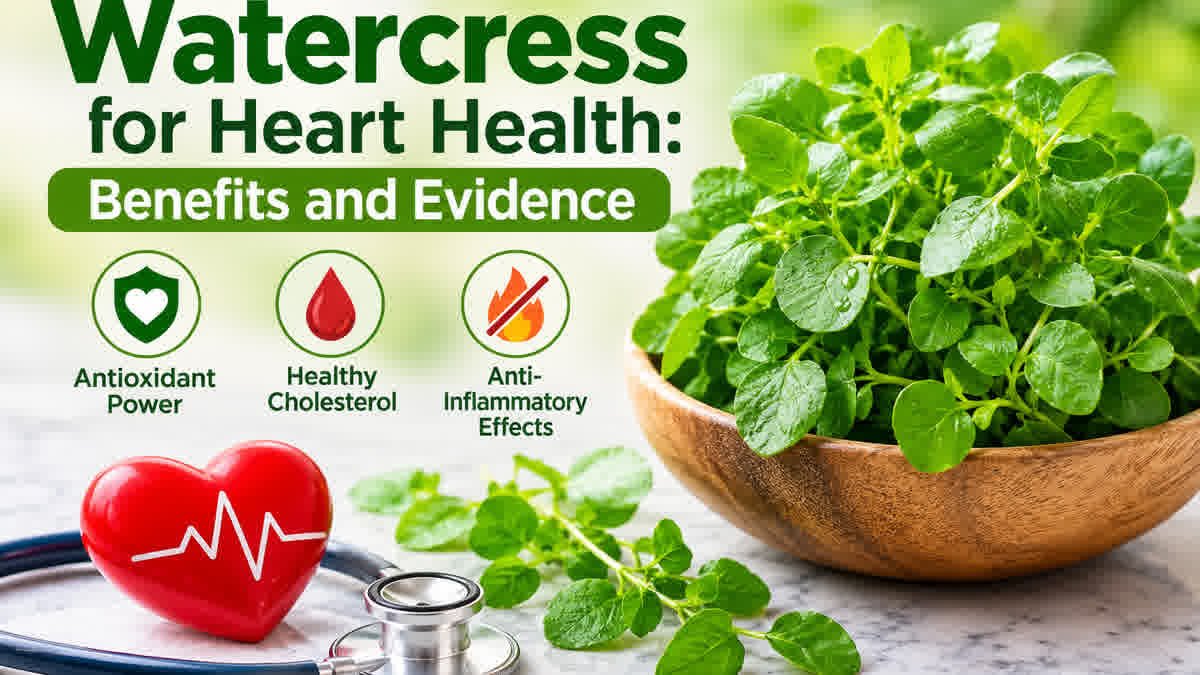

What you eat every day shapes your cardiovascular health over the long term. Vegetables, fruits, whole grains, and healthy fats are consistently linked with a lower risk of heart disease, and leafy greens are an easy place to start. Watercress (Nasturtium officinale) is a peppery, dark green member of the cruciferous family that has drawn growing attention from nutrition researchers.
Watercress is rich in carotenoids such as beta-carotene, lutein, and zeaxanthin, along with vitamin C, potassium, and sulfur-containing plant compounds called glucosinolates. Scientists are asking whether these compounds could help limit oxidative stress, calm inflammation, and support healthier cholesterol and blood pressure. Early human studies are interesting, but they are small and short, so the evidence is promising rather than conclusive.
This guide explains what watercress contains, how its antioxidant and anti-inflammatory compounds may work, and what clinical research has found so far. We also cover how to eat it, safety precautions, and common questions. Throughout, we separate biological potential from proven benefit, because watercress is a supportive food choice, not a treatment for heart disease.
What Is Watercress?
Watercress is a leafy aquatic or semi-aquatic plant with small, round, dark green leaves and tender stems. It belongs to the Brassicaceae family, alongside broccoli, cabbage, and kale. You can learn more about this group in our guide to cruciferous vegetables.
Its flavor is peppery and slightly bitter. People enjoy it raw in salads, sandwiches, and wraps, and cooked in soups and vegetable dishes. It is also very low in calories, with about 11 calories per 100 grams, according to USDA FoodData Central.
Watercress contains several groups of plant compounds (phytochemicals), including:
- Carotenoids, such as beta-carotene and lutein
- Flavonoids and phenolic acids
- Glucosinolates, which the body can convert into active compounds such as phenethyl isothiocyanate (PEITC)
- Vitamins and minerals
A 2025 narrative review in the journal Life summarizes this phytochemical profile and its potential roles in chronic disease. Watercress is a nutritious food, but it is not a medicinal herb, and it does not replace conventional cardiovascular care.
Nutritional Profile of Watercress and Its Heart-Healthy Compounds
The nutrients in watercress matter for the heart mainly as part of an overall healthy eating pattern. The presence of a nutrient does not prove that watercress itself produces a therapeutic effect.
Essential Vitamins and Minerals
Per 100 grams of raw watercress, USDA data show roughly 43 milligrams of vitamin C, 250 micrograms of vitamin K, 120 milligrams of calcium, and 330 milligrams of potassium. Each plays a general role:
- Vitamin C: An antioxidant that also supports collagen formation in blood vessel walls.
- Vitamin K: Needed for normal blood clotting. See the NIH Office of Dietary Supplements for details.
- Folate: Involved in normal cell division and DNA synthesis.
- Potassium: Helps balance sodium and supports normal blood pressure. Explore more potassium-rich vegetables.
- Calcium and magnesium: Minerals involved in muscle function, including the heart muscle.
Carotenoids: Beta-Carotene, Lutein, and Zeaxanthin
Carotenoids are pigments with antioxidant activity. Watercress provides beta-carotene, lutein, and zeaxanthin (USDA reports lutein and zeaxanthin together).
| Compound | Potential relevance |
|---|---|
| Beta-carotene | Provitamin A activity and antioxidant properties |
| Lutein | Antioxidant carotenoid that may help protect cells from oxidative damage |
| Zeaxanthin | Carotenoid with antioxidant activity and a role in eye health |
In laboratory settings, carotenoids can help neutralize reactive oxygen species. However, large human trials have not shown that carotenoids from watercress specifically prevent cardiovascular disease.
Glucosinolates and Other Plant Compounds
Gluconasturtiin is the main glucosinolate in watercress. When the leaves are chopped or chewed, it breaks down into PEITC. Researchers study PEITC for its effects on cellular antioxidant and defense pathways, mostly in laboratory and early human research.
Watercress also contains dietary nitrate, which the body can convert to nitric oxide, a molecule that helps blood vessels relax. This is one proposed reason for blood pressure effects, though it has not been proven for watercress at typical food amounts.
Antioxidant Benefits of Watercress for Heart Health
Antioxidant activity is the most developed part of the watercress research. It is also the area where it is easiest to overstate the findings, so context matters.
Understanding Oxidative Stress and Cardiovascular Health
Oxidative stress happens when unstable molecules called free radicals outnumber the body’s antioxidant defenses. Over time, this can damage cells, including the cells lining blood vessels (the endothelium). Learn more in our guide on what antioxidants are.
Oxidation of LDL cholesterol particles is also thought to contribute to the buildup of plaque in arteries, a process called atherosclerosis, as described by the National Heart, Lung, and Blood Institute. Oxidative stress is one contributor to cardiovascular disease, not its only cause. Blood pressure, cholesterol, smoking, diabetes, and genetics all matter too.
How Beta-Carotene May Support Antioxidant Protection
Beta-carotene can help neutralize certain reactive molecules, and the body converts some of it into vitamin A. These properties make it relevant to cell protection. Even so, beta-carotene in food should not be assumed to lower cholesterol or prevent heart attacks.
Lutein and Zeaxanthin: More Than Eye-Health Nutrients
Lutein and zeaxanthin are best known for their role in the retina. They also have antioxidant properties, and researchers are exploring whether they influence oxidative balance and vascular health. Their established role is in eye nutrition, while cardiovascular effects remain under investigation.
Watercress and Oxidized LDL
Oxidized LDL is a research marker used to estimate oxidative stress in the blood. A 2026 randomized, placebo-controlled pilot study in Antioxidants tested daily dried watercress capsules in middle-aged Thai adults with low-to-moderate cardiovascular risk for four weeks. Within the watercress group, oxidized LDL, antioxidant capacity, and estimated 10-year cardiovascular risk improved from baseline.
A follow-up report noted that the oxidized LDL and antioxidant capacity changes did not reach statistical significance when compared with placebo. Lab marker improvements also do not automatically mean fewer heart attacks or strokes.
Can Watercress Improve Cholesterol and Lipid Profiles?
This is one of the most common questions, and the honest answer is that it is possible but unproven.
Understanding Cholesterol and Lipid Profiles
A lipid profile measures several types of fats in the blood:
- LDL cholesterol: Often called “bad” cholesterol because high levels contribute to plaque buildup.
- HDL cholesterol: Helps carry cholesterol away from tissues.
- Triglycerides: A blood fat that raises cardiovascular risk when elevated.
- Total cholesterol: The overall cholesterol level in the blood.
For a deeper explanation, see our guide to LDL vs. HDL cholesterol and our overview of high cholesterol.
How Watercress May Influence Cholesterol
Researchers have proposed several possible mechanisms. Antioxidants may limit the oxidation of LDL particles. Glucosinolate breakdown products may interact with cellular pathways involved in fat metabolism. These ideas come largely from laboratory and early human research, so they are potential mechanisms, not proven effects.
What Does Research Say About Watercress and LDL?
A 2026 exploratory trial in Nutrients randomized 26 adults to dried watercress capsules (8 grams per day) or placebo for 28 days. The authors reported a statistically significant difference in LDL cholesterol between groups, even after adjusting for multiple comparisons. Total cholesterol, HDL cholesterol, and triglycerides did not show consistent effects.
Several limits are important:
- The study was small and short, and it was single-blind.
- LDL fell slightly in the watercress group (about 164 to 155 mg/dL) and rose in the placebo group, so part of the difference came from the placebo group.
- The trial was registered after recruitment finished.
- It tested capsules, not ordinary servings of fresh watercress.
The authors describe the findings as exploratory and in need of confirmation. Watercress cannot replace cholesterol-lowering treatment prescribed by a clinician. Current evidence is not strong enough to call watercress a reliable cholesterol-lowering food.
Anti-Inflammatory Effects of Watercress and Cardiovascular Health
Why Chronic Inflammation Matters for the Heart
Short-term inflammation is a normal part of healing. Long-lasting, low-grade inflammation, however, is linked with atherosclerosis and changes in how blood vessels function. Diet is one factor that can influence inflammatory activity. See our guide to anti-inflammatory foods for broader context.
How Watercress Compounds May Help Regulate Inflammation
Several watercress compounds have shown anti-inflammatory activity in experimental settings:
- Glucosinolates and isothiocyanates such as PEITC
- Phenolic acids
- Flavonoids such as quercetin and kaempferol
- Carotenoids
Some of these compounds influence NF-κB (a pathway that promotes inflammation) and Nrf2 (a pathway that switches on antioxidant defenses). These mechanisms are mostly described in cell and animal studies, so they should be read as possibilities.
Evidence From Human Research
A 2025 systematic review of randomized trials in Food Science & Nutrition included seven trials and 302 participants. The mean follow-up was about 39 days, and doses ranged widely, from 85 grams per day to 750 mg/kg per day of an extract. The authors reported improvement in most antioxidant and anti-inflammatory markers and a strong safety profile, but they also noted short follow-up and differences in study populations, formulations, and doses.
The picture is not entirely simple. In one proof-of-concept study in healthy adults, eating 85 grams of fresh watercress before a hard workout was followed by a stronger pro-inflammatory response during exercise and a stronger anti-inflammatory counter-response in recovery. The authors said the clinical relevance needs confirmation.
Changes in inflammatory markers do not prove that watercress prevents heart disease. Longer studies are needed to see whether any of these effects translate into better heart outcomes.
What Does Scientific Research Say About Watercress and Heart Health?
Evidence From Laboratory and Animal Studies
Experimental research has identified antioxidant, anti-inflammatory, and metabolic effects linked to watercress compounds. Results from cells and animals cannot be assumed to apply to people eating a normal diet.
Evidence From Human Clinical Trials
Human research so far includes short supplementation trials that measure antioxidant markers, inflammatory markers, blood pressure, oxidized LDL, and lipids. In the 2026 Thai pilot trial, the watercress group had significantly lower systolic and diastolic blood pressure than the placebo group after about four weeks, and the authors called for larger, longer trials. These studies are small, brief, and often use capsules or extracts.
What We Still Do Not Know
- Whether regularly eating fresh watercress produces measurable heart benefits
- Whether effects last for months or years
- Whether watercress meaningfully changes HDL cholesterol and triglycerides
- Whether it lowers the rate of heart attacks or strokes
- What amount provides a benefit as part of a normal diet
| Potential benefit | Current evidence |
|---|---|
| Antioxidant activity | Promising human biomarker evidence |
| Anti-inflammatory effects | Promising but varied clinical evidence |
| LDL cholesterol improvement | Preliminary findings |
| Blood pressure support | Early pilot-trial evidence |
| Prevention of heart disease | Not established |
How to Include Watercress in a Heart-Healthy Diet
Adding watercress to meals is simple, and it fits well with an overall heart-healthy pattern, such as the Mediterranean diet. Try these ideas:
- Toss fresh leaves into salads with tomatoes, cucumber, and avocado.
- Layer it in sandwiches and wraps.
- Combine it with other leafy greens. See our guide to leafy greens and heart health.
- Stir it into soups and vegetable dishes just before serving.
- Pair it with legumes, whole grains, and olive oil.
For more ideas, browse our list of heart-healthy foods.
Does Cooking Affect Watercress’s Nutritional Value?
Preparation matters, but the answer is not simple. A 2016 study in Food Chemistry found that boiling significantly reduced phenolic content, antioxidant activity, and recoverable glucosinolates, while steaming and microwaving kept most phytochemicals. Boiling increased measured carotenoid concentrations. So raw is not always better, but gentle cooking methods tend to preserve more of the compounds studied. Read more in our guide to raw vs. cooked vegetables.
Safety and Precautions When Eating Watercress
Watercress is generally safe as a food for most people. A few precautions apply:
- Wash thoroughly. Rinse under clean running water. Our guide on how to wash and store vegetables offers tips.
- Choose reliable sources. Avoid foraging wild watercress from unknown freshwater, which can carry parasites such as liver flukes, as described by the CDC.
- Watch vitamin K if you take warfarin. Keep intake consistent and talk with your healthcare professional before big changes, as explained by the NIH Office of Dietary Supplements.
- Know your allergies and dietary needs. Stop eating it and seek care if you notice signs of an allergic reaction.
- Do not confuse food with supplements. Research on capsules and extracts does not establish a recommended supplement dose.
Frequently Asked Questions About Watercress and Heart Health
Is Watercress Good for Heart Health?
Watercress is a nutrient-rich, low-calorie vegetable that can fit into a heart-healthy diet. Early studies suggest possible benefits for oxidative stress, inflammation, and blood pressure. However, it has not been shown to prevent heart disease, and larger trials are needed.
Can Watercress Help Lower Cholesterol?
A small 2026 trial using watercress capsules reported a decrease in LDL cholesterol compared with placebo, but it was short and exploratory. There is not enough evidence to say that eating watercress reliably lowers cholesterol. See the Nutrients trial for details.
Does Watercress Contain Beta-Carotene, Lutein, and Zeaxanthin?
Yes. Watercress provides beta-carotene, and USDA data report lutein and zeaxanthin together. These carotenoids have antioxidant activity, but eating them in watercress has not been proven to prevent cardiovascular disease.
Can Eating Watercress Help Reduce Inflammation?
Some short human trials show improvements in inflammatory markers after watercress supplementation, according to a systematic review. Results vary by study, dose, and form, so the effect on long-term inflammation and heart outcomes is unclear.
Does Watercress Help Lower Blood Pressure?
In a 2026 pilot trial, daily watercress capsules were followed by lower blood pressure than placebo over four weeks. The study was small and short, so the finding needs confirmation. Watercress should not replace blood pressure medication. See our guide on how to lower blood pressure.
Is It Better to Eat Watercress Raw or Cooked?
Both can be nutritious. Research shows steaming and microwaving preserve most phytochemicals better than boiling, while raw watercress keeps its heat-sensitive vitamin C. Choose the form you will enjoy and eat regularly.
Can You Eat Watercress Every Day?
Most people can eat watercress regularly as part of a varied diet. People taking warfarin should keep their intake consistent. Our guide on how many vegetables a day explains general recommendations.
What Makes Watercress Different From Other Leafy Green Vegetables?
Watercress combines a very low calorie count with vitamin K, vitamin C, carotenoids, and glucosinolates, and it ranked first in a CDC-published nutrient-density study. That ranking reflects a specific scoring method. Other leafy greens offer their own benefits, so variety is best. Learn more about the benefits of leafy greens.
Conclusion: Is Watercress Good for Heart Health?
Watercress is a nutrient-rich vegetable that contains carotenoids and other bioactive compounds. Its antioxidant and anti-inflammatory properties make it an interesting food in cardiovascular nutrition research. Early human studies suggest possible effects on oxidative stress, inflammatory markers, blood pressure, and LDL cholesterol, but stronger and longer trials are still needed.
Watercress may be a valuable addition to a heart-conscious diet, especially alongside other vegetables, whole grains, and healthy fats. It should not replace prescribed medication or professional care.
For more on protecting your heart, read our guide on how to prevent heart disease.
Sources
- Wen J, et al. Evaluating the Anti-Oxidant and Anti-Inflammatory Properties of Watercress Supplementation at Short-Term Follow-Up: A Systematic Review of Randomized Controlled Trials. Food Science & Nutrition, 2025
- Maluwa C, et al. Watercress (Nasturtium officinale) as a Functional Food for Non-Communicable Diseases Prevention and Management: A Narrative Review. Life, 2025
- Kijkuokool P, et al. Efficacy of Watercress Consumption on Blood Pressure, Oxidative Stress Biomarkers, and Estimated Cardiovascular Risk in Thai Middle-Aged Adults: A Randomized Placebo-Controlled Pilot Study. Antioxidants, 2026
- Maluwa C, et al. Untargeted 1H-NMR Metabolomics Identifies Candidate Metabolic Changes Associated with Watercress Supplementation in Adults with Low-to-Moderate Cardiovascular Risk: A Randomized Placebo-Controlled Trial. Nutrients, 2026
- Schulze C, et al. Proof-of-concept study on watercress, exercise, and inflammatory markers in healthy adults (PubMed Central)
- Giallourou N, et al. Effects of domestic processing methods on the phytochemical content of watercress. Food Chemistry, 2016
- USDA FoodData Central: Watercress, raw
- NIH Office of Dietary Supplements: Vitamin K Fact Sheet for Health Professionals
- National Heart, Lung, and Blood Institute: Atherosclerosis
- Di Noia J. Defining Powerhouse Fruits and Vegetables: A Nutrient Density Approach. Preventing Chronic Disease, 2014
- CDC: Fascioliasis
Medical Disclaimer: This article is for general educational purposes only and is not medical advice. It does not diagnose, treat, or prevent any condition, and it cannot replace guidance from a doctor, registered dietitian, or other qualified healthcare professional. Do not stop or change any prescribed heart or blood pressure medication because of what you read here. Talk with your healthcare provider before making major changes to your diet, especially if you take medications such as warfarin, have a medical condition, are pregnant, or are breastfeeding.