
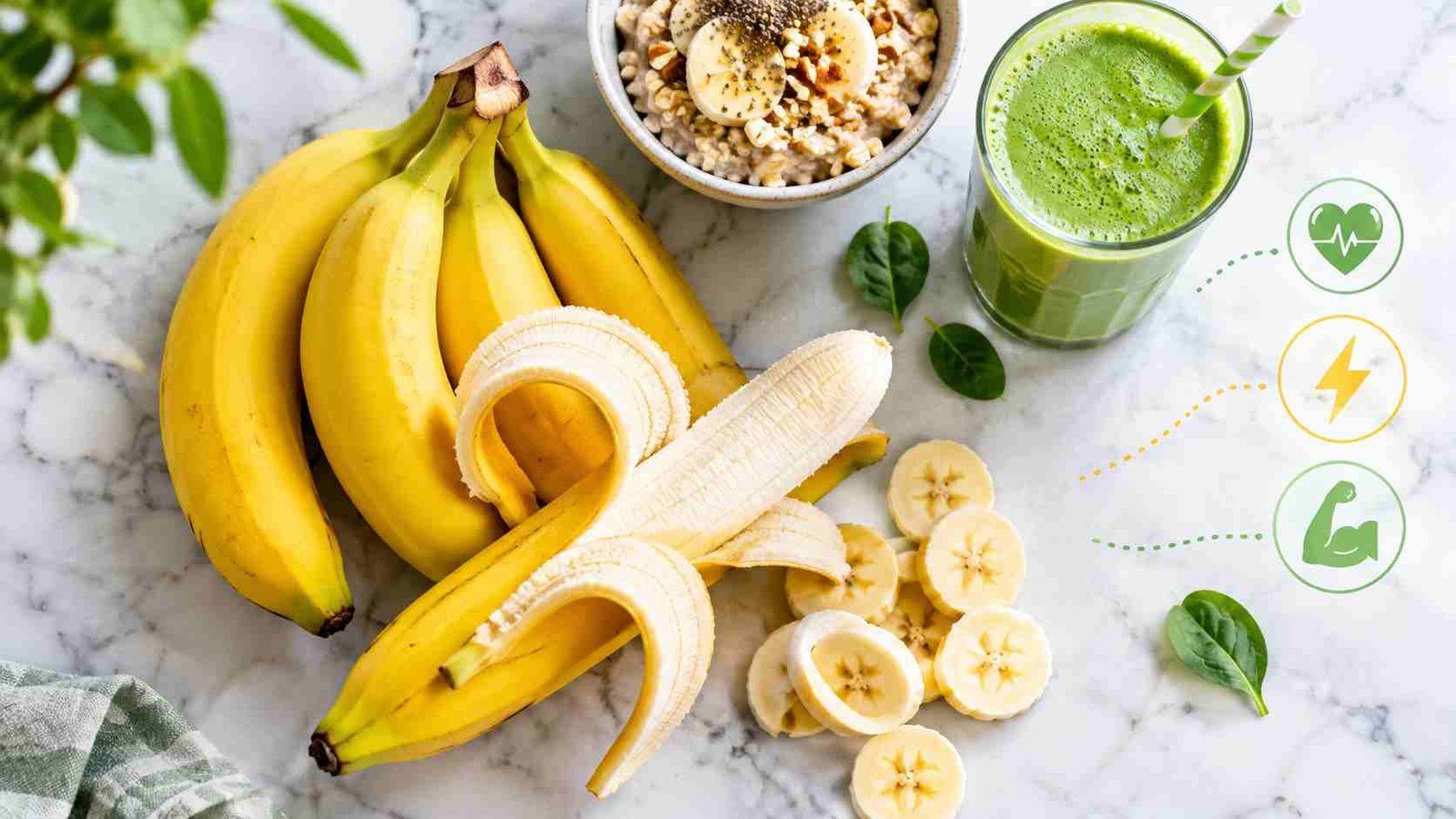

Bananas are a nutrient-rich fruit that provides carbohydrates, dietary fiber, potassium, vitamin B6 and other nutrients. They are portable, affordable in many markets and easy to fit into breakfasts, snacks and workout routines. Research supports several nutritional and health-related benefits of eating fruit, which is why the health benefits of bananas are worth understanding in detail.
This guide looks at what the evidence actually shows. Some benefits, such as the potassium and fiber content, are well established. Others, such as effects on weight, blood sugar or exercise recovery, depend heavily on the rest of your diet and on what a banana replaces. We also separate whole bananas from banana-flavored processed foods, which are nutritionally very different.
One point is worth stating early: a banana can be eaten regularly, but no single food needs to be eaten every day for good health. In this article, “daily” means “can be part of your routine,” not “must be.” A healthy diet is built on variety, balance and overall pattern, as described in our guide to a healthy diet.
Important: This article offers general nutrition information and is not personal medical advice. If you have a health condition or take medication, talk with a healthcare professional about what fits your needs.
Quick Answer: Are Bananas Healthy?
Bananas are a nutritious fruit that provides carbohydrates, fiber, potassium and vitamin B6. Eating bananas regularly can be part of a healthy diet and may support digestive health, normal blood pressure, energy needs and exercise nutrition. However, you do not need to eat a banana every day to be healthy, and the best diet includes a variety of fruits and other nutrient-rich foods.
For more ideas, see our list of healthiest foods to eat everyday.
Banana Nutrition at a Glance
According to USDA FoodData Central, a medium banana (about 118 grams) provides roughly 105 calories, 27 grams of carbohydrate, about 3 grams of fiber, around 420 milligrams of potassium, and a little under half a milligram of vitamin B6. Exact values vary with size and ripeness. The table below summarizes the main components and why they matter.
| Nutrient / Component | Why It Matters |
|---|---|
| Carbohydrates | Provide readily available energy |
| Dietary fiber | Supports digestive health and fullness |
| Potassium | Important for nerve, muscle and fluid balance |
| Vitamin B6 | Supports normal metabolism and nervous-system function |
| Vitamin C | Supports immune function and antioxidant activity |
| Magnesium | Contributes to normal muscle and nerve function |
| Resistant starch | Present in greater amounts in less-ripe bananas; acts as a type of dietary fiber |
How Ripeness Changes a Banana
A banana’s composition changes as it ripens. Less-ripe bananas are firmer and less sweet, and they contain more resistant starch. As the fruit ripens, much of that starch is converted into simpler sugars, so the banana becomes softer and sweeter.
A ripe banana is still a good source of fiber and micronutrients. This ripening shift is one of the most useful things to understand when comparing bananas, and we return to it in the ripe versus unripe section below.
10 Science-Backed Health Benefits of Bananas
1. Provides a Convenient Source of Energy
Bananas contain carbohydrates, which are the body’s main fuel for many types of physical activity. The Dietary Guidelines for Americans recognize carbohydrate-containing whole foods, including fruit, as part of a healthy eating pattern.
A banana is easy to carry and needs no preparation, which makes it a practical snack on busy days or before activity. It is more accurate to say that bananas provide carbohydrates that contribute to your body’s energy needs than to say they give you “instant energy.” How you feel after eating one also depends on what else you have eaten.
2. Supports Heart and Blood Pressure Health
Bananas provide potassium, a mineral that plays an important role in blood pressure regulation and cardiovascular function. The NIH Office of Dietary Supplements notes that most Americans do not reach the recommended adequate intake for potassium (2,600 mg per day for adult women and 3,400 mg for adult men).
A meta-analysis of randomized trials in the BMJ found that higher potassium intake was associated with lower blood pressure in adults with high blood pressure. That evidence concerns overall potassium intake, not bananas alone. The DASH eating plan, which emphasizes fruits, vegetables and lower sodium, shows how potassium-rich foods work as part of a larger pattern.
Bananas are one source of potassium, not a treatment for hypertension. Sodium intake, physical activity, body weight and medical care all matter as well. To learn more, see our guides on high blood pressure and how to lower blood pressure.
3. Supports Digestive Health
Bananas contain dietary fiber, and less-ripe bananas also contain resistant starch, which reaches the large intestine largely undigested. Fiber contributes to normal bowel function, and fermentable fibers and resistant starch can serve as food for gut microbes.
The effect depends on your overall fiber intake, not on one fruit. Bananas are one of many fiber-containing foods, and our guide to high-fiber foods for better digestive health explains how to build fiber into the whole day. If you are curious about the gut microbiome more broadly, see our overview of probiotics.
4. Provides Vitamin B6
Vitamin B6 takes part in many metabolic reactions. According to the NIH Office of Dietary Supplements, it is involved in protein metabolism, red blood cell formation and normal nervous-system function. The recommended intake for most adults aged 19 to 50 is 1.3 mg per day.
A medium banana supplies a meaningful share of that amount, which makes it a convenient dietary source. This does not mean bananas treat a B6 deficiency. Anyone concerned about low vitamin B6 should speak with a healthcare professional.
5. May Support Exercise Performance and Recovery
Carbohydrates fuel exercise, and sports nutrition guidance from the Academy of Nutrition and Dietetics, Dietitians of Canada and the American College of Sports Medicine emphasizes matching carbohydrate intake to activity level. Bananas are portable and easy to digest for many people, so they work well as a pre- or post-workout food.
Potassium is lost in sweat, but eating a banana should not be treated as a complete electrolyte-replacement strategy. The evidence on potassium and exercise-related muscle cramps is also more complicated than popular advice suggests, so bananas should not be presented as a cramp preventive.
Practical pairings include:
- Before exercise: banana with yogurt, banana with a small handful of nuts, or banana with oatmeal.
- After exercise: banana with Greek yogurt, banana with milk, or banana with nut butter.
For more on fueling and recovery, see our guide to workout recovery and our overview of high-protein foods.
6. Can Support Regular Bowel Movements
Fiber adds bulk to stool and contributes to regularity. A banana can be one part of a fiber-rich diet, along with other fruits, vegetables, legumes and whole grains. Fluid intake and physical activity also play a role.
Individual responses vary. Bananas do not always relieve constipation, and they do not always cause it. The effect can depend on your overall diet, how ripe the banana is and how your own digestive system responds. If constipation is persistent or comes with other symptoms, a healthcare professional can help identify the cause.
7. Contains Antioxidant and Plant Compounds
Bananas contain vitamin C and a range of plant compounds, including phenolic compounds and carotenoids. Bananas also contain dopamine, but dietary dopamine does not act as a neurotransmitter in the brain. Eating a banana does not raise brain dopamine in the way the word might suggest.
Antioxidant science is more nuanced than “more antioxidants means better health.” Bananas do not “detox” the body, and antioxidants from a single food should not be expected to prevent cancer or other diseases. The benefit lies in eating a variety of plant foods over time. Read more in our explainer on what antioxidants are and our list of other antioxidant-rich foods.
8. May Help You Feel Full Between Meals
Bananas combine fiber, carbohydrate and a fair amount of food volume, which can contribute to fullness. A banana paired with a protein or fat source, such as yogurt or nut butter, is likely to be more satisfying than a banana alone.
A banana can help you feel full, but it is not a weight-loss food by itself. How filling a snack feels varies from person to person.
9. Can Be Part of a Healthy Weight-Management Diet
Bananas are relatively nutrient-dense, and they provide fiber. Large reviews of research, such as a meta-analysis of fruit and vegetable intake and health outcomes, link higher intake of fruit and vegetables with better long-term health outcomes, although these studies look at overall intake rather than bananas specifically.
Bananas can fit into a weight-management diet, especially when they replace highly processed snacks, but eating bananas alone does not cause weight loss. Bananas do not burn fat or target belly fat, and portion size and total calorie intake still matter. Our guide to weight management covers the broader picture.
10. Makes It Easier to Eat More Whole Fruit
One of the biggest advantages of bananas may be behavioral. They need no preparation, travel well, come naturally portioned and are affordable in many markets. They are also easy to add to breakfast or snacks.
The MyPlate guidance on fruit encourages Americans to eat a variety of whole fruits. When a banana replaces a packaged snack, it can make a regular fruit habit realistic. That practical benefit does not require any special health claim.
Ripe vs. Unripe Bananas: Which Is Healthier?
Neither is universally healthier. The better choice depends on your preferences, digestion and dietary goals.
Less-ripe (green or slightly green) bananas are firmer and less sweet. They contain more resistant starch, which may have a prebiotic effect by feeding gut microbes. Some people find them harder to digest or less pleasant to eat.
Ripe (yellow or spotted) bananas are softer and sweeter because more of the starch has been converted into sugars. They are still nutritious and are often easier on digestion for some people.
Green bananas are not a “superfood,” and ripe bananas are not “bad.” Choose the stage you will enjoy and eat consistently.
Are Bananas High in Sugar?
Bananas contain natural sugar, but they are also a whole fruit that provides fiber, vitamins and minerals. A medium banana has roughly 14 grams of total sugars according to USDA FoodData Central, and none of it is added sugar.
Natural sugars in whole fruit are not the same as added sugars in sodas or desserts. Whole fruit comes with fiber and nutrients that slow eating and add nutritional value. Ripeness changes sweetness, and portion size still matters.
To see how these differ on a package, read our guide to understanding nutrition labels, which explains total sugars versus added sugars.
Can You Eat a Banana Every Day?
For most healthy adults, eating a banana every day can fit into a balanced diet, but there is no requirement to eat one daily. What matters more is the variety across your whole diet.
Consider the following when deciding how often to eat bananas:
- Fruit variety: Rotating fruits such as berries, citrus, apples and kiwi supplies a wider range of nutrients. See our articles on kiwi and cherries for examples.
- Total carbohydrate intake: Bananas add carbohydrate, which may matter for people tracking intake.
- Energy needs: Calorie needs differ by age, size and activity level.
- Medical conditions: Some conditions call for individualized potassium or carbohydrate guidance.
Our guide to what a balanced diet is explains why diversity is a foundation of good nutrition.
How Many Bananas Should You Eat a Day?
There is no universal “correct” number of bananas per day. One banana is a practical serving for many adults, and fruit needs vary with age, energy needs and overall dietary pattern. The Dietary Guidelines for Americans give daily fruit targets for the whole food group, not for any single fruit.
Eating more than one banana is not necessarily harmful for healthy people, but it can add significant carbohydrate and calories. Variety across the fruit group usually serves you better than relying on one fruit.
People with kidney disease or conditions that require potassium restriction should ask their healthcare professional about appropriate potassium intake rather than assuming high-potassium foods are always beneficial. The National Institute of Diabetes and Digestive and Kidney Diseases offers guidance on eating with chronic kidney disease.
Best Ways to Eat Bananas
Keep your approach food-based. Whole bananas, rather than supplements or banana-flavored snacks, are the focus here.
Banana With Oatmeal
Sliced banana adds natural sweetness and fruit to a fiber-rich breakfast, which can reduce the need for added sugar.
Banana With Yogurt
Pairing banana with yogurt adds protein to the carbohydrate in the fruit.
Banana With Nut Butter
This combination provides carbohydrate with fat and protein, which can make a snack more satisfying.
Frozen Banana
Frozen slices blend well into smoothies and can be eaten as a simple frozen snack.
Banana on Whole-Grain Toast
A quick breakfast or snack that combines fruit with whole grains.
Banana as a Pre-Workout Snack
A banana is a convenient carbohydrate source before activity, especially when you want something light and portable.
Are There Any Downsides to Eating Bananas?
For most people, bananas are a safe, nutritious food. A few considerations are worth knowing:
- Potassium: People with kidney disease or certain other medical conditions, or those taking medicines that raise potassium levels, may need to limit potassium. Ask a healthcare professional what is right for you.
- Carbohydrate content: People managing diabetes can include bananas, but portion size and total carbohydrate intake matter.
- Digestive symptoms: Some people experience bloating or changes in bowel habits after eating bananas.
- Allergy: Banana allergy is uncommon but possible, and it can be linked to latex allergy in some people.
- Over-reliance: Eating bananas at the expense of other fruits and foods can reduce dietary variety.
Bananas and Diabetes: Are They Safe to Eat?
People with diabetes generally do not need to eliminate bananas solely because they contain natural sugar. The American Diabetes Association notes that fruit can fit into a diabetes eating plan.
Bananas can fit into many diabetes-friendly eating patterns, but the appropriate portion depends on an individual’s overall carbohydrate intake and blood glucose goals. Whole fruit is generally preferable to fruit juice, and ripeness may affect blood glucose response, with riper bananas typically raising it more quickly than less-ripe ones. Individual responses vary.
People who use insulin or glucose-lowering medication should follow their personalized meal plan and ask their care team how bananas fit in. For more background, see our guides on diabetes and diet and blood sugar.
Frequently Asked Questions About Banana Health Benefits
What are the main health benefits of bananas?
Bananas provide carbohydrates, fiber, potassium and vitamin B6. They can contribute to energy needs, digestive health and a varied diet. They are not a cure or treatment for any condition.
Is it healthy to eat a banana every day?
For most healthy adults, yes, a daily banana can fit into a balanced diet. It is not required, though, and variety across fruits matters more than any one choice. People with kidney disease or potassium restrictions should ask their healthcare professional first.
What happens if you eat bananas every day?
For most people, a daily banana adds fiber, potassium and other nutrients without causing problems. Effects on weight, digestion or blood sugar depend on the rest of your diet and on what the banana replaces.
Are bananas good for your heart?
Bananas provide potassium, which plays a role in blood pressure regulation. They can be part of a heart-healthy pattern, but they do not prevent or treat heart disease on their own. See our guide to heart-healthy foods.
Are bananas good for digestion?
The fiber in bananas, and the resistant starch in less-ripe ones, can support normal digestion for many people. Responses vary, and some people notice bloating. Overall fiber intake and fluids matter as well.
Do bananas help with constipation?
They might for some people, because they provide fiber, but the effect is not guaranteed. Bananas do not always relieve or cause constipation. If it persists, consult a healthcare professional.
Are bananas good before a workout?
Yes, for many people. A banana provides easy-to-digest carbohydrate, and sports nutrition guidance from the Academy of Nutrition and Dietetics and the ACSM supports carbohydrate fueling for activity. Pair it with yogurt, oatmeal or nuts if you need more staying power.
Are bananas good for weight loss?
Bananas can fit into a weight-management diet, particularly when they replace highly processed snacks. They do not cause weight loss on their own, and portion size and total calories still matter.
Are bananas high in sugar?
A medium banana has roughly 14 grams of natural sugar along with fiber and nutrients, according to USDA FoodData Central. Natural sugar in whole fruit differs from added sugar in processed foods and drinks.
Are green bananas healthier than ripe bananas?
Not necessarily. Green bananas have more resistant starch, while ripe bananas are sweeter and often easier to digest. Both are nutritious, so choose based on taste, digestion and your goals.
Can people with diabetes eat bananas?
Many people with diabetes can include bananas as part of a planned meal pattern, as the American Diabetes Association notes that fruit can fit. Portion size and total carbohydrate intake matter, and your care team can help tailor this.
How many bananas should you eat a day?
There is no set number. One banana is a practical serving for many adults, and fruit intake should include a variety of types. People with kidney disease should ask a healthcare professional about potassium limits.
The Bottom Line
Bananas are a nutrient-dense whole fruit that provides carbohydrates, fiber, potassium and vitamin B6. They can support a varied, balanced diet and are especially convenient as a snack or carbohydrate source around physical activity. Ripeness changes their starch and sugar balance, and neither stage is universally better.
You can eat bananas daily if they fit your overall diet, but no single fruit needs to be eaten every day for good health. A balanced diet is built from variety, not from one perfect food.
Sources
- U.S. Department of Agriculture. FoodData Central.
- National Institutes of Health, Office of Dietary Supplements. Potassium: Health Professional Fact Sheet.
- National Institutes of Health, Office of Dietary Supplements. Vitamin B6: Health Professional Fact Sheet.
- Aburto NJ, et al. Effect of increased potassium intake on cardiovascular risk factors and disease: systematic review and meta-analyses. BMJ. 2013.
- Aune D, et al. Fruit and vegetable intake and the risk of cardiovascular disease, total cancer and all-cause mortality. International Journal of Epidemiology. 2017.
- U.S. Department of Agriculture and U.S. Department of Health and Human Services. Dietary Guidelines for Americans.
- National Heart, Lung, and Blood Institute. DASH Eating Plan.
- Thomas DT, Erdman KA, Burke LM. Position of the Academy of Nutrition and Dietetics, Dietitians of Canada, and the American College of Sports Medicine: Nutrition and Athletic Performance. 2016.
- USDA MyPlate. Fruits.
- National Institute of Diabetes and Digestive and Kidney Diseases. Eating and Nutrition for Chronic Kidney Disease.
- American Diabetes Association. Food and Nutrition.
Medical Disclaimer: This article is for general educational purposes only and is not a substitute for professional medical advice, diagnosis or treatment. Nutrition needs differ from person to person, especially for people with kidney disease, diabetes or other medical conditions. Always talk with a doctor, registered dietitian or other qualified healthcare professional before making changes to your diet, and seek care right away if you think you may have a medical emergency.