
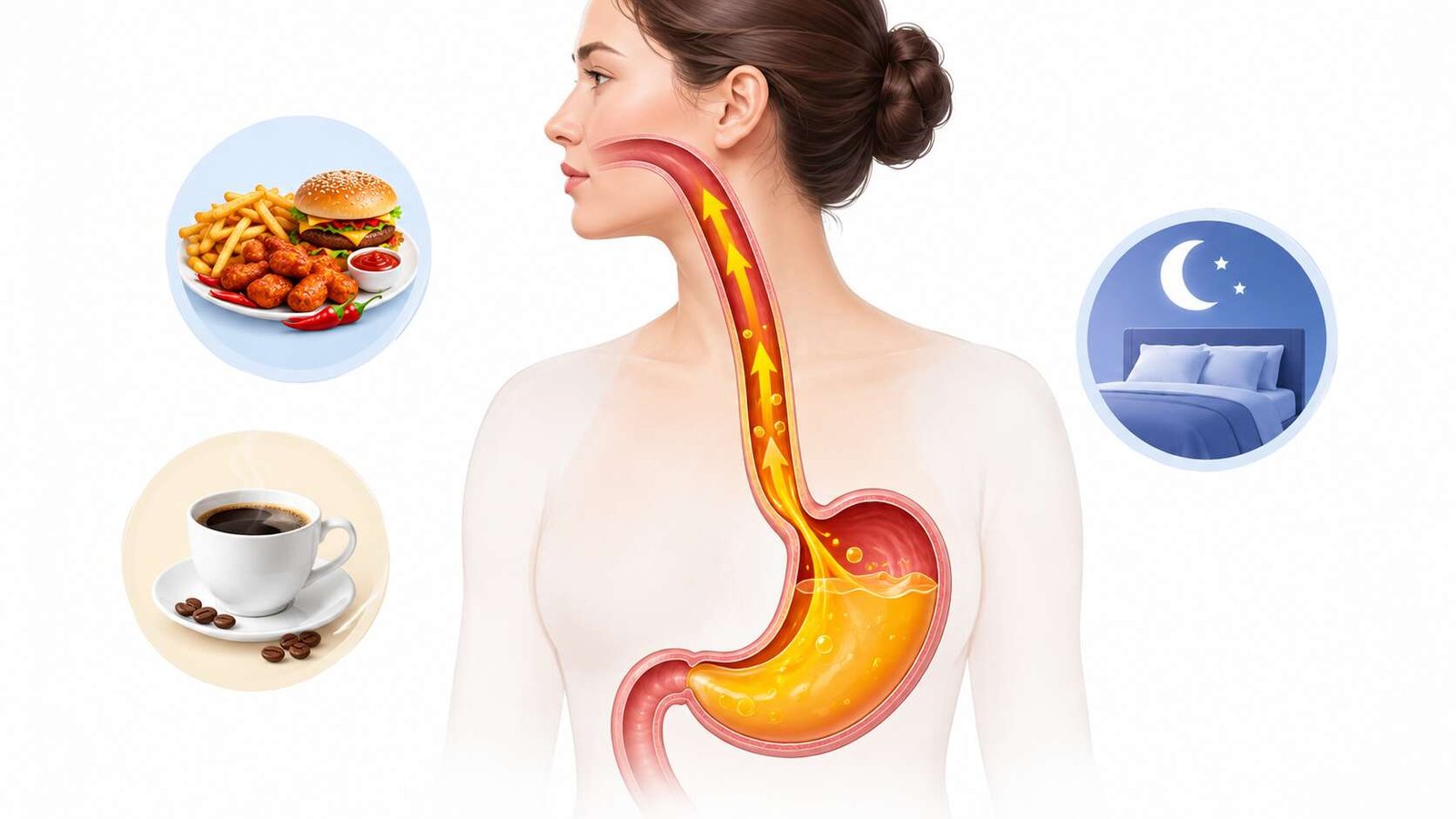

A burning feeling in your chest after dinner, a sour taste at the back of your throat, or discomfort that gets worse when you lie down can all be signs of acid reflux. Most people have felt it at some point. The American College of Gastroenterology notes that occasional reflux is very common, and our overview of how common acid reflux is shows how many people deal with it.
Acid reflux happens when stomach contents flow backward into the esophagus, the tube that carries food from your mouth to your stomach. This usually occurs because the lower esophageal sphincter (LES), a ring of muscle at the bottom of the esophagus, relaxes when it should not or does not close tightly enough, as the National Institute of Diabetes and Digestive and Kidney Diseases (NIDDK) explains. Several everyday habits, foods, health conditions, and medicines can make that more likely.
Occasional reflux is common and often manageable with simple changes. Reflux that keeps coming back may point to gastroesophageal reflux disease (GERD), which deserves a medical conversation. This guide explains what causes acid reflux, which triggers matter most, how to find relief, and when to get care. It is general information, not a substitute for advice from your own clinician.
What Causes Acid Reflux?
Quick answer: Acid reflux occurs when stomach contents flow backward into the esophagus, often because the lower esophageal sphincter relaxes when it shouldn’t or doesn’t close properly. Large meals, certain foods and drinks, late-night eating, excess abdominal pressure, alcohol, smoking, and some health conditions can make reflux more likely. Triggers vary from person to person.
The lower esophageal sphincter
The LES works like a one-way valve. It opens to let food into the stomach, then closes to keep stomach contents where they belong. Gravity helps when you are upright, which is one reason symptoms often flare when you lie down.
Reflux can happen when the LES relaxes at the wrong time or is weakened. It can also happen when pressure inside the stomach rises enough to push contents upward. NIDDK says that GERD may develop when the LES becomes weak or relaxes when it shouldn’t. Some people notice early signs of acid reflux well before symptoms become frequent.
Acid reflux vs. GERD
Acid reflux is an episode or a symptom. Nearly everyone has it now and then, and it does not always mean something is wrong. Mayo Clinic experts note that having acid reflux does not necessarily mean you have a medical condition.
GERD is a longer-lasting form, where reflux happens repeatedly and causes bothersome symptoms or complications. Frequency matters, but so do severity, sleep disruption, and effects on daily life. The Mayo Clinic overview of GERD describes it as reflux that happens repeatedly over time. A clinician can tell you which applies to you, and our guide on how acid reflux is diagnosed explains what to expect.
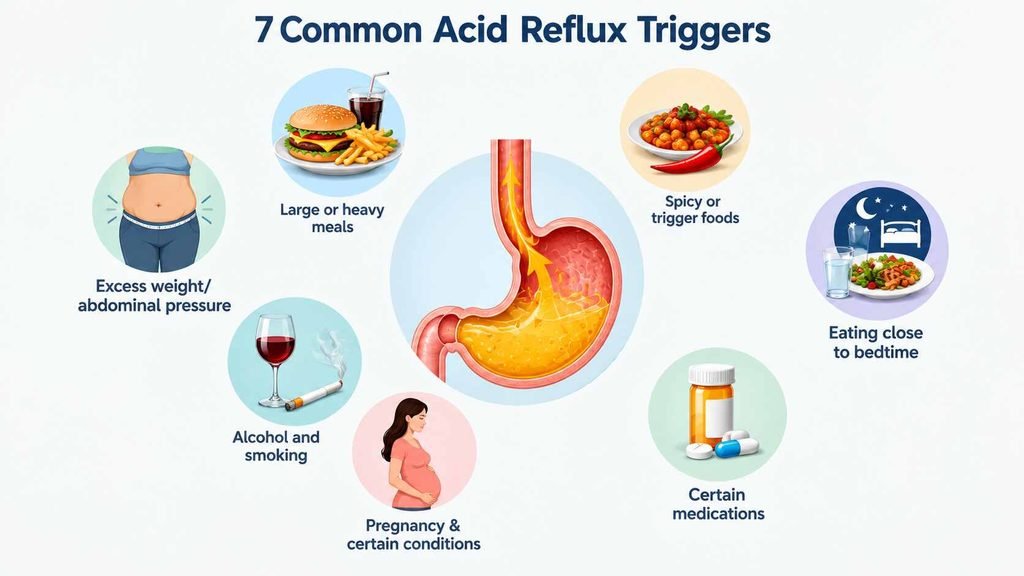
7 Common Acid Reflux Triggers
Not every trigger affects every person. The list below describes factors that may raise the chance of symptoms, not guarantees.
- Large or heavy meals
- Trigger foods and drinks
- Eating close to bedtime
- Excess weight and abdominal pressure
- Alcohol and smoking
- Pregnancy and certain health conditions
- Certain medications
1. Large or Heavy Meals
A big meal stretches the stomach and raises pressure inside it. That pressure can push stomach contents toward the esophagus, especially if the LES is already prone to relaxing. A Mayo Clinic gastroenterologist describes overeating, and eating and then lying down, as major triggers.
Fatty meals may also slow stomach emptying, which keeps food in the stomach longer. Eating smaller portions and staying upright after meals may help. Our guide on how to manage acid reflux at home covers these steps in more detail.
2. Trigger Foods and Drinks
Food triggers differ widely between people. Foods and drinks that are commonly reported to worsen symptoms include:
- Fatty or fried foods
- Spicy foods
- Chocolate
- Coffee and other caffeinated drinks
- Alcohol
- Carbonated drinks
- Peppermint
- Citrus fruits and juices
- Tomato-based foods
The Mayo Clinic heartburn guide lists many of these as possible triggers. You do not need to cut out everything on the list. The more useful approach is to find out which foods affect you.
If you want to build meals around gentler choices, our high-fiber foods for digestive health guide and our overview of how to improve gut health can help.
3. Eating Too Close to Bedtime
When you lie flat with a full stomach, gravity no longer helps keep stomach contents down. That combination can make nighttime heartburn more likely. If your discomfort is mainly in your chest after dark, see our article on chest pain at night for other possible causes.
Late dinners, bedtime snacks, and lying down right after eating are common contributors. NIDDK says doctors may recommend eating meals 2 to 3 hours before you lie down. Better sleep habits can help too, and our guide on how to improve sleep offers practical ideas.
4. Excess Weight and Abdominal Pressure
Extra weight around the abdomen can increase pressure on the stomach. That pressure may push stomach contents upward through the LES. Mayo Clinic lists obesity among the conditions that can increase the risk of GERD.
For people who carry extra weight, NIDDK notes that doctors may recommend weight loss to reduce GERD symptoms. This is a mechanical explanation, not a judgment. Reflux affects people at every body size. Our article on acid reflux risk factors shows how weight fits with other risks, and our guide to weight management covers evidence-based approaches.
5. Alcohol and Smoking
Alcohol may relax the LES and can irritate the esophagus in some people. Many people notice symptoms after drinking, especially in the evening.
Smoking can lower LES pressure and may reduce saliva, which helps neutralize acid in the esophagus. A Mayo Clinic gastroenterologist advises avoiding triggers such as coffee, alcohol, and smoking first. If either seems to trigger your symptoms, cutting back or quitting may help. Free quit support is available through Smokefree.gov.
6. Pregnancy and Certain Health Conditions
Several conditions make reflux more likely:
- Pregnancy: A growing uterus raises abdominal pressure, and hormonal changes may relax the LES.
- Hiatal hernia: Part of the stomach pushes up through the diaphragm, which can weaken the barrier against reflux.
- Delayed stomach emptying (gastroparesis): Food stays in the stomach longer, which can increase reflux.
- Obesity: Covered above.
NIDDK describes these factors that contribute to GER and GERD. Mayo Clinic also lists pregnancy and hiatal hernia as conditions that can raise GERD risk. If you are pregnant, ask your obstetric provider before using any reflux medicine. Some people also wonder whether acid reflux runs in families, which our genetics article addresses.
7. Certain Medications
Some medicines can cause reflux-like symptoms or make reflux worse. Examples named by NIDDK include calcium channel blockers, some sedatives, certain asthma medicines, nonsteroidal anti-inflammatory drugs (NSAIDs), and some antidepressants. You can read more in the NIDDK causes overview.
Do not stop a prescribed medicine on your own. If you suspect a medicine is affecting your reflux, talk with your prescriber or a pharmacist. They can review options, such as changing the dose, timing, or medicine.
How to Get Relief From Acid Reflux
Most relief strategies target the triggers above. You may not need all of them. Start with the ones that fit your pattern. NIDDK says many people can manage symptoms with lifestyle changes or over-the-counter medicines. If you want a longer-term plan, our guide to living with acid reflux goes further.
1. Eat Smaller Meals
Smaller portions reduce stomach stretching and pressure. Some people do better with several small meals across the day than with two or three large ones.
2. Avoid Lying Down After Eating
Stay upright for 2 to 3 hours after eating when possible. A short, gentle walk after a meal may be more comfortable than sitting slumped or reclining. Our guide to walking for health explains how to build the habit.
3. Identify Your Personal Food Triggers
A food and symptom diary can be more useful than a strict “reflux diet.” For a couple of weeks, note what you eat and drink, the time, and any symptoms. Mayo Clinic advises avoiding the foods that trigger your heartburn, which means you only need to limit the ones that bother you.
4. Raise Your Upper Body at Night
If symptoms happen mostly when you sleep, elevating the head of your bed may help. NIDDK’s treatment guidance for GER and GERD covers raising the head of the bed by about 6 to 8 inches, using blocks under the bed frame or a wedge pillow designed for this purpose. Stacking regular pillows usually bends the waist and may not help.
5. Maintain a Healthy Weight if Appropriate
If your clinician has said weight loss is appropriate for you, even modest changes may reduce abdominal pressure and symptoms. Work with a healthcare professional on a plan that fits your health and goals. Our high-protein foods and Mediterranean diet guides can support balanced eating.
6. Avoid Smoking and Limit Alcohol
If you smoke, quitting can help your overall health and may ease reflux. If alcohol is a trigger for you, drinking less or avoiding it may reduce symptoms.
7. Consider Over-the-Counter Medicines When Appropriate
Over-the-counter (OTC) options work in different ways:
- Antacids neutralize stomach acid and can bring quick, short-term relief for occasional symptoms.
- H2 blockers reduce acid production and last longer than antacids.
- Proton pump inhibitors (PPIs) provide stronger acid suppression and are generally better at healing irritated esophageal tissue.
The American College of Gastroenterology patient guide and NIDDK both describe these medicine types. OTC medicines are meant for occasional or short-term use unless a clinician advises otherwise. Mayo Clinic advises seeing a clinician if you take nonprescription heartburn medicines more than twice a week. For a closer comparison, see our guide to acid reflux treatment options.
What About Home Remedies for Acid Reflux?
Many popular remedies have limited evidence. Here is a quick, balanced look:
- Ginger: Often suggested for digestion, but evidence specifically for reflux is limited. Our article on ginger and acid reflux looks at what is known, and our broader piece asks whether ginger is good for health.
- Apple cider vinegar: Not proven to help reflux. Because it is acidic, it may irritate the throat and esophagus in some people.
- Baking soda: Can neutralize acid briefly, but it is not suitable as a routine remedy. It contains a lot of sodium, so check with a clinician before using it, especially if you have high blood pressure or kidney disease.
- Milk: May feel soothing at first, but it is not a reliable treatment. Full-fat milk may worsen symptoms for some people.
- Chewing gum: May help some people by increasing saliva and swallowing, which clears acid from the esophagus. Avoid peppermint gum if mint is a trigger.
- Yogurt: Some people find it soothing. See our guide on yogurt for acid reflux and our overview of yogurt’s health benefits.
Natural does not always mean effective or safe, so discuss any remedy with a clinician if you have ongoing symptoms.
When Is Acid Reflux a Sign of GERD?
A single episode of heartburn does not mean you have GERD. Mayo Clinic describes GERD as acid reflux that happens repeatedly over time, and NIDDK describes it as a more severe and long-lasting condition.
Possible signs that reflux has become a recurring problem include:
- Symptoms that happen often or keep returning
- Symptoms that disturb your sleep or daily activities
- Symptoms that continue despite lifestyle changes
- Regular reliance on OTC medicines to get through the week
The usual path runs from an occasional trigger to a repeating pattern, then to possible GERD, and finally to a medical evaluation. Only a healthcare professional can diagnose GERD.
When Should You See a Doctor for Acid Reflux?
Seek emergency care right away (call 911 in the U.S.) for severe or unexplained chest pain or pressure, especially with shortness of breath, sweating, or pain that spreads to the arm, jaw, or back. Chest pain can be a sign of a heart attack, and it can be hard to tell apart from reflux. Learn more about heart attack symptoms and what chest pain can feel like.
Mayo Clinic notes that distinguishing GERD from heart-related symptoms can be difficult, which is why severe chest symptoms should be evaluated promptly. For broader guidance, see our chest pain article.
Make an appointment with a healthcare professional if you have:
- Frequent reflux or heartburn
- Symptoms that continue despite lifestyle changes
- Little relief from OTC medicines
- Difficulty or pain when swallowing
- Persistent vomiting
- Unexplained weight loss
- Black, tarry stools or vomit that looks like coffee grounds (these can signal GI bleeding and need prompt care)
- Symptoms that regularly disrupt your sleep
NIDDK lists difficulty swallowing, persistent vomiting, unexplained weight loss, and signs of GI bleeding among the reasons to seek medical care. Long-lasting reflux can also lead to complications, which NIDDK covers under GERD complications. If discomfort is mostly in your upper belly, our guide on abdominal pain after eating may also be useful.
Frequently Asked Questions
What is the main cause of acid reflux?
The main cause is a lower esophageal sphincter that relaxes at the wrong time or does not close tightly, which lets stomach contents move back into the esophagus. Increased pressure in the abdomen can add to the problem. NIDDK explains this mechanism, and triggers vary from person to person.
What foods commonly trigger acid reflux?
Fatty or fried foods, spicy foods, chocolate, caffeine, alcohol, carbonated drinks, peppermint, citrus, and tomato-based foods are commonly reported triggers. Not everyone reacts to all of them. A food and symptom diary can help you identify your own, and Mayo Clinic lists common heartburn triggers.
Why does acid reflux happen after eating?
Eating raises stomach volume and pressure, and a large or fatty meal can increase the chance that contents move upward. Lying down or bending over soon afterward can make this more likely. If chest discomfort follows meals, read about chest pain after eating, and see a clinician if it is severe or new.
Why is acid reflux worse at night?
When you lie flat, gravity no longer helps keep stomach contents down. Eating late can add to this. Mayo Clinic notes that heartburn can be worse at night or while lying down. Finishing meals 2 to 3 hours before bed and raising the head of your bed may help.
Can stress cause acid reflux?
Stress has not been shown to directly cause reflux, but it may make symptoms feel worse or lead to habits that trigger them, such as eating quickly, drinking more alcohol, or sleeping poorly. Research findings are mixed. Our guide on how to reduce stress offers practical ideas.
How can I relieve acid reflux quickly?
For occasional symptoms, sitting upright, avoiding tight clothing around the waist, and taking an antacid as directed on the label can bring short-term relief. Avoid lying down right after eating. A Mayo Clinic gastroenterologist notes that antacids work quickly, while H2 blockers last longer. If you need quick relief often, talk with a healthcare professional.
Is acid reflux the same as GERD?
No. Acid reflux is an episode or symptom that most people experience at times. GERD is a chronic condition in which reflux happens repeatedly and causes bothersome symptoms or complications. NIDDK describes the difference, and a clinician can tell you which applies to you.
When should I see a doctor about acid reflux?
See a healthcare professional if reflux is frequent, keeps returning despite self-care, wakes you at night, or comes with trouble swallowing, persistent vomiting, or unexplained weight loss. Mayo Clinic advises seeing a clinician for severe or frequent symptoms. Call 911 for severe chest pain or pressure, especially with shortness of breath or arm or jaw pain.
Conclusion
Acid reflux usually happens because stomach contents move upward through the lower esophageal sphincter. Large meals, certain foods and drinks, late-night eating, extra abdominal pressure, alcohol, smoking, pregnancy, some medical conditions, and certain medicines can make symptoms more likely.
The goal is not to remove every possible trigger. It is to learn which ones affect you and make changes that fit your life. Small steps, such as eating smaller meals and leaving a few hours before bed, often make a real difference. Our guide on how to prevent acid reflux offers more ways to lower your risk.
If symptoms are frequent, disruptive, or paired with warning signs, talk with a healthcare professional. For a wider look at related issues, see our overview of common digestive problems.
Sources
- National Institute of Diabetes and Digestive and Kidney Diseases (NIDDK). Acid Reflux (GER & GERD) in Adults
- NIDDK. Symptoms & Causes of GER & GERD
- NIDDK. Treatment for GER & GERD
- NIDDK. Definition & Facts for GER & GERD (complications)
- Mayo Clinic. Gastroesophageal reflux disease (GERD): Symptoms and causes
- Mayo Clinic. Heartburn: Symptoms and causes
- Mayo Clinic. Acid reflux and GERD: The same thing?
- Mayo Clinic News Network. Mayo Clinic Minute: Help with heartburn
- Mayo Clinic News Network. Mayo Clinic Minute: GERD is not “just” heartburn
- Mayo Clinic News Network. Mayo Clinic Q and A: Is it heartburn or a heart attack?
- American College of Gastroenterology. Acid Reflux/GERD
- American College of Gastroenterology Patient Portal. Gastroesophageal Reflux Disease (GERD)
- Smokefree.gov. Quit smoking resources
Medical Disclaimer: This article is for general information and education only. It does not provide medical advice, diagnosis, or treatment, and it is not a substitute for care from a qualified healthcare professional. Everyone’s health situation is different, so talk with your own clinician about your symptoms, medicines, and treatment choices. Never ignore or delay seeking professional advice because of something you read here. If you think you may be having a medical emergency, such as severe chest pain, call 911 or your local emergency number right away.
7 thoughts on “What Causes Acid Reflux? 7 Common Triggers & How to Get Relief”
Comments are closed.