
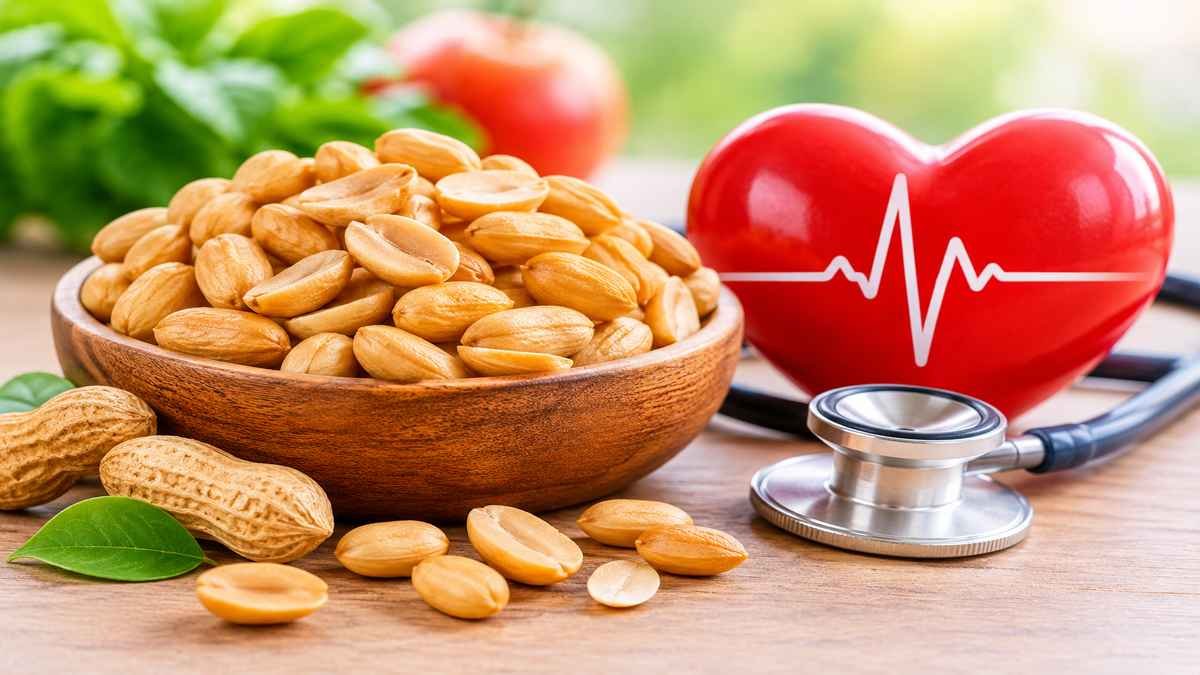

Can eating peanuts regularly benefit your heart? It is a fair question, because peanuts are small, salty-sweet, and easy to overeat, yet they are also affordable and nutrient-rich. When it comes to peanuts and heart health, the answer depends largely on how you eat them and what they replace in your diet.
Peanuts contain mostly unsaturated fats, along with plant protein, fiber, magnesium, vitamin E, and other nutrients. These components may help support healthy cholesterol levels and overall cardiovascular health when peanuts are part of a balanced eating pattern. Unsalted, minimally processed peanuts are generally the best choice for everyday eating.
This article explains how peanuts may support the heart, what research shows about cholesterol, blood pressure, and heart disease, and how much to eat. It also covers which types are best, whether salted peanuts are a problem, and who should be careful. Peanuts can support a heart-healthy diet but are not a treatment for heart disease. For general nutrition details, see our guide to the health benefits of peanuts.
Are Peanuts Good for Heart Health?
Yes, plain peanuts can be part of a heart-healthy diet, especially when they are unsalted and replace foods high in saturated fat. They provide unsaturated fats, fiber, plant protein, and minerals that fit a heart-conscious eating pattern. They do not prevent or treat heart disease on their own.
Peanuts contain predominantly monounsaturated and polyunsaturated fats. They also provide fiber, plant protein, magnesium, and other nutrients. Replacing snacks rich in saturated fat, such as pastries or processed meats, with plain peanuts may improve the overall quality of your dietary fat intake.
Large population studies have associated regular peanut and nut consumption with a lower risk of cardiovascular disease. Association is not the same as proof, and the difference between potential benefits and proven disease prevention matters. Peanuts are technically legumes, though their nutritional profile is similar to tree nuts. The American Heart Association includes unsalted nuts in a heart-healthy eating pattern, and the Mayo Clinic offers similar guidance.
How Peanuts May Support Heart Health
Several nutrients in peanuts are relevant to cardiovascular health. The sections below separate what is well understood from what is still being studied.
1. May Help Improve Cholesterol Levels
Unsaturated fats can help improve blood lipid profiles. When they replace saturated fats in the diet, LDL (“bad”) cholesterol tends to fall, as described in the Dietary Guidelines for Americans. Peanuts also provide fiber and plant sterols, which may contribute to cholesterol management.
Some studies have found that adding peanuts to the diet can improve total cholesterol, LDL, or triglycerides, while others found little change. Individual responses vary. Peanuts should complement, not replace, any prescribed cholesterol treatment. For background, see our guides to high cholesterol and LDL vs. HDL cholesterol.
2. Provide Heart-Healthy Unsaturated Fats
Most of the fat in peanuts is monounsaturated, particularly oleic acid, which is also the main fat in olive oil. The rest is largely polyunsaturated. Peanuts contain a small amount of saturated fat, about 2 grams per ounce.
The type of fat matters more than the total amount. What you replace is key: eating peanuts in place of fried snacks or processed meats can improve your fat intake, while simply adding peanuts on top of an unchanged diet adds calories.
Learn more about healthy fats and see the American Heart Association’s overview of fats.
3. Supply Fiber for Cardiovascular Wellness
An ounce of peanuts provides roughly 2 to 3 grams of fiber. Soluble fiber is linked with healthier cholesterol levels, and fiber also supports digestion and a healthy weight. The Harvard Nutrition Source explains how fiber supports long-term health.
Peanuts contribute only part of daily fiber needs. Combine them with whole grains, fruits, vegetables, and legumes, as discussed in our guide to high-fiber foods for digestive health.
4. Contain Magnesium and Other Important Nutrients
Peanuts provide magnesium, potassium, vitamin E, and folate. Magnesium is involved in normal muscle and nerve function, including heart muscle function. Potassium helps maintain fluid balance and normal blood pressure. Vitamin E acts as an antioxidant, and folate supports normal cell processes. See the NIH magnesium fact sheet and potassium fact sheet for details.
The amounts in a serving of peanuts do not independently prevent cardiovascular disease. They are one contribution among many foods.
5. May Support Healthy Blood Vessels
Peanuts contain arginine, an amino acid the body uses to make nitric oxide, a molecule that helps blood vessels relax. They also contain polyphenols and other plant compounds. These are plausible biological mechanisms for vascular benefits.
Mechanisms in the lab do not always translate to proven clinical benefits in people. Treat these as areas of ongoing research rather than established effects.
What Does Research Say About Peanuts and Heart Disease?
Understanding the type of evidence is important, so we will separate it into three groups.
Observational Research
Large population studies follow people over time and compare health outcomes by diet. A 2017 study in the Journal of the American College of Cardiology, which followed large groups of U.S. adults, found that regular consumption of peanuts and tree nuts was associated with a lower risk of cardiovascular disease and coronary heart disease. You can find it by searching PubMed.
Clinical Trials and Meta-Analyses
A 2022 systematic review and meta-analysis published in Frontiers in Nutrition examined peanut consumption and cardiovascular risk factors in clinical trials. It reported improvements in certain blood lipid measurements, while the authors also pointed to limitations and differences among the available studies. Search for it on PubMed.
What the Evidence Actually Means
- Research is promising but not conclusive for every cardiovascular outcome.
- Observational associations do not prove cause and effect, because people who eat nuts may also have other healthy habits.
- Peanuts should be considered within an overall healthy eating pattern, such as the Mediterranean diet.
- More long-term research is needed to establish specific effects.
For an overview of other nuts, see our guide to the best nuts for heart health.
Can Peanuts Help Lower Blood Pressure?
Peanuts provide potassium and magnesium, minerals involved in normal blood pressure regulation. Their unsaturated fats can also support a healthier overall dietary pattern, similar to the DASH eating plan, which includes nuts, legumes, vegetables, and fruits.
However, the 2022 review of peanut interventions did not find significant improvements in systolic or diastolic blood pressure. It would not be accurate to claim that eating peanuts directly lowers blood pressure. Sodium is also relevant: heavily salted peanuts can work against blood pressure goals.
Nutritional support is not the same as treating hypertension. If you have high blood pressure, follow your clinician’s plan. Our articles on high blood pressure and how to lower blood pressure offer more background.
How Many Peanuts Should You Eat Daily for Heart Health?
A typical reference serving is about one ounce (28 grams). This is a portion example, not a mandatory daily prescription. The American Heart Association suggests that a serving of nuts is about a small handful, as part of a heart-healthy diet.
A practical peanut serving:
- 28 grams, or approximately 1 ounce
- Around 160 to 170 calories, depending on preparation
Peanuts are energy-dense, so portion control matters. The best approach is to replace less nutritious snacks rather than adding extra calories. Individual needs vary with age, activity level, and health conditions. For more detail, see our guides on how many nuts to eat every day and whether peanuts are fattening.
Which Peanuts Are Best for Heart Health?
Preparation and added ingredients matter more than raw versus roasted. For more on this, read our comparison of raw vs. roasted peanuts.
Unsalted Peanuts
Unsalted peanuts are a practical everyday choice because they help you avoid unnecessary sodium. They are available raw or roasted.
Dry-Roasted Peanuts
Dry-roasted peanuts are convenient and flavorful. Choose varieties without excessive added salt, sugar, or unnecessary oils.
Boiled Peanuts
Boiled peanuts provide protein, fat, and other nutrients. Watch for added salt, which is common in commercial and homemade preparations.
Peanut Butter
Peanut butter provides many of the same nutrients as whole peanuts. Choose products with peanuts as the main ingredient and minimal added sugar and sodium. Not every commercial peanut butter is equally nutritious, so check the label. See our comparison of peanuts vs. peanut butter.
Are Salted Peanuts Bad for Heart Health?
Excessive sodium intake can raise blood pressure in many people, and high blood pressure is a major risk factor for heart disease. The American Heart Association recommends limiting sodium to 2,300 mg per day, with an ideal limit of 1,500 mg for most adults.
Heavily salted peanuts can contribute a notable amount of sodium, which is less suitable for people who are limiting it. Lightly salted varieties contain less. Read the Nutrition Facts label to compare products; the FDA explains how to use it.
Unsalted peanuts are generally a better everyday option. That said, a small amount of salted peanuts does not automatically cause heart disease. Your overall sodium intake from all foods matters most.
Potential Risks and Who Should Be Careful
Peanut Allergies
Peanuts are a common food allergen. People with peanut allergy should avoid them completely. Severe allergic reactions can cause anaphylaxis and require emergency medical care. The FDA provides information on allergens and food labeling.
High Calorie Content
Peanuts are energy-dense, and large portions can contribute to a calorie surplus. Sensible portions help them fit into a balanced diet.
Added Salt and Sugar
Some packaged varieties contain substantial sodium or added sugar, including honey-roasted and candy-coated types. Check ingredient and nutrition labels.
Aflatoxin Contamination
Peanuts can sometimes become contaminated with aflatoxins, toxins produced by certain molds that grow in warm, humid conditions. The World Health Organization describes the risks. Buy properly stored products from reliable sources, and avoid peanuts that are moldy, shriveled, discolored, or taste bitter.
If you have heart disease, take blood thinners, or have other medical conditions, ask your clinician or a registered dietitian how peanuts fit into your diet.
Simple Ways to Add Peanuts to a Heart-Healthy Diet
- Add unsalted peanuts to oatmeal.
- Combine peanuts with fresh fruit for a filling snack.
- Sprinkle crushed peanuts over vegetable salads.
- Spread natural peanut butter on whole-grain toast.
- Add peanuts to vegetable stir-fries.
- Use homemade peanut sauce with vegetables and lean protein.
Peanuts work best as part of a varied diet containing vegetables, fruits, whole grains, beans, and other nutrient-rich foods. See our list of heart-healthy foods for more ideas.
Frequently Asked Questions About Peanuts and Heart Health
Are peanuts good for your heart every day?
Moderate portions of plain peanuts can fit into a heart-healthy eating pattern. Daily consumption is not necessary, and the overall quality of the diet matters more.
Do peanuts lower LDL cholesterol?
Their unsaturated fats and fiber may contribute to healthier cholesterol levels, particularly when they replace foods high in saturated fat. Results vary between people and studies. The Harvard Nutrition Source reviews research on nuts and cholesterol.
Are peanuts better than almonds for heart health?
Both offer unsaturated fats, fiber, protein, and other nutrients, and neither needs to be considered universally superior. See our article on almonds and heart health for a comparison.
Can people with high cholesterol eat peanuts?
Plain, unsalted peanuts can be included in a cholesterol-conscious diet, subject to individual dietary needs and allergies. They should not replace prescribed treatment. Discuss your cholesterol plan with your healthcare professional.
Are peanuts or peanut butter healthier for the heart?
Both can provide beneficial nutrients. The ingredient list, added sodium, added sugar, and serving size determine the quality of the product.
Can peanuts reduce the risk of heart disease?
Large observational studies link regular nut and peanut intake to a lower risk of cardiovascular disease, but they cannot prove cause and effect. Peanuts are best seen as one part of a broader heart-healthy pattern, as described by the American Heart Association.
Are boiled or roasted peanuts better for the heart?
Neither is clearly better. What matters most is the amount of added salt, sugar, and oil. Plain or unsalted versions are generally the best choices.
Final Verdict: Are Peanuts Good for Heart Health?
Peanuts provide nutrients that support a heart-conscious eating pattern. Their unsaturated fats may help improve cholesterol profiles when they replace saturated fats, and research suggests potential cardiovascular benefits, though not every benefit is conclusively established. Unsalted, minimally processed peanuts are practical choices, and portion size and overall dietary quality still matter. For more on a heart-healthy diet, see our guide on how to prevent heart disease.
Peanuts are not a miracle food, but they can be a nutritious and affordable addition to a balanced, heart-conscious diet.
Sources
- American Heart Association. Nuts and Your Heart: Eating Nuts for Heart Health
- American Heart Association. Fats
- American Heart Association. Sodium
- Mayo Clinic. Nuts and Your Heart: Eating Nuts for Heart Health
- Harvard T.H. Chan School of Public Health, The Nutrition Source. Nuts for the Heart
- Harvard T.H. Chan School of Public Health, The Nutrition Source. Fiber
- National Heart, Lung, and Blood Institute. DASH Eating Plan
- National Institutes of Health, Office of Dietary Supplements. Magnesium: Fact Sheet for Health Professionals
- National Institutes of Health, Office of Dietary Supplements. Potassium: Fact Sheet for Health Professionals
- U.S. Department of Agriculture and U.S. Department of Health and Human Services. Dietary Guidelines for Americans
- U.S. Food and Drug Administration. How to Understand and Use the Nutrition Facts Label
- U.S. Food and Drug Administration. Food Allergies
- World Health Organization. Mycotoxins
- PubMed. Nut consumption and cardiovascular disease risk (Journal of the American College of Cardiology, 2017)
- PubMed. Peanut consumption and cardiovascular risk factors: randomized trials meta-analysis (Frontiers in Nutrition, 2022)
Medical Disclaimer: This article is for general educational purposes only and is not medical advice. It does not diagnose, treat, or replace guidance from a qualified healthcare professional who knows your health history. Talk with your doctor or a registered dietitian before making significant dietary changes, especially if you have heart disease, high cholesterol, high blood pressure, or a food allergy. If you have a peanut allergy, avoid peanuts and ask an allergist for guidance.
1 thought on “Are Peanuts Good for Heart Health? Benefits, Risks, and What Research Says”
Comments are closed.