
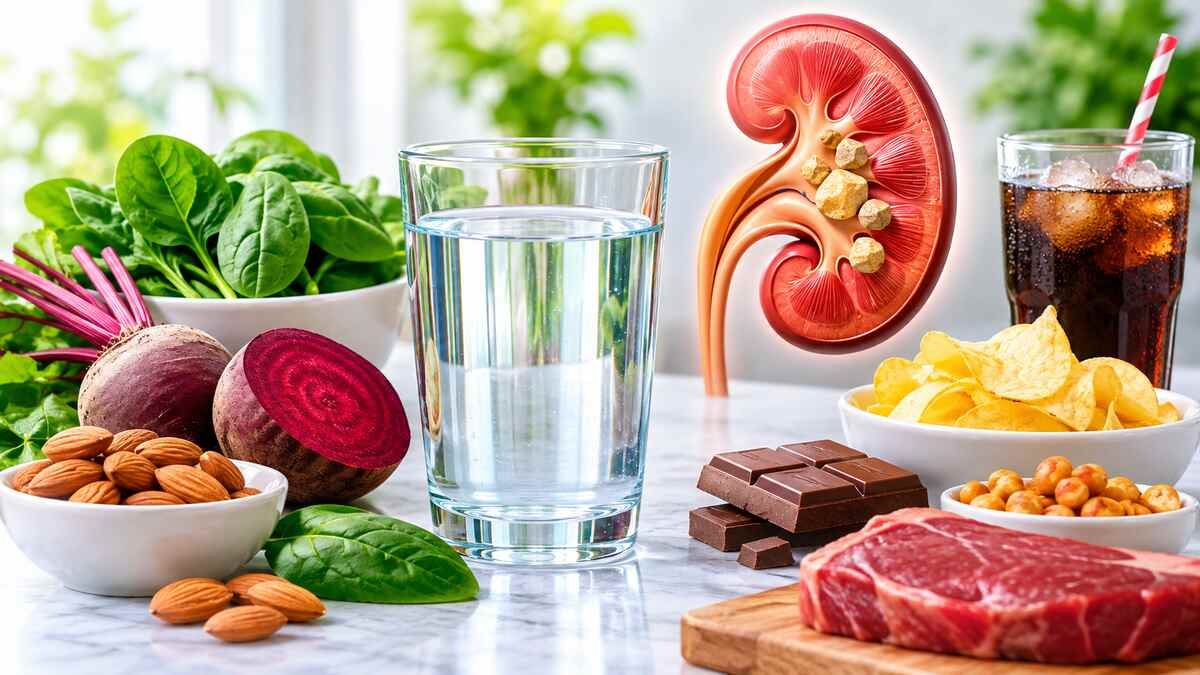

Have you ever wondered why kidney stones develop in some people and keep coming back in others? Kidney stones are more likely to form or return when you do not drink enough water, eat too much salt, consume excessive animal protein, or regularly eat certain high-oxalate foods. Sugary drinks and some supplements may also play a role. Which factors matter most depends on the type of stone you have.
These habits do not all act the same way, and they do not necessarily make an existing stone grow right away. Instead, they can shift urine chemistry toward conditions that favor crystal formation. Certain medical conditions can add to the effect. The result is that two people with kidney stones may need very different advice.
This guide explains what can make kidney stones worse, including 10 foods, drinks, and habits worth understanding, why dehydration matters, and how calcium fits in. You will also learn how stone type changes the picture, what you can do to lower the chances of problems getting worse, and when to see a doctor. It is general information, not personal medical advice.
What Makes Kidney Stones Worse?
Kidney stones form when minerals and salts in urine become concentrated and clump into crystals. Several everyday factors can push urine in that direction:
- Not drinking enough water
- Eating too much salt
- Consuming excessive animal protein
- Eating large amounts of high-oxalate foods when you are prone to calcium oxalate stones
- Drinking sugary beverages regularly
- Taking certain supplements without medical guidance
- Having underlying medical conditions that change urine composition
It helps to separate two ideas. Some factors encourage new stones to form or existing ones to grow. Others simply make an existing stone more painful, such as a stone moving into the ureter. Diet mainly influences the first group, and avoiding certain foods will not shrink or dissolve a stone that is already there.
For a deeper look at how stones develop, see our guide on what causes kidney stones. The National Institute of Diabetes and Digestive and Kidney Diseases (NIDDK) also explains how diet relates to stone formation.
10 Foods and Drinks That Can Make Kidney Stones Worse
The items below are common triggers, but they are not equally harmful, and they do not apply to everyone. A food that matters for one stone type may be irrelevant for another. Treat this list as a starting point for a conversation with a clinician or registered dietitian.
1. Salty Foods and Excess Sodium
High sodium intake increases the amount of calcium the kidneys release into urine. More calcium in urine raises the chance of calcium-containing stones, which are the most common type. Sodium is one of the most consistently recommended targets for people who form stones.
Most excess sodium comes from packaged snacks, instant noodles, processed meats, canned foods, and salty sauces. Cooking with fresh ingredients and cutting back on added salt can help. Our guide to the DASH diet for beginners shows one way to eat with less sodium.
2. Spinach and Other High-Oxalate Vegetables
Oxalate is a natural compound found in many plant foods. In urine, it can bind with calcium to form calcium oxalate crystals. Spinach, rhubarb, beets, and Swiss chard are well-known high-oxalate foods.
These vegetables are not automatically unhealthy, and many are rich in nutrients. People with calcium oxalate stones may be advised to limit them, but that advice should be individualized. Read more about spinach and beetroot to see their wider nutrition profiles.
3. Too Many Nuts and Nut Products
Almonds, peanuts, cashews, and some other nuts contain significant amounts of oxalate. Large portions or frequent snacking on them may matter for people prone to calcium oxalate stones. Smaller portions are less likely to be a concern.
Because needs vary, ask a registered dietitian what portion size makes sense for you. Our article on how many nuts you should eat every day gives general portion context.
4. Too Much Red Meat and Animal Protein
Diets very high in animal protein can raise uric acid production, make urine more acidic, and lower urinary citrate, a natural stone inhibitor. Beef, pork, organ meats, and some seafood are the usual examples. This pattern is most closely tied to uric acid stones but may also affect calcium stones.
The goal is balance, not eliminating protein. Moderating portions and mixing in plant proteins is a common approach. See our overview of high-protein foods for context on healthy intake.
5. Sugary Drinks and Soft Drinks
Regularly drinking sugar-sweetened beverages, including sodas made with high-fructose corn syrup, has been linked to higher kidney stone risk in observational research. Possible explanations include changes in urinary calcium and oxalate and effects on insulin and metabolism. These studies show an association rather than proof of cause.
Making water your main beverage is a simple swap that also supports hydration. Our guide to the benefits of hydration offers practical ideas.
6. Too Much Chocolate and Cocoa
Cocoa products can contain oxalate, and amounts rise in darker, higher-cocoa products. People prone to calcium oxalate stones may be told to moderate their intake. That does not mean occasional chocolate directly causes stones.
If you enjoy dark chocolate, ask your care team how much fits your situation. You can also read about dark chocolate health benefits for broader context.
7. Excessive Tea Consumption
Tea contains oxalate, with amounts varying by tea type and how it is prepared. Black tea tends to be higher than many other types. Very high intake could matter for people with calcium oxalate stones.
Most people do not need to give up tea. Tea also counts toward fluid intake, which helps dilute urine, so the overall picture is mixed. Our article on green tea health benefits covers other considerations.
8. Processed and Packaged Foods
Processed foods are a major source of hidden sodium. Instant meals, packaged soups, chips, processed meats, and ready-made sauces can add up quickly even when they do not taste very salty.
Simple alternatives include homemade meals, fresh or frozen vegetables, and checking nutrition labels for sodium. Our nutrition facts guide explains how to read those labels.
9. Organ Meats and High-Purine Foods
Purines are natural compounds that the body breaks down into uric acid. Foods high in purines include liver, kidney meat, sardines, anchovies, and some shellfish. For people prone to uric acid stones, high intake may be particularly relevant.
This does not mean these foods are harmful for everyone. A clinician can tell you whether purine intake is worth limiting based on your stone type and uric acid levels.
10. Certain Supplements in Excessive Amounts
High-dose vitamin C supplements may increase urinary oxalate in some people, and observational research has linked them with higher stone risk, particularly in men. Calcium and vitamin D supplements may also need individualized assessment. Food sources of vitamin C are generally not the concern.
Always talk with a healthcare professional before starting or changing supplements. The National Kidney Foundation provides additional guidance on diet and prevention.
Can Dehydration Make Kidney Stones Worse?
Yes. When you do not drink enough fluid, the kidneys make less urine, and that urine is more concentrated. Minerals and salts sit closer together, which makes crystals more likely to form and stick together.
The risk is higher during hot weather, intense exercise, heavy sweating, and illnesses that cause vomiting or diarrhea. Drinking water steadily throughout the day works better than drinking a lot at once. Our guide on how to build a hydration habit can help.
People with a history of stones may be given a personalized fluid target. Urine color can offer a rough clue, since pale yellow usually suggests good hydration, but color alone cannot confirm that you are drinking enough.
Lifestyle Habits That Can Increase Kidney Stone Risk
Beyond specific foods, everyday habits can affect your risk.
Not Drinking Water Regularly
Inconsistent hydration can leave urine concentrated for long stretches. Long gaps without fluids, such as during busy workdays, may add up.
Eating Too Much Salt
Sodium raises urinary calcium, so a steady high-salt diet can keep conditions favorable for calcium stones.
Consuming Excessive Animal Protein
Very high animal protein intake may increase uric acid and lower citrate, shifting urine chemistry toward stone formation.
Maintaining an Unhealthy Weight
Obesity is associated with a higher risk of kidney stones, likely through effects on metabolism and urine composition. Gradual, sustainable changes are more helpful than crash diets. See our guide to weight management for balanced strategies.
Ignoring Recurrent Symptoms
If stones keep returning, relying on diet changes alone may not be enough. Repeated problems deserve a medical assessment to look for underlying causes. Our guide to the early signs of kidney stones can help you recognize symptoms.
Does Calcium Make Kidney Stones Worse?
Many people assume that calcium-rich foods cause calcium stones, so they cut back on dairy. In most cases, that is the wrong move. Normal dietary calcium intake may actually help lower the risk of calcium oxalate stones.
Here is why. Calcium from food binds to oxalate in the digestive tract, which reduces how much oxalate gets absorbed and later passed into urine. When dietary calcium is too low, more oxalate may be absorbed.
Milk, yogurt, and other calcium-rich foods are generally appropriate for many people prone to stones. Calcium supplements are different and may raise risk for some individuals, so they need individualized guidance. Do not eliminate dietary calcium without medical advice. (NIDDK)
What Makes Different Types of Kidney Stones Worse?
Kidney stones have different chemical compositions, so their triggers differ. This is why a single “kidney stone diet” does not fit everyone.
| Kidney stone type | Factors that may contribute |
|---|---|
| Calcium oxalate | High urinary oxalate, excess sodium, insufficient fluids |
| Calcium phosphate | High urinary calcium and certain urine chemistry changes |
| Uric acid | High-purine foods, excessive animal protein, acidic urine |
| Cystine | Genetic factors and insufficient fluid intake |
Calcium oxalate stones are the most common. Calcium phosphate stones are also calcium-based and can be tied to changes in urine pH and calcium levels. Uric acid stones tend to form in persistently acidic urine. Cystine stones are rare and linked to an inherited condition.
That is why identifying the stone’s composition matters. A passed stone can be analyzed in a lab, and the result guides prevention. Diet alone cannot manage every type, and some people need medication or other care. You can learn more in our guide to kidney stones treatment options.
How to Prevent Kidney Stones From Getting Worse
The steps below are widely recommended, but your plan should reflect your stone type and health history.
- Drink enough water throughout the day. The goal is to produce plenty of dilute urine.
- Reduce excess sodium. Limit processed foods and added salt.
- Eat a balanced diet with appropriate calcium. Our guide to what is a balanced diet is a helpful start.
- Moderate animal protein. Balance portions rather than cutting protein out.
- Limit high-oxalate foods if medically advised. Not everyone needs to.
- Reduce sugary beverages. Choose water more often.
- Maintain a healthy weight. Small, steady changes add up.
- Follow up if stones recur. Ask about stone analysis and a 24-hour urine test when appropriate.
The European Association of Urology (EAU) guidelines support individualized evaluation and metabolic testing for people at higher risk of recurrence. For more general habits, see our risk factors article.
When Should You See a Doctor for Kidney Stones?
Kidney stones sometimes need medical evaluation and treatment. See a healthcare professional promptly if you have:
- Severe pain in the back, side, or lower abdomen
- Blood in the urine
- Painful urination
- Persistent nausea or vomiting
- Difficulty passing urine
- Fever and chills, especially with urinary symptoms or flank pain
Fever or chills with suspected kidney stones can signal an infection behind a blockage, which needs urgent medical assessment. Inability to urinate, uncontrolled pain, or persistent vomiting also calls for prompt care. Do not wait for diet changes to resolve these symptoms. The Mayo Clinic outlines when to seek help.
Frequently Asked Questions About Kidney Stones
What is the biggest thing that makes kidney stones worse?
Not drinking enough fluid is one of the biggest modifiable factors. Low fluid intake leads to concentrated urine, which favors crystal formation and recurrence. Drinking more fluid is a core part of prevention for most stone types. (NIDDK)
What foods should you avoid if you have kidney stones?
It depends on your stone type. High-sodium foods are commonly limited, and some people may need to watch high-oxalate or high-purine foods. Ask your clinician to identify your stone type before restricting foods. (National Kidney Foundation)
Does coffee make kidney stones worse?
Coffee is not universally harmful. Some observational studies link caffeinated drinks with a lower risk of stones, though results are not proof of benefit. Total fluid intake, preparation, and your individual situation matter. Learn more in our guide to black coffee benefits.
Can drinking less water cause kidney stones?
Yes, it can contribute. Less fluid means more concentrated urine, which makes it easier for minerals to crystallize. Staying well hydrated helps dilute those minerals. (Mayo Clinic)
Is milk bad for kidney stones?
Usually not. Normal dietary calcium intake is generally beneficial for many people prone to calcium oxalate stones because it binds oxalate in the gut. Calcium supplements may need individualized guidance. (NIDDK)
Can kidney stones get bigger over time?
Some can. Stones may grow as more minerals build up on them, though growth varies from person to person. Because size affects whether a stone will pass, any known stone should be monitored by a healthcare professional.
Final Thoughts
Dehydration, excess sodium, and too much animal protein can all contribute to kidney stones. Some high-oxalate foods may matter if you have calcium oxalate stones, but dietary calcium should not be restricted without good reason. Different stone types need different prevention strategies. Recurrent stones and concerning symptoms deserve medical attention, and a qualified healthcare professional can help you build a plan that fits you.
Sources
- NIDDK: Eating, Diet, and Nutrition for Kidney Stones
- National Kidney Foundation: Kidney Stones
- European Association of Urology: Urolithiasis Guidelines
- Mayo Clinic: Kidney Stones, Symptoms and Causes
Medical Disclaimer: This article is for general educational purposes only and is not medical advice. It does not diagnose, treat, or replace care from a qualified healthcare professional. Always talk with your doctor about your own health, symptoms, and treatment options. If you think you may be having a medical emergency, call 911 or your local emergency number right away.
2 thoughts on “What Makes Kidney Stones Worse? Foods, Drinks, and Habits to Avoid”
Comments are closed.