
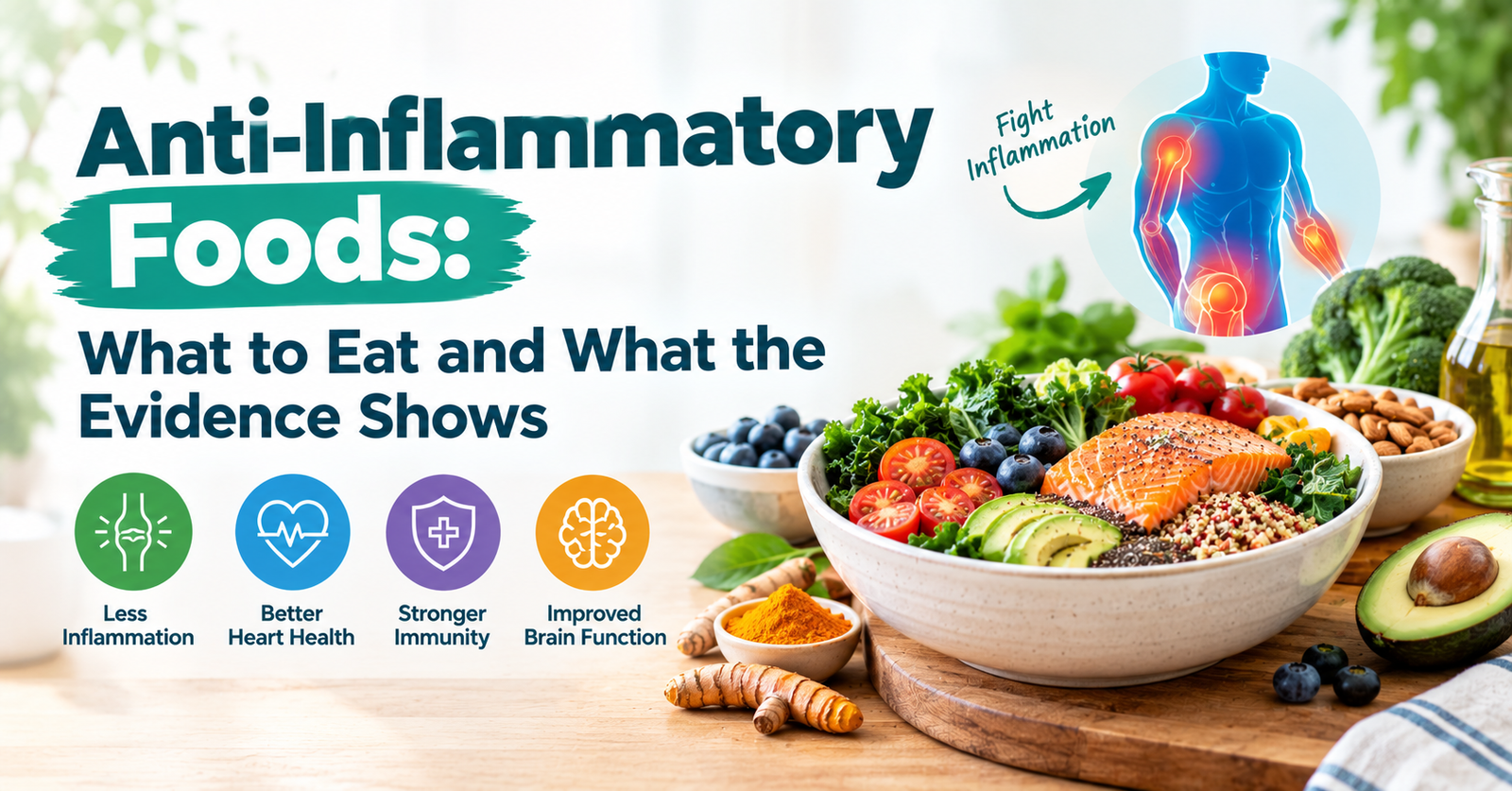

“Anti-inflammatory” has become one of the most overused words in nutrition marketing, stamped on everything from smoothies to supplements. Underneath the branding, though, the underlying science is real. Chronic low-grade inflammation is a documented contributor to heart disease, type 2 diabetes, arthritis, cognitive decline, and several other major conditions, and diet is one of the most consistently studied ways to influence it.
According to Harvard Health, one of the most powerful tools for managing inflammation comes from the grocery store rather than the pharmacy. This guide covers what chronic inflammation actually is, which foods the evidence supports, which foods work against you, and how to build this into your diet without chasing every trending ingredient.
The one thing to understand first
There’s no single “anti-inflammatory diet” — it’s a pattern defined more by what you avoid than by any one superfood, and ultra-processed food is the biggest problem across nearly all the research.
Harvard Health notes there isn’t one single anti-inflammatory diet, but rather an eating pattern guided as much by what you don’t eat as by what you do. A 2025 report in the journal Nutrients found that ultra-processed foods can alter gut bacteria, damage the gut lining, and switch on inflammatory genes in cells. That single mechanism explains why cutting back on processed food tends to matter more than adding any individual “superfood.”
What chronic inflammation actually is
Inflammation itself isn’t the enemy — it’s a normal, protective immune response. The problem is when it doesn’t turn off.
Acute inflammation is a healthy response
Short-term inflammation is how your body responds to injury or infection, and it’s an essential part of healing. This kind of inflammation resolves once the threat is gone.
Chronic inflammation is different
Chronic, low-grade inflammation persists for months or years, often without obvious symptoms. According to a 2026 umbrella review published in Nutrition Reviews, this persistent state is a common pathological feature linked to the development and progression of numerous noncommunicable diseases.
How doctors measure it
Chronic inflammation is often tracked through blood markers like C-reactive protein (CRP), interleukin-6 (IL-6), and fibrinogen. Higher levels of these markers are associated with increased risk for heart disease, diabetes, and other chronic conditions, which is part of why diet’s effect on these markers matters clinically, not just theoretically.
Foods the evidence supports for reducing inflammation
A consistent group of whole foods shows up across nearly every major review of anti-inflammatory nutrition.
Fatty fish
Salmon, tuna, mackerel, and sardines are rich in omega-3 fatty acids. According to Harvard Health, eating fatty fish is associated with lower levels of CRP, and researchers believe this may partly explain why fish intake is linked to reduced cardiovascular disease risk.
Berries and other polyphenol-rich fruit
Strawberries, blueberries, raspberries, and blackberries contain anthocyanins, plant compounds that give berries their color and appear to have a genuine anti-inflammatory effect on cells. These compounds are associated with lower risks of heart disease, cognitive decline, and diabetes, according to the same Harvard Health review.
Leafy green vegetables
Arugula, spinach, kale, and chard are rich in vitamins A, C, E, and K, along with minerals like magnesium and potassium. A 2026 umbrella review specifically links green leafy vegetables, legumes, and whole grains — all high in fiber and complex carbohydrates — to lower CRP and IL-6 levels.
Nuts, especially walnuts
Nuts provide healthy fats, fiber, and plant compounds tied to reduced inflammation, with walnuts showing up specifically in several reviews for their omega-3 content. A modest daily portion appears to offer benefit without needing to be a large part of the diet.
Olive oil
Extra-virgin olive oil’s monounsaturated fat content is one of the most studied anti-inflammatory components of the Mediterranean diet. A 2026 study in Nutrition Reviews found a significant beneficial association between Mediterranean-style eating and lower levels of CRP, IL-6, and adiponectin — a hormone involved in regulating inflammation and metabolism.
Fermented and dairy foods
Research summarized in a 2022 review on anti-inflammatory nutrients found dairy products showed some of the strongest benefits on inflammation markers among animal foods studied, while red meat and eggs showed more neutral effects.
Fermented dairy specifically provides live cultures worth understanding on their own — our guide to probiotics and our overview of whether yogurt is good for your health both cover this in more depth.
Whole grains and legumes
Whole grains and legumes like beans and lentils provide fiber and complex carbohydrates that support lower inflammatory markers. Our guide to high-fiber foods for digestive health covers how fiber intake connects to broader digestive and metabolic benefits beyond inflammation specifically.
Foods and habits that promote inflammation
Reducing pro-inflammatory foods matters at least as much as adding anti-inflammatory ones, and the evidence here is fairly consistent.
Ultra-processed foods
Microwaveable meals, hot dogs, packaged baked goods, sugary cereals, and processed meats are consistently linked to higher inflammation. According to Harvard Health, these foods are high in salt, added sugar, and saturated fat, and have been linked in other studies to shorter lifespans, cancer, and heart disease.
Added sugar and refined carbohydrates
Refined carbohydrates and added sugar can spike blood sugar and contribute to inflammatory processes over time. Sodas, white bread, and sugary cereals are common everyday sources worth reducing first, since they tend to add up quickly without much nutritional benefit in return.
Red and processed meat
Multiple reviews, including a 2025 overview of anti-inflammatory diets and noncommunicable disease, identify red and processed meat as foods that should generally be limited in an anti-inflammatory eating pattern, alongside refined carbohydrates and saturated fat.
Excess alcohol
According to Harvard Health, excessive alcohol and binge drinking promote inflammation, and current research suggests less is better across the board. Limiting intake to no more than one drink a day, if you drink at all, is a reasonable general guideline.
The Mediterranean diet as the model anti-inflammatory pattern
Rather than following an isolated list of foods, most nutrition researchers point to an existing, well-studied eating pattern as the clearest practical template.
Why it keeps showing up in the research
The 2026 umbrella review in Nutrition Reviews found consistent, high-certainty evidence linking the Mediterranean diet to lower CRP, IL-6, and improved adiponectin levels. This pattern combines nearly every food group covered above — fish, olive oil, vegetables, legumes, whole grains, and moderate dairy — into one coherent, sustainable way of eating.
A ready-made starting point
Rather than building an anti-inflammatory diet from scratch, our full guide to the Mediterranean diet covers exactly how to structure meals around these principles, along with the broader cardiovascular and metabolic evidence behind the pattern.
How inflammation connects to digestive health
Inflammation doesn’t just affect the heart and joints — it plays a role in digestive comfort too, including a condition many people don’t associate with diet at all.
Chronic inflammation and acid reflux
Some researchers have proposed that oxidative stress and inflammation contribute to acid reflux and GERD, which is part of the reasoning behind testing anti-inflammatory compounds like curcumin for symptom relief. If reflux is a regular issue for you, understanding your personal acid reflux risk factors is a more reliable starting point than assuming any single anti-inflammatory food will resolve it.
Turmeric and curcumin: a genuinely mixed picture
Turmeric is frequently marketed as an anti-inflammatory remedy for reflux, but the evidence is more complicated than most product claims suggest. A small clinical trial comparing curcumin to the medication omeprazole for functional dyspepsia found comparable symptom control between the two after 28 and 56 days.
At the same time, other research indicates curcumin may stimulate gastric acid production and relax the lower esophageal sphincter in some people, potentially worsening reflux rather than easing it. Given this mixed picture, anyone with GERD should talk to a doctor before using turmeric or curcumin supplements specifically for reflux.
Ginger tends to be better tolerated
Compared with turmeric, ginger has a more consistently favorable reputation for digestive comfort without the same acid-related concerns. Our guide to whether ginger is good for health covers what the evidence actually supports, separate from anti-inflammatory marketing claims specifically.
Reflux symptoms across different life stages
Digestive tolerance and reflux risk shift over time, and understanding your own pattern matters more than following generic advice. Our guides to acid reflux in your 30s and acid reflux in your 50s cover what tends to change at each stage, and our overview of common digestive problems is a useful next step if inflammation-related dietary changes aren’t resolving ongoing symptoms.
When to look deeper into a digestive symptom
Persistent symptoms deserve more than a dietary guess. Our guide on how acid reflux is typically diagnosed and our practical breakdown of how to manage acid reflux at home both cover next steps beyond diet alone, and our guide on what abdominal pain feels like can help you describe symptoms more precisely if you do see a doctor.
Lifestyle factors that affect inflammation beyond diet
Food is a major lever for managing inflammation, but it isn’t the only one.
Sleep quality
According to Harvard Health, poor sleep raises cortisol production, and persistently elevated cortisol can trigger a long-term inflammatory response. Consistent, adequate sleep is one of the more overlooked anti-inflammatory habits.
Smoking and inflammation markers
Smoking is directly associated with elevated CRP and fibrinogen levels. Many of smoking’s harmful effects, including increased cancer and cardiovascular disease risk, may be partly explained by this chronic inflammatory burden.
Weight and physical activity
Excess weight is itself a risk factor for inflammation, and several studies find the link between diet and inflammation holds even after accounting for body weight. If weight management is part of your goal, our overview of current weight-loss strategies covers what’s actually supported by evidence.
Fitting anti-inflammatory eating into a broader routine
Diet works best as part of a complete lifestyle approach rather than an isolated fix. Our broader guide on how to live a healthy lifestyle covers how nutrition, activity, sleep, and stress management work together, and our pillar guide on what makes a healthy diet covers the broader nutritional principles an anti-inflammatory pattern builds on.
Practical ways to eat more anti-inflammatory foods
None of this requires a strict new diet plan. A few consistent habits go further than chasing individual ingredients.
Build meals around whole foods first
Filling most of your plate with vegetables, whole grains, and a quality protein source naturally displaces processed food without requiring elimination or counting. This is the same core principle behind the Mediterranean pattern covered above.
Add fatty fish and legumes weekly
Aiming for fish two or three times a week, alongside regular servings of beans or lentils, is a realistic, sustainable target for most people. Canned or frozen options work just as well as fresh for this purpose.
Keep protein adequate while shifting its sources
An anti-inflammatory diet doesn’t mean cutting protein — it means leaning more on fish, legumes, and moderate dairy, and less on processed and red meat. Our guide to high-protein foods can help you meet your protein needs while making these swaps.
Consider how meal timing fits in
Some people combine anti-inflammatory food choices with a structured eating window. Our guide to intermittent fasting covers what the current evidence says about meal timing strategies, separate from food quality itself.
When to talk to a doctor
Dietary changes can meaningfully support inflammation management, but they aren’t a substitute for medical evaluation in certain situations. Talk to a doctor if you notice:
- Persistent joint pain, swelling, or stiffness
- Ongoing fatigue that doesn’t improve with better sleep and diet
- Digestive symptoms, including reflux, that persist despite dietary changes
- A family history of autoimmune or inflammatory conditions
- Interest in curcumin, turmeric, or other supplements, especially if you take other medications
A doctor can check relevant inflammatory markers and help determine whether ongoing symptoms point to something beyond diet alone. Our overview of the most common health issues can also help you understand which conditions chronic inflammation most directly contributes to.
Frequently asked questions
What foods reduce inflammation the fastest?
No food produces an immediate, dramatic effect, but fatty fish, berries, leafy greens, and olive oil are among the most consistently supported anti-inflammatory foods across current research. Benefits build over weeks to months of consistent intake, not a single meal.
Is turmeric good for inflammation and acid reflux?
Turmeric’s compound curcumin has genuine anti-inflammatory properties supported by multiple studies, including comparable results to a common reflux medication in one small trial. However, other research suggests curcumin may stimulate stomach acid and relax the lower esophageal sphincter in some people, so anyone with GERD should check with a doctor before using it specifically for reflux.
What foods should I avoid on an anti-inflammatory diet?
Ultra-processed foods, added sugar, refined carbohydrates, red and processed meat, and excess alcohol are the most consistently identified contributors to chronic inflammation. Cutting back on these tends to matter more than adding any single “superfood.”
Is the Mediterranean diet the same as an anti-inflammatory diet?
They overlap heavily. The Mediterranean diet is the most extensively studied eating pattern for reducing inflammatory markers like CRP and IL-6, which is why many nutrition experts recommend it as a practical, ready-made template for anti-inflammatory eating.
Can diet alone control chronic inflammation?
Diet is one of the most significant, modifiable factors, but sleep, smoking status, alcohol intake, physical activity, and body weight all independently affect inflammation too. A comprehensive approach across these areas produces better results than diet changes alone.
Sources
- Harvard Health. Foods That Fight Inflammation
- Harvard Health. Quick-Start Guide to an Anti-Inflammation Diet
- Harvard Health. Anti-Inflammatory Diet: Foods That Help Reduce Chronic Inflammation
- Harvard Health. Fighting Inflammation With Food
- Reyneke GL, Lambert K, Beck EJ. Dietary Patterns Associated With Anti-Inflammatory Effects. Nutrition Reviews, 2026.
- National Center for Biotechnology Information. Anti-Inflammatory Nutrients and Obesity-Associated Metabolic-Inflammation
- National Center for Biotechnology Information. Overview of Anti-Inflammatory Diets and Their Effects on Non-Communicable Diseases
- Clinician.com. Turmeric and Curcumin Help Patients With Dyspepsia and Acid Reflux
Medical disclaimer
This article is for general information and education. It is not medical advice and does not replace an individualized evaluation by a doctor or registered dietitian. Talk to a healthcare provider before making significant dietary changes or starting a new supplement, especially if you take other medications or have a chronic health condition.
Read our full Medical Disclaimer.