
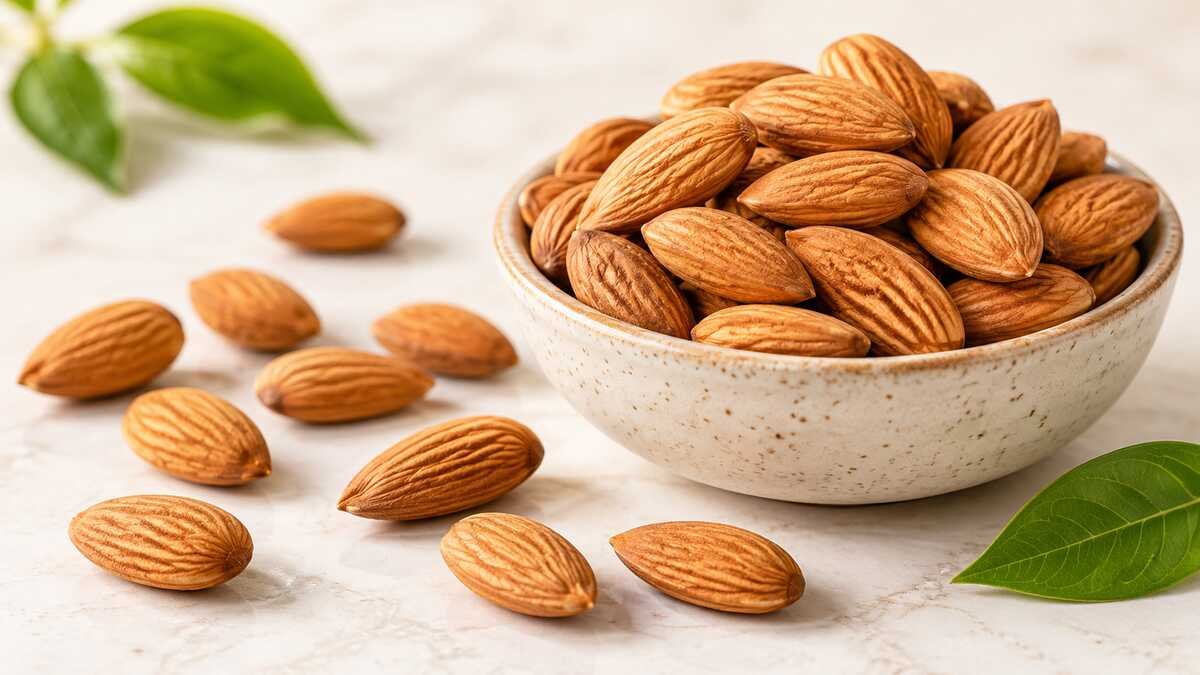

Are almonds good for heart health? Yes, almonds can support heart health, particularly when they are part of a balanced eating pattern. They provide unsaturated fats, fiber, plant protein, vitamin E, magnesium, and other nutrients that make them a useful food for cardiovascular nutrition.
The strongest evidence involves cholesterol. A 2025 systematic review and meta-analysis of randomized controlled trials found that almond consumption lowered LDL (“bad”) cholesterol and several related lipid measures. Improving a risk factor is meaningful, but it does not prove that eating almonds prevents heart attacks or strokes, and almonds are not a treatment for cardiovascular disease.
This guide covers the nutrients that make almonds relevant, what research shows about LDL cholesterol, blood pressure, and heart disease risk, and how much to eat. It also explains how to choose between raw, roasted, and salted almonds, how they compare with other nuts, and what the downsides are. For related ideas, see our guide to heart-healthy foods.
What Makes Almonds Heart-Healthy?
Almonds combine several nutrients that matter for cardiovascular nutrition. No single one explains their effects, and their value depends on how almonds fit into your overall diet.
Unsaturated fats
Most of the fat in almonds is unsaturated, including a large share of monounsaturated fat, and an ounce contains only about 1 gram of saturated fat. An American Heart Association presidential advisory recommends replacing saturated fat with unsaturated fat within an overall healthful dietary pattern. Replacing some saturated-fat-rich foods with almonds is one way to apply that advice. See our guide to healthy fats for more.
Dietary fiber
An ounce of almonds provides about 3 grams of fiber. Fiber supports digestive health and contributes to a balanced eating pattern. It is one part of the almond’s nutrient package, and the amount in one serving does not guarantee a particular cholesterol reduction.
Vitamin E and magnesium
Vitamin E helps protect cells from oxidative damage, and an ounce of almonds provides about 7 mg. Magnesium, at roughly 75 to 80 mg per ounce, supports normal muscle and nerve function and many other processes. You can find full values in our guide to almond nutrition.
Plant compounds
Almonds contain phytosterols such as beta-sitosterol, along with polyphenols. A 2025 scientific perspective notes that phytosterols have well-established LDL-lowering effects. These compounds may contribute to the benefits seen in studies, but researchers have not shown that any single compound accounts for the overall effect.
In short, almonds pack several potentially helpful nutrients into one food, but their contribution to heart health depends on the diet around them.
Do Almonds Lower LDL Cholesterol?
The research suggests that almonds can modestly lower LDL cholesterol. This is the best-supported link between almonds and heart health, so it deserves a closer look.
What is LDL cholesterol?
LDL (low-density lipoprotein) particles carry cholesterol through the bloodstream. Your body needs some cholesterol to build cells and hormones, but high LDL levels are associated with a greater risk of atherosclerotic cardiovascular disease. In atherosclerosis, plaque builds up in artery walls and can narrow them over time. Our guides to LDL vs. HDL cholesterol and high cholesterol explain this in more depth.
What does the research show?
Randomized controlled trials test a food or diet change against a comparison group, which makes them useful for measuring effects on blood markers. A 2025 systematic review and meta-analysis pooled 36 publications representing 2,485 participants. Almond consumption significantly reduced LDL cholesterol (about 5 mg/dL on average), total cholesterol, non-HDL cholesterol, apolipoprotein B (apoB), and several cholesterol ratios.
The review did not find significant changes in HDL cholesterol or lipoprotein(a), and the effect on triglycerides was not statistically significant. Almond doses in the included trials ranged widely, and the review was funded by the Almond Board of California. An earlier 2019 meta-analysis reached a similar conclusion for LDL, with a comparable average reduction.
Why might almonds improve cholesterol levels?
Researchers point to three plausible contributors:
- Unsaturated fats: Swapping foods high in saturated fat for almonds may improve the fat composition of the diet.
- Fiber: Almonds supply fiber as part of a nutrient-rich food.
- Plant compounds: Phytosterols and other natural compounds may add to the effect.
Scientists are still studying how these components work together, and no single mechanism has been established.
Does eating almonds guarantee lower cholesterol?
No. Cholesterol levels vary with genetics, other foods, physical activity, medications, and underlying health conditions, so individual responses differ. Almonds can complement a heart-healthy diet, but they should not replace prescribed treatment. To see how cholesterol fits into the bigger picture, read about cholesterol and heart health.
Can Almonds Help Reduce the Risk of Heart Disease?
Almonds may support cardiovascular health through favorable changes in some risk factors. They should not be presented as a standalone way to prevent heart disease.
Understanding cardiovascular risk factors
LDL cholesterol is only one of several factors linked to cardiovascular disease. Others include high blood pressure, smoking, diabetes, physical inactivity, family history, and overall dietary pattern. Learn more in our guide to how to prevent heart disease.
What does the evidence actually establish?
Improving a risk factor is not the same as proving that a food prevents a heart attack or stroke. Trials on almonds have mostly measured outcomes such as cholesterol, not the number of cardiovascular events. Observational studies of nuts in general have linked higher nut intake with lower cardiovascular risk, but these studies cannot show that almonds alone caused the difference. Harvard’s Nutrition Source discusses this distinction, and Mayo Clinic notes that studies have not conclusively proved nuts reduce heart disease risk.
How almonds fit into prevention
Almonds work best as one part of an eating pattern rich in vegetables, fruits, whole grains, legumes, and unsaturated fats. Our guides to the Mediterranean diet and best nuts for heart health show how.
Are Almonds Good for Blood Pressure?
The evidence for blood pressure is less consistent than the evidence for LDL cholesterol.
What research says about almonds and blood pressure
Almonds provide magnesium and unsaturated fats, both relevant to overall nutrition. In the 2019 meta-analysis of 15 randomized trials, systolic blood pressure showed no difference between almond and control groups. Diastolic pressure fell only in the subgroup eating more than about 42.5 grams of almonds a day. A 2022 meta-analysis of 26 trials did report lower diastolic pressure overall, with no clear effect on systolic pressure.
What should you do if you have high blood pressure?
People with high blood pressure should follow individualized medical advice. A balanced diet and attention to sodium intake are both important, and unsalted almonds are a practical snack that adds no extra sodium. Almonds are useful, but they should not be your only strategy. See our guides on how to lower blood pressure and vegetables and blood pressure.
How Many Almonds Should You Eat for Heart Health?
There is no single ideal amount, but a small handful is a practical starting point.
What is a reasonable serving?
A commonly used serving is about 1 ounce (28 grams) of whole almonds, which is roughly 20 to 24 almonds depending on size. That serving contains approximately 160 to 170 calories, 6 grams of protein, 14 grams of fat, and 3 grams of fiber. Exact values vary slightly by preparation and database. Some health organizations, including Mayo Clinic, define a nut serving as a slightly larger small handful (1.5 ounces) and suggest about 4 to 6 servings of unsalted nuts per week.
Do you need to eat almonds every day?
Almonds can be eaten regularly if they fit your overall diet, but daily intake is not essential. Other nuts, seeds, legumes, and foods rich in unsaturated fat also contribute to a varied, heart-healthy pattern. For more on amounts, see how many nuts to eat every day.
Why portion size matters
Almonds are energy-dense, so larger portions add calories quickly. Mayo Clinic advises limiting portions for this reason. Replacing a less nutritious snack with a measured portion of almonds is usually more helpful than adding extra calories to an unchanged diet. A small handful is a useful starting point, not a prescription or a guaranteed therapeutic dose.
Raw, Roasted, or Salted Almonds: Which Is Best for Your Heart?
Plain raw and plain dry-roasted almonds are both practical choices. The label matters more than the preparation method.
Raw almonds
Plain raw almonds provide unsaturated fats, fiber, protein, and micronutrients. There is no strong evidence that raw almonds are inherently more heart-healthy than all roasted varieties.
Dry-roasted almonds
Plain dry-roasted almonds fit into a heart-healthy diet as well. Roasting can change flavor and some nutritional characteristics, but the overall nutrient profile stays broadly similar. Mayo Clinic suggests choosing raw or dry-roasted nuts over those cooked in oil.
Salted almonds
Salted almonds still provide the nutrients in almonds, but the added sodium may be a concern if you need to limit salt. Unsalted versions are a simple alternative.
Flavored almonds
Honey-roasted, chocolate-coated, and other flavored almonds can contain added sugar, sodium, and other ingredients. Check the nutrition label instead of judging a product by its packaging.
Are Almonds Better Than Other Nuts for Heart Health?
No single nut is universally best. Variety matters more than finding a winner.
Almonds versus walnuts
Almonds offer vitamin E, monounsaturated fats, and fiber. Walnuts stand out for their plant-based omega-3 fatty acid, alpha-linolenic acid. Compare them in detail in almonds vs. walnuts.
Almonds versus pistachios and other nuts
Nuts differ in their nutrient profiles, but most provide unsaturated fats, fiber, and protein. Mayo Clinic notes that almonds, walnuts, hazelnuts, pecans, and peanuts all appear quite heart healthy. See also pistachios and peanuts and heart health.
Which should you choose?
Choose according to taste, budget, access, allergies, and dietary needs. Swapping foods high in saturated fat for unsalted nuts can be a useful strategy, whichever nut you pick.
Potential Downsides of Eating Almonds
Almonds suit many people, but a few limitations are worth knowing.
High calorie content
Almonds deliver substantial energy in a small serving, so portion awareness helps.
Added sodium and sugar
Heavily salted or sugar-coated varieties may contain ingredients that do not suit some dietary goals, including limiting sodium.
Nut allergies
Almonds can cause allergic reactions, and some can be serious. People with a known almond or tree nut allergy should follow their healthcare professional’s advice and avoid products containing almonds. The NHS offers an overview of food allergy symptoms and what to do.
Individual dietary needs
People with specific medical conditions or prescribed diets may need individualized guidance about food choices. Ask a clinician or registered dietitian if you are unsure.
How to Add Almonds to a Heart-Healthy Diet
Think substitution, not just addition. Replacing a snack rich in saturated fat with almonds is likely to help more than adding almonds to a diet that already meets your energy needs. Try these ideas:
- Snack on a small portion of unsalted almonds.
- Stir chopped almonds into oatmeal.
- Sprinkle almonds over salads or vegetable dishes.
- Add sliced almonds to plain yogurt.
- Top whole-grain meals with almonds.
- Swap a high-saturated-fat snack for plain almonds when it suits you.
The American Heart Association advisory supports choosing unsaturated fats in place of saturated fats as part of an overall heart-healthy eating pattern. Almonds are most useful when they complement that pattern. See also these antioxidant-rich foods for more ideas.
Frequently Asked Questions About Almonds and Heart Health
Are almonds good for heart health?
Yes, almonds can support heart health as part of a balanced diet. Clinical research suggests they can improve LDL cholesterol and several other lipid measures. They should complement, not replace, other cardiovascular health measures.
Can almonds lower LDL cholesterol?
Research indicates that almond consumption can produce modest reductions in LDL cholesterol. The effect varies between individuals and depends partly on the overall diet. Almonds are not a substitute for cholesterol-lowering medication when it is needed.
How many almonds should you eat daily for heart health?
An ounce, or about 20 to 24 almonds, is a commonly used serving reference. This is not a universal medical recommendation. The right amount depends on your energy needs, diet, and health circumstances.
Are salted almonds bad for your heart?
Salted almonds still contain the beneficial nutrients found in almonds, but the added sodium can be a concern for people who need to limit salt. Unsalted almonds are a practical alternative.
Are almonds good for people with high cholesterol?
Almonds may help improve LDL cholesterol when included in an appropriate dietary pattern. People with high cholesterol should also follow medical guidance and any prescribed treatment plan.
Can almonds prevent heart attacks?
There is no strong evidence that eating almonds alone prevents heart attacks. Research supports improvements in certain risk factors, particularly LDL cholesterol, but Mayo Clinic notes that benefits for heart disease itself have not been conclusively proved.
The Bottom Line: Are Almonds Good for Heart Health?
Almonds provide unsaturated fats, fiber, protein, vitamin E, and magnesium, and clinical evidence supports modest improvements in LDL cholesterol and some other lipid measures. Evidence for independent effects on blood pressure and cardiovascular events is more limited.
A small handful of plain, unsalted almonds is a practical choice for many people within a varied diet, especially when it replaces foods higher in saturated fat. The benefit comes from the nutrient profile and how almonds fit into your overall eating pattern, not from a guaranteed protective effect. Almonds do not replace prescribed medication or individualized medical advice.
Sources
- Blood Lipid Levels in Response to Almond Consumption: A Systematic Review and Meta-Analysis of Randomized Controlled Trials, Nutrients (2025)
- Almond Consumption and Risk Factors for Cardiovascular Disease: A Systematic Review and Meta-analysis of Randomized Controlled Trials, Advances in Nutrition (2019)
- The effect of almond intake on cardiometabolic risk factors, inflammatory markers, and liver enzymes: A systematic review and meta-analysis, Phytotherapy Research (2022)
- Perspective: Current Scientific Evidence and Research Strategies in the Role of Almonds in Cardiometabolic Health, Current Developments in Nutrition (2025)
- Dietary Fats and Cardiovascular Disease: A Presidential Advisory From the American Heart Association, Circulation (2017)
- Almonds: Nutrition and health benefits, Harvard T.H. Chan School of Public Health, The Nutrition Source
- Nuts and your heart: Eating nuts for heart health, Mayo Clinic
- Food allergy, NHS
Medical Disclaimer: This article is for educational purposes only and is not a substitute for personalized medical advice. If you have high cholesterol, high blood pressure, cardiovascular disease, or a food allergy, please talk with a qualified healthcare professional about your individual needs.