
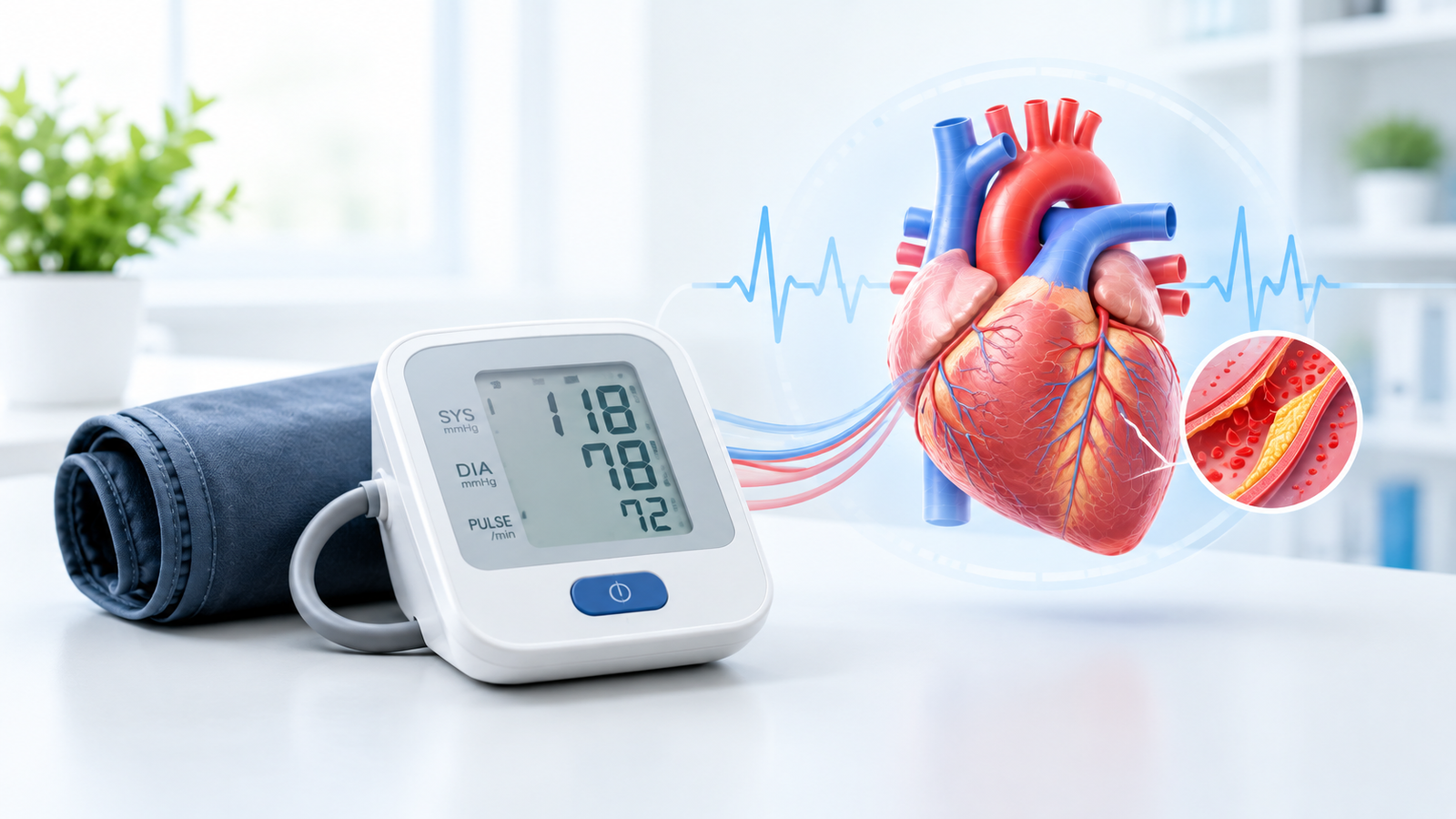

Blood pressure is one of the most important measurable indicators of your cardiovascular health. Persistently high blood pressure can damage blood vessels and place extra strain on the heart, making it a major, modifiable risk factor for heart disease. It’s also a condition that frequently causes no obvious symptoms, which is exactly why understanding your numbers and checking them regularly matters so much.
Important: This article is for general information only and is not a substitute for professional medical advice, diagnosis, or treatment.
This guide covers how blood pressure actually affects your heart, what healthy numbers look like, how to monitor your own readings accurately, and practical, evidence-based ways to protect your cardiovascular health, whether you’re managing a diagnosis already or simply trying to stay ahead of one.
What Is Blood Pressure?
Every time your heart beats, it pushes blood through your arteries, creating pressure against the artery walls. That pressure is what a blood pressure reading measures.
Systolic vs. Diastolic Blood Pressure
A blood pressure reading always includes two numbers:
- Systolic pressure (the top number) measures the force in your arteries when your heart beats and pushes blood out.
- Diastolic pressure (the bottom number) measures the force in your arteries while your heart rests between beats.
Both numbers matter. A reading of 120/80 mm Hg, for example, means a systolic pressure of 120 and a diastolic pressure of 80.
What Is a Healthy Blood Pressure?
According to the American Heart Association and American College of Cardiology’s 2025 blood pressure guideline, blood pressure falls into four general categories:
| Category | Systolic (mm Hg) | Diastolic (mm Hg) | |
|---|---|---|---|
| Normal | Below 120 | and | Below 80 |
| Elevated | 120–129 | and | Below 80 |
| Stage 1 hypertension | 130–139 | or | 80–89 |
| Stage 2 hypertension | 140 or higher | or | 90 or higher |
A reading above 180/120 mm Hg is considered a hypertensive crisis and needs prompt evaluation.
One important note: a single elevated reading doesn’t necessarily mean you have hypertension. Diagnosis relies on multiple readings taken over time, not one isolated number. Our guide to what high blood pressure means covers causes and symptoms in more depth.
How Does Blood Pressure Affect Heart Health?
Persistently elevated blood pressure increases cardiovascular risk in a fairly direct way: it puts greater force against your artery walls and adds to the heart’s workload with every single beat. Over years, that added strain adds up.
High Blood Pressure and Heart Disease
The 2025 AHA/ACC guideline identifies high blood pressure as a major modifiable risk factor for several types of cardiovascular disease, including:
- Coronary artery disease
- Heart attack
- Heart failure
- Stroke
- Atrial fibrillation
Our guide to heart disease covers each of these conditions individually, along with their other risk factors.
Can High Blood Pressure Weaken the Heart?
Yes, over time. When the heart consistently pumps against higher pressure, the heart muscle — particularly the left ventricle — can thicken and stiffen as it adapts to the added workload. Eventually, this can affect how efficiently the heart pumps and relaxes, contributing to heart failure in some people.
Blood Pressure and Artery Health
High blood pressure doesn’t only affect the heart directly. Sustained pressure against artery walls can accelerate atherosclerosis — the buildup of plaque that narrows arteries and reduces blood flow. Damaged, stiffened arteries also lose some of their natural elasticity, which raises blood pressure further and creates a cycle that’s easier to interrupt early than to reverse later.
What Causes High Blood Pressure?
High blood pressure usually develops from a mix of factors rather than one single cause. The CDC identifies physical inactivity, an unhealthy diet, alcohol use, tobacco use, certain medical conditions, age, and family history among the factors associated with high blood pressure.
Common contributors include:
- Genetics and family history
- Age
- A high-sodium diet
- Physical inactivity
- Excess body weight
- Alcohol use
- Tobacco use
- Chronic stress
- Certain medical conditions, such as kidney disease or sleep apnea
- Certain medications
For a deeper look at these causes, see our full guide to what high blood pressure is and what causes it.
How Do You Know If Your Blood Pressure Is Too High?
Does High Blood Pressure Cause Symptoms?
In most cases, no. High blood pressure is often called a “silent” condition precisely because it typically doesn’t cause noticeable symptoms, even when it’s significantly elevated. Many people find out they have hypertension during a routine checkup, not because something felt wrong.
Why Regular Blood Pressure Checks Matter
Because symptoms usually aren’t a reliable signal, regular measurement is what actually catches high blood pressure early. That includes:
- Blood pressure checks at routine healthcare visits
- Home monitoring, especially if you’re managing a diagnosis or adjusting treatment
- Keeping a simple record of your readings over time
- Looking at overall trends rather than reacting to any single number
The current AHA/ACC guideline specifically emphasizes standardized measurement technique and home blood pressure monitoring as important tools for improving blood pressure control.
How to Measure Blood Pressure at Home
Home monitoring is one of the most useful tools available for understanding your everyday blood pressure, since office readings alone can miss patterns or be skewed by stress.
Choosing a Blood Pressure Monitor
Look for an automatic, upper-arm cuff monitor that has been clinically validated for accuracy. Wrist and finger monitors are generally less reliable.
How to Prepare for a Reading
Avoid caffeine, exercise, and smoking for at least 30 minutes beforehand, and empty your bladder before measuring — a full bladder can temporarily raise your reading.
Correct Sitting Position
Sit with your back supported, feet flat on the floor (not crossed), and your arm resting on a table at roughly heart level. Avoid talking during the measurement.
When to Take Your Blood Pressure
Many providers recommend measuring at consistent times, such as once in the morning and once in the evening, to capture a realistic daily picture rather than a single snapshot.
How Often Should You Check It?
This depends on your individual risk and whether you have a diagnosis already. Your healthcare provider can recommend a monitoring schedule that fits your situation.
Keeping a Blood Pressure Log
Recording your readings — including the date, time, and both numbers — makes it much easier for you and your provider to spot patterns and adjust your plan if needed.
A Note on Smartwatches and Cuffless Devices
It’s worth knowing that the 2025 AHA/ACC guideline recommends against using cuffless devices — including smartwatches, rings, and similar wearables — to diagnose or manage high blood pressure, since these technologies haven’t yet been validated to the same standard as traditional cuff-based monitors. They may be useful for general wellness tracking, but they shouldn’t currently replace a validated cuff monitor for anything clinical.
How to Protect Your Heart by Managing Blood Pressure
Eat for Heart Health
The 2025 AHA/ACC guideline recommends heart-healthy eating patterns, including the DASH diet, along with reducing sodium intake. NHLBI describes the DASH eating plan as emphasizing vegetables, fruits, and whole grains, along with fish, poultry, beans, nuts, and healthy oils, while limiting foods high in saturated fat, sugar-sweetened beverages, and sweets.
For more on specific food choices, see our guides to heart-healthy foods, healthy fats, omega-3 fatty acids, and the Mediterranean diet.
Stay Physically Active
Regular physical activity is one of the more consistently effective lifestyle tools for supporting healthy blood pressure. It doesn’t replace prescribed treatment for people with diagnosed hypertension, but it’s a genuine, evidence-based part of the broader management picture. Our guide to exercise and heart health covers how much activity you actually need and how to get started safely.
Maintain a Healthy Weight
Excess body weight adds to the heart’s workload and is associated with higher blood pressure. Even modest, sustainable weight loss can make a meaningful difference for many people. Our guide to weight management covers realistic approaches rather than promising universal results.
Limit Alcohol
Excess alcohol intake raises blood pressure and adds unnecessary strain on the cardiovascular system over time. Cutting back is one of the more directly actionable steps available.
Avoid Tobacco
Smoking causes an immediate rise in blood pressure and heart rate with every cigarette, and it damages blood vessels over the long term. Quitting — at any age — meaningfully lowers cardiovascular risk.
Manage Stress
Chronic, ongoing stress is associated with sustained increases in blood pressure over time, separate from the short-term spikes that come with any stressful moment. Our guide to how to reduce stress offers practical strategies.
Get Enough Sleep
Poor sleep duration and quality are linked to higher blood pressure and other cardiovascular risk factors. See our guide to how to improve sleep for practical steps.
Take Prescribed Medication as Directed
Lifestyle changes and medication aren’t necessarily alternatives — many people need both working together. If you’re prescribed blood pressure medication, taking it consistently, exactly as directed, is one of the most protective things you can do for your heart. Never start, stop, or adjust a prescription on your own. Our guide to how to lower blood pressure covers lifestyle and treatment approaches together in more detail.
Blood Pressure, Cholesterol, Blood Sugar, and Heart Health
Cardiovascular risk is never influenced by blood pressure alone. The CDC identifies high blood pressure, high cholesterol, and smoking among the major risk factors for heart disease, alongside several other factors, including:
- Blood glucose and diabetes
- Physical inactivity
- Overall diet quality
- Excess body weight
- Age and family history
These factors interact rather than acting independently. Insulin resistance, for example, frequently coexists with high blood pressure and unfavorable cholesterol levels — a cluster sometimes called metabolic syndrome. If you’re managing blood sugar concerns alongside blood pressure, related reading includes our guides to what diabetes is, prediabetes, insulin resistance, and how to prevent diabetes. For cholesterol specifically, see our guide to high cholesterol.
What Happens If High Blood Pressure Goes Untreated?
Left unmanaged, high blood pressure gradually damages blood vessels and organs throughout the body. Over time, this raises the risk of:
- Heart disease, including coronary artery disease and heart failure
- Stroke
- Kidney disease
- Cognitive decline
- Broader damage to blood vessels throughout the body
This isn’t meant to alarm — it’s meant to explain why control matters. Many of these risks are meaningfully reduced once blood pressure is brought under control, which is the entire point of monitoring and treatment in the first place.
When Should You Talk to a Healthcare Professional?
Consider scheduling an evaluation if you have:
- Repeatedly elevated readings
- A new hypertension diagnosis
- Difficulty controlling your blood pressure despite lifestyle changes
- Questions about your medications or side effects
- Existing cardiovascular disease
- Diabetes or kidney disease
- Pregnancy-related blood pressure concerns
When Is High Blood Pressure an Emergency?
A reading above 180/120 mm Hg needs timely medical evaluation. If that reading comes with symptoms such as chest pain, shortness of breath, back pain, numbness or weakness, vision changes, or difficulty speaking, it’s a medical emergency — call 911 right away rather than waiting to see if it passes. For related symptom guidance, see our guides to chest pain, heart attack symptoms, and what causes back pain.
Frequently Asked Questions
What is a healthy blood pressure for adults? A reading below 120/80 mm Hg is generally considered normal for most adults, though personal targets can vary based on age and other health conditions.
Is 120/80 still considered normal blood pressure? A reading of exactly 120/80 mm Hg sits right at the boundary — under 120/80 is normal, while 120/80 itself is right at the edge of the elevated category on the systolic side.
Can high blood pressure cause heart disease? Yes. Sustained high blood pressure is one of the most significant modifiable risk factors for several types of heart disease, including coronary artery disease and heart failure.
Can lowering blood pressure improve heart health? Yes. Bringing blood pressure into a healthier range reduces strain on the heart and blood vessels and lowers the risk of heart attack, stroke, and related complications over time.
How often should I check my blood pressure? It depends on your individual risk and history — your healthcare provider can recommend a schedule that fits your situation, whether that’s occasional checks or regular home monitoring.
Is high blood pressure always associated with symptoms? No. Most people with high blood pressure have no symptoms at all, which is why regular measurement — not how you feel — is the reliable way to detect it.
What foods are good for blood pressure and heart health? Vegetables, fruits, whole grains, beans, nuts, fish, and foods lower in sodium — the general pattern behind the DASH diet — are consistently associated with healthier blood pressure.
Does exercise lower blood pressure? For many people, yes. Regular physical activity is a genuine, evidence-based part of blood pressure management, though it doesn’t necessarily replace medication for everyone who needs it.
Can stress raise blood pressure? Short-term stress raises blood pressure temporarily. Chronic, ongoing stress is more strongly associated with sustained elevations over time.
Can high blood pressure be reversed? For many people, especially in earlier stages, lifestyle changes can bring blood pressure back into a healthier range. Others will need ongoing medication, and that’s not a personal failure.
When is high blood pressure an emergency? A reading above 180/120 mm Hg combined with symptoms like chest pain, trouble breathing, or difficulty speaking requires immediate emergency care.
Key Takeaways
- Blood pressure is one of the most important measurable indicators of cardiovascular health.
- Persistently high blood pressure increases the risk of heart disease, stroke, and other cardiovascular and vascular conditions.
- High blood pressure usually causes no noticeable symptoms, which is why regular monitoring matters.
- Cuffless devices like smartwatches aren’t yet recommended for diagnosing or managing blood pressure — validated upper-arm cuff monitors remain the standard.
- Heart-healthy eating, regular activity, a healthy weight, limiting alcohol, avoiding tobacco, and managing stress and sleep all support healthy blood pressure.
- Many people need medication alongside lifestyle changes, and that’s a normal part of treatment.
- Your individual blood pressure goals and treatment plan should always be discussed with a healthcare professional.
This article is for general information and education. It is not medical advice and cannot replace guidance from a qualified healthcare provider. Talk to a doctor about your own blood pressure readings and cardiovascular risk, especially if you have an existing heart condition or other significant health concerns.
Sources
- American Heart Association / American College of Cardiology. 2025 High Blood Pressure Guideline
- American Heart Association. Cuffless Devices for the Measurement of Blood Pressure (Scientific Statement)
- Centers for Disease Control and Prevention. High Blood Pressure Risk Factors
- Centers for Disease Control and Prevention. Heart Disease Risk Factors
- National Heart, Lung, and Blood Institute. DASH Eating Plan
2 thoughts on “Blood Pressure and Heart Health: What You Need to Know”
Comments are closed.