
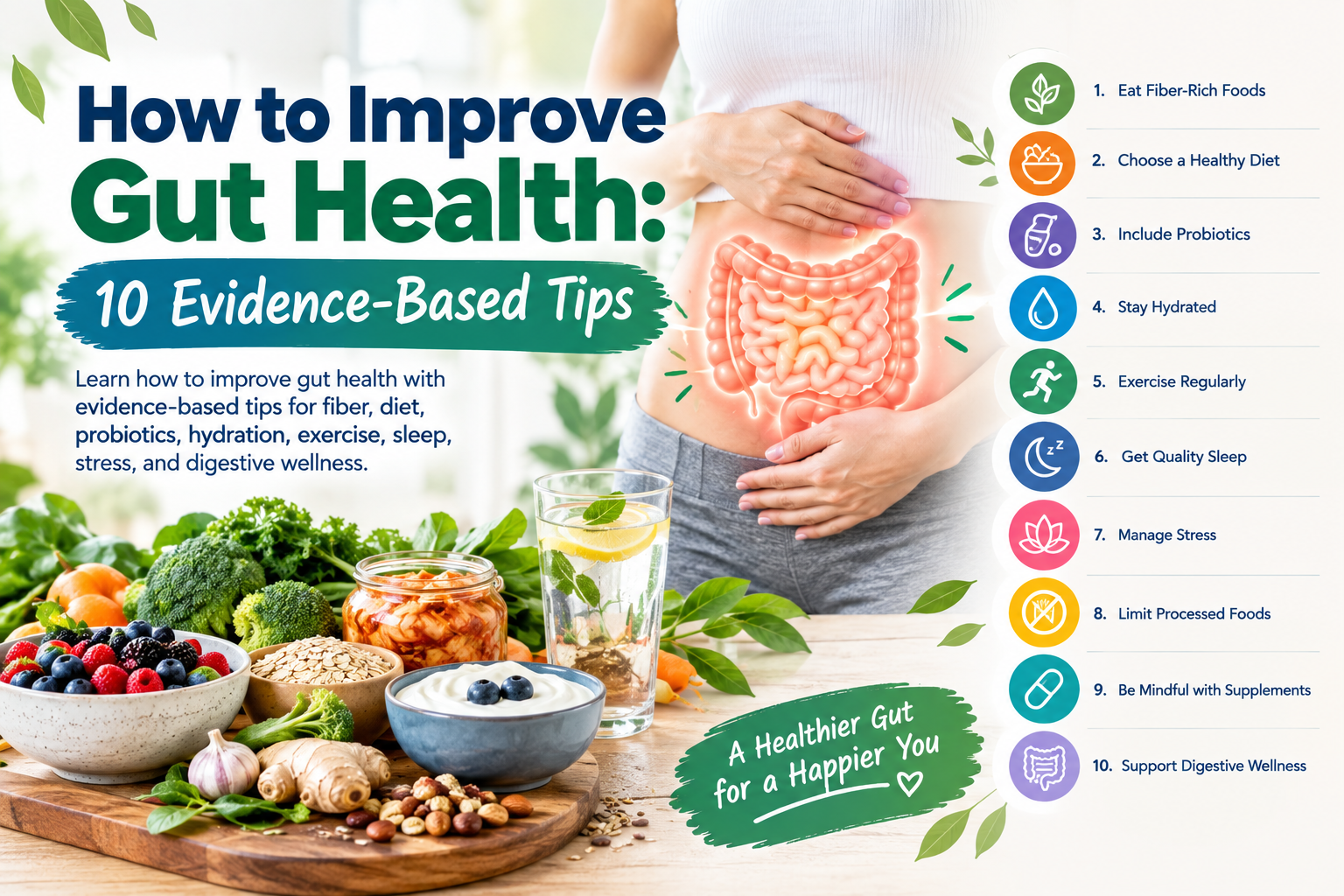

Your gut is home to trillions of microorganisms, collectively called the gut microbiome. This community does far more than digest food. It helps regulate your immune system, influences blood sugar and cholesterol, and may even affect mood.
A diverse, well-balanced microbiome is linked to better health across the board. An imbalanced one is linked to digestive problems, inflammation, and a higher risk of several chronic conditions. The good news: you can influence your gut health with everyday habits, no expensive supplements or microbiome tests required.
This guide covers ten strategies backed by real research, not gut-health marketing.
Quick answer
- Eating a wide variety of fiber-rich plants does more for microbial diversity than any single “superfood.”
- Fermented foods like yogurt, kimchi, and sauerkraut have been shown to increase gut bacterial diversity in clinical research.
- Sleep, stress, and exercise all measurably affect your gut microbiome, not just your digestion.
- Added sugar, artificial sweeteners, and certain food emulsifiers may disrupt the gut lining and bacterial balance.
- Probiotic supplements aren’t as universally helpful as marketing suggests. Evidence for most uses is weak.
- Persistent digestive symptoms deserve medical evaluation, not just dietary tweaks.
Why gut health matters
The gut microbiome includes hundreds of species of bacteria, along with viruses and fungi, mostly living in your large intestine. A healthy, diverse microbiome typically includes 250 to 300 different bacterial species. A less healthy one might have as few as 70 to 80.
What a healthy microbiome does for you
Your gut bacteria produce compounds that affect far more than digestion. These include:
- Short-chain fatty acids, which help regulate appetite, blood sugar, and inflammation
- Neurotransmitters like serotonin and GABA, which may influence mood and gut motility
- Compounds that help protect the intestinal lining and reduce cancer-cell growth
Low microbial diversity has been linked to obesity, type 1 and type 2 diabetes, inflammatory bowel disease, and psoriatic arthritis. A 2021 study of over 4,500 adults also linked greater gut diversity to longer, healthier lives. None of this proves the microbiome directly causes these outcomes, but the associations are consistent enough that researchers take them seriously.
1. Eat a wide variety of fiber-rich plants
Fiber acts as a prebiotic: food for the beneficial bacteria living in your gut. But variety matters more than volume alone.
Aim for range, not just quantity
The American Gut Project, which analyzed stool samples and diet data from over 10,000 people, found something notable. People who ate 30 or more different types of plants a week had significantly more diverse gut microbiomes than those who ate fewer than 10 types. This mattered more than whether someone was vegetarian or ate meat.
Different plants feed different bacteria. A varied diet feeds a wider range of them.
Good sources to rotate through
| Food group | Examples |
|---|---|
| Legumes | Lentils, chickpeas, black beans |
| Whole grains | Oats, quinoa, brown rice |
| Vegetables | Broccoli, Brussels sprouts, leafy greens |
| Fruits | Berries, apples, pears |
| Nuts and seeds | Almonds, chia seeds, flaxseed |
Most adults should aim for 21 to 38 grams of fiber a day, though individual needs vary. If you’re not used to high-fiber eating, increase your intake gradually. A sudden jump can cause gas and bloating.
Brassica vegetables deserve special mention
Broccoli, cabbage, cauliflower, and other brassica-family vegetables feed bacteria that help suppress microbes linked to ulcerative colitis and IBS. They also support the mucus layer that protects your intestinal wall. If you’re managing digestive discomfort already, our overview of common digestive problems covers how diet fits into managing specific conditions like IBS and IBD.
2. Add fermented foods to your routine
Fermented foods contain live bacteria that appear to genuinely shift gut microbial diversity, more consistently than fiber alone in at least one well-designed study.
What the research found
A Stanford University study assigned participants to either a high-fiber diet or a diet with six daily servings of fermented foods, including yogurt, kimchi, sauerkraut, and kefir. After 10 weeks, the fermented-food group showed increased microbial diversity. The high-fiber group, surprisingly, did not.
Interestingly, only about 10% of the bacteria in the fermented foods actually took up residence in participants’ guts. Researchers believe fermented foods may work partly by temporarily disrupting the microbiome, giving existing beneficial bacteria room to grow.
How to add fermented foods
Look for products labeled with live, active cultures, and avoid heat-processed versions, which kill the bacteria. Good options include:
- Plain yogurt or kefir
- Sauerkraut and kimchi (unpasteurized, refrigerated)
- Kombucha
- Miso and tempeh
Start with small amounts if you’re new to fermented foods, and build up gradually.
3. Stay properly hydrated
Water plays a bigger role in gut health than most people realize. It helps transport nutrients, supports the mucus layer lining your digestive tract, and keeps things moving.
The dehydration-constipation connection
When you become constipated, your gut microbiota composition actually changes, becoming less abundant overall. Dehydration is both a cause and a consequence of digestive sluggishness, which makes proper hydration one of the simplest, most overlooked interventions available.
Most adults benefit from around four to six cups of water daily, though needs vary by body size, activity level, and climate. Thirst, headache, dry mouth, and infrequent urination are all signs you need more fluids.
4. Move your body regularly
Exercise affects your gut microbiome independently of diet, and the research on this has gotten more specific in recent years.
What the evidence shows
A systematic review found that 150 to 270 minutes of moderate-to-high-intensity exercise per week, sustained for at least six weeks, positively affected gut microbiota composition. The effect was strongest when aerobic exercise was combined with resistance training.
Sedentary people tend to have different, less favorable gut microbiota profiles compared to active people. This research suggests the relationship may be changeable: becoming more active could shift your microbiome in a healthier direction, even if you’re starting from a fairly sedentary baseline.
5. Prioritize sleep
The gut-sleep relationship runs in both directions. Poor sleep can disrupt your microbiome, and an imbalanced microbiome may make it harder to sleep well.
What research links sleep and gut bacteria
Research published in Frontiers in Microbiology found that certain gut bacteria appear to influence sleep patterns, including the likelihood of insomnia and how long you stay asleep at night. Most adults need seven to nine hours of sleep a night for overall health, gut included.
If you’re struggling with sleep, daytime exercise, consistent sleep timing, and basic sleep hygiene practices are reasonable starting points before reaching for supplements.
6. Manage stress deliberately
The gut-brain connection isn’t just a figure of speech. Stress hormones like cortisol and adrenaline have measurable effects on digestion.
How stress shows up in your gut
Stress can trigger diarrhea, constipation, stomach pain, and heartburn. This is why nervousness can cause “butterflies” or nausea before a stressful event. It’s a real physiological response, not just something in your head.
Chronic, ongoing stress appears to have a more sustained impact on gut bacterial balance than occasional stressful events. Techniques like belly breathing, relaxation exercises, and meditation have research support for reducing stress-related digestive symptoms, though they work better as ongoing habits than one-time fixes.
If stress-related digestive discomfort is a recurring pattern for you, tracking when it happens can help. Our guide to abdominal pain that comes and goes explains how to identify patterns tied to stress versus other triggers.
7. Limit added sugar, artificial sweeteners, and emulsifiers
Several common food additives appear to disrupt gut bacteria and the protective intestinal lining, based on a growing body of research.
Artificial sweeteners
Sucralose, aspartame, and saccharin have been shown in research to affect microbiome diversity in ways that may interfere with normal blood sugar regulation. This doesn’t mean occasional diet soda is dangerous, but regular, heavy use is worth reconsidering if gut health is a priority.
Emulsifiers in processed foods
Emulsifiers like carboxymethylcellulose and polysorbate 80, common in many packaged foods, have been shown in research to disrupt the protective mucus layer in the intestines. A study found these compounds can promote gut inflammation and related disease processes. These ingredients are difficult to avoid completely, but minimizing heavily processed foods naturally reduces exposure.
8. Include polyphenol-rich foods and fatty fish
Certain compounds found in plant foods and fish appear to actively support a healthier gut environment, beyond simple fiber content.
Coffee, tea, and polyphenols
Polyphenols, plant compounds found in coffee, tea, berries, asparagus, artichokes, and olives, can increase populations of bacteria that protect the intestinal lining and produce beneficial short-chain fatty acids. Your gut bacteria also convert polyphenols into forms with anti-inflammatory and protective effects elsewhere in the body.
Fatty fish
A Norwegian study found that people who ate salmon or cod five times a week for eight weeks saw reductions in a bacterial group linked to type 2 diabetes risk, compared to those who kept their usual diet. Other research has found that people with higher blood levels of omega-3 fatty acids tend to have more diverse gut microbiomes, even without a particularly high-fiber diet.
9. Use probiotic supplements thoughtfully, not automatically
Probiotics are heavily marketed for gut health, but the evidence behind them is more limited than most packaging suggests.
What the evidence actually supports
A 2020 review by the American Gastroenterological Association found low-certainty evidence for probiotic supplements helping with several common uses: preventing antibiotic-associated diarrhea in adults, treating ulcerative colitis or Crohn’s disease, or easing IBS symptoms. That doesn’t mean probiotics never help anyone, but it does mean the evidence isn’t strong enough to recommend them broadly.
Probiotics after antibiotics: a surprising finding
One study found that people who took probiotics after a course of antibiotics still had a disrupted microbiome five months later. People who didn’t take probiotics saw their gut bacteria return to a healthy balance within about three weeks. Eating fermented and fiber-rich foods appeared to be a more effective way to support recovery.
If you’re considering probiotics for a specific condition, talk to a doctor about whether there’s evidence for that particular use, rather than assuming a general benefit.
10. Take antibiotics only when necessary
Antibiotics save lives, but they don’t distinguish between harmful bacteria and the beneficial ones living in your gut.
The tradeoff worth understanding
Every course of antibiotics has the potential to reduce gut bacterial diversity, sometimes for months afterward. This doesn’t mean avoiding antibiotics when you genuinely need them. It means not requesting or using them for infections, like most colds and many sinus infections, that don’t require them in the first place.
If you do need antibiotics, focus on fermented and fiber-rich foods during and after treatment to support recovery, rather than relying on probiotic supplements alone.
Digestive symptoms that need more than lifestyle changes
Diet and lifestyle adjustments help most people most of the time. But some digestive symptoms point toward something that needs medical evaluation rather than a longer trial of home remedies.
When to see a doctor
Talk to a healthcare provider if you experience:
- Blood in your stool or vomit
- Unintentional weight loss
- Persistent vomiting
- Pain that wakes you from sleep
- Symptoms that keep getting worse despite lifestyle changes
- New digestive symptoms after age 50
Our guide to what abdominal pain feels like can help you describe your symptoms more precisely if you do need to see someone. And if reflux specifically is part of the picture, our guides to acid reflux in your 30s and acid reflux in your 50s cover how symptoms and triggers tend to shift with age.
A note on natural remedies
Some people reach for ginger as a general digestive aid, and there’s reasonable evidence behind several of its uses. But ginger’s effect on reflux specifically is more complicated than its reputation suggests. Our guide to ginger and acid reflux explains why, and our broader overview of ginger’s health effects covers where the evidence is strong versus preliminary.
Weight also plays a role in several digestive conditions, from reflux to gallstone risk. If you’re working on weight as part of a broader gut-health strategy, our roundup of 2026 weight loss trends covers where current evidence-based approaches stand.
Frequently asked questions
How long does it take to improve gut health? Some changes happen faster than you’d expect. The Stanford fermented-foods study showed measurable diversity increases within 10 weeks. Other benefits, like reduced inflammation or improved bowel regularity, may show up within days to weeks of consistent changes.
Are probiotic supplements worth taking? For most healthy people, food-based approaches like fermented foods and fiber appear to be at least as effective, and the evidence for general-purpose probiotic supplements is weaker than marketing suggests. Certain specific conditions may benefit from certain strains, but that’s a conversation to have with a doctor rather than a default assumption.
Can gut health affect my mood? There’s a real, physiological connection between gut bacteria and neurotransmitter production, including serotonin and GABA. Research in this area is still developing, but it’s not just a wellness trend. The gut-brain connection is a recognized area of active medical research.
What foods should I avoid for gut health? Heavily processed foods with artificial sweeteners and certain emulsifiers are the main things to minimize based on current research. This doesn’t require an all-or-nothing approach. Reducing frequency matters more than eliminating these completely.
Is it bad to take probiotics every day? Probiotics are generally considered safe for most healthy people, even with daily use. The bigger issue is unrealistic expectations about what they’ll accomplish, not safety.
Does stress really affect digestion, or is that exaggerated? It’s real, not exaggerated. Stress hormones directly affect gut motility and sensitivity, which is why stress commonly triggers diarrhea, constipation, or stomach pain. Managing stress is a legitimate part of managing digestive health, not just a general wellness suggestion.
Sources
- Harvard Health Publishing. 5 Simple Ways to Improve Gut Health
- Wastyk HC, et al. Gut-Microbiota-Targeted Diets Modulate Human Immune Status. Cell. 2021.
- McDonald D, et al. American Gut: An Open Platform for Citizen Science Microbiome Research. mSystems. 2018.
- AARP, reporting on Stanford, UC San Diego, and Mayo Clinic research. 6 Gut Health Hacks That Work
- American Gastroenterological Association. 2020 Clinical Practice Guideline on the Role of Probiotics
- Frontiers in Microbiology. Research on gut microbiota and sleep patterns (2023)
- Systematic review on exercise and gut microbiota composition, Nutrients (via PMC)
- Study on emulsifiers and intestinal microbiota, published via Microbiome journal
Medical disclaimer
This article is for general information and education. It is not medical advice and cannot diagnose or treat any digestive condition. If you have persistent or severe digestive symptoms, see a qualified healthcare provider.
Read our full Medical Disclaimer.
1 thought on “How to Improve Gut Health: 10 Evidence-Based Tips”
Comments are closed.