
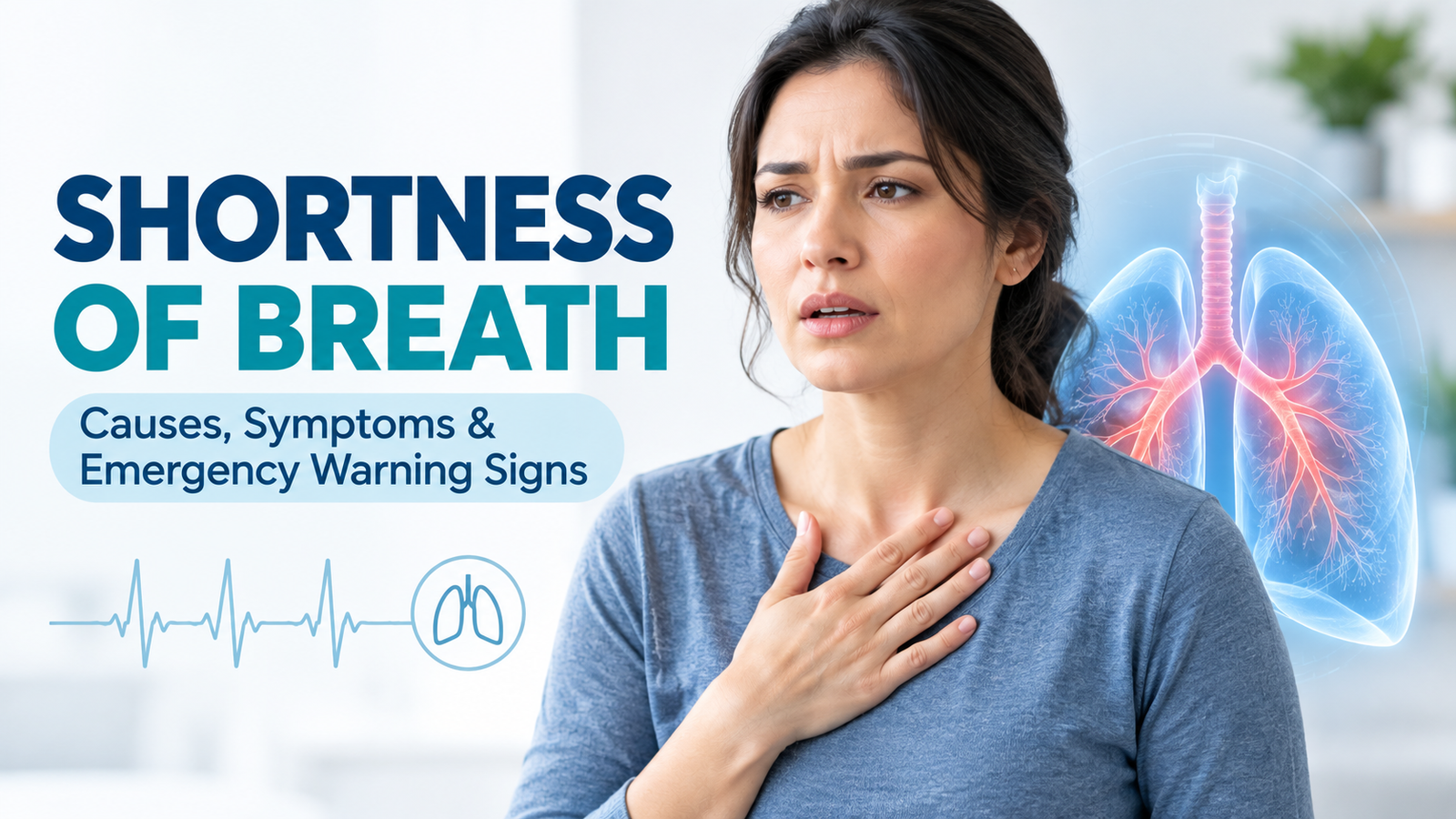

Feeling short of breath can be frightening. Sometimes it means nothing more than a hard climb up the stairs. Other times it signals a problem with your heart, lungs, or blood that needs care right away.
This guide explains what shortness of breath is, what causes it, and how doctors find the answer. It also spells out the warning signs that call for emergency help. Breathing problems are among the most common health issues, so knowing the basics can help you act quickly and calmly.
What Is Shortness of Breath?
Shortness of breath is the feeling that you cannot get enough air. Doctors call it dyspnea. Mayo Clinic says it can feel like chest tightness, trouble breathing, or a sense of suffocating.
Even people with healthy lungs can feel it at times. Mayo Clinic lists very strenuous exercise, very hot or cold weather, weight gain, high altitude, and stress or anxiety as examples.
Occasional vs. Persistent Breathlessness
Getting winded after hard exertion is normal. Persistent breathlessness is different. An American Family Physician review defines chronic dyspnea as dyspnea that lasts more than one month.
New, unexplained, or worsening breathlessness deserves a medical check. The NHS advises against trying to self-diagnose the cause.
What Does Shortness of Breath Feel Like?
People describe it in many ways, including:
- Not getting enough air
- Tightness in the chest
- Rapid or labored breathing
- Feeling unable to take a full breath
- Needing to breathe harder than usual
- Breathlessness during activity or at rest
The words you choose do not reliably reveal the cause. An older American Family Physician review notes that studies have not linked specific descriptions to specific diseases. Doctors look at the whole picture instead.
When Is Shortness of Breath an Emergency?
Read this section first if you are having trouble breathing right now.
Call 911 or Your Local Emergency Number If
Mayo Clinic and the NHS list these warning signs. Get emergency help if you have:
- Severe shortness of breath that comes on suddenly
- Severe difficulty breathing, such as gasping, choking, or being unable to speak in full sentences
- Shortness of breath with chest pain or pressure, or chest tightness or heaviness
- Pain that spreads to the arms, back, neck, or jaw
- Fainting or severe dizziness
- Blue, gray, or very pale lips, nails, or skin. On brown or Black skin, the NHS says this may be easier to see on the palms of the hands.
- Sudden confusion or a change in alertness
- Shortness of breath that starts after a long time without moving, such as after surgery, illness, injury, or a long plane or car trip
- Swelling of the face, lips, tongue, or throat
Why These Signs Matter
These symptoms can signal a heart attack, a blood clot in the lungs, a severe asthma attack, or a life-threatening allergic reaction. Mayo Clinic says shortness of breath with chest pain, fainting, or blue lips can point to a heart attack or a blood clot in the lungs.
A blood clot in the lungs is called a pulmonary embolism. The National Heart, Lung, and Blood Institute (NHLBI) says symptoms can arrive within seconds to minutes or build slowly over days. Some people have none.
A severe allergic reaction, called anaphylaxis, can also narrow the airways. Mayo Clinic says to call 911 right away and use an epinephrine autoinjector if one is available. Get emergency care even if symptoms improve, because they can return.
What to Do While You Wait for Help
- Call for help first. Do not drive yourself. The NHS and Mayo Clinic both advise against it.
- Sit in the position that makes breathing easiest, and stay as calm as you can.
- Use your prescribed rescue inhaler or epinephrine if a doctor told you to.
- Bring your medicines to the hospital.
Do not try to work out the cause before you call. Do not rely on a home pulse oximeter either. The FDA says these devices can be inaccurate, and symptoms matter more than the number.
Common Causes of Shortness of Breath
Many everyday conditions can cause breathlessness. The NHS lists asthma, chest infections, being overweight, smoking, and panic attacks among the common causes.
Physical Activity and Deconditioning
Hard exercise raises your breathing rate. Low fitness makes that effect stronger. The 2005 AAFP review explains that inactivity leads to cardiovascular deconditioning, which worsens breathlessness during exertion.
Regular movement helps. Our guide to the benefits of exercise explains how to build up gradually. Extra weight can also make breathing harder, and our overview of weight loss trends in 2026 can help you choose sustainable methods.
Anxiety and Panic Attacks
Anxiety can affect breathing. The National Institute of Mental Health lists shortness of breath or choking sensations, a racing heart, sweating, and dizziness as panic attack symptoms. Its fact sheet adds that panic attacks can feel like a heart attack.
Because the two can look alike, do not assume anxiety is the cause. Get new symptoms checked. Our guide on how to reduce stress offers practical tools once a doctor has ruled out other causes.
Asthma
Asthma inflames and narrows the airways. It typically causes wheezing, shortness of breath, chest tightness, and cough. A Journal of Family Practice review says symptoms vary over time. Allergens, irritants, exercise, weather changes, and viral infections often trigger them, and they can worsen at night or early in the morning.
Respiratory Infections
Colds, flu, bronchitis, and pneumonia can all cause breathlessness. Mayo Clinic advises seeing a provider if shortness of breath comes with high fever, chills, and cough. Pneumonia can also cause chest pain when you breathe or cough. Doctors often treat pneumonia with antibiotics when bacteria are the cause, according to NI Direct.
Allergies
Allergic triggers can set off asthma symptoms in some people. A severe allergic reaction is a different matter. Swelling of the lips, tongue, or throat with trouble breathing is an emergency.
Anemia
Anemia means your blood carries less oxygen than your body needs. The Office on Women’s Health lists shortness of breath or chest pain with activity among symptoms of iron-deficiency anemia. Other symptoms include fatigue, weakness, pale skin, and headaches. Pregnancy can also raise the risk. NI Direct advises mentioning breathlessness to your doctor so they can check for anemia.
Medical Conditions That Can Cause Shortness of Breath
Some causes are more serious. A doctor needs to diagnose them.
Heart Failure
In heart failure, the heart cannot pump enough blood for the body’s needs. NHLBI says one of the first signs may be breathlessness after routine activities, such as climbing stairs. Later it can occur while dressing or walking across a room. Some people feel short of breath lying flat. Others notice swelling in the ankles, feet, or legs.
Older adults who are not very active may feel tired and confused instead. Treatment, including lifestyle changes, medicines, devices, and procedures, can help many people, according to NHLBI.
Heart Attack and Angina
Reduced blood flow to the heart can cause breathlessness with or without chest discomfort. Mayo Clinic says a heart attack may also bring pain that spreads to the shoulder, arm, back, neck, or jaw, along with cold sweats and lightheadedness.
Chronic Obstructive Pulmonary Disease (COPD)
COPD is a long-term lung disease that includes chronic bronchitis and emphysema. NHLBI says it may cause no symptoms or only mild ones at first. Over time, an ongoing cough, shortness of breath, wheezing, and chest tightness appear. Mayo Clinic notes that the long-term lung effects of smoking may first show up as worsening breathlessness.
Pulmonary Embolism
NHLBI says most pulmonary embolisms start as clots in a deep leg vein. Its venous thromboembolism page lists major surgery, injury, and long periods without movement, including long-distance travel, as risk factors. Leg swelling and pain can signal a clot.
Other Lung and Systemic Causes
The NHS also lists pulmonary fibrosis (lung scarring) and lung cancer as possible serious causes. Acid reflux can occasionally trigger a cough or worsen asthma, according to Mayo Clinic. Our overview of common digestive problems explains how reflux fits in.
Shortness of Breath at Rest vs. During Activity
Timing offers strong clues. Doctors ask when your breathlessness starts and what makes it worse.
| Pattern | What it may suggest |
|---|---|
| Only during very hard exercise, extreme heat or cold, or high altitude | Often normal (Mayo Clinic) |
| With ordinary tasks, such as climbing stairs | Deconditioning, anemia, heart failure, or COPD |
| When lying flat | Heart failure, asthma, or reflux |
| At night or early morning | Asthma or heart failure |
| Suddenly at rest | Possible emergency, such as a blood clot, heart attack, or severe asthma attack |
| For more than one month | Chronic dyspnea that needs evaluation |
Mayo Clinic advises making an appointment if you have trouble breathing when you lie flat. If breathing problems disturb your sleep, see a doctor first. Then healthy sleep habits can support recovery, and our guide on how to improve sleep offers steps.
Symptoms That May Occur With Shortness of Breath
Other symptoms help clinicians narrow down the cause. Watch for:
- Cough: Suggests asthma, infection, COPD, or fluid in the lungs.
- Wheezing: A high-pitched whistle when breathing points to narrowed airways.
- Chest pain or pressure: Can signal a heart or lung problem.
- Fever and chills: Suggest infection.
- Fatigue: Common with heart failure and anemia.
- Dizziness or fainting: Can come from heart problems or low oxygen. See what causes dizziness.
- Rapid or irregular heartbeat: Appears with heart problems, anemia, and panic attacks.
- Bluish lips or skin: A sign of low oxygen that needs emergency care.
- Swollen ankles: Can point to heart failure.
Pain that spreads to the back, arm, or jaw can signal a heart attack. Most back pain has other causes, which our guide on what causes back pain explains.
When Should You See a Doctor for Shortness of Breath?
Book an appointment if:
- Your breathlessness is new or unexplained
- It keeps coming back or is getting worse
- Ordinary activities cause unusual breathlessness
- You have swelling in your feet or ankles
- You have trouble breathing when you lie flat
- You have wheezing, or fever and chills with a cough
- You already have a heart or lung condition and your symptoms are worsening
How Is Shortness of Breath Diagnosed?
Doctors start with your history and a physical exam. They ask about your symptoms, smoking, medicines, and exposures. The 2020 AAFP review says the results should guide testing.
First-Line Tests
The AAFP review recommends starting with:
- A complete blood count, which checks for anemia
- A basic chemistry panel
- An electrocardiogram (ECG), which records the heart’s electrical activity
- A chest X-ray
- Spirometry, a breathing test that measures airflow
- Pulse oximetry, which estimates blood oxygen
Spirometry matters. The Journal of Family Practice review found that a clinical diagnosis of COPD or asthma made without lung-function testing was often wrong.
Further Testing
If the cause stays unclear, doctors may order an echocardiogram (a heart ultrasound), a cardiac stress test, pulmonary function tests, or a chest CT scan. A 2012 AAFP review says a blood test called BNP may help exclude heart failure. It adds that a D-dimer test may help rule out a pulmonary embolism. NHLBI says a CT pulmonary angiogram is the main test for diagnosing one.
Home Pulse Oximeters
Typical oxygen saturation runs from 95% to 100% for most people, and it can be lower with lung disease. The FDA warns that a reading of 90% may reflect a true level of 86% to 94%. Skin pigmentation, poor circulation, cold fingers, tobacco use, and nail polish can affect accuracy. Use these devices only as a rough guide.
How Is Shortness of Breath Treated?
Treatment depends on the cause. The NHS says so directly. No single medicine suits everyone.
Depending on the diagnosis, treatment may include:
- Inhaled medicines for asthma or COPD. Mayo Clinic warns that skipping heart and lung medicines can worsen breathlessness.
- Antibiotics when bacteria cause a lung infection.
- Heart treatments, including medicines, devices, or procedures for heart failure.
- Blood-thinning medicines for blood clots, as NHLBI describes.
- Oxygen therapy in selected situations. Mayo Clinic advises people who use oxygen to check their supplies and equipment regularly.
- Treatment of anemia by addressing its cause, such as low iron.
- Anxiety treatment. The NIMH calls panic disorder treatable.
- Epinephrine for anaphylaxis.
What Can You Do for Mild Shortness of Breath?
For mild breathlessness that you already understand, a few steps can help:
- Stop strenuous activity and rest.
- Sit in a comfortable position.
- Stay calm and avoid unnecessary exertion.
- Follow your asthma or lung-care plan if you have one.
- Take your prescribed medicines as directed.
Try Pursed-Lip Breathing
Cleveland Clinic describes pursed-lip breathing as a simple way to slow your breathing. You inhale slowly through your nose and exhale gently through pursed lips. Ask your provider to show you the technique first.
Home care should never delay emergency care. Call 911 for severe or sudden symptoms. See a doctor if symptoms are new, persistent, or worsening.
Habits That Support Healthy Breathing
Daily habits can lower your risk of some causes:
- Do not smoke. The 2020 AAFP review recommends encouraging smoking cessation regardless of how long someone has smoked.
- Stay active. Build up gradually, as our guide to healthy habits suggests.
- Aim for a healthy weight. The NHS lists being overweight as a common cause of breathlessness.
- Eat a balanced diet. See our guides to a balanced diet and a healthy diet. The Nutrition Facts label helps you compare foods.
- Keep up with treatment. Take medicines for heart and lung conditions as prescribed.
For more ideas, browse our healthy living tips and our guide on how to improve your health.
Frequently Asked Questions About Shortness of Breath
What are the most common causes of shortness of breath?
The NHS lists asthma, chest infections, being overweight, smoking, and panic attacks. The 2005 AAFP review says asthma, heart failure, COPD, pneumonia, heart disease, interstitial lung disease, and psychological conditions account for about 85% of chronic dyspnea. Anemia and deconditioning are also common.
Can anxiety cause shortness of breath?
Yes. Panic attacks often include shortness of breath, a racing heart, and dizziness. Still, do not assume anxiety is the cause of new symptoms, because heart and lung problems can look similar. Get a medical evaluation.
When is shortness of breath an emergency?
Call 911 if breathlessness is severe or sudden. Also call if it comes with chest pain, fainting, blue or gray lips or skin, confusion, or swelling of the lips or throat. New breathlessness after surgery, injury, or a long trip is also an emergency.
Why am I short of breath when lying down?
Fluid in the lungs from heart failure can make it hard to breathe lying flat. Asthma can also flare at night. Talk with a doctor if lying down makes breathing harder, because it needs evaluation.
Can shortness of breath be caused by heart problems?
Yes. Heart failure, heart attack, and other heart conditions can cause breathlessness. NHLBI says breathlessness after routine activities can be an early sign of heart failure.
Can anemia cause shortness of breath?
Yes. The Office on Women’s Health lists shortness of breath with activity among symptoms of iron-deficiency anemia. Fatigue, weakness, pale skin, and dizziness often accompany it. A blood test can confirm it.
Should I be concerned about shortness of breath after exercise?
Feeling winded after very hard exercise is normal. Be concerned if you become breathless with much less effort than usual, if it comes with chest pain or dizziness, or if it takes a long time to recover. See a doctor for any of these.
How can I tell if shortness of breath is serious?
You cannot reliably tell at home. Use the emergency warning signs above as your guide, and do not try to self-diagnose. When in doubt, get medical help.
Key Takeaways
- Shortness of breath means feeling unable to get enough air, and it ranges from harmless to life-threatening.
- Sudden or severe breathlessness, or breathlessness with chest pain, fainting, blue lips, or confusion, needs emergency care.
- Common causes include deconditioning, anxiety, asthma, infections, allergies, and anemia.
- Heart failure, COPD, and pulmonary embolism are serious causes that need diagnosis.
- Doctors usually start with a history, a physical exam, and simple tests, such as an ECG, chest X-ray, and spirometry.
- Treatment depends on the cause, and home measures should never delay emergency help.
Breathing problems can feel scary, but acting early makes a big difference. Learn the warning signs, get new symptoms checked, and support your lungs and heart every day. Our guide on how to live a healthy lifestyle shows how the pieces fit together.
This article offers general health information and does not replace a professional medical evaluation. If you have severe or sudden trouble breathing, call 911 or your local emergency number.
References
- Mayo Clinic. Shortness of Breath: When to See a Doctor.
- Mayo Clinic. Shortness of Breath: In-Depth.
- NHS. Shortness of Breath.
- NI Direct. Shortness of Breath.
- Budhwar N, Syed Z. Chronic Dyspnea: Diagnosis and Evaluation. Am Fam Physician. 2020;101(9):542-548.
- Karnani NG, Reisfield GM, Wilson GR. Evaluation of Chronic Dyspnea. Am Fam Physician. 2005;71(8):1529-1537.
- Wahls SA. Causes and Evaluation of Chronic Dyspnea. Am Fam Physician. 2012;86(2):173-182.
- COPD and Asthma: Diagnostic Accuracy Requires Spirometry. J Fam Pract. 2019;68(2):76-81.
- National Heart, Lung, and Blood Institute. Heart Failure Symptoms.
- National Heart, Lung, and Blood Institute. Heart Failure.
- National Heart, Lung, and Blood Institute. COPD: Signs and Symptoms.
- National Heart, Lung, and Blood Institute. Pulmonary Embolism.
- National Heart, Lung, and Blood Institute. Venous Thromboembolism.
- Office on Women’s Health. Iron-Deficiency Anemia Fact Sheet.
- Mayo Clinic. Chest Pain: First Aid.
- Mayo Clinic. Anaphylaxis: First Aid.
- Mayo Clinic. Gastroesophageal Reflux Disease (GERD).
- National Institute of Mental Health. Panic Disorder: The Symptoms.
- National Institute of Mental Health. Panic Disorder: When Fear Overwhelms.
- Cleveland Clinic. Pursed Lip Breathing.
- U.S. Food and Drug Administration. FDA Brief: FDA Warns About Limitations and Accuracy of Pulse Oximeters.
- U.S. Food and Drug Administration. Pulse Oximeter Accuracy and Limitations: FDA Safety Communication.