


If your chest pain is sudden, severe, or comes with shortness of breath, sweating, or pain spreading to the arm or jaw, call 911 now.
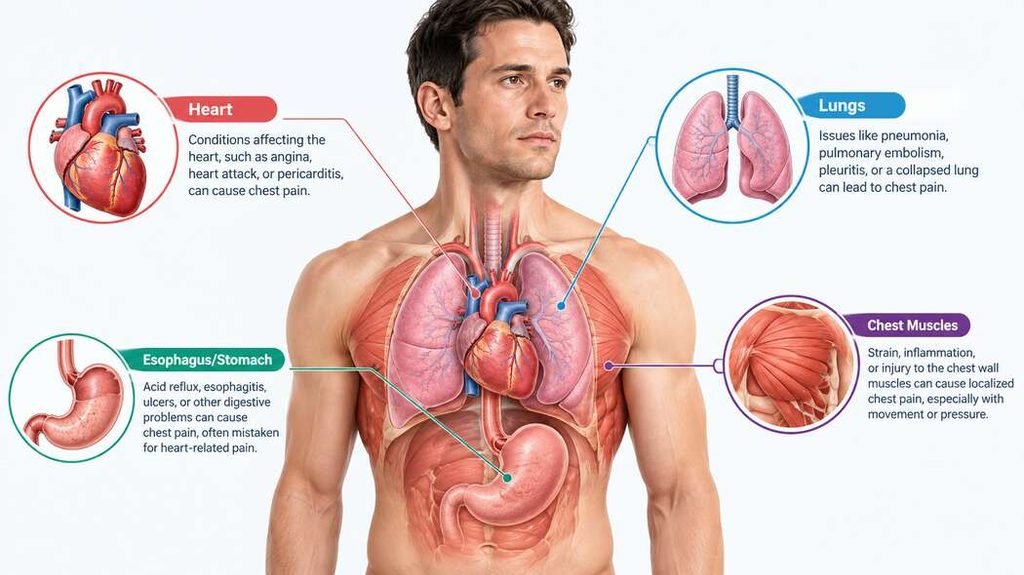
Chest pain can come from many places, including the heart, lungs, digestive tract, muscles, ribs, and nerves. Because so many structures sit close together in the chest, the same type of discomfort can have very different causes. Some are minor and short-lived, while others need urgent treatment.
Chest pain does not automatically mean a heart attack. Many cases are linked to problems outside the heart, such as acid reflux, muscle strain, or anxiety. Still, the way chest pain feels is not a reliable guide to its cause, and a few dangerous conditions can look like milder ones at first.
This guide explains the most common causes of chest pain, what each can feel like, and how doctors find the cause. It starts with the warning signs that call for emergency care, because those matter most. It is general information, not a diagnosis. New, severe, unexplained, or persistent chest pain should be evaluated by a medical professional.
When Chest Pain Is an Emergency
If you think you or someone else may be having a heart attack, call 911 right away. The American Heart Association (AHA) advises calling 911 rather than driving yourself, because emergency responders can begin evaluation and treatment on the way and can alert the hospital team before you arrive. Read the AHA’s warning signs of a heart attack for more detail.
Call 911 if chest pain:
- Is sudden or severe
- Feels like pressure, squeezing, heaviness, or tightness
- Feels tearing or ripping, or is felt in the upper back
- Lasts more than a few minutes, or goes away and comes back
- Spreads to the arm, shoulder, jaw, neck, or back
- Occurs with shortness of breath or severe breathing difficulty
- Comes with cold sweating
- Comes with nausea or vomiting
- Causes dizziness, lightheadedness, or fainting
- Occurs with a racing or irregular heartbeat
Heart attack symptoms are not always dramatic. According to the AHA, some people have only mild discomfort, or symptoms such as nausea, fatigue, or shortness of breath. Symptoms can also be less typical in women, older adults, and people with diabetes.
No single symptom pattern can rule out a heart attack. When in doubt, it is safer to get checked than to wait. You can read more in our guide to heart attack symptoms.
The 2021 AHA/ACC chest pain guideline emphasizes quickly identifying or excluding life-threatening causes in people with acute chest pain and getting immediate medical care.
1. Heart-Related Causes
Heart-related chest pain happens when the heart muscle or the tissue around it is not getting enough blood or becomes inflamed. The main conditions include angina, coronary artery disease, heart attack, pericarditis, and myocarditis. A tear in the aorta, the body’s main artery, is less common but is also an emergency.
Angina is chest discomfort caused by reduced blood flow to the heart. Mayo Clinic describes it as pressure or squeezing that often appears during physical effort or stress and eases with rest. It is often a sign of underlying coronary artery disease. Angina that is new, happens at rest, gets worse, or lasts longer than usual can be a warning that a heart attack may be developing and needs emergency care.
Coronary artery disease develops when plaque narrows the arteries that supply the heart. It may cause no symptoms for years, then show up as angina or a heart attack. Our guide to heart disease explains more.
A heart attack occurs when blood flow to part of the heart is blocked. The discomfort may feel like pressure, fullness, or squeezing in the center of the chest. It can also be described as tightness or a burning sensation. It may spread to the arm, jaw, neck, or back and may come with shortness of breath, sweating, or nausea.
Pericarditis is inflammation of the sac around the heart. Mayo Clinic notes that it often causes sharp chest pain that may worsen when lying down or breathing deeply and ease when leaning forward.
Myocarditis is inflammation of the heart muscle, often following an infection. According to Mayo Clinic, it can cause chest pain, shortness of breath, and an irregular heartbeat.
Aortic dissection is a tear in the wall of the aorta. It can cause sudden, severe chest or upper back pain, sometimes described as ripping or tearing. It is a medical emergency, as Mayo Clinic explains.
The AHA/ACC guideline notes that cardiac chest pain may be described as pressure, tightness, or discomfort rather than “pain,” and it can show up in nearby areas. Because of this, describing the feeling alone cannot confirm or rule out a heart cause.
To learn more about protecting your heart, see our overview of what heart health means.
2. Acid Reflux and Heartburn
Acid reflux is one of the most common non-cardiac causes of chest discomfort. It happens when stomach acid flows back into the esophagus and irritates its lining. When this occurs often, it may be called gastroesophageal reflux disease (GERD).
Typical features include:
- A burning feeling behind the breastbone
- Symptoms after eating or when bending over
- A sour or bitter taste in the mouth, or regurgitation
- Discomfort that is worse when lying down, especially at night
Mayo Clinic notes that GERD can also cause trouble swallowing and a sensation of a lump in the throat. Heartburn can feel very similar to heart-related pain, which is why it is easy to misjudge. If the pain is sudden, severe, spreads to the arm or jaw, or comes with shortness of breath or sweating, treat it as a possible emergency.
If reflux is a recurring concern, these guides may help: early signs of acid reflux, acid reflux risk factors, and symptom guides for men, women, and older adults. You can also read whether acid reflux is serious.
3. Muscle Strain and Chest Wall Pain
Chest wall pain is an umbrella term for pain that comes from the muscles, ribs, cartilage, and joints of the chest. It is a frequent cause of chest discomfort, and it often follows a clear trigger.
Common triggers include:
- Exercise or a new workout routine
- Heavy lifting or pushing
- Repetitive movements, such as painting or shoveling
- Forceful or prolonged coughing
- A minor injury or bump to the chest
This type of pain often changes with movement, a deep breath, or a twist of the torso. It may feel sore, sharp, or achy, and pressing on the area may reproduce it.
Tenderness that you can reproduce by pressing on the chest can point toward a musculoskeletal source. However, this clue should not be used on its own to rule out a serious problem. The AHA/ACC guideline cautions that chest wall tenderness does not exclude a cardiac cause, and people can have heart disease and chest wall pain at the same time.
Mild strains often improve with rest and time. If the pain does not make sense given your activity, have it checked.
4. Costochondritis
Costochondritis is inflammation of the cartilage that connects the ribs to the breastbone (sternum). Mayo Clinic explains that the exact cause is often unknown, though it can be linked to injury, strain, or infection.
The main features include:
- Pain and tenderness along the edge of the breastbone
- Pain that is sharp, aching, or pressure-like
- Discomfort that worsens with movement, coughing, or deep breathing
- Tenderness when pressing on the affected area
Costochondritis can feel similar to cardiac pain, which can be alarming. The pain may also spread across the chest or into the back. Because of that overlap, a doctor usually needs to rule out other causes before the diagnosis can be made with confidence.
Costochondritis often goes away on its own over weeks or longer. A health professional can recommend pain relief options that fit your health history. If you have fever, swelling, redness, or trouble breathing, seek medical care promptly.
5. Lung-Related Causes
Several lung and airway conditions can cause chest pain. Pain that worsens with breathing or coughing can occur with them, but this pattern alone is not diagnostic.
- Pleurisy is inflammation of the lining around the lungs. It commonly causes sharp pain when breathing in, coughing, or sneezing, according to Mayo Clinic.
- Pneumonia is a lung infection. It may cause chest pain along with cough, fever, chills, and fatigue.
- Pulmonary embolism is a blood clot in the lungs. According to MedlinePlus, it can cause sudden shortness of breath, chest pain, and a fast heartbeat, and it can be life-threatening.
- Pneumothorax, or a collapsed lung, happens when air leaks into the space around the lung. MedlinePlus notes that it can cause sudden chest pain and shortness of breath.
Chest pain together with sudden shortness of breath is an emergency (see “When Chest Pain Is an Emergency” above). For more on this symptom, see our guide to shortness of breath.
6. Anxiety and Panic Attacks
Anxiety and panic can cause real physical symptoms. Mayo Clinic lists chest pain among the common symptoms of a panic attack, along with:
- Chest tightness
- A pounding or rapid heartbeat
- Rapid breathing
- Sweating or trembling
- Dizziness
- A sense of impending danger or loss of control
These episodes can feel frightening, and they often peak within minutes. Anxiety can cause real chest pain, but new or unexplained chest pain should not automatically be attributed to it. Panic attacks and heart problems can look alike, and having one does not rule out the other.
If you have had chest pain checked and no heart or lung cause was found, a clinician may explore anxiety as a contributor. Therapy, stress management, and other treatments can help.
You can learn more in our guides to panic attacks, what anxiety is, and how to reduce stress.
7. Other Causes
Several other conditions can also cause chest pain:
- Esophageal disorders: Problems with the esophagus, including inflammation or narrowing, can cause pain or trouble swallowing.
- Esophageal spasm: Sudden, forceful contractions of the esophagus can cause squeezing chest pain that may mimic a heart attack.
- Gallbladder problems: Gallstones or gallbladder inflammation can cause pain in the upper abdomen that sometimes spreads to the chest, back, or shoulder.
- Stomach ulcers: Peptic ulcers typically cause burning pain in the upper abdomen, which can sometimes be felt in the lower chest. The NIDDK provides an overview.
- Shingles: The CDC explains that shingles often starts with burning or tingling pain on one side of the body, followed by a rash. The pain can appear before the rash does.
- Nerve-related pain: Irritated or compressed nerves in the chest wall or spine can cause sharp or burning pain.
Mayo Clinic notes that chest discomfort can arise from heart, digestive, lung, musculoskeletal, nerve-related, and other causes. If you are not sure why your chest hurts, a clinician can sort through these possibilities. Our guides to common digestive problems and what causes abdominal pain offer more background.
What Does Chest Pain Feel Like?
People describe chest pain in many ways, including pressure, squeezing, burning, stabbing, aching, or tightness. The descriptions below may offer clues, but they are not a way to diagnose yourself.
| Chest pain pattern | Possible causes |
|---|---|
| Pressure or squeezing | Heart-related causes |
| Tearing or ripping, sudden and severe | Aortic dissection (emergency) |
| Burning behind the breastbone | Heartburn or GERD |
| Sharp pain with breathing | Lung, chest wall, or pericardial causes (such as pericarditis) |
| Localized tenderness | Musculoskeletal causes |
| Pain during or after exertion | Musculoskeletal or cardiac causes |
| Pain after eating | Reflux or other digestive causes |
| Pain with racing heart or fear | Anxiety or panic, or cardiac causes |
These patterns can provide clues, but chest pain characteristics alone cannot reliably diagnose the cause. The AHA/ACC guideline stresses that a medical evaluation is needed to sort out what is happening. Many conditions overlap, and a person can have more than one cause at once.
Chest Pain by Trigger
Paying attention to when chest pain happens can help you describe it to a clinician. It cannot replace an exam.
After eating. Reflux, indigestion, and other digestive problems are common reasons for chest discomfort after meals. Large or fatty meals and lying down soon after eating can bring on symptoms. Do not assume it is heartburn if the pain is new, severe, or comes with sweating or shortness of breath. See also abdominal pain after eating.
During exercise. Chest discomfort that appears during physical effort deserves medical attention, particularly when it is new or keeps happening. It can signal that the heart is not getting enough blood, as in angina. Stop the activity and seek care. Call 911 if the pain does not ease within a few minutes of resting. Muscle strain can also cause pain with exercise, but a doctor should help sort the two apart. Our guide to the benefits of exercise explains why staying active is still important once you have been evaluated.
When breathing. Pain that worsens with a deep breath may come from pleurisy, pneumonia, pericarditis, a pulmonary embolism, or the muscles and cartilage of the chest wall. Sudden pain with trouble breathing needs urgent care.
When lying down. Reflux often feels worse when you lie flat, because acid moves more easily into the esophagus. Pericarditis can also cause pain that increases when lying down and improves when sitting up and leaning forward.
Pain that comes and goes. Some heart conditions, including angina, cause symptoms that appear and fade, so pain that goes away does not prove it was harmless. Recurring pain still needs evaluation.
How Doctors Diagnose Chest Pain
Emergency evaluation commonly focuses first on excluding life-threatening heart and lung conditions. The AHA/ACC guideline recommends that people with acute chest pain who arrive at an emergency department have an electrocardiogram (ECG) done and read within 10 minutes. Mayo Clinic notes that an ECG, blood tests, and a chest X-ray may be among the first tests. The exact approach depends on your symptoms, age, and risk factors.
Medical history
A clinician will likely ask about:
- Where the pain is and what it feels like
- When it began and how long it lasts
- Whether it comes and goes
- Whether exercise, eating, breathing, or movement affects it
- Whether it spreads to other areas
- Other symptoms, such as shortness of breath, nausea, or sweating
- Your medical conditions, medicines, and family history
Physical examination
The exam may include checking your heart rate, blood pressure, and oxygen level. A clinician may also listen to your heart and lungs and examine your chest wall for tenderness.
Possible tests
Depending on the situation, your care team may use:
- Electrocardiogram (ECG or EKG): records the heart’s electrical activity
- High-sensitivity cardiac troponin: a blood test that can detect heart muscle injury
- Chest X-ray: looks at the lungs, heart size, and chest structures
- Echocardiogram: an ultrasound of the heart
- Stress testing: checks how the heart responds to exertion
- CT imaging or CT coronary angiography: provides detailed pictures of the chest or heart arteries
Not everyone needs every test. Your provider will choose them based on your own situation. The NHS chest pain page and MedlinePlus give additional patient-friendly overviews.
When Should You See a Doctor for Chest Pain?
Not every episode of chest pain is an emergency, but many still need a medical visit. The simple framework is this: if it may be an emergency, call 911. If it is not an emergency but is unexplained or recurring, arrange a medical evaluation.
Schedule an appointment with a health professional for:
- New, unexplained chest pain
- Recurrent chest pain
- Chest pain during physical activity
- Chest pain with swallowing problems
- Chest pain with a persistent cough or fever
- Any chest symptoms in someone with cardiovascular risk factors, such as high blood pressure, high cholesterol, diabetes, smoking, or a family history of heart disease
If you are unsure which category your symptoms fall into, err on the side of caution and seek care.
Can Chest Pain Go Away on Its Own?
Yes, some causes can resolve without treatment. However, chest pain that disappears does not prove the cause was harmless.
Muscle strain may improve with rest. Some digestive discomfort passes once the stomach settles. Anxiety-related symptoms often ease after an episode ends.
On the other hand, symptoms from heart conditions can also come and go. Pain that returns or has no clear explanation should not simply be ignored. Mayo Clinic advises medical assessment for new or unexplained chest pain, and the same applies if you have had a similar episode before but never found the reason.
How Can You Reduce the Risk of Some Causes of Chest Pain?
Not every cause of chest pain can be prevented, but healthy habits lower the risk of heart disease and may help with other triggers. General steps include:
- Do not smoke, and avoid secondhand smoke
- Manage blood pressure and cholesterol
- Manage diabetes if you have it
- Stay regularly active, as advised by your health professional
- Follow a heart-healthy eating pattern
- Maintain a healthy weight when appropriate
- Follow your prescribed treatment if you already have cardiovascular disease
The AHA’s Life’s Essential 8 framework covers diet, physical activity, nicotine exposure, sleep, weight, cholesterol, blood sugar, and blood pressure. For more, see our guides on how to prevent heart disease, how to lower blood pressure, and how to manage acid reflux at home.
Frequently Asked Questions About Chest Pain
What is the most common cause of chest pain?
It varies by age, setting, and individual health. Musculoskeletal (chest wall) problems and digestive causes such as acid reflux are common, but heart and lung conditions are also important possibilities. Because the cause cannot be determined from symptoms alone, new or unexplained pain should be evaluated. See Mayo Clinic’s overview of chest pain.
Can acid reflux cause chest pain?
Yes. Acid reflux can cause a burning feeling behind the breastbone that may be mistaken for heart pain. Because the two can feel alike, do not assume new or severe chest pain is reflux. Learn more in our guide to acid reflux treatment options.
Can anxiety cause chest pain?
Yes, anxiety and panic attacks can cause chest tightness or pain, often with a racing heart and fast breathing. However, new or unexplained chest pain should not automatically be blamed on anxiety. A medical evaluation can help rule out other causes.
How can you tell if chest pain is serious?
You cannot reliably tell from how it feels. Warning signs include pressure or squeezing, tearing pain, pain spreading to the arm, jaw, or back, shortness of breath, cold sweats, nausea, or fainting. If any of these are present, call 911. The American Heart Association lists common warning signs.
When should I go to the ER for chest pain?
Call 911 or go to the emergency room if chest pain is sudden, severe, lasts more than a few minutes, or comes with shortness of breath, sweating, nausea, or dizziness. Calling an ambulance is generally safer than driving yourself. If you are unsure, it is better to be checked.
Can chest pain go away on its own?
Sometimes, as with muscle strain or minor digestive upset. But pain that fades can still have a serious cause, and heart-related pain can come and go. Recurrent or unexplained chest pain should be evaluated.
Why does my chest hurt when I breathe?
Pain with breathing can come from the lungs, the lining around them, the sac around the heart, or the muscles and cartilage of the chest wall. Conditions such as pleurisy, pneumonia, pericarditis, costochondritis, and pulmonary embolism may be involved. If it comes with sudden shortness of breath, seek urgent care. MedlinePlus offers more detail.
Why does my chest hurt after eating?
Reflux and indigestion are common reasons. Still, chest pain after a meal can also be related to the heart or other digestive conditions. If the pain is new, severe, or comes with sweating or shortness of breath, treat it as possibly urgent.
Can muscle pain feel like chest pain?
Yes. Strained chest muscles or inflamed rib cartilage can cause sharp or aching pain, often worse with movement or pressure. Because the feeling can resemble heart pain, a clinician may need to rule out other causes first.
Can chest pain come and go?
Yes. Several causes, including angina, reflux, and anxiety, can produce symptoms that come and go. Intermittent chest pain still warrants a medical evaluation, particularly if it occurs with exertion.
Does chest pain always mean a heart problem?
No. Many cases are caused by the digestive system, muscles, lungs, or anxiety. Still, heart problems are among the most serious possibilities, which is why new or unexplained chest pain should be checked.
What tests are used to diagnose chest pain?
Common tests include an ECG, blood tests such as high-sensitivity troponin, and a chest X-ray. Others may include an echocardiogram, stress test, or CT imaging. Your care team will choose tests based on your symptoms and risk factors, as described in the AHA/ACC chest pain guideline.
Sources
- Mayo Clinic: Chest pain
- American Heart Association: Warning signs of a heart attack
- American Heart Association: Heart attack symptoms in women
- Gulati M, et al. 2021 AHA/ACC/ASE/CHEST/SAEM/SCCT/SCMR Guideline for the Evaluation and Diagnosis of Chest Pain. Circulation.
- American Heart Association: Life’s Essential 8
- Mayo Clinic: Angina
- Mayo Clinic: Pericarditis
- Mayo Clinic: Myocarditis
- Mayo Clinic: Aortic dissection
- Mayo Clinic: Gastroesophageal reflux disease (GERD)
- Mayo Clinic: Costochondritis
- Mayo Clinic: Pleurisy
- Mayo Clinic: Panic attacks and panic disorder
- MedlinePlus (NIH): Chest pain
- MedlinePlus (NIH): Pulmonary embolism
- MedlinePlus (NIH): Pneumothorax
- NIDDK (NIH): Peptic ulcers (stomach ulcers)
- CDC: Shingles signs and symptoms
- NHS: Chest pain
Medical Disclaimer: This article is for general information and education only. It is not medical advice, and it does not diagnose, treat, or prevent any condition. Chest pain can be a sign of a serious or life-threatening problem. If you have sudden, severe, or unexplained chest pain, or you think you may be having a heart attack, call 911 right away. For any health concern, talk with a qualified healthcare professional who can consider your personal history and needs. Never delay or ignore medical care because of something you read here.
8 thoughts on “What Causes Chest Pain? 7 Common Causes & When to Seek Help”
Comments are closed.