
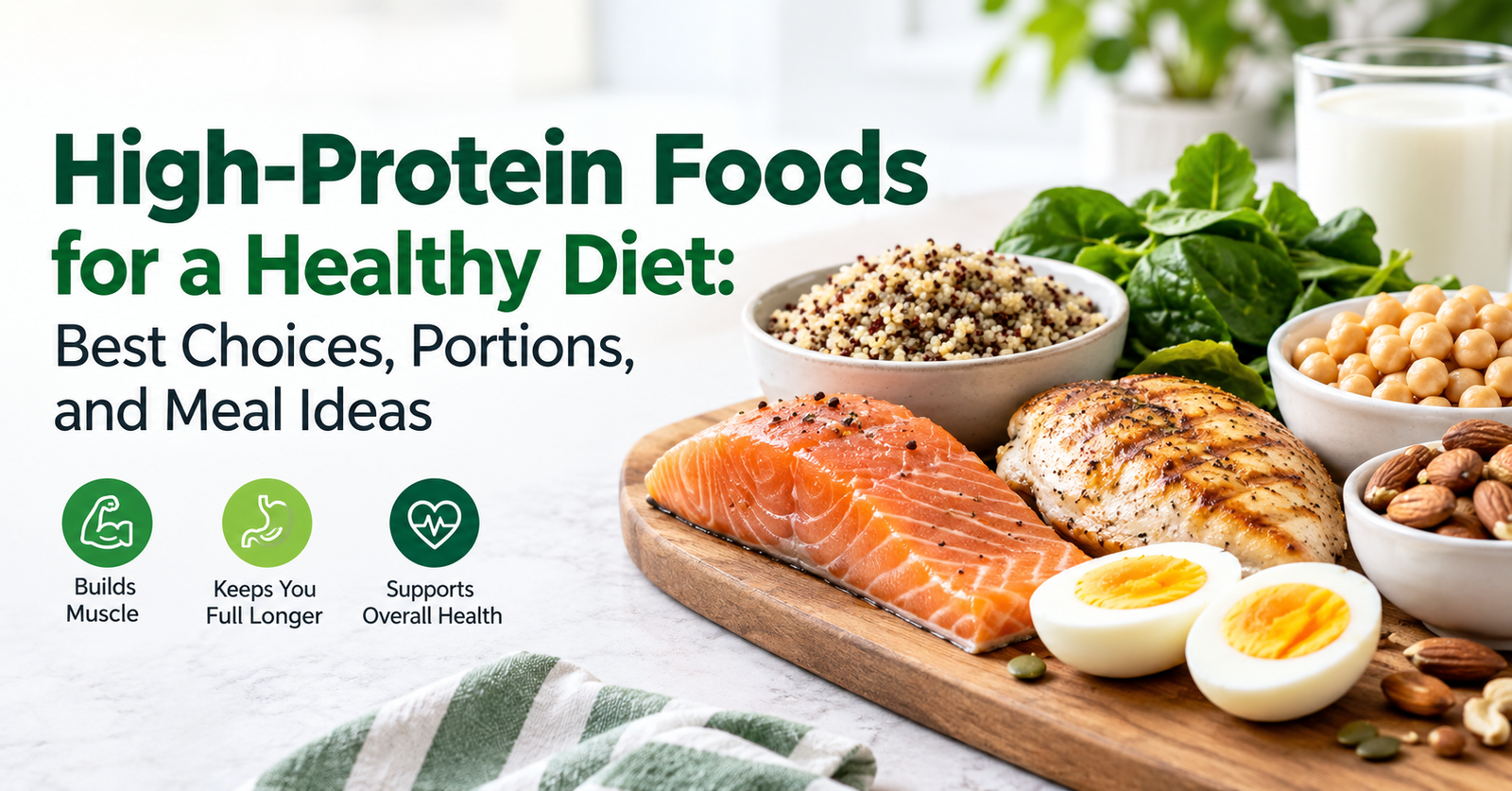

Protein gets a lot of attention right now. Social media, food labels, and even the newest U.S. dietary guidelines push people to eat more of it. So which high-protein foods for a healthy diet deserve a place on your plate?
This guide explains what protein does, how much you need, and which foods deliver the most. It compares animal and plant sources, shares simple meal ideas, and covers who should take extra care. Good nutrition also helps you manage some of the most common health issues, and our guide to what makes a healthy diet shows where protein fits.
Why Protein Matters for a Healthy Diet
Protein builds and repairs muscle, skin, and other tissues. It also helps make enzymes, hormones, and immune cells. Your body breaks protein into smaller units called amino acids. It cannot make nine of them, so you must get those essential amino acids from food.
Complete vs. Incomplete Proteins
A complete protein contains all nine essential amino acids. Harvard Health notes that eggs are a complete protein, and so are quinoa and soy foods such as tofu and tempeh. Many other plant foods, like beans and grains, have lower amounts of one or two amino acids.
You do not need to match foods at every meal. Eating a variety of plant proteins over the day usually covers your needs.
How Much Protein Do You Need?
The answer depends on which guideline you follow. Your age, activity level, and health also matter.
The Long-Standing RDA
The Recommended Dietary Allowance (RDA) for adults is 0.8 grams of protein per kilogram of body weight per day, according to Harvard Health. That works out to about 60 grams a day for a 75-kilogram (165-pound) person. The RDA is the minimum that meets basic needs, not an ideal target.
The 2025–2030 U.S. Guidelines
The 2025–2030 Dietary Guidelines for Americans set a higher goal of 1.2 to 1.6 grams per kilogram per day, as MedlinePlus summarizes. For a 70-kilogram person, that means about 84 to 112 grams daily.
Experts debate this change. A 2026 review in The Journal of Nutrition explains that the target rests mainly on weight-management trials. The authors say the evidence is less clear for healthy people with stable weight.
Protein Needs by Group
| Group | Suggested daily protein | Source |
|---|---|---|
| Most healthy adults (minimum) | 0.8 g per kg | Harvard Health |
| 2025–2030 U.S. guidelines | 1.2–1.6 g per kg | MedlinePlus |
| Adults over 65 | 1.0–1.2 g per kg (1.2–1.5 with illness) | PROT-AGE Study Group |
| Active adults and athletes | 1.2–2.0 g per kg | Academy of Nutrition and Dietetics and ACSM |
| Pregnancy | 75–100 g total | Harvard Health |
| Advanced kidney disease | May need less | Ask your care team |
To find your target, divide your weight in pounds by 2.2 to get kilograms. Then multiply by the number in the table.
The Best High-Protein Foods
Both animal and plant foods can supply enough protein. The amounts below are approximate and come from the USDA FoodData Central database.
Animal-Based Protein Foods
| Food | Serving | Protein (approx.) |
|---|---|---|
| Chicken breast, skinless, cooked | 3 oz (85 g) | 26 g |
| Lean beef sirloin, cooked | 3 oz | 22–26 g |
| Salmon, cooked | 3 oz | 19–22 g |
| Canned tuna in water, drained | 3 oz | 17–20 g |
| Greek yogurt, plain, nonfat | ¾ cup | 15–18 g |
| Cottage cheese, low-fat | ½ cup | 12–14 g |
| Eggs | 1 large | 6 g |
| Milk | 1 cup | 8 g |
Fish deserves special mention. The American Heart Association recommends non-fried seafood at least twice a week, especially fish rich in omega-3 fats. Salmon, sardines, and trout are good choices.
Plant-Based Protein Foods
| Food | Serving | Protein (approx.) |
|---|---|---|
| Lentils, cooked | ½ cup | 9 g |
| Edamame, shelled, cooked | ½ cup | 9 g |
| Black beans, cooked | ½ cup | 8 g |
| Chickpeas, cooked | ½ cup | 7 g |
| Tofu, firm | ½ cup | 10–20 g |
| Tempeh | ½ cup | 15 g |
| Quinoa, cooked | 1 cup | 8 g |
| Pumpkin seeds | 1 oz | 8–9 g |
| Peanut butter | 2 tbsp | 7 g |
| Almonds | 1 oz | 6 g |
Plant proteins bring fiber, which animal foods lack. MedlinePlus also notes that nuts, eaten as part of a healthy diet, can help lower heart disease risk.
Choose Lean Cuts and Limit Processed Meat
The dietary guidelines still advise keeping saturated fat at 10% of calories or less, so MedlinePlus recommends lean cuts. Examples include sirloin, tenderloin, and round for beef, and tenderloin or loin for pork.
Processed meats deserve extra caution. The World Health Organization’s cancer agency classifies processed meat as carcinogenic to humans and red meat as probably carcinogenic. It estimates that each 50 grams of processed meat eaten daily raises colorectal cancer risk by 18%. Bacon, ham, sausage, and hot dogs all count.
Animal vs. Plant Protein: What the Research Shows
The source of your protein may matter as much as the amount. A large Harvard study in JAMA Internal Medicine followed more than 131,000 health professionals. Higher plant protein intake linked to lower death rates. Swapping processed red meat for plant protein linked to the biggest drop.
The Harvard Nutrition Source summary adds that poultry and fish did not link to earlier death. The study also found the effects mostly in people with an unhealthy lifestyle habit, such as smoking. This was an observational study, so it shows links, not proof.
A practical takeaway follows. Build most meals around beans, lentils, fish, poultry, eggs, and dairy, and eat red and processed meat less often.
Health Benefits of Getting Enough Protein
Enough protein supports several goals. The strongest evidence covers muscle, fullness, and heart health.
Muscle and Healthy Aging
Muscle mass drops with age. The PROT-AGE Study Group found that older adults need more protein than younger adults to keep lean mass and function. They also recommend regular exercise, including resistance training.
Fullness and Weight Management
The trials behind the new U.S. guidelines compared higher-protein diets with lower-protein diets. The Journal of Nutrition review describes benefits for fat loss and for keeping muscle during weight loss. If weight loss is your goal, our overview of weight loss trends in 2026 can help you choose sustainable methods.
How to Build High-Protein Meals
Simple habits make it easy to reach your target. You do not need supplements or complicated plans.
Spread Protein Across the Day
Include a protein food at every meal and snack. The PROT-AGE authors suggest about 25 to 30 grams per meal for older adults. If you follow intermittent fasting, plan protein-rich meals inside your eating window so you do not fall short.
A Sample Day
| Meal | Example | Protein (approx.) |
|---|---|---|
| Breakfast | ¾ cup Greek yogurt, 1 oz almonds, berries | 23 g |
| Lunch | Lentil bowl: 1 cup lentils, ½ cup quinoa, vegetables | 22 g |
| Snack | 2 hard-boiled eggs | 12 g |
| Dinner | 3 oz salmon, roasted vegetables, ½ cup quinoa | 23–26 g |
| Total | 80–83 g |
This day meets the RDA for most adults. Add another serving of beans, tofu, or chicken if you aim for a higher target.
Cook Smart
How you cook matters. The dietary guidelines advise swapping deep-fried foods for baked, broiled, roasted, stir-fried, or grilled dishes. Season with herbs and spices instead of heavy sauces.
High-Protein Foods and Digestive Comfort
Some protein foods suit sensitive stomachs better than others. A few adjustments help.
If You Have Acid Reflux
Fried and fatty protein foods often trigger heartburn. Reviews, including one in Archives of Internal Medicine, find little proof that cutting specific foods helps everyone. Triggers differ from person to person. Grilled fish, skinless chicken, egg whites, and beans usually feel gentler than fried or fatty cuts.
The American College of Gastroenterology also advises finishing meals two to three hours before bed. Our guide on how to manage acid reflux at home offers a full plan, and our article on acid reflux risk factors explains what raises your odds. If you enjoy a soothing tea, our article on whether ginger is good for health covers the evidence.
Reflux often starts in your early adult years, so see our guide to acid reflux in your 30s. Older adults need more protein and often face more reflux, and our article on acid reflux in your 50s explains why. Healthy habits also help, as our guide on whether acid reflux can be prevented shows.
If Beans and Dairy Cause Gas
Beans, lentils, and dairy can cause gas, bloating, or loose stools in some people. Add them slowly and drink water as your fiber intake rises. Rinse canned beans before use. Our overview of common digestive problems explains conditions such as lactose intolerance and irritable bowel syndrome.
Who Should Be Careful With High-Protein Diets
High-protein eating suits most healthy people. A few groups need extra caution.
Kidney Disease
Your kidneys filter the waste products of protein, as the National Kidney Foundation explains. A 2018 meta-analysis found that higher-protein diets did not harm kidney function in healthy adults. People with kidney disease are different. The PROT-AGE authors note that people with severe kidney disease who are not on dialysis may need to limit protein. Ask your doctor before you increase your intake.
Extremely High Intakes
More is not always better. Harvard Health says the average person should not exceed 2 grams per kilogram per day. Too much protein can crowd out carbohydrates and healthy fats. Balance matters.
Protein Powders and Bars
Most people can meet their needs with food. The dietary guidelines encourage minimally processed whole foods, and many bars and shakes contain added sugar. If you use a supplement, check the label.
When to See a Doctor or Dietitian
Talk with a healthcare professional if you have:
- Kidney disease, or a family history of it
- Unplanned weight loss or muscle loss
- Frequent heartburn that does not improve. Our guide on how acid reflux is diagnosed explains next steps.
- Belly pain after meals. Our article on what abdominal pain feels like can help you describe it.
- Pregnancy, or plans to follow a very high-protein diet
A registered dietitian can build a plan that fits your health and goals.
Frequently Asked Questions
What are the best high-protein foods for a healthy diet?
Fish, skinless poultry, eggs, Greek yogurt, cottage cheese, lentils, beans, tofu, tempeh, and nuts all rank well. They offer protein plus other nutrients.
Is plant protein as good as animal protein?
Plant protein can meet your needs when you eat a variety of foods. Soy and quinoa are complete proteins. Large studies link plant-rich protein choices to good health outcomes.
Can you eat too much protein?
Yes, in a few ways. Very high intakes can crowd out other nutrients. People with kidney disease may need to limit protein.
Do I need protein powder?
Most people do not. Whole foods supply protein along with fiber, vitamins, and minerals.
Key Takeaways
- Adults need at least 0.8 grams of protein per kilogram daily. The 2025–2030 U.S. guidelines suggest 1.2 to 1.6 grams.
- Older adults, active people, and those losing weight often benefit from more.
- Fish, poultry, eggs, dairy, beans, lentils, tofu, and nuts are strong choices.
- Limit processed meat and choose lean cuts of red meat.
- Spread protein across meals, and bake, broil, or grill instead of frying.
- People with kidney disease should ask their doctor before they raise their intake.
Protein is one piece of a larger picture. Pair it with vegetables, whole grains, sleep, and movement. Our guide on how to live a healthy lifestyle shows how the pieces fit together.
This article offers general education and does not replace personal medical advice. Talk with a qualified healthcare professional or registered dietitian about your nutrition needs.
Read our full Medical Disclaimer.
References
- Dietary Guidelines for Americans 2025–2030. U.S. Department of Agriculture and U.S. Department of Health and Human Services.
- MedlinePlus. Dietary Guidelines for Americans 2025–2030.
- Perspectives on the Protein Recommendations in the 2025–2030 Dietary Guidelines for Americans. J Nutr. 2026.
- Harvard Health. High-Protein Foods: The Best Protein Sources to Include in a Healthy Diet.
- Harvard Health. How Much Protein Do You Need Every Day?
- Bauer J, Biolo G, Cederholm T, et al. Evidence-Based Recommendations for Optimal Dietary Protein Intake in Older People: A Position Paper From the PROT-AGE Study Group. J Am Med Dir Assoc. 2013;14(8):542-559.
- Thomas DT, Erdman KA, Burke LM. Position of the Academy of Nutrition and Dietetics, Dietitians of Canada, and the American College of Sports Medicine: Nutrition and Athletic Performance. J Acad Nutr Diet. 2016;116(3):501-528.
- U.S. Department of Agriculture. FoodData Central.
- Rimm EB, Appel LJ, Chiuve SE, et al. Seafood Long-Chain n-3 Polyunsaturated Fatty Acids and Cardiovascular Disease: A Science Advisory From the American Heart Association. Circulation. 2018.
- International Agency for Research on Cancer. Q&A on the Carcinogenicity of the Consumption of Red Meat and Processed Meat.
- Song M, Fung TT, Hu FB, et al. Association of Animal and Plant Protein Intake With All-Cause and Cause-Specific Mortality. JAMA Intern Med. 2016;176(10):1453-1463.
- Harvard T.H. Chan School of Public Health. Processed Red Meat Related to Higher Risk of Death, Plant Protein to Lower Risk.
1 thought on “High-Protein Foods for a Healthy Diet: Best Choices, Portions, and Meal Ideas”
Comments are closed.