
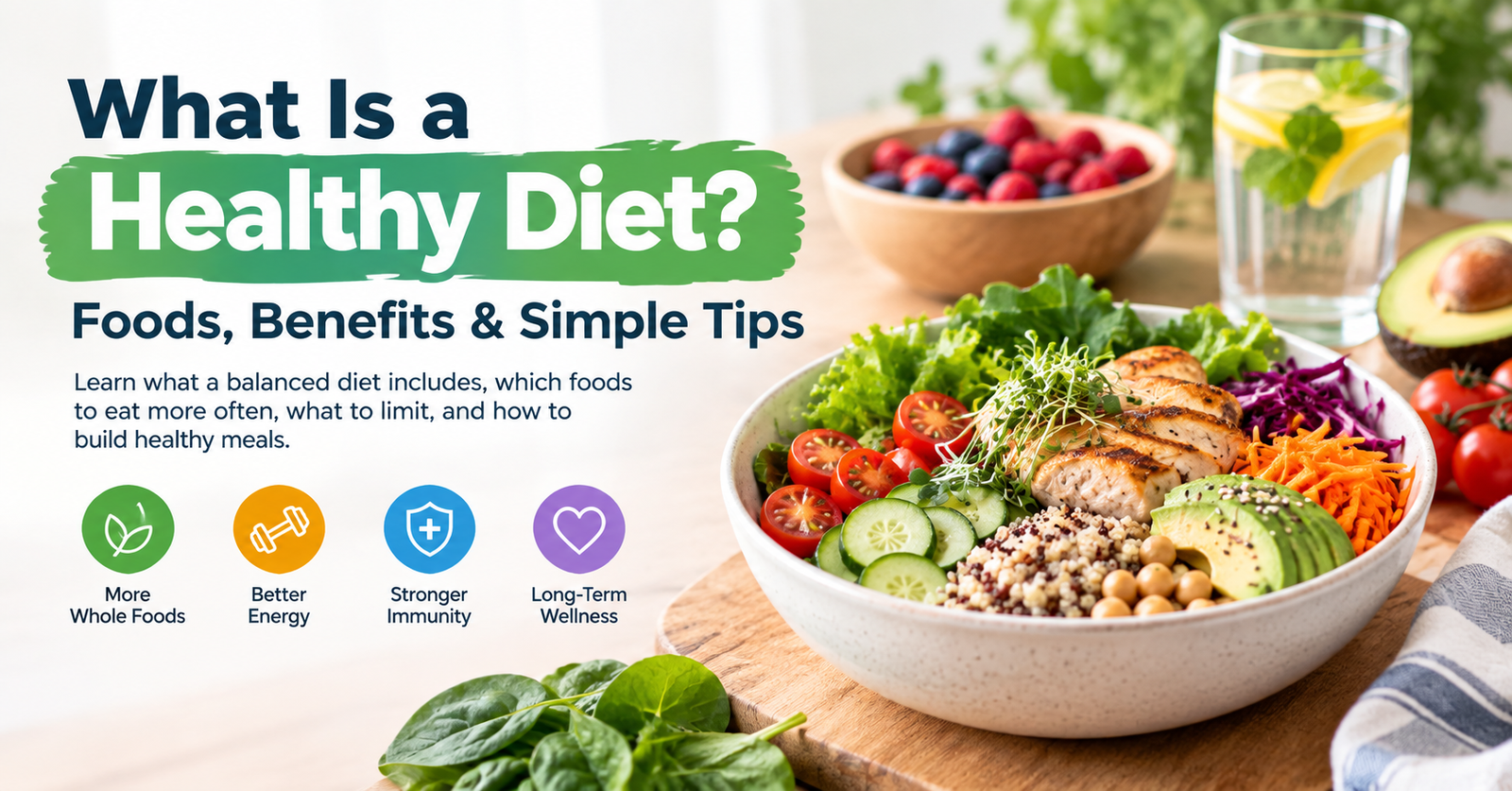

Ask ten people to define “healthy diet” and you’ll likely get ten different answers — low-carb, low-fat, plant-based, high-protein, or whatever plan is trending this year. That confusion isn’t really about nutrition science being unclear. It’s about diet culture layering opinion on top of a set of principles that are actually fairly consistent.
Major health authorities, including the World Health Organization and the newly updated 2025–2030 Dietary Guidelines for Americans, define a healthy diet in remarkably similar terms.
This guide breaks down what that actually means in practice: the core principles, the food groups that matter most, and simple, realistic ways to apply them without following a rigid plan.
The one thing to understand first
A healthy diet isn’t a list of “good” and “bad” foods — it’s a pattern built on four principles: adequacy, balance, moderation, and diversity.
The World Health Organization uses these four words specifically because a healthy diet depends on the overall pattern of what you eat, not any single food or meal. Adequacy means getting enough of the nutrients your body needs. Balance means the right proportions of protein, carbohydrates, and fats.
Moderation means avoiding excess, particularly of added sugar, sodium, and unhealthy fats. Diversity means eating a wide variety of foods so nutrient gaps in one food get filled by another.
Keep those four words in mind through the rest of this guide. They’re the foundation everything else builds on.
What current nutrition guidance actually says
Two major frameworks currently shape most evidence-based dietary advice: WHO’s global guidance and the U.S. Dietary Guidelines for Americans, updated for 2025–2030. Both point in a similar direction.
The WHO’s four core principles
WHO defines a healthy diet as one that protects against malnutrition in all its forms, including both nutrient deficiencies and diet-related chronic disease. Its guidance centers on minimally processed foods that are low in unhealthy fats, added sugars, and sodium, built from a wide variety of fruits, vegetables, whole grains, legumes, and nuts.
The 2025–2030 Dietary Guidelines for Americans
The newest U.S. guidelines, released in January 2026, mark a notable shift toward whole, nutrient-dense foods and away from highly processed products. They emphasize protein at every meal, full-fat dairy without added sugar, a variety of fruits and vegetables throughout the day, healthy fats from whole food sources, and fiber-rich whole grains over refined carbohydrates.
Where the two frameworks agree
Despite different emphases, both frameworks land on the same core idea: build meals around whole, minimally processed foods, get a wide variety of them, and limit added sugar, sodium, and unhealthy fats. Neither framework requires eliminating entire food groups or following a rigid meal plan to count as “healthy.”
The core components of a healthy diet
Rather than memorizing rules, it helps to think of a healthy diet as a handful of food categories working together.
Protein
Protein supports muscle maintenance, immune function, and satiety. Current guidance recommends including high-quality protein at every meal, from sources like eggs, poultry, seafood, beans, lentils, nuts, and soy, with a general target around 1.2 to 1.6 grams per kilogram of body weight per day for most adults.
Fruits and vegetables
Fruits and vegetables provide fiber, vitamins, minerals, and antioxidants that are difficult to get from other sources. Current guidance suggests roughly three servings of vegetables and two servings of fruit daily, based on a 2,000-calorie diet, though needs vary by individual.
Whole grains
Whole grains retain the fiber and nutrients that refining strips away, and they support steadier blood sugar and digestive health. Guidance recommends prioritizing whole grains like oats, brown rice, and whole wheat over refined versions like white bread and white rice.
Healthy fats
Healthy fats from foods like olive oil, avocados, nuts, seeds, and fatty fish support heart and brain health. Saturated fat, more concentrated in fried foods and certain processed products, should generally stay under 10% of total daily calories.
Dairy or dairy alternatives
Dairy provides protein, calcium, and other key nutrients. The latest U.S. guidelines specifically recommend full-fat dairy without added sugar, a shift from older low-fat recommendations, though dairy-free alternatives can meet similar nutrient needs when chosen carefully.
For a closer look at specific foods that check these boxes, our guide to the healthiest foods to eat every day breaks down practical, everyday options across each of these categories.
What a healthy diet limits, not eliminates
Moderation, one of WHO’s four core principles, is about limiting certain things rather than banning them outright.
Added sugar
Added sugar contributes calories without meaningful nutrition and is linked to weight gain, type 2 diabetes, and dental problems when consumed in excess. WHO guidance recommends keeping added sugar to no more than 10% of daily calories, with additional benefit below 5%.
Sodium
Excess sodium is a well-established contributor to high blood pressure. WHO recommends limiting sodium to about 2 grams per day, roughly equivalent to 5 grams of table salt.
Highly processed foods
Highly processed foods tend to be high in refined carbohydrates, added sugar, sodium, and unhealthy fats, while offering comparatively little fiber or micronutrient value. Both major frameworks point to these foods, not any single nutrient, as the biggest gap between current average diets and a genuinely healthy one.
How diet affects overall health
Diet quality doesn’t just influence weight — it affects nearly every measurable aspect of long-term health.
Chronic disease risk
Unhealthy dietary patterns are a leading contributor to noncommunicable diseases, including heart disease, type 2 diabetes, stroke, and certain cancers. A diet built around whole, nutrient-dense foods measurably lowers risk across all of these conditions.
Weight management
Diet is one of the most direct levers for managing weight, alongside physical activity and sleep. If you’re specifically focused on weight, our overview of current weight-loss strategies covers what’s actually supported by evidence, including where popular short-term approaches fall short of lasting results.
Digestive health
Fiber, hydration, and food choices all directly affect digestion, and diet is one of the most modifiable factors in common digestive complaints. Understanding your personal acid reflux risk factors is a good example of how specific foods and eating patterns can meaningfully affect one common condition.
Mental and cognitive health
Emerging research increasingly links diet quality to mood, energy, and cognitive function, not just physical health outcomes. This connection is one more reason diet fits into a broader healthy lifestyle rather than standing alone.
Simple ways to build a healthier diet
None of this requires an overnight overhaul. A few practical, sustainable changes tend to matter more than any single dramatic shift.
Build your plate around whole foods first
Start meals with vegetables, protein, and whole grains, then add other items around them. This naturally displaces processed foods without requiring strict counting or elimination.
Read labels for added sugar and sodium
Checking labels for added sugar and sodium content helps you spot hidden sources in foods that don’t taste obviously sweet or salty, like sauces, breads, and packaged snacks. Small swaps here often add up more than people expect.
Add variety gradually
Rotating in a new vegetable, grain, or protein source each week builds dietary diversity without requiring a full meal-plan rewrite. Variety also makes healthy eating more enjoyable and sustainable over time.
Cook more meals at home
Home cooking gives you direct control over ingredients, portion sizes, and cooking methods, like baking or grilling instead of deep-frying. Even a few home-cooked meals a week can meaningfully shift overall diet quality.
Pair diet with the rest of a healthy lifestyle
Diet works best alongside other health habits, not in isolation. Our broader guide on how to live a healthy lifestyle covers how nutrition fits together with activity, sleep, and stress management for a more complete picture.
How diet connects to digestive symptoms
Diet is one of the most common levers people reach for when digestive symptoms appear, and for good reason — it’s often a real contributing factor.
Recognizing common digestive issues
Bloating, irregular bowel habits, and reflux are frequently tied to diet, though not always in obvious ways. Our overview of common digestive problems is a useful starting point if diet changes alone haven’t resolved recurring symptoms.
Understanding reflux specifically
Certain foods and eating patterns are well-documented triggers for acid reflux, and diet changes are often the first line of management. Our guides on how acid reflux is diagnosed, whether acid reflux can be prevented, and how to manage acid reflux at home all cover how diet fits into a broader management plan.
Reflux changes with age
Reflux risk and dietary tolerance shift over the decades, partly due to changes in digestion and partly due to accumulating risk factors like weight and medication use. Our guides to acid reflux in your 30s and acid reflux in your 50s cover what tends to change at each life stage.
Some natural additions have real evidence behind them
Not every “natural remedy” trend holds up under scrutiny, but some do. Our guide to ginger and its effects on health covers where the research is genuinely supportive and where the evidence is still limited.
Describing symptoms clearly to a doctor
If diet changes alone don’t resolve digestive discomfort, being able to describe it accurately helps a doctor evaluate it faster. Our guide on what abdominal pain feels like can help you put more precise words to what you’re experiencing.
Common myths about healthy eating
A few persistent myths make healthy eating feel more complicated than it needs to be.
“Healthy” means restrictive
A genuinely healthy diet isn’t about eliminating entire food groups or cutting calories to the bare minimum. It’s about overall pattern and proportion, which leaves plenty of room for flexibility and enjoyment.
All fat is bad
Healthy fats from whole foods are an essential, protective part of a balanced diet. The concern is specific types and amounts, particularly excess saturated fat, not fat as a category.
Supplements can replace food
Whole foods provide nutrients in combinations that supplements can’t fully replicate, along with fiber and other beneficial compounds. Supplements can fill specific gaps, but they aren’t a substitute for a genuinely varied diet.
One “perfect” diet works for everyone
Individual needs vary by age, activity level, health conditions, and personal preferences. Both WHO and the current U.S. guidelines explicitly acknowledge this, which is part of why sustainable, individualized habits outperform rigid, one-size-fits-all plans.
When to talk to a doctor or dietitian
Diet changes handle a lot on their own, but some situations call for professional guidance rather than general advice. Consider reaching out if you notice:
- Persistent digestive symptoms that don’t improve with diet changes
- Unintentional weight loss or gain
- Signs of a nutrient deficiency, like persistent fatigue or unusual cravings
- A chronic health condition, like diabetes or heart disease, that requires a tailored eating plan
- Difficulty maintaining a balanced diet due to a medical condition or medication
A registered dietitian or doctor can help translate general guidance into a plan that fits your specific health history, which matters more the more complex your situation is. Our overview of the most common health issues can also help you understand which conditions diet most directly influences, which makes it easier to know when a change in eating pattern might genuinely help.
Frequently asked questions
What are the four principles of a healthy diet?
The World Health Organization defines a healthy diet around adequacy, balance, moderation, and diversity. In practice, this means getting enough nutrients, the right proportions of protein, carbs, and fat, limiting excess sugar and sodium, and eating a wide variety of foods.
What foods should a healthy diet include?
A healthy diet generally includes protein at every meal, a variety of fruits and vegetables, whole grains, healthy fats, and dairy or a comparable alternative. Current U.S. guidelines specifically emphasize whole, minimally processed versions of each.
Is fat bad for you in a healthy diet?
No — healthy fats from whole foods like olive oil, nuts, and fatty fish are an important part of a balanced diet. The main concern is limiting saturated fat, generally to under 10% of total daily calories, not avoiding fat altogether.
How much sugar and sodium should a healthy diet contain?
WHO recommends keeping added sugar under 10% of daily calories, with extra benefit below 5%, and limiting sodium to about 2 grams per day. These are upper limits for a healthy pattern, not targets to aim for.
Do I need to follow a specific diet plan to eat healthy?
No. Both WHO and the current U.S. Dietary Guidelines describe healthy eating as a flexible pattern built around whole, nutrient-dense foods, not a rigid plan. Individual needs vary, and sustainable habits generally matter more than following any single named diet exactly.
Sources
- World Health Organization. Healthy Diet
- Food and Agriculture Organization and World Health Organization. What Are Healthy Diets? Joint Statement
- U.S. Department of Health and Human Services and U.S. Department of Agriculture. Dietary Guidelines for Americans, 2025–2030
- Oklahoma State University Extension. The New Dietary Guidelines for Americans (2025–2030)
Medical disclaimer
This article is for general information and education. It is not medical advice and does not replace an individualized evaluation by a doctor or registered dietitian. Talk to a healthcare provider before making significant changes to your diet, especially if you have an existing health condition.
Read our full Medical Disclaimer.
4 thoughts on “What Is a Healthy Diet? Foods, Benefits & Simple Tips”
Comments are closed.