
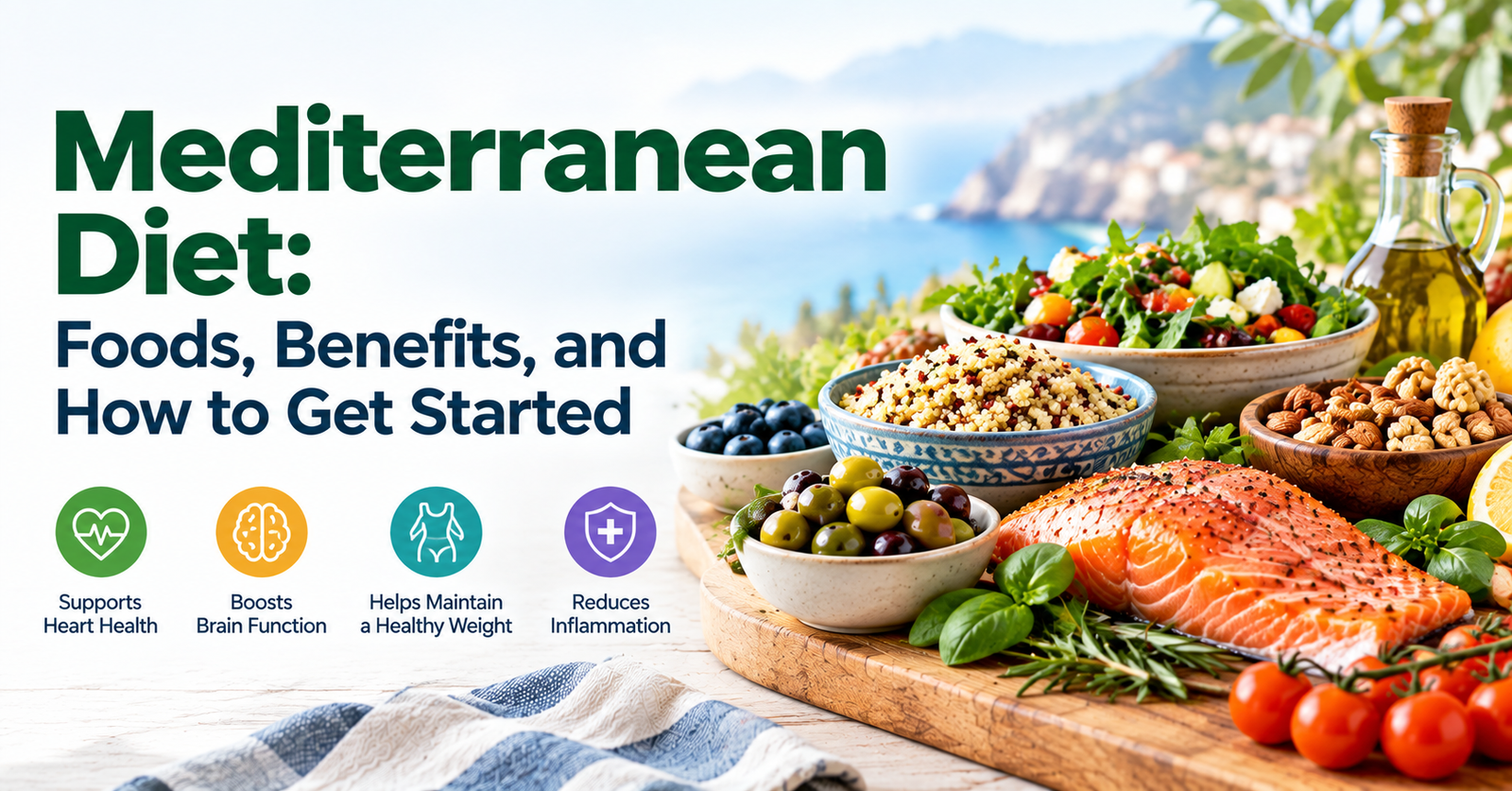

Few eating patterns have been studied as thoroughly as the Mediterranean diet. It has been the subject of large randomized trials, decades of population research, and repeated top rankings from independent health organizations, including U.S. News & World Report’s Best Diets rankings. That combination of strong evidence and genuine livability is rare in nutrition science, where most “best diets” turn out to be either well-studied and hard to sustain, or easy to follow but thin on real data.
This guide covers what the Mediterranean diet actually consists of, what the research supports, and how to start eating this way without treating it as a rigid program.
The one thing to understand first
The Mediterranean diet isn’t a fixed meal plan — it’s a flexible eating pattern built around whole plant foods, olive oil, and moderate portions of fish and dairy, with red meat and processed food kept occasional rather than routine.
According to the Mayo Clinic, people who follow this pattern tend to have lower rates of high cholesterol and high blood pressure, and research suggests it may reduce inflammation throughout the body. Because it’s a pattern rather than a strict protocol, it adapts easily to different cuisines, budgets, and personal tastes, which is likely a major reason it has outperformed more rigid diets in long-term adherence studies.
Where the Mediterranean diet comes from
The Mediterranean diet is based on the traditional eating habits of countries bordering the Mediterranean Sea, particularly Greece and southern Italy in the mid-20th century.
The Seven Countries Study
Researcher Ancel Keys popularized the diet in the 1950s and 1960s after the landmark Seven Countries Study found that populations in Mediterranean regions had notably lower rates of heart disease than populations eating a more typical Western diet. That early observation launched decades of follow-up research.
A pattern, not a single national cuisine
Despite the name, the Mediterranean diet isn’t one specific national cuisine. It reflects shared dietary habits across multiple Mediterranean countries and cultures, unified more by ingredients and preparation style than by any single dish or menu.
The core foods of the Mediterranean diet
The diet centers on a consistent set of food groups, with clear guidance on what to eat often and what to limit.
Vegetables, fruits, and legumes
Fresh vegetables, fruits, beans, and lentils form the base of most Mediterranean meals. These foods provide fiber, vitamins, and antioxidants that research consistently links to lower chronic disease risk.
Whole grains
Whole grains like whole wheat bread, brown rice, farro, and bulgur replace refined grains as the primary carbohydrate source. This swap supports steadier blood sugar and better digestive health compared with refined alternatives.
Olive oil
Extra-virgin olive oil serves as the primary fat source, replacing butter and other saturated fats in most cooking and dressing. According to Oxford Academic’s Cardiovascular Research, the Mediterranean diet’s high monounsaturated fat content from olive oil is one of its most-studied protective components.
Fish and seafood
Fish, particularly fatty varieties like salmon and sardines, is recommended at least twice a week for its omega-3 fatty acid content. This is one of the clearer distinctions between the Mediterranean pattern and diets built around red meat as the primary protein source.
Nuts and seeds
Nuts and seeds provide healthy fats, protein, and fiber in relatively small daily portions. Walnuts and almonds are especially common in Mediterranean eating patterns and were a specific focus in the landmark PREDIMED trial.
Poultry, eggs, and dairy in moderation
Poultry and eggs appear a few times a week, and dairy — often yogurt and cheese rather than milk — is eaten in moderate amounts. Fermented dairy in particular plays a notable role, and our guide on whether yogurt is good for your health covers why it holds up well within this kind of eating pattern.
Red meat and sweets as occasional foods
Red meat, processed meat, and sweets are eaten only occasionally in a traditional Mediterranean pattern, rather than being featured as everyday staples. This is one of the more significant differences from a typical Western diet.
What the research actually shows
The Mediterranean diet has more high-quality clinical evidence behind it than nearly any other dietary pattern, spanning heart disease, diabetes, and brain health.
Cardiovascular disease prevention
The PREDIMED trial, a large Spanish randomized controlled study, found that a Mediterranean diet enriched with olive oil or nuts reduced major cardiovascular events by around 30%, primarily through fewer strokes. A 2025 systematic review in Cardiovascular Research describes the Mediterranean diet as the most intensely studied and best scientifically proven dietary pattern for cardiovascular disease prevention, citing PREDIMED alongside the Lyon Diet Heart Study, PREDIMED-Plus, and CORDIOPREV as consistent supporting trials.
A more recent meta-analysis published in late 2025, covering more than 1.4 million participants across 87 studies, found that higher adherence to the Mediterranean diet was consistently associated with lower rates of coronary heart disease, atrial fibrillation, hypertension, and cardiovascular death.
Type 2 diabetes management and prevention
Multiple studies have found the Mediterranean diet improves blood glucose control and can delay the need for glucose-lowering medication in people with type 2 diabetes. A 2026 analysis from the PREDIMED-Plus study found that combining a calorie-controlled Mediterranean diet with exercise and structured support reduced diabetes risk by 31% in participants with metabolic syndrome.
Brain and cognitive health
Research has linked the Mediterranean diet’s emphasis on seafood, nuts, seeds, and olive oil to a range of brain health benefits, according to U.S. News & World Report. Diets high in antioxidants and healthy fats are thought to support cognitive function partly by reducing inflammation and oxidative stress in the brain.
Weight management
The Mediterranean diet isn’t primarily marketed as a weight-loss plan, but its emphasis on fiber, healthy fats, and whole foods supports satiety and gradual, sustainable weight loss for many people. If weight management is a specific goal, our overview of current weight-loss strategies covers where whole-food eating patterns like this one fit alongside other evidence-based approaches.
How the Mediterranean diet affects digestion
Beyond its cardiovascular and metabolic effects, the Mediterranean diet has a notable, if less publicized, relationship with digestive health.
A genuine link to reduced acid reflux
Emerging research indicates that healthy eating patterns with high intakes of fruits and whole grains, including the Mediterranean diet, are associated with improved GERD symptoms. A study of more than 800 adults published in Diseases of the Esophagus found that closer adherence to a Mediterranean diet was linked to a lower risk of reflux.
A notable head-to-head study against medication
A widely cited study led by Dr. Craig Zalvan compared a strict plant-based Mediterranean-style diet, paired with alkaline water, against standard proton pump inhibitor medication in patients with laryngopharyngeal reflux. According to Olive Oil Times’ coverage of the research, 62.6% of the diet group saw a meaningful symptom improvement after six weeks, compared with 54.1% of the medication group. This was a specific, modified version of the diet with no meat or dairy, not the standard Mediterranean pattern, so it’s worth discussing with a doctor before treating diet alone as a substitute for prescribed medication.
Why fiber and healthy fats likely help
High-fiber foods support regular digestion and a healthy gut, and our guide to high-fiber foods for digestive health explains how fiber intake connects to broader digestive comfort, not just reflux specifically. Replacing saturated fat with olive oil and other unsaturated fats is also a commonly recommended step for people managing reflux, since saturated fat is more strongly linked to relaxing the lower esophageal sphincter.
Understanding your own reflux triggers
Diet is only one part of the picture, and individual acid reflux risk factors vary quite a bit from person to person. If digestive symptoms are a regular concern, our overview of common digestive problems and our guide to how acid reflux is typically diagnosed are useful next steps.
How the Mediterranean diet supports other health goals
Because it’s built on whole, minimally processed foods, the Mediterranean pattern connects naturally to several other areas of nutrition.
Protein sources within the pattern
Fish, legumes, eggs, and modest amounts of poultry provide most of the protein in a traditional Mediterranean diet, with red meat playing a smaller role than in many Western diets. Our guide to high-protein foods covers how to make sure protein intake stays adequate within this kind of plant-forward pattern.
Gut health and fermented foods
Yogurt and other fermented dairy products are a regular feature of Mediterranean eating and provide beneficial live cultures. Our guide to probiotics covers what the evidence actually supports for gut health, which is a useful companion to understanding why fermented dairy earns a regular place in this diet.
Pairing the diet with intermittent fasting
Some people combine the Mediterranean diet’s food choices with a structured eating window, an approach sometimes called Mediterranean-style intermittent fasting. Our guide to intermittent fasting covers what the evidence says about combining meal timing strategies with food-quality-focused patterns like this one.
A natural fit within broader healthy-diet guidance
The Mediterranean diet aligns closely with general healthy-eating principles rather than contradicting them. Our pillar guide on what makes a healthy diet covers the broader principles the Mediterranean pattern reflects particularly well.
How to start eating a Mediterranean diet
Adopting this pattern doesn’t require an immediate, total overhaul. A gradual approach tends to be more sustainable and just as effective over time.
Start with one meal a day
Choosing one meal, often lunch or dinner, to rebuild around vegetables, whole grains, and olive oil is an easier entry point than changing every meal at once. This lets you build familiarity with new ingredients and preparation styles gradually.
Make olive oil your primary fat
Swapping butter and other saturated fats for olive oil in cooking and dressings is one of the simplest, highest-impact changes. A moderate amount used regularly, rather than a large amount used occasionally, best reflects how the diet is traditionally practiced.
Add fish twice a week
Building in two fish-based meals a week, especially fatty fish like salmon, sardines, or mackerel, is a realistic target for most households. Canned or frozen options work just as well nutritionally as fresh.
Snack on nuts instead of processed snacks
Keeping a small portion of unsalted nuts on hand as a go-to snack replaces less nutrient-dense options without requiring much planning. Portion control matters here, since nuts are calorie-dense.
Treat red meat and sweets as occasional, not routine
Rather than eliminating red meat or dessert entirely, shifting them from a daily habit to an occasional one reflects how the traditional pattern actually works. This flexibility is part of why the diet tends to be more sustainable than stricter elimination-based plans.
Build the rest of your lifestyle around it
Diet quality works best alongside other healthy habits, not in isolation. Our broader guide on how to live a healthy lifestyle covers how nutrition fits together with activity, sleep, and stress management for more complete results.
Who should be cautious or check with a doctor first
The Mediterranean diet is safe for most people, but a few situations call for extra guidance.
People managing kidney disease or on blood thinners
The diet’s emphasis on certain fats, fish, and specific nutrients means people with kidney disease or those on blood-thinning medication should check with a doctor before making major changes. Fish oil and vitamin K-rich vegetables, both featured heavily, can interact with certain treatments.
People with a diagnosed digestive condition
While the Mediterranean pattern often helps digestive symptoms, individual tolerance varies, especially for people with existing conditions. Understanding what abdominal pain feels like and how it may relate to a new dietary change is worth reviewing if new symptoms appear after a diet shift.
People managing reflux at different life stages
Digestive tolerance can shift with age, and our guides to acid reflux in your 30s and acid reflux in your 50s cover what tends to change at each stage. If reflux symptoms are already a concern, our practical guide to managing acid reflux at home covers additional strategies beyond diet alone.
When to talk to a doctor or dietitian
The Mediterranean diet is broadly considered safe and beneficial for most adults, but professional guidance helps in certain situations. Consider reaching out if you:
- Have a chronic condition like kidney disease, heart disease, or diabetes and want a tailored eating plan
- Take medication that could interact with specific foods, like blood thinners
- Notice new or worsening digestive symptoms after changing your diet
- Aren’t sure how to adapt the pattern to a food allergy or intolerance
- Want personalized guidance on portion sizes or specific health goals
A registered dietitian can help translate the general principles covered here into a plan that fits your specific needs. Our overview of the most common health issues can also help you understand which conditions a diet like this one most directly supports.
Frequently asked questions
What foods are not allowed on the Mediterranean diet?
No foods are strictly forbidden. Red meat, processed meat, refined grains, and sweets are simply eaten occasionally rather than daily, while vegetables, whole grains, olive oil, and fish make up the bulk of meals.
Is the Mediterranean diet good for weight loss?
It can support gradual, sustainable weight loss through its emphasis on fiber, healthy fats, and whole foods, even though it isn’t designed primarily as a weight-loss plan. Many people find it easier to sustain long-term than more restrictive diets.
Can the Mediterranean diet help with acid reflux?
Research suggests it can. Studies have linked closer adherence to the Mediterranean diet with reduced reflux risk, and one notable study found a strict plant-based version performed as well as medication for a specific type of reflux over six weeks. Results vary by individual, and it’s worth discussing significant diet changes with a doctor if you’re currently on reflux medication.
Is red wine required as part of the Mediterranean diet?
No. While traditional versions of the diet include low-to-moderate red wine consumption, it’s an optional element, not a requirement, and current health guidance generally recommends minimizing alcohol regardless of dietary pattern.
How long does it take to see benefits from the Mediterranean diet?
Some studies have found measurable improvements in cholesterol, blood pressure, and inflammation markers within weeks, while cardiovascular risk reduction becomes more apparent over months to years of consistent adherence. Consistency over time matters more than short-term strictness.
Sources
- Mayo Clinic. Mediterranean Diet for Heart Health
- U.S. News & World Report. Mediterranean Diet: Beginner’s Guide
- Oxford Academic, Cardiovascular Research. Mediterranean Diet and Cardiovascular Disease
- ScienceDirect. Effectiveness of Mediterranean Diet for the Primary Prevention of Cardiovascular Diseases
- ScienceDaily. Scientists Found a Smarter Mediterranean Diet That Cuts Diabetes Risk by 31%
- Olive Oil Times. Study: Plant-Based Diet Alleviates Reflux as Effectively as Medications
Medical disclaimer
This article is for general information and education. It is not medical advice and does not replace an individualized evaluation by a doctor or registered dietitian. Talk to a healthcare provider before making significant dietary changes, especially if you have a chronic health condition or take prescription medication.
Read our full Medical Disclaimer.