
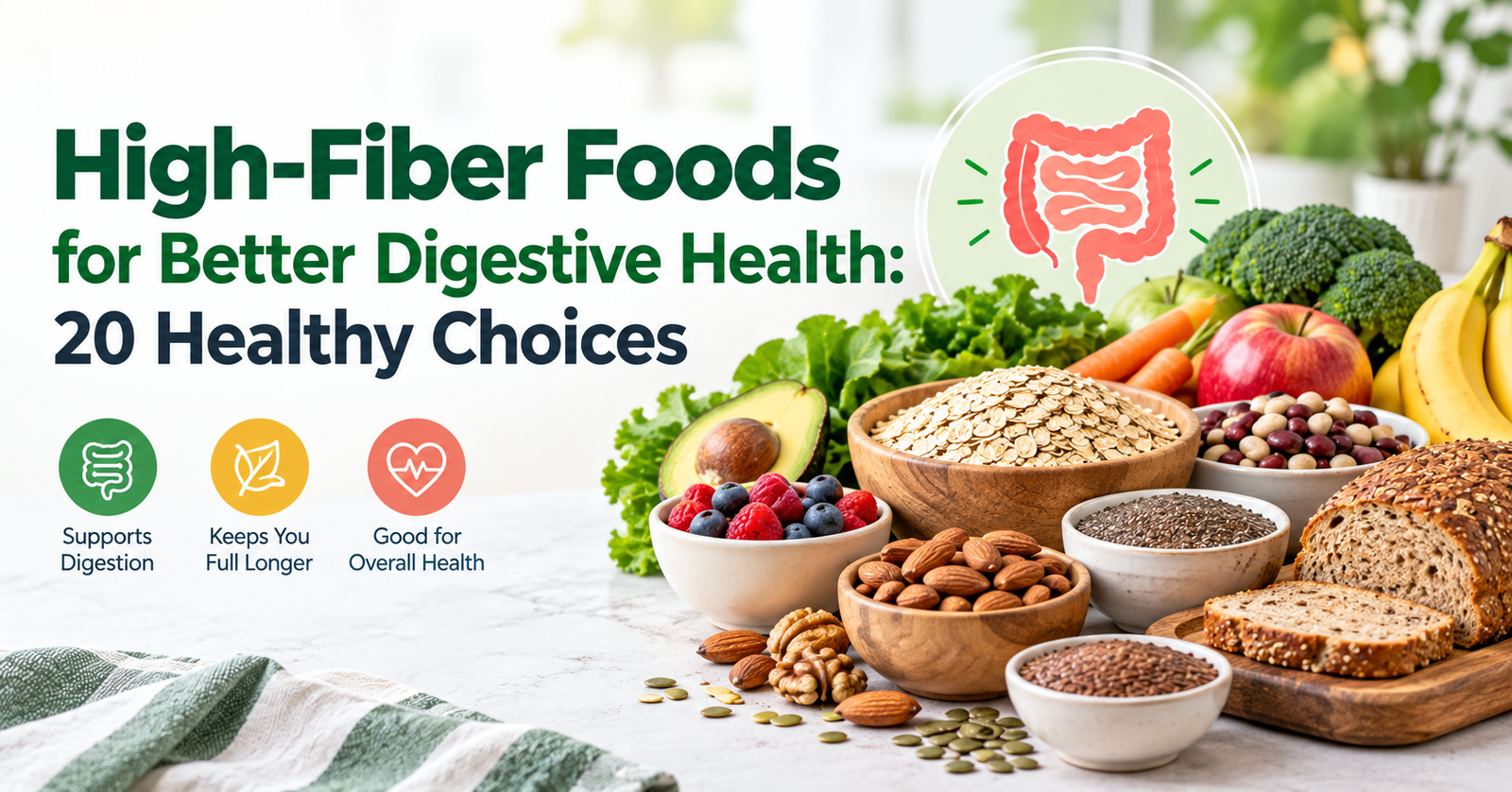

Fiber is one of the simplest tools for better digestion. It helps keep bowel movements regular, feeds healthy gut bacteria, and supports your heart and blood sugar too. Yet most adults fall short. Mayo Clinic reports that Americans average only about 15 grams a day, roughly half of the recommended amount.
This guide covers high-fiber foods for better digestive health. You will find 20 healthy choices, daily targets, tips to add fiber without gas or bloating, and signs that need a doctor. Digestive complaints rank among the most common health issues, and fiber-rich eating is a core part of what a healthy diet looks like.
Why Fiber Matters for Digestive Health
Dietary fiber is the part of plant foods that your body cannot digest or absorb. It passes through your gut largely intact. Along the way, it changes how your digestive system works.
Soluble vs. Insoluble Fiber
Mayo Clinic explains that fiber comes in two main types:
- Insoluble fiber does not dissolve in water. It adds bulk to stool and helps material move through your gut. Wheat bran, nuts, beans, and vegetables such as cauliflower are good sources.
- Soluble fiber dissolves in water and forms a gel. Oats, beans, and many fruits supply it. Mayo Clinic notes that soluble fiber also helps lower cholesterol and supports healthy gut bacteria.
Most plant foods contain both types. Eating a variety covers both.
What Fiber Does in Your Gut
Fiber bulks up and softens stool, which makes it easier to pass. A Mayo Clinic Q&A adds that fiber may lower the risk of hemorrhoids, small pouches in the colon (diverticulosis), and colon cancer.
Gut bacteria also ferment some fibers. That process feeds the bacteria that keep your colon healthy. So fiber supports regularity and your gut ecosystem at the same time.
How Much Fiber Do You Need?
Your target depends on your age and sex. The National Academy of Medicine sets these daily amounts, as Mayo Clinic lists them.
| Group | Daily fiber goal |
|---|---|
| Women 50 and younger | 25 g |
| Women over 50 | 21 g |
| Men 50 and younger | 38 g |
| Men over 50 | 30 g |
The dietary guidelines offer another way to set your goal. They suggest 14 grams of fiber for every 1,000 calories, according to the Mayo Clinic food chart.
Why Aim for the Higher End?
A large Lancet analysis pooled 185 observational studies and 58 clinical trials. People with the highest fiber intake had 15% to 30% lower rates of death from any cause, heart disease, stroke, type 2 diabetes, and colorectal cancer. The benefits were greatest at 25 to 29 grams a day.
Most of the evidence is observational, so it shows links rather than proof. Still, the direction is consistent, and fiber-rich foods carry few downsides for most people.
20 High-Fiber Foods for Better Digestive Health
The amounts below are approximate. They come from the USDA FoodData Central database and match the Mayo Clinic high-fiber food chart closely. Package labels vary by brand.
Legumes (Beans, Lentils, and Peas)
Legumes rank among the richest fiber sources. They also supply plant protein, as our guide to high-protein foods explains.
| # | Food | Serving | Fiber (approx.) |
|---|---|---|---|
| 1 | Split peas, cooked | ½ cup | 8 g |
| 2 | Lentils, cooked | ½ cup | 8 g |
| 3 | Black beans, cooked | ½ cup | 7.5 g |
| 4 | Chickpeas, cooked | ½ cup | 6 g |
Whole Grains
| # | Food | Serving | Fiber (approx.) |
|---|---|---|---|
| 5 | Pearled barley, cooked | 1 cup | 6 g |
| 6 | Whole-wheat spaghetti, cooked | 1 cup | 6 g |
| 7 | Oatmeal, cooked | 1 cup | 4 g |
| 8 | Popcorn, air-popped | 3 cups | 3.5 g |
Oats deserve special mention because they supply soluble fiber. Popcorn counts as a whole grain, so it works as a snack.
Fruits
| # | Food | Serving | Fiber (approx.) |
|---|---|---|---|
| 9 | Raspberries | 1 cup | 8 g |
| 10 | Pear, with skin | 1 medium | 5.5 g |
| 11 | Avocado | ½ medium | 5 g |
| 12 | Apple, with skin | 1 medium | 4.5 g |
| 13 | Prunes (dried plums) | 5 | 3 g |
Keep the skin on pears and apples. The skin holds much of the fiber.
Vegetables
| # | Food | Serving | Fiber (approx.) |
|---|---|---|---|
| 14 | Broccoli, cooked | 1 cup | 5 g |
| 15 | Green peas, cooked | ½ cup | 4.5 g |
| 16 | Brussels sprouts, cooked | 1 cup | 4 g |
| 17 | Sweet potato, baked with skin | 1 medium | 4 g |
Seeds and Nuts
| # | Food | Serving | Fiber (approx.) |
|---|---|---|---|
| 18 | Chia seeds | 1 tbsp | 4 g |
| 19 | Almonds | 1 oz | 3.5 g |
| 20 | Ground flaxseed | 1 tbsp | 2 g |
Fiber-Rich Foods for Common Digestive Problems
Different digestive conditions respond to fiber in different ways. Here is what the research says.
Constipation
Constipation is common. The joint AGA-ACG guideline estimates that chronic idiopathic constipation affects about 8% to 12% of U.S. adults. The 2023 guideline suggests fiber supplements, and psyllium has the best evidence. It also advises drinking enough fluids and warns that gas is a common side effect.
Food helps too. In a small randomized trial, about 10 prunes a day improved stool consistency more than psyllium in people with mild to moderate constipation. The study was small and short, so treat prunes as a helpful option, not a cure.
Irritable Bowel Syndrome (IBS)
IBS needs a more careful approach. The ACG guideline on IBS suggests soluble fiber, but not insoluble fiber, for overall symptoms. Wheat bran can make bloating worse in some people.
The guideline also recommends a limited trial of a low-FODMAP diet. FODMAPs are fermentable carbohydrates that some people digest poorly. Work with a dietitian if you try it.
Diverticular Disease
Many people avoid nuts, seeds, and popcorn if they have diverticulosis. Research does not support that advice. A large JAMA study of more than 47,000 men found that nuts, corn, and popcorn did not raise the risk of diverticulitis. A summary of the AGA guideline says people with a history of diverticulitis should eat a fiber-rich diet and should not avoid seeds, nuts, or popcorn.
During an acute flare, your doctor may advise a temporary low-fiber diet. Follow their guidance.
Acid Reflux
Fiber may also help with reflux. In a cross-sectional study, higher fiber intake linked to fewer reflux symptoms. That design shows an association, not a cause. Still, oatmeal, vegetables, and whole grains often feel gentle on a sensitive stomach.
Our guide on how to manage acid reflux at home offers a full plan. You can also read about acid reflux risk factors and whether acid reflux can be prevented. Reflux often starts early, so see acid reflux in your 30s, and new symptoms later in life are covered in acid reflux in your 50s.
How to Add Fiber Without Gas and Bloating
Adding fiber too fast is the most common mistake. Your gut needs time to adjust. Two habits prevent most problems.
Go Slowly
Mayo Clinic warns that adding too much fiber too quickly can cause gas, diarrhea, cramping, and bloating. It suggests raising your intake gradually over a few weeks. Add one new high-fiber food every few days.
Drink Enough Fluids
Fiber works best with water. Mayo Clinic explains that some fibers absorb water, so being well hydrated helps prevent uncomfortable bowel movements. The AGA-ACG guideline gives the same advice. Sip water throughout the day.
Easy Swaps
- Choose oatmeal or whole-grain cereal instead of refined cereal.
- Swap white rice or pasta for barley, brown rice, or whole-wheat pasta.
- Add beans or lentils to soups and salads.
- Eat fruit with the skin on.
- Snack on air-popped popcorn, nuts, or raw vegetables.
- Rinse canned beans to reduce gas-causing compounds.
Some people sip ginger tea for digestive comfort. Our article on whether ginger is good for health explains what the evidence shows.
A Sample Day With About 29 Grams of Fiber
| Meal | Example | Fiber (approx.) |
|---|---|---|
| Breakfast | 1 cup oatmeal, ½ cup raspberries, 1 tbsp ground flaxseed | 10 g |
| Lunch | Lentil soup with ½ cup lentils | 8 g |
| Snack | 1 pear | 5.5 g |
| Dinner | 1 cup broccoli with your protein of choice | 5 g |
| Total | 28.5 g |
Add a serving of beans, almonds, or whole grains to reach a higher target.
Beyond Digestion: Other Benefits of Fiber
Fiber helps your whole body. Two benefits stand out.
Heart Health and Blood Sugar
The Lancet analysis found that higher fiber intake improved cholesterol, blood pressure, and body weight in clinical trials. Soluble fiber helps lower LDL cholesterol and control blood glucose, according to Mayo Clinic.
Fullness and Weight Management
Fiber-rich foods keep you full longer, which may help you manage weight. If weight loss is a goal, our overview of weight loss trends in 2026 can help you choose sustainable methods.
Shorter eating windows can make it harder to reach fiber goals. If you follow intermittent fasting, plan fiber-rich meals inside your eating window.
Who Should Be Careful With High-Fiber Diets
Fiber suits most people. A few situations call for extra care:
- Bowel narrowing or blockage: Fiber can worsen symptoms if a stricture or obstruction exists. The AGA-ACG guideline lists mechanical obstruction as a reason to avoid constipation treatments.
- Active flares of inflammatory bowel disease or diverticulitis: Your doctor may advise a low-fiber diet for a short time.
- Gastroparesis (slow stomach emptying): High-fiber foods may worsen symptoms, so ask your care team.
- IBS: Insoluble fiber and fermentable foods may trigger symptoms, as noted above.
- Medicines: Fiber can affect how the body absorbs some drugs. Ask a pharmacist about timing.
When to See a Doctor
Fiber and fluids fix many mild problems. Some symptoms need a medical check. Book an appointment if you notice:
- Constipation that lasts for several weeks despite dietary changes
- Blood in your stool, or black, tarry stools
- Unplanned weight loss
- A new, lasting change in bowel habits
- Iron-deficiency anemia
- Persistent belly pain. Our guide on what abdominal pain feels like can help you describe it.
- Heartburn that keeps returning. Our guide on how acid reflux is diagnosed explains next steps.
Other conditions can mimic fiber-related problems, and our overview of common digestive problems explains how they differ.
Frequently Asked Questions
What are the best high-fiber foods for digestive health?
Beans, lentils, split peas, whole grains, raspberries, pears, and broccoli lead the list. Chia seeds, flaxseed, and almonds add smaller boosts. Variety matters more than any single food.
Can I get enough fiber from supplements?
Food comes first because it also supplies vitamins and minerals. The AGA-ACG guideline does support psyllium for constipation. Talk with your doctor before you start a supplement.
Can too much fiber cause problems?
Yes. Too much fiber too fast causes gas, cramping, and bloating. Very high intakes without enough fluid can worsen constipation. Increase slowly and drink water.
Does fiber help with weight loss?
Fiber may help you feel full. It works best alongside balanced meals, movement, and sleep.
Key Takeaways
- Adults need about 21 to 38 grams of fiber a day, depending on age and sex.
- Beans, lentils, whole grains, fruits, vegetables, nuts, and seeds all deliver fiber.
- Add fiber gradually over a few weeks and drink plenty of fluids.
- Soluble fiber suits IBS best, and people with diverticular disease do not need to avoid nuts and popcorn.
- People with bowel narrowing, gastroparesis, or active flares should ask their doctor first.
- See a doctor for blood in stool, weight loss, or constipation that will not clear.
Fiber works best as part of a balanced routine. Pair it with protein, movement, and good sleep. Our guide on how to live a healthy lifestyle shows how the pieces fit together.
This article offers general education and does not replace personal medical advice. Talk with a qualified healthcare professional or registered dietitian about your digestive health and nutrition needs.
Read our full Medical Disclaimer.
References
- Mayo Clinic. Dietary Fiber: Essential for a Healthy Diet.
- Mayo Clinic. Chart of High-Fiber Foods.
- Mayo Clinic Health System. Fiber.
- Mayo Clinic News Network. Mayo Clinic Q and A: Getting Adequate Amount of Fiber Has Several Health Benefits.
- U.S. Department of Agriculture. FoodData Central.
- Reynolds A, Mann J, Cummings J, Winter N, Mete E, Te Morenga L. Carbohydrate Quality and Human Health: A Series of Systematic Reviews and Meta-Analyses. Lancet. 2019;393:434-445.
- Chang L, Chey WD, Imdad A, et al. American Gastroenterological Association–American College of Gastroenterology Clinical Practice Guideline: Pharmacological Management of Chronic Idiopathic Constipation. Am J Gastroenterol. 2023;118(6):936-954.
- Attaluri A, Donahoe R, Valestin J, Brown K, Rao SS. Randomised Clinical Trial: Dried Plums (Prunes) vs. Psyllium for Constipation. Aliment Pharmacol Ther. 2011;33(7):822-828.
- Lacy BE, Pimentel M, Brenner DM, et al. ACG Clinical Guideline: Management of Irritable Bowel Syndrome. Am J Gastroenterol. 2021;116(1):17-44.
- Strate LL, Liu YL, Syngal S, Aldoori WH, Giovannucci EL. Nut, Corn, and Popcorn Consumption and the Incidence of Diverticular Disease. JAMA. 2008;300(8):907-914.
- MDedge. AGA Updates Guidelines for Management of Acute Diverticulitis.
- El-Serag HB, Satia JA, Rabeneck L. Dietary Intake and the Risk of Gastro-oesophageal Reflux Disease: A Cross Sectional Study in Volunteers. Gut. 2005;54(1):11-17.
1 thought on “High-Fiber Foods for Better Digestive Health: 20 Healthy Choices”
Comments are closed.