
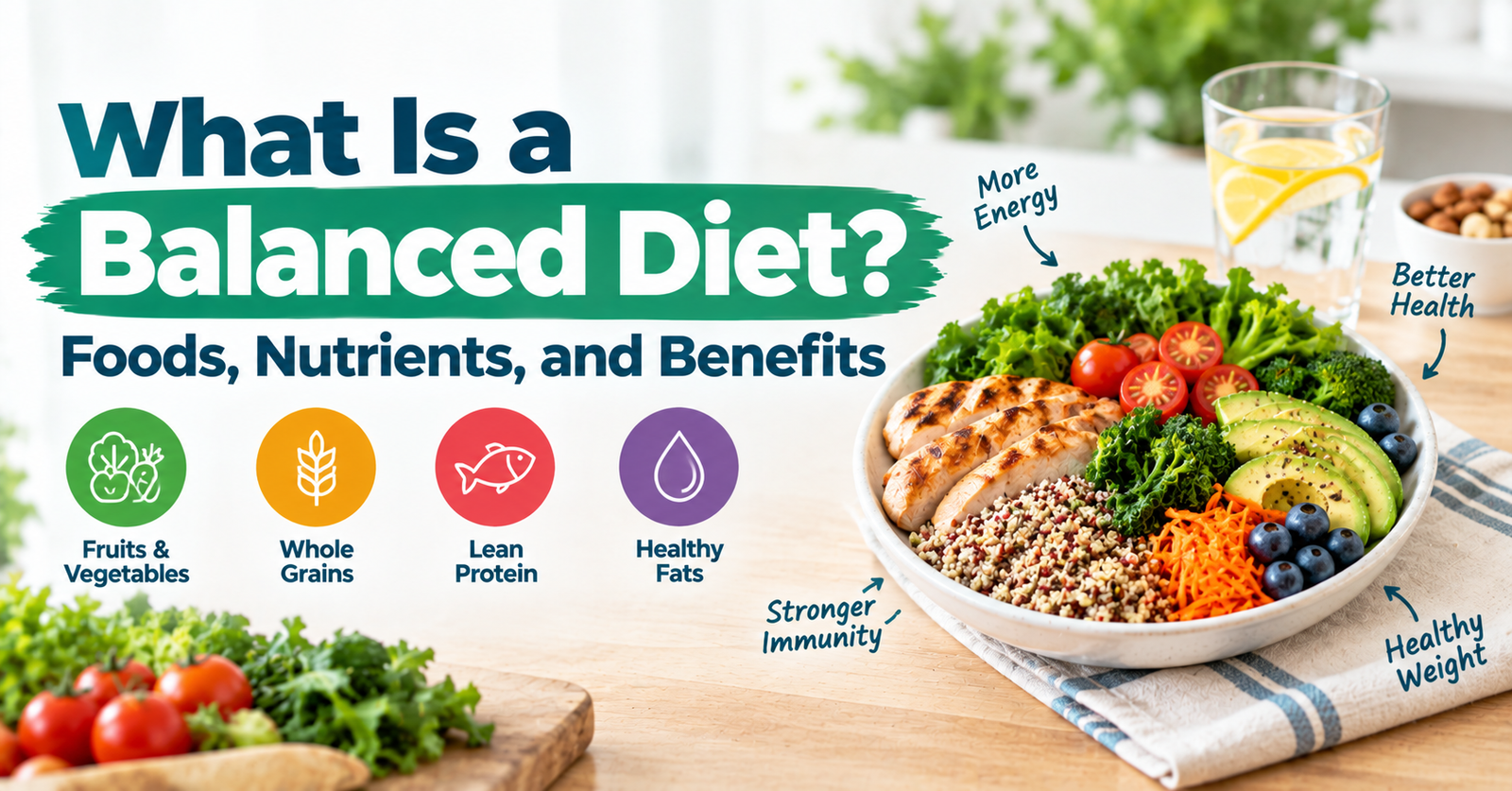

“Balanced diet” is one of those phrases everyone uses and almost no one defines. It sounds like common sense, yet ask most people to describe what actually makes a meal balanced, and the answers get vague fast.
The concept has a real, specific definition behind it. It comes down to eating the right proportions of food groups and nutrients, not any single food or rule. This guide breaks that structure down clearly: the food groups involved, how they should be proportioned, and how to apply that in a real kitchen without overthinking every meal.
The one thing to understand first
A balanced diet is about proportion, not restriction — it means getting the right mix of food groups and macronutrients in reasonable amounts, not eliminating entire categories of food.
According to the University of Minnesota’s nutrition guide, carbohydrates, fat, and protein are all essential nutrients. The body needs a reasonable balance of all three to function well. That single idea separates a genuinely balanced diet from most trending diet plans, which tend to demonize one macronutrient while ignoring the actual goal: proportion across the whole picture.
The core building blocks of a balanced diet
Before looking at specific foods, it helps to understand the nutrient categories a balanced diet is actually balancing.
The seven essential components
According to MedicineNet, a balanced diet rests on seven essential factors: carbohydrates, protein, fat, fiber, vitamins, minerals, and water. Each plays a distinct role, and none can fully substitute for another.
Macronutrients versus micronutrients
Carbohydrates, protein, and fat are macronutrients, meaning the body needs them in relatively large amounts for energy and structure. Vitamins and minerals are micronutrients, needed in much smaller amounts but still essential for processes like immune function, bone health, and nerve signaling.
Why proportion matters more than elimination
Because each macronutrient serves a different purpose, cutting one out entirely, rather than adjusting its proportion, tends to create new problems while solving old ones. A balanced diet works by adjusting ratios within reasonable ranges, not by removing entire categories.
The recommended macronutrient ranges
Nutrition science has specific, research-based ranges for how much of your daily calories should come from each macronutrient.
What the AMDR actually recommends
The Acceptable Macronutrient Distribution Range, or AMDR, is the standard reference for macronutrient balance. According to the Institute of Medicine’s Food and Nutrition Board, the ranges are:
| Macronutrient | Recommended range of daily calories |
|---|---|
| Carbohydrates | 45–65% |
| Fat | 20–35% |
| Protein | 10–35% |
Why these are ranges, not fixed targets
These numbers are deliberately flexible. Individual needs vary by age, activity level, and health goals, so a balanced diet can look different from person to person while still falling within these ranges. Our guide to high-protein foods covers how to shift your own protein intake toward the higher end of this range if that fits your goals.
MyPlate: the practical model for balance
Ranges and percentages are useful, but most people need a simpler, visual way to apply them at mealtime. That’s exactly what USDA’s MyPlate model was built for.
From food pyramid to plate
The USDA replaced its long-standing food pyramid with MyPlate in 2011. According to MedicineNet, this shift made proportions easier to visualize by showing food groups directly on a plate rather than in a pyramid.
The five food groups
MyPlate organizes eating around five groups: fruits, vegetables, grains, protein, and dairy. According to Clemson University’s Cooperative Extension, following these proportions covers essential nutrient needs well enough that most people don’t need additional vitamin or mineral supplements.
How the plate is divided
A commonly cited breakdown from MedicineNet splits the plate roughly as follows: vegetables make up about 40% of the plate, grains about 30%, protein about 20%, and fruit about 10%, with a small side of dairy. In practice, this generally translates to filling half your plate with fruits and vegetables and splitting the other half between grains and protein.
Daily targets by food group
According to familydoctor.org, general daily targets include about 2.5 cups of vegetables, 5 ounce-equivalents of protein, 3 cups of dairy, and roughly 5 teaspoons of oils, adjusted for individual calorie needs. These are averages meant to guide planning, not exact daily requirements.
What each food group contributes
Each of the five MyPlate groups brings something specific to a balanced diet, and understanding the “why” makes the proportions easier to remember.
Vegetables and fruits
Vegetables and fruits provide fiber, vitamins, and minerals while contributing relatively few calories for their volume. Our guide to high-fiber foods for digestive health covers how this food group supports digestion specifically, beyond its general nutrient content.
Grains
Whole grains provide complex carbohydrates, fiber, and B vitamins. According to Clemson University’s guide, MyPlate recommends making at least half of daily grain intake whole grains rather than refined ones.
Protein
The protein group includes meat, poultry, seafood, eggs, beans, nuts, and soy products. Variety within this group matters, since different protein sources bring different additional nutrients, like omega-3s from fish or fiber from beans.
Dairy
Dairy contributes calcium, vitamin D, and protein. Choosing low-fat or fat-free versions, per familydoctor.org, helps keep saturated fat intake in the recommended range without sacrificing these nutrients.
Oils
Oils aren’t an official MyPlate food group, but they still matter nutritionally. A modest daily amount, roughly 5 teaspoons, supports fat-soluble vitamin absorption without pushing total fat intake outside the AMDR range.
Why balance benefits your health
A genuinely balanced diet isn’t just a nutrition science formality. It has real, measurable effects on health outcomes.
Chronic disease prevention
According to familydoctor.org, healthy eating patterns like MyPlate can help manage or prevent chronic conditions, including diabetes, some cancers, heart disease, high blood pressure, and stroke. Balance across food groups is a major part of why these patterns work.
Weight management
Because a balanced diet emphasizes proportion rather than restriction, it tends to be more sustainable for long-term weight management than diets built around eliminating entire food groups. Our overview of current weight-loss strategies covers where balanced, whole-food eating fits alongside more targeted approaches.
Reduced inflammation
Diets that lean heavily on whole foods across all groups, rather than processed, single-nutrient-heavy foods, are associated with lower markers of chronic inflammation. Our guide to anti-inflammatory foods covers this connection in more depth.
How a balanced diet supports digestive health
Digestive comfort depends heavily on getting the balance of fiber, fat, and portion size right, which makes this a particularly relevant area for the balanced-diet concept.
Fiber and fat balance
A diet too low in fiber or too high in fat can both contribute to digestive discomfort, including symptoms of acid reflux. Understanding your own acid reflux risk factors can help you fine-tune where your personal balance should sit.
Fermented foods within a balanced diet
Dairy, particularly fermented dairy like yogurt, contributes to digestive health alongside its role in calcium and protein intake. Our guides to probiotics and whether yogurt is good for your health cover what the evidence actually supports here.
Recognizing when symptoms need more than diet
Persistent digestive symptoms deserve attention beyond dietary adjustment alone. Our overview of common digestive problems and our guide on what abdominal pain feels like are useful next steps if symptoms persist despite a well-balanced diet.
Balance and reflux across life stages
Digestive tolerance shifts with age, which affects how “balanced” should be interpreted for your specific situation. Our guides to acid reflux in your 30s and acid reflux in your 50s cover what tends to change at each stage, and our practical guide to managing acid reflux at home covers strategies beyond diet alone. If reflux symptoms are new or worsening, it’s also worth understanding how acid reflux is typically diagnosed.
How to apply balance to real meals
Understanding the theory is one thing. Building it into everyday eating is another, and it doesn’t require precise measuring at every meal.
Use the plate method as a mental shortcut
Picture your plate divided roughly into the proportions covered above: half fruits and vegetables, a quarter grains, a quarter protein, with a side of dairy. This visual shortcut works well enough for most meals without requiring you to calculate percentages.
Read labels to check your assumptions
Nutrition Facts labels can confirm whether a packaged food actually fits into a balanced pattern the way you assume it does. Our guide to reading nutrition facts labels covers how to check fiber, sodium, and added sugar content quickly.
Consider an established eating pattern as a template
Rather than building balance from scratch at every meal, an established pattern can do much of the work for you. Our guide to the Mediterranean diet covers one of the most evidence-backed examples of a naturally balanced eating pattern.
Balance within a structured eating schedule
If you follow a specific meal timing approach, balance still matters within a shorter window. Our guide to intermittent fasting covers how to maintain food-group balance even with fewer meals in a day.
Connect diet to the rest of your health routine
A balanced diet works best as one part of an overall healthy routine. Our guide on how to live a healthy lifestyle covers how nutrition fits together with activity, sleep, and stress management, and our broader pillar guide on what makes a healthy diet covers the wider principles a balanced diet is built on.
Common misconceptions about balanced eating
A few persistent myths make balanced eating feel more complicated or more restrictive than it actually is.
“Balanced” doesn’t mean equal portions of everything
Balance refers to appropriate proportions, not equal amounts. Vegetables should take up more plate space than protein, not the same amount, which is a common point of confusion.
One unbalanced meal doesn’t ruin a balanced diet
Balance is a pattern measured over days and weeks, not a strict requirement for every single meal. A heavier, less balanced meal occasionally doesn’t undo an otherwise consistent pattern.
Balanced doesn’t mean bland
Herbs, spices, and flavorful preparation methods fit naturally into a balanced diet. Our guide to whether ginger is good for health is a good example of how a flavorful ingredient can also carry genuine nutritional value.
When to talk to a doctor or dietitian
Most people can apply the general principles in this guide without professional help, but some situations call for more individualized guidance. Consider reaching out if you:
- Manage a chronic condition, like diabetes or heart disease, that requires specific macronutrient targets
- Are pregnant, breastfeeding, or have significantly different calorie needs than average
- Have a food allergy or intolerance that limits an entire food group
- Notice digestive symptoms that persist despite a generally balanced diet
- Want a personalized target within the AMDR ranges rather than a general guideline
A registered dietitian can translate these general proportions into a plan suited to your specific needs. Our overview of the most common health issues can also help you understand which conditions a well-balanced diet most directly supports.
Frequently asked questions
What are the main components of a balanced diet?
A balanced diet includes carbohydrates, protein, fat, fiber, vitamins, minerals, and water, distributed across the five MyPlate food groups: fruits, vegetables, grains, protein, and dairy. Each component plays a distinct role, and none should be eliminated entirely.
What percentage of calories should come from carbs, protein, and fat?
The Acceptable Macronutrient Distribution Range recommends 45–65% of daily calories from carbohydrates, 20–35% from fat, and 10–35% from protein. These are flexible ranges, not fixed numbers, and individual needs vary.
What does a balanced plate actually look like?
A commonly used guideline fills about half the plate with fruits and vegetables, a quarter with grains, and a quarter with protein, alongside a small serving of dairy. This visual approach works well as a general mealtime guide without requiring precise measurement.
Is it okay to eat an unbalanced meal sometimes?
Yes. A balanced diet is a pattern assessed over days and weeks, not a rule that applies to every single meal. One less balanced meal doesn’t undo an otherwise consistent, balanced eating pattern.
How is a balanced diet different from a healthy diet?
The terms overlap significantly, but “balanced” specifically refers to the proportion of food groups and macronutrients in your diet, while “healthy” is a broader term that also includes food quality, moderation of added sugar and sodium, and overall dietary pattern. A diet can be reasonably balanced in proportion while still needing improvement in food quality, which is why both concepts matter together.
Sources
- University of Minnesota. Balancing Food Choices
- MedicineNet. What Are the 7 Things You Need for a Balanced Diet?
- MedicineNet. What Is MyPlate?
- Clemson University Cooperative Extension. What Is MyPlate?
- familydoctor.org. Balancing the Food Plate
Medical disclaimer
This article is for general information and education. It is not medical advice and does not replace an individualized evaluation by a doctor or registered dietitian. Talk to a healthcare provider before making significant dietary changes, especially if you manage a chronic health condition.
Read our full Medical Disclaimer.
1 thought on “What Is a Balanced Diet? Foods, Nutrients, and Benefits”
Comments are closed.